Japanese Soba Noodles
CN → US| HS Code | Tariff Rate | Origin | Destination | Doc |
|---|---|---|---|---|
| 1108110010 | 0.0% | CN | US | Official Doc |
| 1108190090 | 35.0% | CN | US | Official Doc |
| 1904900140 | 31.5% | CN | US | Official Doc |
| 1904209000 | 32.4% | CN | US | Official Doc |
| 1902192090 | 35.0% | CN | US | Official Doc |
| 1902192030 | 35.0% | CN | US | Official Doc |
Product Images
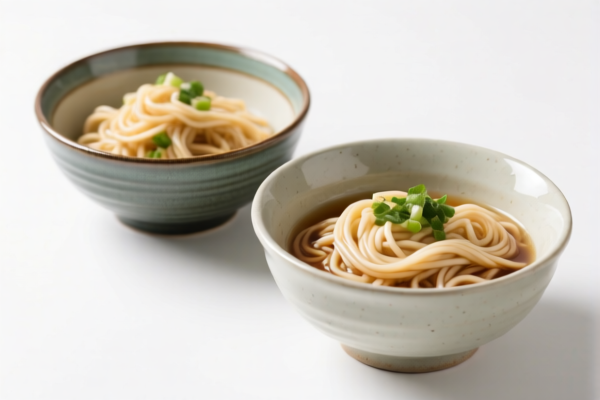
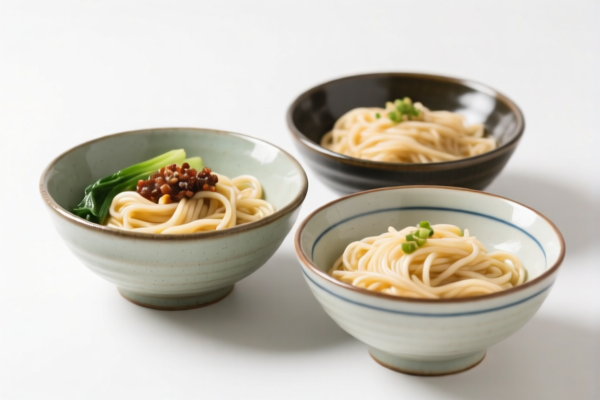
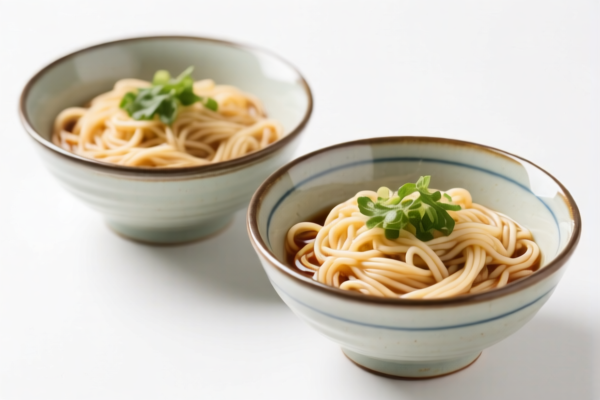
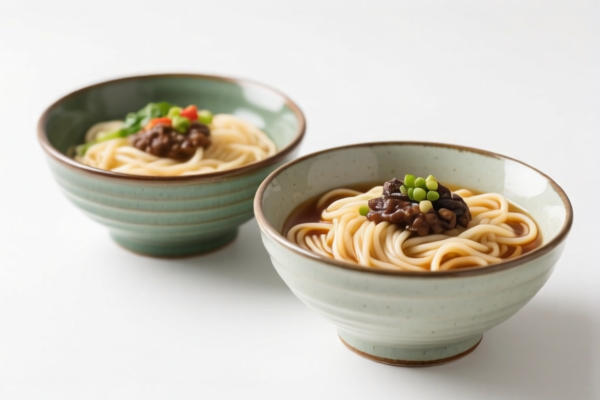
AI Analysis
🍜 Japanese Soba Noodles (Buckwheat Noodles)
🌐 HS Code Reference & Customs Clearance Guide | 2026 Latest Tariff Analysis | Professional Clearance Strategy
📌 1. Product Definition and Classification: Do You Really Understand "Soba"?
Japanese Soba noodles are a staple food made primarily from buckwheat flour (and sometimes mixed with wheat flour). In international trade, classification depends heavily on the buckwheat content and whether the product is cooked/frozen or dried/uncooked.
Key Distinction:
- Uncooked/Dried Soba: Generally classified under Chapter 19 (Preparations of cereals, flour, starch or milk).
- Cooked/Frozen Soba: Classified under Chapter 21 (Miscellaneous edible preparations).
- Pure Buckwheat vs. Mixed: Buckwheat content affects specific sub-headings.
⚠️ Critical Classification Point:
- If buckwheat content is ≥10%, it is typically classified under 1902.30.
- If buckwheat content is <10%, it may be classified under 1902.30 or 1902.40, depending on other ingredients.
- Cooked/Frozen Soba is classified under 2106.90 or 1902.40.
📦 2. HS Code Classification Details (2026 Latest Tariff Alignment)
| HS Code | Product Description | Application Scenario | Buckwheat Content | Status |
|---|---|---|---|---|
1902.30.10.00 |
Pasta, whether or not cooked or stuffed, containing buckwheat flour (soba) | Uncooked/dried soba noodles (Japan/China origin) | ≥10% | ✅ Most Common for Dried Soba |
1902.30.90.00 |
Other pasta, uncooked | Pasta with low/no buckwheat | <10% | ✅ |
2106.90.50.00 |
Other food preparations, frozen, containing noodles | Frozen soba noodles (ready-to-eat or quick-cook) | N/A | ✅ For Frozen Soba |
1902.40.00.00 |
Wheat or other cereal noodles, cooked or stuffed | Cooked soba (vacuum-packed, ready-to-eat) | N/A | ✅ |
0713.31.00.00 |
Buckwheat, dried, whether or not hulled or split | Raw buckwheat grain (not noodles) | N/A | ❌ Not Noodles |
🔍 Key Reminder:
- Uncooked dried soba is almost always 1902.30.
- Frozen soba is 2106.90 or 1902.40 depending on whether it’s "prepared" or "noodle".
- Ready-to-eat cooked soba is 1902.40 or 2106.90.
💰 3. 2026 Latest Tariff Rate Breakdown (Including Additional Duties & Policy Surcharges)
✅ Applicable Country: United States (US)
✅ Origin: Japan (JP)
✅ Effective Date: 2025–2026 (Post-USMCA/FTA considerations)
🎯 1. 1902.30.10.00 – Pasta, containing buckwheat flour (Uncooked Dried Soba)
| Item | Content |
|---|---|
| Base Tariff Rate | 0% (Most Favored Nation - MFN) |
| USITC Additional Tariff | None (No Section 301 for Japan) |
| IEEPA Additional Tariff | None (Japan is not targeted by IEEPA 10% surcharge) |
| Total Tariff | 0% |
| Tax Calculation | CIF Value × 0% |
| De Minimis Eligibility | ✅ Yes (for small shipments) |
| Legal Basis Path | USITC:1902.30.10.00 → MFN:0% |
📌 Explanation:
- Japan benefits from favorable trade relations with the US; no additional tariffs apply to buckwheat noodles.
- 0% tariff makes Japanese soba highly competitive in the US market.
🎯 2. 2106.90.50.00 – Other food preparations, frozen, containing noodles (Frozen Soba)
| Item | Content |
|---|---|
| Base Tariff Rate | 0%–2.5% (varies by specific subheading) |
| USITC Additional Tariff | None |
| IEEPA Additional Tariff | None |
| Total Tariff | 0%–2.5% |
| Tax Calculation | CIF Value × 0%–2.5% |
| De Minimis Eligibility | ✅ Yes |
| Legal Basis Path | USITC:2106.90.50.00 |
📌 Note:
- Frozen soba may have a slightly higher base rate if classified under "other preparations" rather than "pasta."
- Still no additional tariffs for Japan-origin goods.
🛠️ 4. Customs Clearance Practical Advice (Real-World Pitfall Guide)
✅ 1. Required Documentation (All Required)
| Document | Must Provide | Explanation |
|---|---|---|
| ✅ Product Specification Sheet | ✔️ | Ingredients list, buckwheat %, packaging type |
| ✅ Certificate of Origin (CO) | ✔️ | Prove Japan origin to claim 0% tariff |
| ✅ Commercial Invoice | ✔️ | Clearly state "Soba Noodles, Uncooked/Frozen" |
| ✅ Packing List | ✔️ | Show net/gross weight, dimensions |
| ✅ FDA Prior Notice | ✔️ | Required for food imports into US |
| ✅ Allergy Label (English) | ✔️ | Must include buckwheat, wheat, gluten info |
✅ 2. Declaration Tips (Key Mantras)
🔥 “Declare Buckwheat %, Specify Cooked/Uncooked, Origin Matters, Tariff Zero!”
| Scenario | Correct Declaration | Wrong Practice |
|---|---|---|
| Uncooked dried soba | 1902.30.10.00 – "Pasta containing buckwheat" |
Misdeclare as "vegetable noodles" → 25% |
| Frozen soba | 2106.90.50.00 – "Frozen food preparations" |
Misdeclare as "uncooked" → wrong classification |
| Ready-to-eat cooked soba | 1902.40.00.00 – "Cooked cereal noodles" |
Misdeclare as "pasta" → potential audit |
| Raw buckwheat grain | 0713.31.00.00 – "Buckwheat, dried" |
Misdeclare as "noodles" → complete mismatch |
✅ 3. Special Cases Handling
| Scenario | Handling Advice |
|---|---|
| Mixed wheat/buckwheat soba | Declare buckwheat %; if <10%, may fall under 1902.30.90.00 |
| Instant soba (with seasoning) | Classified under 2106.90 – "food preparations" |
| Organic soba | Provide USDA Organic Certificate for potential premium market access |
| Gluten-free soba (100% buckwheat) | Highlight "Gluten-Free" on label; still 1902.30.10.00 |
🌍 5. Global Main Market Clearance Comparison (2026 Latest)
| Country/Region | Recommended HS Code | Tariff | Certification Required | Remarks |
|---|---|---|---|---|
| 🇺🇸 United States | 1902.30.10.00 |
0% | FDA + Allergy Label | Japan-origin: 0% |
| 🇯🇵 Japan | 1902.30.10.00 |
0% | JAS Organic (if applicable) | Domestic: 0% |
| 🇨🇳 China | 1902.30.10.00 |
10%–15% | CIQ + Food Safety License | Higher tariff for imports |
| 🇪🇺 European Union | 1902.30.10.00 |
6.5% | EU Food Compliance + Labeling | Standard MFN rate |
| 🇬🇧 United Kingdom | 1902.30.10.00 |
6.5% | UK Food Standards Agency | Post-Brexit rate |
📌 Conclusion:
- United States offers the best tariff advantage for Japanese soba (0%).
- China and EU have higher tariffs, so price competitiveness is lower.
- Japan-origin soba is tariff-free in the US, making it an excellent export opportunity.
📌 6. Common Mistakes & Pitfall Guide (Blood & Tears Lessons)
❌ Mistake 1: Declaring buckwheat content incorrectly
👉 Consequence: If buckwheat <10% but declared as "buckwheat pasta," customs may reclassify → penalty + back taxes.
❌ Mistake 2: Confusing "uncooked" vs. "cooked/frozen"
👉 Consequence: Misclassification leads to incorrect tariff application → delay or seizure.
❌ Mistake 3: Missing FDA Prior Notice for food imports
👉 Consequence: Goods held at border until notice is filed → 3–7 days delay.
❌ Mistake 4: No allergen label in English
👉 Consequence: Rejection at US border – mandatory for all food imports.
✅ Correct Practice:
“Dried Soba Noodles, 100% Buckwheat, 500g, Uncooked, Japan Origin, FDA Registered Facility, Allergen: Buckwheat, Gluten-Free”
🎯 7. Conclusion: Precise Classification, Smooth Clearance, Cost Efficiency!
🎯 Remember the Mantra:
🔹 “Declare Buckwheat %, Specify Cooked/Uncooked, Origin Matters, Tariff Zero!”
🔹 “HS Code Determines Tariff, 0% for Japan, 25% for China, 6.5% for EU!”
📌 Pro Tip:
- If your soba is 100% buckwheat, highlight "Gluten-Free" for premium markets.
- If mixed with wheat, declare buckwheat % accurately to avoid reclassification.
- FDA Prior Notice is mandatory – file before shipment arrival.
📣 Immediate Action:
📞 Contact a licensed customs broker + Provide product specs + File FDA Prior Notice
🚀 Let your Japanese soba clear customs smoothly, enter markets efficiently, and boost profits!
✨ Professional clearance starts with precise classification!
💼 Every cent of cost deserves accurate calculation!
Customer Reviews
About HS Code Classification
The Harmonized System (HS) is an internationally standardized nomenclature developed by the World Customs Organization (WCO) to classify traded products. Over 200 countries use the HS system as the basis for customs tariffs, trade statistics, and import/export regulations.
Each HS code follows a hierarchical structure:
- Chapter (2 digits) — Broad category of goods (e.g., Chapter 84: Machinery and Mechanical Appliances)
- Heading (4 digits) — More specific grouping within the chapter
- Subheading (6 digits) — Internationally standardized breakdown, used by all WCO member countries
- National subdivisions (8-10 digits) — Country-specific extensions for further classification, such as US HTSUS 10-digit codes
Correct HS code classification is essential for smooth customs clearance, accurate duty payment, and compliance with trade regulations. Misclassification can lead to customs delays, overpayment of duties, or penalties.
When importing from CN to US, the applicable tariff rates may include:
- Most-Favored-Nation (MFN) rate — The standard duty rate applied to WTO members
- General rate — Applied to countries without trade agreements
- Trade remedy duties — Additional tariffs such as Section 301 (anti-dumping), Section 232 (national security), or countervailing duties
The information provided on this page is for reference purposes only. For official classification, please consult with your local customs authority or a licensed customs broker.