Jeans Button
CN → US| HS Code | Tariff Rate | Origin | Destination | Doc |
|---|---|---|---|---|
| 7116205000 | 17.5% | CN | US | Official Doc |
| 7116204000 | 28.0% | CN | US | Official Doc |
| 7117909000 | 28.5% | CN | US | Official Doc |
| 9606212000 | 35.0% | CN | US | Official Doc |
| 9606214000 | 0.0% | CN | US | Official Doc |
Product Images
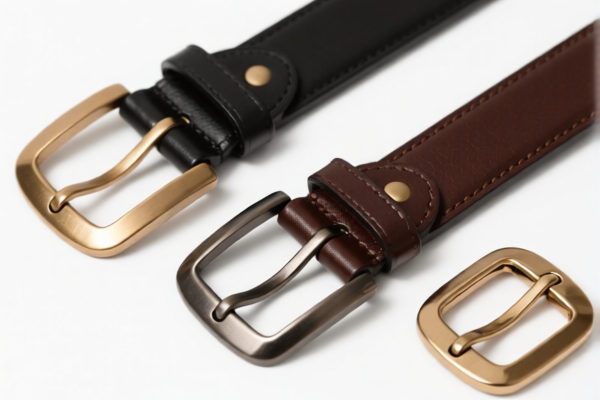
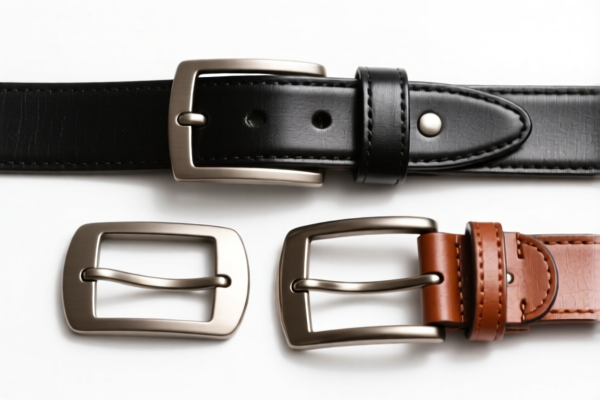
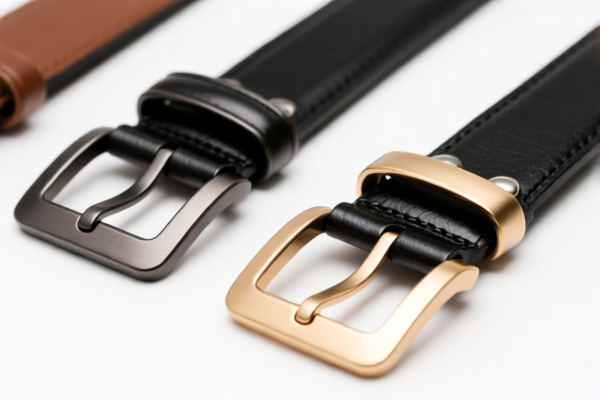
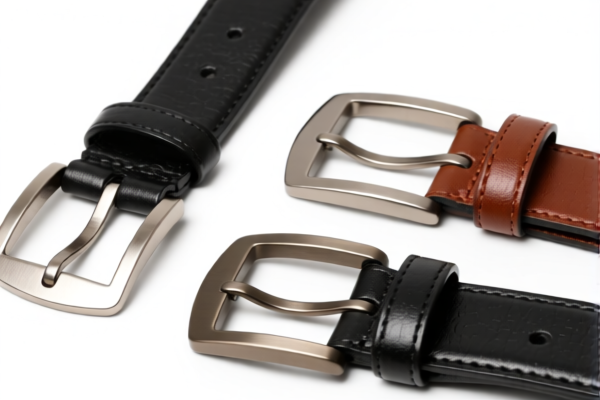
AI Analysis
👖 Jeans Buttons (Jean Buttons / Rivets)
🌐 HS Code Reference & Customs Clearance Guide | 2026 Latest Tariff Analysis | Professional Clearance Strategy
📌 I. Product Definition: Are You Selling "Buttons" or "Fasteners"?
Jeans buttons, often referred to as rivets or metal buttons, are essential hardware components for denim apparel. In international trade, their classification depends heavily on material composition and apparent function. They are not simply "buttons" under Chapter 96; if they are made of precious metal, base metal with plating, or contain gemstones, they often fall under Chapter 71 (Imitation Jewelry/Hardware) or specific textile hardware categories.
Key Distinction: - Base Metal/Plastic/Metal with Stone: Often classified under Chapter 71 (if deemed "imitation jewelry" or "general articles") because they resemble jewelry findings. - Purely Functional Textile Fasteners: If clearly identifiable as textile accessories (buttons, snaps) without jewelry characteristics, they may fall under Chapter 96. - Material Ambiguity: If the material is unclear, customs may default to the "catch-all" provisions in Chapter 71 or 96, impacting duty rates significantly.
⚠️ Critical Warning:
- Misclassifying a metal button as a "textile button" (Ch 96) when it is plated base metal/gem-studded (Ch 71) can lead to severe penalties and higher duties. - US Customs (CBP) scrutinizes "Jeans Buttons" closely due to the high volume of trade and potential for tariff evasion via misclassification.
📦 II. HS Code Classification Breakdown (2026 Latest Tariff Reference)
Based on the provided data, here are the four potential HS codes for Jeans Buttons, sorted by likely applicability and risk profile:
| HS Code | Product Description & Logic | Total Tax Rate (China Origin → US) | Tax Breakdown |
|---|---|---|---|
7116.20.50.00 |
Gemstone/Stone-Embedded Buttons Buttons made of gemstones or semi-precious stones. Classified as "other articles" in Ch 71. |
17.5% | Base: 0.0% + Add'l: 7.5% (Sec 301) + IEEPA: 10% |
7116.20.40.00 |
Base Metal/Plastic/Shell Buttons Buttons typically made of plastic, metal, or shell. Classified as "other articles." |
28.0% | Base: 10.5% + Add'l: 7.5% (Sec 301) + IEEPA: 10% |
7117.90.90.00 |
Imitation Jewelry / Unclear Material Principle: If material is unclear, defaults to "other imitation jewelry/articles." |
28.5% | Base: 11.0% + Add'l: 7.5% (Sec 301) + IEEPA: 10% |
9606.21.40.00 |
Textile Fasteners (Plastic/Metal) Buttons classified as "buttons" (fasteners) for clothing. Fits the "catch-all" for textile buttons. |
35.0% (Plus Unit Duty) |
Base: 0.3¢/line/gross + 4.6% + Add'l: 25.0% (Sec 301) + IEEPA: 10% |
9606.21.20.00 |
Plastic Buttons (Specific Subheading) Buttons explicitly identified as plastic. |
35.0% | Base: 0.0% + Add'l: 25.0% (Sec 301) + IEEPA: 10% |
🔍 Key Observation:
- Lowest Duty:7116.20.50.00(17.5%) applies only if buttons are gemstone/semi-precious stone. - Highest Duty:9606codes (35.0%) apply if classified as textile fasteners, especially if plastic. - Material is Key: The difference between 17.5% and 35.0% is huge. Proof of material is mandatory.
💰 III. Detailed Tariff Analysis (China Origin → USA)
✅ Applicable Country: United States (US)
✅ Origin: China (CN)
✅ Effective Time: Current 2025/2026 Tariff Schedule (Section 301 & IEEPA)
🎯 1. 7116.20.50.00 – Gemstone/Semi-Precious Stone Buttons
| Item | Detail |
|---|---|
| Base Duty | 0.0% |
| Section 301 Duty | +7.5% |
| IEEPA Duty | +10% |
| Total Duty | 17.5% |
| Unit Duty | None |
| De Minimis Eligibility | ❌ No (Section 301/IEEPA exceptions apply for CN origin) |
📌 Interpretation:
- This is the most favorable rate IF the button contains genuine or semi-precious stones. - Documentation Required: Must prove the presence of gemstones/semi-precious materials. Plain metal/plastic buttons DO NOT qualify.
🎯 2. 7116.20.40.00 – Base Metal/Plastic/Shell Buttons
| Item | Detail |
|---|---|
| Base Duty | 10.5% |
| Section 301 Duty | +7.5% |
| IEEPA Duty | +10% |
| Total Duty | 28.0% |
| Unit Duty | None |
| De Minimis Eligibility | ❌ No |
📌 Interpretation:
- Applies to common metal, plastic, or shell buttons classified under Chapter 71 ("Other articles of natural or cultured pearls, precious or semi-precious stones..."). - CBP often classifies decorative metal buttons here if they resemble jewelry findings.
🎯 3. 7117.90.90.00 – Imitation Jewelry (Unclear Material)
| Item | Detail |
|---|---|
| Base Duty | 11.0% |
| Section 301 Duty | +7.5% |
| IEEPA Duty | +10% |
| Total Duty | 28.5% |
| Unit Duty | None |
| De Minimis Eligibility | ❌ No |
📌 Interpretation:
- Default Category: If you cannot prove the material (e.g., no specs, vague description), CBP may classify here. - Risk: This is a "catch-all" for imitation jewelry. If your buttons are clearly textile fasteners, this classification may be challenged, but it carries a high base duty.
🎯 4. 9606.21.20.00 & 9606.21.40.00 – Textile Fasteners (Buttons)
| Item | Detail |
|---|---|
| Base Duty | 0.0% (20) or 0.3¢/line + 4.6% (40) |
| Section 301 Duty | +25.0% |
| IEEPA Duty | +10% |
| Total Duty | 35.0% (+ unit duty for 40) |
| Unit Duty | Yes, for 9606.21.40.00 |
| De Minimis Eligibility | ❌ No |
📌 Interpretation:
- Chapter 96 covers "Buttons, push-buttons, snap-buttons...". - If the button is purely functional and made of plastic or base metal, it may fall here. - High Risk: The 25% Section 301 duty makes this category expensive (35% total). CBP may challenge this if the button is decorative (jewelry-like).
🛠️ IV. Customs Clearance Recommendations (Practical Guide)
✅ 1. Preparation Checklist (Non-Negotiable)
| Document | Required? | Purpose |
|---|---|---|
| Product Specs Sheet | ✅ Yes | Must specify material (e.g., "Zinc Alloy with Rhodium Plating," "ABS Plastic," "Brass with Cubic Zirconia"). |
| High-Res Photos | ✅ Yes | Show the button from all angles. Highlight any stones, plating, or logos. |
| Commercial Invoice | ✅ Yes | DO NOT just write "Jeans Buttons." Use detailed descriptions: "Metal Buttons, Zinc Alloy, Chrome Plated, for Denim Jeans." |
| Material Certificate | ✅ Recommended | If claiming 7116.20.50.00 (gemstone), provide proof of stone content. |
| HS Code Pre-Ruling | ✅ Strongly Advised | Request a binding ruling from CBP to avoid post-entry audits. |
✅ 2. Classification Strategy (Best Practice)
| Scenario | Recommended HS Code | Why? |
|---|---|---|
| Buttons with Stones/Gems | 7116.20.50.00 |
Lowest duty (17.5%). Must prove gemstone content. |
| Decorative Metal Buttons | 7116.20.40.00 |
If they look like jewelry/findings, Ch 71 is safer than Ch 96. Duty: 28%. |
| Plain Plastic Buttons | 9606.21.20.00 |
Clearly textile fasteners. Duty: 35%. |
| Unclear Material | 7117.90.90.00 |
High risk of audit. Avoid vague descriptions. |
🔥 Golden Rule:
"If it looks like jewelry, classify it as jewelry (Ch 71). If it looks like a plain fastener, classify it as a button (Ch 96)."
- Ch 71 generally has lower base duties (0-11%) but adds 17.5-28.5% total. - Ch 96 has lower base duties (0-4.6%) but adds 35% total due to higher Section 301 (25%). - Verdict: For decorative metal buttons,7116codes are often cheaper than9606codes.
✅ 3. Common Pitfalls & How to Avoid Them
| Mistake | Consequence | Solution |
|---|---|---|
| Vague Description: "Buttons for Jeans" | CBP defaults to highest duty or audits | Be specific: Material, Size, Weight, Application |
| Misclassifying Metal as Plastic | Penalty for undervaluation & wrong HTS | Provide material test reports or detailed specs |
| Ignoring Section 301/IEEPA | Unexpected 35% duty at customs | Plan for 28.5%-35% duty in your cost model |
| Failing to Declare Origin | Denied IEEPA exemption (if applicable) | Clearly state "Made in China" |
🌍 V. Global Market Comparison (2026)
| Market | Recommended HS Code | Estimated Total Duty (China Origin) | Notes |
|---|---|---|---|
| 🇺🇸 USA | 7116.20.50.00 (if gemstone) or 7116.20.40.00 |
17.5% - 28.5% | High scrutiny on material. Avoid Ch 96 unless plain plastic. |
| 🇨🇳 China | 7318.15.00.00 (Metal fasteners) |
~0-5% | Lower duties. Classification differs from US. |
| 🇪🇺 EU | 7318.15.00 or 7116.20.00 |
~2-4% | No equivalent to US Section 301. Much cheaper. |
| 🇬🇧 UK | 7318.15.00 |
~2-4% | Similar to EU post-Brexit. |
📌 Conclusion:
- The US market is the most expensive due to Section 301 and IEEPA tariffs. - Material declaration is critical in the US. A misclassification can cost you 10-15% extra in duties.
📌 VI. Final Verdict & Action Plan
- Identify Material: Determine if buttons are gemstone-embedded, metal/plastic, or unclear.
- Select HS Code:
- Gemstone? →
7116.20.50.00(17.5%) - Decorative Metal/Plastic/Shell? →
7116.20.40.00(28.0%) - Plain Plastic/Textile Fastener? →
9606.21.20.00(35.0%) - Document Everything: Prepare specs, photos, and invoices that explicitly state the material.
- Pre-Ruling: If shipping large volumes, request an HTS pre-ruling from CBP.
- Cost Planning: Budget for 17.5% to 35% in duties for US imports.
🚀 Pro Tip:
If your buttons are decorative, argue for Chapter 71 classification. The 17.5%-28.5% duty is significantly lower than the 35% duty for Chapter 96 textile fasteners. This is a key cost-saving strategy for jeans hardware exporters.
✨ Accurate Classification = Maximum Profit.
💼 Don't let "Jeans Buttons" become a tariff headache.
📞 Consult a customs broker before your first shipment!
Customer Reviews
About HS Code Classification
The Harmonized System (HS) is an internationally standardized nomenclature developed by the World Customs Organization (WCO) to classify traded products. Over 200 countries use the HS system as the basis for customs tariffs, trade statistics, and import/export regulations.
Each HS code follows a hierarchical structure:
- Chapter (2 digits) — Broad category of goods (e.g., Chapter 84: Machinery and Mechanical Appliances)
- Heading (4 digits) — More specific grouping within the chapter
- Subheading (6 digits) — Internationally standardized breakdown, used by all WCO member countries
- National subdivisions (8-10 digits) — Country-specific extensions for further classification, such as US HTSUS 10-digit codes
Correct HS code classification is essential for smooth customs clearance, accurate duty payment, and compliance with trade regulations. Misclassification can lead to customs delays, overpayment of duties, or penalties.
When importing from CN to US, the applicable tariff rates may include:
- Most-Favored-Nation (MFN) rate — The standard duty rate applied to WTO members
- General rate — Applied to countries without trade agreements
- Trade remedy duties — Additional tariffs such as Section 301 (anti-dumping), Section 232 (national security), or countervailing duties
The information provided on this page is for reference purposes only. For official classification, please consult with your local customs authority or a licensed customs broker.