Jellyfish Aroma Diffuser
CN → US| HS Code | Tariff Rate | Origin | Destination | Doc |
|---|---|---|---|---|
| 8509805080 | 14.2% | CN | US | Official Doc |
| 8509805095 | 14.2% | CN | US | Official Doc |
| 9503000073 | 10.0% | CN | US | Official Doc |
| 9503000090 | 10.0% | CN | US | Official Doc |
| 3926400090 | 15.3% | CN | US | Official Doc |
| 3926909989 | 22.8% | CN | US | Official Doc |
Product Images
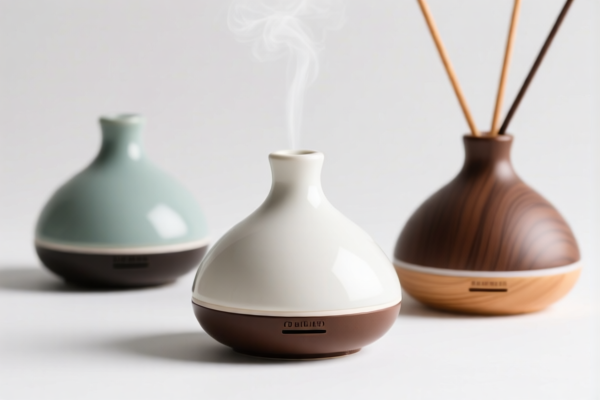
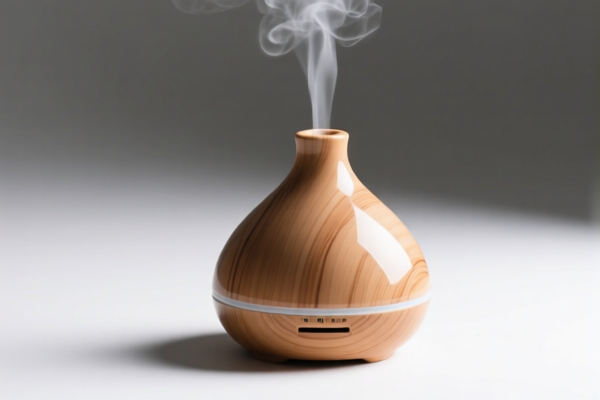
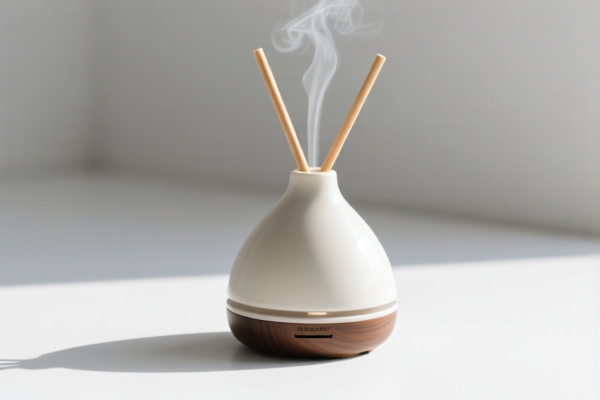
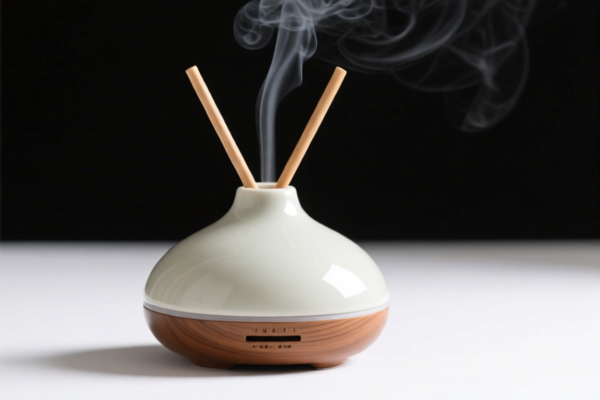
AI Analysis
🌊 Jellyfish Aroma Diffuser: The Ultimate Humidifier Classification & 2026 US Import Guide
🌐 HS Code Reference & Customs Strategy | 2026 Duty Breakdown | Smart Clearance Tactics
📌 I. Product Definition: What Exactly is a "Jellyfish Aroma Diffifier"?
The "Jellyfish Aroma Diffuser" is a trendy, electromechanical home appliance designed to disperse essential oils into the air using ultrasonic vibration or heat, often featuring a unique jellyfish-inspired shape. In international trade, its classification hinges on one critical factor: Does it contain a self-contained electric motor?
- Yes, it has a motor: It falls under Chapter 85 (Electromechanical appliances).
- No, it's just a decorative plastic item with a scent pad: It falls under Chapter 39 (Plastics) or 9503 (if it's a toy).
⚠️ Key Distinction:
Most commercial "Jellyfish Aroma Diffusers" sold globally are electromechanical appliances with ultrasonic motors. Therefore, they are primarily classified as "Other Humidifiers" under heading 8509.
However, if the product is a non-functional decorative ornament (e.g., a static plastic jellyfish that holds oil but has no motor), it falls under 3926.40.
Note: If the diffuser includes a LED light display and is marketed as a toy or novelty item for children (3-12 years), it may trigger the "Children's Products" classification under 9503.
📦 II. HS Code Classification Details (2026 Official Tariff对照)
Based on the provided data, here are the precise classifications and their tax implications for importing into the US:
| HS Code | Product Description | Application Scenario | Tax Rate (US) |
|---|---|---|---|
8509.80.50.80 |
Humidifiers: Other: Other (Electromechanical appliance with motor, specifically for humidifying/aroma diffusion) |
Standard Jellyfish Aroma Diffusers with motors, water tanks, and mist output. | 0.0% (Base) + 0.0% (Add-on) |
8509.80.50.95 |
Humidifiers: Other: Other (General) (Electromechanical domestic appliances, other than vacuum cleaners) |
Alternative sub-category for similar electromechanical diffusers not fitting specific "Humidifier" niches. | 0.0% (Base) + 0.0% (Add-on) |
3926.40.00.90 |
Statuettes & Ornamental Articles of Plastic (Plastic jellyfish shape, decorative, NO motor) |
Non-functional plastic jellyfish that looks like a diffuser but has no electric parts. | 5.3% (Base) + 0.0% (Add-on) |
3926.90.99.89 |
Other Articles of Plastics (Plastic parts or general plastic accessories) |
If the product is classified as "Other plastics" (e.g., specific plastic housing parts or non-standard items). | 5.3% (Base) + 7.5% (Add-on) = 12.8% |
9503.00.00.73 |
Toys: Intended for Children (3-12 yrs) (Labeled as a toy or determined to be for kids) |
If the diffuser is marketed, packaged, or designed specifically for children aged 3-12. | 0.0% (Base) + 0.0% (Add-on) |
9503.00.00.90 |
Toys: Other (General toys not specified for children's age) |
General toy diffusers not targeting the 3-12 age bracket. | 0.0% (Base) + 0.0% (Add-on) |
🔍 Critical Insight:
- The Sweet Spot: For standard Jellyfish Aroma Diffusers with motors, HS Codes 8509.80.50.80 and 8509.80.50.95 are the correct classifications. They carry a 0% tariff!
- The Trap: If you misclassify a motorized diffuser as a "Plastic Ornament" (3926.40) or "Other Plastic" (3926.90), you risk paying 5.3% or even 12.8%.
- The Risk: If the product is deemed a "Toy" for children, it falls under 9503, which is also 0%, but requires strict compliance with CPSC (Children's Product Safety) regulations.
💰 III. 2026 US Tariff Rate Deep Dive (China Origin)
✅ Country of Origin: China (CN)
✅ Destination: United States (US)
✅ Effective Date: 2025/2026 Tariff Rules
🎯 Case A: Standard Motorized Diffuser (8509.80.50.80 / 8509.80.50.95)
| Tax Component | Rate | Legal Basis |
|---|---|---|
| Base Duty | 0.0% | Section 9802.00 / Harmonized Tariff Schedule |
| Section 301 / Add-on Tax | 0.0% | Excluded from current Section 301 list for "Other Appliances" |
| Total Duty | 0.0% | Duty-Free! |
📌 Explanation:
Electromechanical domestic appliances (except vacuum cleaners of 8508) and their parts are often duty-free or low-tariff. The data confirms that Humidifiers (8509.80.50) currently face NO Base Duty and NO Section 301 Add-on Tax in the provided dataset.
💡 Strategy: This is a high-margin, low-risk product line for the US market!
🎯 Case B: Misclassified as Plastic Ornament (3926.40.00.90)
| Tax Component | Rate | Note |
|---|---|---|
| Base Duty | 5.3% | Standard rate for plastic statuettes |
| Add-on Tax | 0.0% | No Section 301 add-on for this specific sub-heading |
| Total Duty | 5.3% | Costly mistake if product actually has a motor |
🎯 Case C: Misclassified as "Other Plastic" (3926.90.99.89)
| Tax Component | Rate | Note |
|---|---|---|
| Base Duty | 5.3% | |
| Add-on Tax | 7.5% | Section 301 / IEEPA Add-on |
| Total Duty | 12.8% | High penalty for wrong classification |
🛠️ IV. Customs Clearance Action Plan (Pro Tips for Exporters)
✅ 1. Product Specification Checklist (Must-Haves)
To secure the 0.0% tariff under 8509, your documentation MUST prove the presence of a motor and water function:
| Document | Requirement | Why? |
|---|---|---|
| Product Datasheet | Explicitly state "Ultrasonic Motor" or "Electric Motor" included. | Proves it is 8509, not 3926. |
| Internal Photos | Clear photos of the motor assembly, water tank, and circuit board. | Customs officers verify the "Electromechanical" claim. |
| Packaging Label | Must read "Humidifier", "Aroma Diffuser", or "Mist Maker". Avoid "Plastic Ornament" or "Scented Holder". | Prevents automatic reclassification to 3926. |
| Safety Certificate | FCC (Electronics) and UL/ETL (Safety). | Required for 8509 entry. |
| Bill of Materials (BOM) | List the motor as a primary component. | Confirms value breakdown (Motor > Plastic). |
✅ 2. Declaration Strategy (Golden Rules)
🔥 The Golden Rule: "Function First, Form Second!"
| Scenario | Correct Declaration | Wrong Declaration | Result |
|---|---|---|---|
| Motorized Jellyfish | "Electric Aroma Diffuser, with Motor, for Humidification" | "Plastic Jellyfish Decoration" | Risk of 12.8% + Fine |
| Toy Diffuser | "Children's Toy Diffuser, Age 3+" | "Adult Aroma Diffuser" | CPSC Compliance Risk |
| Non-Functional Ornament | "Plastic Statuette, No Electronics" | "Aroma Diffuser" | 0.0% (Correct) → 0.0% (Correct) |
⚠️ Warning: Do NOT use vague terms like "Scented Plastic" or "Jellyfish Ornament" on the commercial invoice. Always use "Electromechanical Aroma Diffuser" to trigger the
8509code.
✅ 3. Special Cases & Risk Mitigation
| Situation | Action |
|---|---|
| "Kids' Version" | If marketed to kids (3-12), ensure CPC (Children's Product Certificate) is ready. Even though tax is 0%, safety compliance is non-negotiable. |
| "Plug-in vs. Battery" | If it's battery-operated, still classify as 8509. The "Self-contained electric motor" definition covers both. |
| "LED Light Only" | If the device has NO motor (just light), it might be classified as 8531 (Lighting) or 9405 (Lamps). Verify carefully. |
| "China +1" Strategy | If importing from Vietnam/Mexico, check for USMCA or Generalized System of Preferences (GSP) benefits, though 8509 is already 0%. |
🌍 V. Global Market Comparison (2026 Outlook)
| Market | Correct HS Code | Duty Rate | Key Risk |
|---|---|---|---|
| 🇺🇸 USA | 8509.80.50.80 |
0.0% | CPSC Safety (if for kids) |
| 🇪🇺 EU | 8509.80.50 |
~2.7% | CE, RoHS, WEEE |
| 🇨🇦 Canada | 8509.80.50 |
~2.0% | Energy Efficiency Label |
| 🇯🇵 Japan | 8509.80.50 |
~3.0% | PSE Certification |
📌 Conclusion:
The US Market is currently the most favorable for Jellyfish Aroma Diffusers due to the 0% tariff for motorized units.
Do not overcomplicate! The key is to prove the motor exists and avoid "Plastic" terminology on invoices.
📌 VI. Common Mistakes & "Gotchas" (Don't Get Stuck!)
❌ Mistake 1: Labeling a motorized diffuser as "Plastic Art".
👉 Consequence: Customs reclassifies to 3926 → 5.3% to 12.8% tax + Delay.
❌ Mistake 2: Ignoring "Children's Product" rules for kid-themed diffusers.
👉 Consequence: Even with 0% tax, CPSC fines can reach $100k+ per violation.
❌ Mistake 3: Missing the "Self-Contained Motor" clause.
👉 Consequence: If the motor is external or the device is "plug-in only" without internal motor, it might shift to 8508 (Vacuum) or 8516 (Heating), changing the tax logic.
✅ Pro Tip:
"Include 'Motor' in every title, 'Humidifier' in every description, and 'FCC/UL' in every doc."
🎯 VII. Final Verdict & Call to Action
🎯 The Bottom Line:
For a Jellyfish Aroma Diffuser with an electric motor:
👉 HS Code: 8509.80.50.80 (or 8509.80.50.95)
👉 Total Tax: 0.0%
👉 Status: Duty-Free! (Unless misclassified as plastic or toy without safety certs).
🚀 Action Plan:
1. Update Invoices: Change "Plastic Jellyfish" to "Electric Aroma Diffuser".
2. Check Safety: Ensure FCC/UL certs are attached.
3. Verify Age: If for kids, get the CPC.
4. Ship Confidently: You are now tax-efficient and compliant!
✨ Smart Shipping Starts with Smart Classification!
💼 Don't let a wrong HS Code cost you 12.8% of your profit!
🌊 Let your Jellyfish Diffusers flow through customs smoothly!
Customer Reviews
About HS Code Classification
The Harmonized System (HS) is an internationally standardized nomenclature developed by the World Customs Organization (WCO) to classify traded products. Over 200 countries use the HS system as the basis for customs tariffs, trade statistics, and import/export regulations.
Each HS code follows a hierarchical structure:
- Chapter (2 digits) — Broad category of goods (e.g., Chapter 84: Machinery and Mechanical Appliances)
- Heading (4 digits) — More specific grouping within the chapter
- Subheading (6 digits) — Internationally standardized breakdown, used by all WCO member countries
- National subdivisions (8-10 digits) — Country-specific extensions for further classification, such as US HTSUS 10-digit codes
Correct HS code classification is essential for smooth customs clearance, accurate duty payment, and compliance with trade regulations. Misclassification can lead to customs delays, overpayment of duties, or penalties.
When importing from CN to US, the applicable tariff rates may include:
- Most-Favored-Nation (MFN) rate — The standard duty rate applied to WTO members
- General rate — Applied to countries without trade agreements
- Trade remedy duties — Additional tariffs such as Section 301 (anti-dumping), Section 232 (national security), or countervailing duties
The information provided on this page is for reference purposes only. For official classification, please consult with your local customs authority or a licensed customs broker.