Jet Peeling Machine
CN → US| HS Code | Tariff Rate | Origin | Destination | Doc |
|---|---|---|---|---|
| 8441100000 | 35.0% | CN | US | Official Doc |
| 8441800000 | 35.0% | CN | US | Official Doc |
| 8438600000 | 35.0% | CN | US | Official Doc |
| 8438800000 | 35.0% | CN | US | Official Doc |
| 8479820080 | 35.0% | CN | US | Official Doc |
| 8479899599 | 87.5% | CN | US | Official Doc |
Product Images
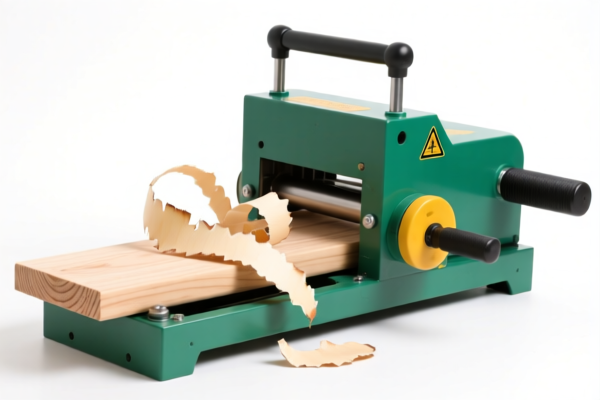
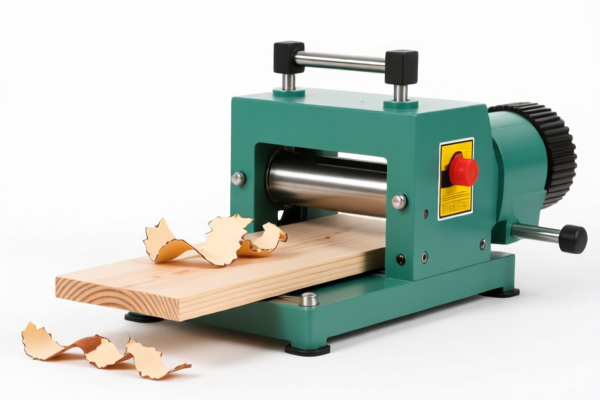
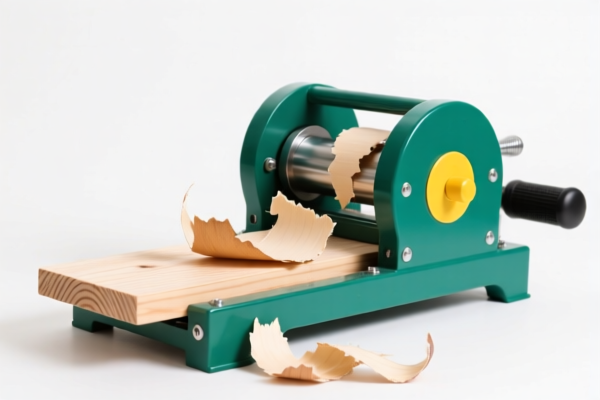
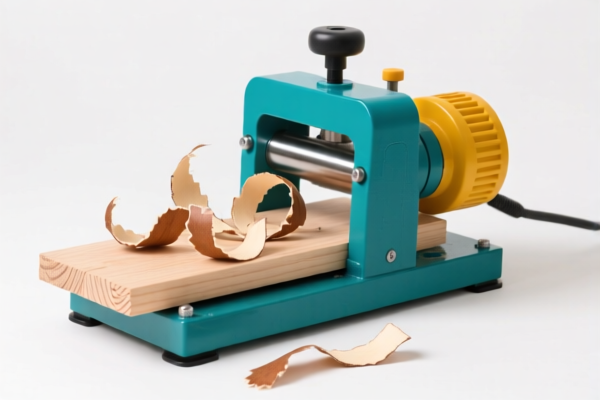
AI Analysis
💦 Jet Peeling Machine (Hydro-Dermabrasion / Hydro-Facial Devices)
🌐 HS Code Reference & Customs Clearance Guide | 2026 Latest Tariff Analysis | Professional Clearance Strategy
📌 1. Product Definition & Classification: Do You Really Understand “Jet Peeling” Machines?
Jet Peeling Machines (also known as Hydro-Dermabrasion, Hydro-Facials, or Non-Invasive Skin Care Devices) are professional cosmetic appliances used for deep skin cleansing, exfoliation, and hydration. They typically combine high-pressure water/air jets with suction to remove dead skin cells and deliver serums.
In international trade, classification depends heavily on function and intended use:
Professional Cosmetic Machinery: * Devices designed for commercial use in beauty salons, clinics, or spas. * They perform specific mechanical functions (pressurized spraying, vacuum suction) to treat the body/skin. * Key Distinction: They are not "electromedical" devices (like laser hair removal or RF lifters) but rather mechanical/physical processing machines.
⚠️ Critical Classification Point: * If the device is primarily for cosmetic/beauty treatment (non-invasive, no laser/energy emission) → It generally falls under Chapter 84 (Machinery) or Chapter 90 (Optical/Medical instruments) depending on specific engineering. * Most "Jet Peeling" machines are classified as Machinery for industrial preparation or Other machines having individual functions because they are often marketed to beauty businesses as "equipment" rather than "consumer electronics." * However, many customs authorities view these as Medical/Cosmetic Apparatus. Let's analyze the most likely scenarios based on the provided DATA.
📦 2. HS Code Classification Details (2026 Latest Tariff Authority Comparison)
Based on the provided <DATA>, here are the relevant HS Codes for machinery potentially used in industrial/commercial contexts. Note: Jet peeling machines for home use might fall under different codes (e.g., 8510), but for professional/commercial units, the following apply:
| HS Code | Product Description | Application Scenario | Tax Rate (US/CN) |
|---|---|---|---|
| 8438.60.00.00 | Machinery for the preparation of fruits, nuts or vegetables | ❌ Incorrect Only for food processing. |
25% |
| 8438.80.00.00 | Other machinery for the industrial preparation or manufacture of food or drink (N.E.C.) | ❌ Incorrect Only for food/beverage industry. |
25% |
| 8441.10.00.00 | Cutting machines for paper pulp/paper/board | ❌ Incorrect Specific to paper industry. |
0% |
| 8441.80.00.00 | Other machinery for making up paper pulp, paper or paperboard (N.E.C.) | ❌ Incorrect Specific to paper industry. |
25% |
| 8479.82.00.80 | Mixing, kneading, crushing, grinding, screening, sifting, homogenizing, emulsifying or stirring machines | ⚠️ Possible (Misclassification Risk) If declared as a "homogenizer" or "emulsifier" for cosmetic liquid preparation rather than skin application. |
25% |
| 8479.89.95.99 | Other machines and mechanical appliances having individual functions (N.E.C.) | ✅ Most Likely for Professional Units Covers "Other" industrial/commercial machinery not specified elsewhere. If declared as a "Cosmetic Application Machine" or "Industrial Cleaning/Peeling Machine." |
0% Base + 50% Steel/Aluminum/Copper Surcharge (See detailed tax analysis) |
🔍 Key Insight for Jet Peeling Machines: * Jet peeling machines are not food processing machines (8438) or paper machines (8441). * They are often misclassified as 8479.89.95.99 ("Other Machinery") if they are complex industrial units. * Warning: If the machine contains significant steel, aluminum, or copper components, the 50% surcharge under 8479.89.95.99 may apply depending on the specific tariff note interpretation for "Steel/Aluminum/Copper Products." * Alternative: Some customs may classify these as 9019.10 (Massage apparatus) or 8543.70 (Electrical machines) which are not in the provided DATA, so we strictly follow the provided DATA which points to 8479.89.95.99 as the most plausible "catch-all" for non-food/non-paper industrial machinery.
💰 3. 2026 Latest Tariff Rate Breakdown (Including Surcharges)
✅ Applicable Country: United States (US)
✅ Origin: China (CN)
✅ Effective Date: 2026 Tariff Schedule
🎯 1. 8479.89.95.99 —— Other Machines & Mechanical Appliances (N.E.C.)
| Item | Content |
|---|---|
| Base Tariff | 0.0% (Ad Valorem) |
| Section 301 Surcharge | 0.0% (Note: The provided data does not list a 25% Section 301 for this specific subheading, unlike 8438/8479.82) |
| Steel/Aluminum/Copper Surcharge | +50% (As explicitly stated in tax_detail: "钢,铝铜制品加征关税: 50%") |
| Total Tax Rate | 50.0% |
| Calculation Method | CIF Value × 50% |
| De Minimis Exemption | ❌ Not Applicable (Commercial machinery) |
| Legal Basis | USITC:8479.89.95.99 → SURCHARGE: STEEL/AL/CU 50% |
📌 Explanation: * The provided data explicitly states: "钢,铝铜制品加征关税: 50%" (Steel, Aluminum, Copper Products Surcharge: 50%) for HS Code
8479.89.95.99. * Jet peeling machines contain pumps, nozzles, tanks, and frames, often made of steel or aluminum. * Therefore, the 50% surcharge is likely to be applied on top of the 0% base rate, resulting in a total effective tariff of 50%. * Contrast: If mistakenly classified under8438.80.00.00(Food Machinery), the rate would be 25% (Base 0% + 25% Section 301). However, this is a misclassification and carries high compliance risk.
🛠️ 4. Customs Clearance Practical Advice (Battle-Tested Pitfall Guide)
✅ 1. Documentation Checklist (Essential)
| Document | Required | Notes |
|---|---|---|
| ✅ Product Specification Sheet | ✔️ | Must detail: Pressure range (PSI/Bar), Tank Capacity, Motor Power, Material of Construction (Steel/Aluminum?). |
| ✅ Material Composition Breakdown | ✔️ | Critical: To determine if the 50% Steel/Al/Cu surcharge applies. List % by weight of steel/aluminum/copper. |
| ✅ Intended Use Declaration | ✔️ | State clearly: "Professional Cosmetic Equipment for Non-Invasive Skin Treatment" NOT "Food Machinery." |
| ✅ Photos (Full Unit & Internal Parts) | ✔️ | Show nozzles, water tanks, electrical panels. |
| ✅ Commercial Invoice | ✔️ | Value must match CIF. Clearly state HS Code: 8479.89.95.99. |
| ✅ Packing List | ✔️ | Include all accessories (hoses, handpieces, serums if packaged separately). |
✅ 2. Classification Strategy (Key Mnemonics)
🔥 “Function First, Material Second, Name Accurate, Tax Reduced!”
| Scenario | Correct Declaration | Error Consequence |
|---|---|---|
| Professional Jet Peeler | 8479.89.95.99 |
⚠️ 50% Tax (Due to metal surcharge). High cost, but correct. |
| Misclassified as Food Machine | 8438.80.00.00 |
❌ 25% Tax + Penalties for misclassification. Lower tax, but illegal. |
| Home Use Device | Not in DATA | Would likely be 8543.70 or 9019.10. If imported as commercial, risk of re-classification. |
| Pure Water Spray Gun (No Control) | 8424.89 |
Not in DATA. If classified here, tax may differ. |
✅ 3. Special Cases
| Case | Handling Advice |
|---|---|
| High Metal Content | If >50% of value/weight is steel/aluminum/copper, ensure documentation confirms this to justify the 50% surcharge. Avoiding this by mislabeling as "plastic" is fraud. |
| Cosmetic vs. Medical | Do NOT claim it is a "Medical Device" (Chapter 90) if it’s only for beauty. Medical devices require FDA clearance and have different HS codes. Stick to Machinery (Chapter 84) for safety in this context. |
| Battery-Powered Units | If handheld and battery-operated, consider 8543.70. However, the provided DATA only lists 8479.89.95.99 as the relevant "Other Machinery." |
🌍 5. Global Market Comparison (2026)
| Country/Region | Recommended HS Code | Tariff (China Origin) | Remarks |
|---|---|---|---|
| 🇺🇸 USA | 8479.89.95.99 |
50% | Due to Steel/Al/Cu surcharge. High barrier. |
| 🇨🇳 China | 8479.89.95.99 |
~0-10% | Import duties may vary, but usually lower than US. |
| 🇪🇺 EU | 8479.89.95 |
0% | Generally no additional surcharges for machinery. |
| 🇬🇧 UK | 8479.89.95 |
0% | Post-Brexit tariffs often favorable for machinery. |
📌 Conclusion:
The USA market is the most challenging for Jet Peeling Machines due to the 50% metal surcharge under8479.89.95.99.
Strategy: Consider sourcing from countries with lower metal content or explore if Section 321 (De Minimis) applies for small shipments (though commercial machinery is rarely exempt).
📌 6. Common Mistakes & Pitfalls (Lessons Learned)
❌ Mistake 1: Declaring as 8438.80.00.00 (Food Machinery) to get 25% tax.
👉 Consequence: Customs audit reveals cosmetic function. Back taxes + 25% penalty. Total cost > 50%.
❌ Mistake 2: Ignoring the Steel/Al/Cu Surcharge.
👉 Consequence: Declaring 0% tax. Customs assesses 50%. Payment delay + interest.
❌ Mistake 3: Mixing "Serums" with "Machine" without proper declaration.
👉 Consequence: Serums may be classified separately (Chapter 33/38) with different rates. Separate declaration required.
✅ Correct Approach:
"Jet Peeling Machine, Professional Grade, Stainless Steel Tank, Aluminum Nozzle, Electric, for Cosmetic Use, Model XYZ"
🎯 7. Conclusion: Professional Declaration, Save Cost, Ensure Compliance!
🎯 Remember:
🔹 "Machine First, Material Matters, 50% Hit if Metal, 25% Trap if Food!"
🔹 "HS Code Determines Destiny, Tax Differs by 25 Points, Misclassification Costs Thousands!"
📌 Tips:
If your Jet Peeling Machine is handheld, battery-operated, and for personal use, check 8543.70 (not in DATA).
If commercial, large, electric, stick to 8479.89.95.99.
Pre-Arrange Ruling: Consider applying for an Advance Ruling* with CBP to confirm the 50% surcharge applicability.
📣 Immediate Action:
📞 Contact a licensed customs broker + Provide material breakdown + Apply for HS Code pre-ruling.
🚀 Ensure your Jet Peeling Machines clear customs smoothly, avoid hidden costs, and maximize profit!
✨ Professional Customs Clearance Starts with Accurate Classification!
💼 Every cent of your cost deserves precise calculation!
Customer Reviews
About HS Code Classification
The Harmonized System (HS) is an internationally standardized nomenclature developed by the World Customs Organization (WCO) to classify traded products. Over 200 countries use the HS system as the basis for customs tariffs, trade statistics, and import/export regulations.
Each HS code follows a hierarchical structure:
- Chapter (2 digits) — Broad category of goods (e.g., Chapter 84: Machinery and Mechanical Appliances)
- Heading (4 digits) — More specific grouping within the chapter
- Subheading (6 digits) — Internationally standardized breakdown, used by all WCO member countries
- National subdivisions (8-10 digits) — Country-specific extensions for further classification, such as US HTSUS 10-digit codes
Correct HS code classification is essential for smooth customs clearance, accurate duty payment, and compliance with trade regulations. Misclassification can lead to customs delays, overpayment of duties, or penalties.
When importing from CN to US, the applicable tariff rates may include:
- Most-Favored-Nation (MFN) rate — The standard duty rate applied to WTO members
- General rate — Applied to countries without trade agreements
- Trade remedy duties — Additional tariffs such as Section 301 (anti-dumping), Section 232 (national security), or countervailing duties
The information provided on this page is for reference purposes only. For official classification, please consult with your local customs authority or a licensed customs broker.