Jewelry
CN → US| HS Code | Tariff Rate | Origin | Destination | Doc |
|---|---|---|---|---|
| 7113195091 | 15.5% | CN | US | Official Doc |
| 7113195095 | 23.0% | CN | US | Official Doc |
| 7116201500 | 24.0% | CN | US | Official Doc |
| 7117909000 | 28.5% | CN | US | Official Doc |
| 7018105000 | 35.0% | CN | US | Official Doc |
Product Images
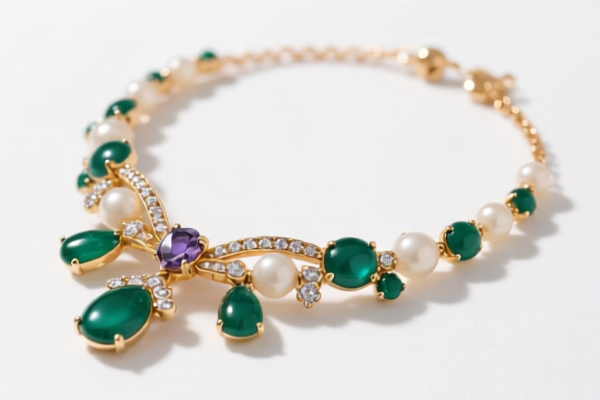
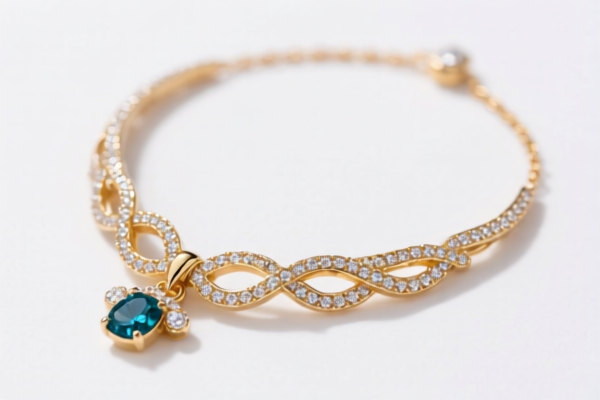
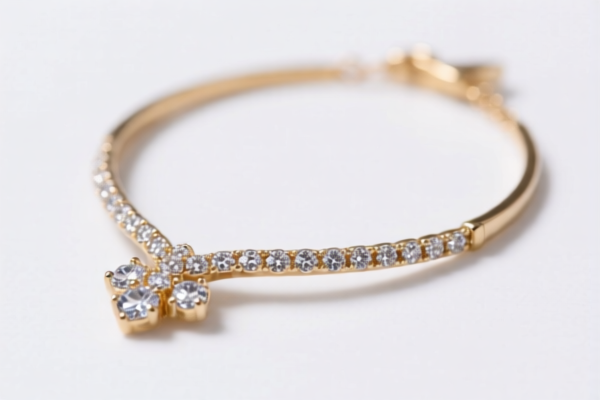
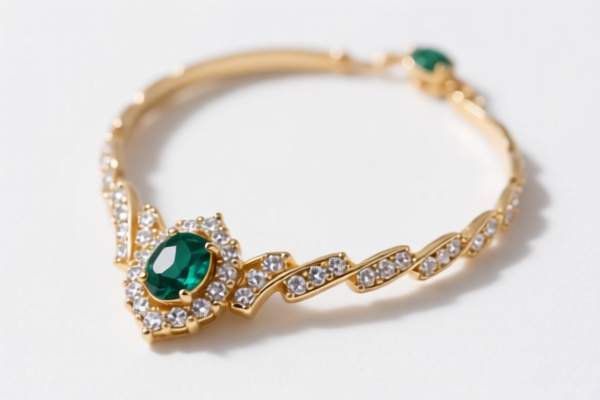
AI Analysis
💎 Jewelry: The Ultimate HS Code & Customs Clearance Guide (2026 Edition)
🌐 HS Code Reference & Clearance Strategy | 2026 Tariff Deep Dive | Expert Compliance
Jewelry is a high-value, high-risk category in international trade. A slight misclassification between "Solid Gold," "Precious Metal Plated," or "Costume Jewelry" can trigger massive tax spikes (from 15.5% to 35.0%).
⚠️ Critical Warning:
In the context of US-China Trade, jewelry containing diamonds or made from precious/non-ferrous metals is often subject to heavy Section 301 / "122 Clause" tariffs (10%) PLUS additional Section 232 or Country-Specific surcharges (up to 25%).Your classification determines if you pay 15.5% or 35.0%+. A 20% difference can wipe out your entire profit margin!
📦 II. HS Code Classification Matrix (2026 Authority)
Based on the latest trade data, here is the precise breakdown for Diamond Jewelry and Beaded Accessories.
| HS Code | Product Description | Material/Composition | Total Tax Rate | Key Tax Drivers |
|---|---|---|---|---|
| 7113.19.50.91 | Diamond Jewelry | Solid Gold Jewelry | 15.5% | Base (5.5%) + Sec 122 (10%) |
| 7113.19.50.95 | Diamond Jewelry | Plated Precious/ Base Metal | 23.0% | Base (5.5%) + Surcharge (7.5%) + Sec 122 (10%) |
| 7116.20.15.00 | Diamond Jewelry | Stone (Natural/Synthetic/Reconstructed) | 24.0% | Base (6.5%) + Surcharge (7.5%) + Sec 122 (10%) |
| 7117.90.90.00 | Costume Jewelry Parts | Imitation/Fake Jewelry Components | 28.5% | Base (11.0%) + Surcharge (7.5%) + Sec 122 (10%) |
| 7018.10.50.00 | Glass Beads/Artifacts | Glass, Artificial Pearls | 35.0% | Base (0%) + Surcharge (25%) + Sec 122 (10%) |
💰 III. 2026 Tariff Rate Breakdown (Detailed Analysis)
🎯 1. HS Code 7113.19.50.91 — The "Gold Standard"
- Product: Solid Gold Diamond Jewelry (e.g., 18k Gold Diamond Ring).
- Why this Code?: The base material is Gold. It falls under "Jewelry of precious metal."
- Tax Structure:
- 🏛️ Base Tariff: 5.5% (Standard MFN rate).
- ⚡ Sec 122 Tariff: 10.0% (Specific 2026 China Import Clause).
- 🚫 No Surcharge: No extra 7.5% or 25% applies here.
- 💥 Total: 15.5%
📌 Expert Insight: This is the lowest tax bracket for diamond jewelry. If your item is truly solid gold, ensure your invoice explicitly states "Solid Gold" to avoid misclassification into the higher "Plated" category.
🎯 2. HS Code 7113.19.50.95 — The "Trap" for Plated Goods
- Product: Diamond Jewelry on Precious or Base Metal (Plated/Electroplated).
- Why this Code?: Even if it has diamonds, if the metal base is plated (not solid), it moves to this "Plated Jewelry" bucket.
- Tax Structure:
- 🏛️ Base Tariff: 5.5%.
- ⚡ Surcharge: +7.5% (Specific to plated/base metal jewelry).
- ⚡ Sec 122 Tariff: 10.0%.
- 💥 Total: 23.0%
📌 Risk Alert: Many sellers misdeclare "Plated" items as "Solid Gold" to save money. DO NOT DO THIS. Customs labs test plating thickness; if caught, you face penalties + back taxes.
🎯 3. HS Code 7116.20.15.00 — The "Stone-Centric" Category
- Product: Jewelry featuring Natural, Synthetic, or Reconstructed Stone (even with Diamonds).
- Why this Code?: If the primary value or classification is driven by the Gemstone category rather than the metal base (or if the metal is not precious), it falls here.
- Tax Structure:
- 🏛️ Base Tariff: 6.5% (Slightly higher than gold base).
- ⚡ Surcharge: +7.5%.
- ⚡ Sec 122 Tariff: 10.0%.
- 💥 Total: 24.0%
📌 Note: Synthetic diamonds or reconstructed stones often trigger this specific code. "Lab-Grown Diamond" jewelry might also fall here if not categorized under solid metal.
🎯 4. HS Code 7117.90.90.00 — The "Costume" Premium
- Product: Imitation Jewelry Parts / Costume Jewelry.
- Why this Code?: Materials are non-precious (zinc alloy, plastic, glass, etc.) and designed for fashion, not investment.
- Tax Structure:
- 🏛️ Base Tariff: 11.0% (Higher base for non-precious items).
- ⚡ Surcharge: +7.5%.
- ⚡ Sec 122 Tariff: 10.0%.
- 💥 Total: 28.5%
🎯 5. HS Code 7018.10.50.00 — The "Glass" Nightmare
- Product: Glass Beads, Artificial Pearls, Glass Small Items (e.g., Glass Beaded Bracelets).
- Why this Code?: If the item is >90% Glass or Artificial Pearls, it hits the hardest tariff.
- Tax Structure:
- 🏛️ Base Tariff: 0.0% (Interestingly, base is low).
- ⚡ Surcharge: +25.0% (HIGHEST SURCHARGE).
- ⚡ Sec 122 Tariff: 10.0%.
- 💥 Total: 35.0%
🚨 RED ALERT: 35.0% is the highest rate in this dataset. A $100,000 shipment of glass beads pays $35,000 in tax. This is often due to the "25% Surcharge" on glass products from China.
🛠️ IV. Customs Clearance Practical Advice (Risk Mitigation)
✅ 1. The "Material Truth" Strategy
- Action: Do not guess. You must provide a Material Composition Report.
- Why:
- If you claim "Gold" (7113) but it's "Gold Plated" (7113...95), you save 5.5% base but add 7.5% surcharge + 10% Sec 122.
- If you claim "Plated" (7113...95) but it's "Solid Gold", you underpay and face audits.
- Document Required: Assay Certificate (for precious metals) or Composition Lab Report (for alloys/glass).
✅ 2. The "122 Clause" & Surcharge Clarity
- Clarification:
- "Base Tariff": The standard US International Trade Commission (ITC) rate.
- "Sec 122 Tariff": A specific 10% punitive tariff on Chinese goods (often linked to Section 301 or newer trade actions). This applies to ALL 5 codes above.
- "Surcharge": An additional penalty (7.5% or 25%) for specific materials (Plated, Glass, Imitation).
- Calculation Formula:
>
Total Duty = (Base + Surcharge + 10%) × CIF Value
✅ 3. Declaration Tips (Avoiding Delays)
- Description: Be hyper-specific.
- ✅ Good: "18k Solid Gold Ring with Natural Diamond."
- ✅ Good: "Glass Bead Bracelet (99% Glass, 1% Alloy Clasp)."
- ❌ Bad: "Jewelry" or "Diamond Necklace" (Too vague → will be seized for inspection).
- Value Declaration: Ensure CIF (Cost, Insurance, Freight) is accurate. Glass jewelry (35% tax) is a prime target for under-declaration audits.
✅ 4. Special Handling for "Artificial Pearls"
- Risk: Artificial pearls often fall under 7018.10.50.00 (35% tax).
- Strategy: If the pearls are made of nacre (real shell) vs. glass/plastic, the classification might shift.
- Real Nacre → Could potentially move to 7113/7116 (Lower tax).
- Glass/Plastic → 7018 (35% tax).
- Action: Get a Pearl Origin Report.
🌍 V. Global Market Comparison (US Focus)
| Product Type | US Tariff (China Origin) | EU Tariff (Avg) | HK/China Outbound |
|---|---|---|---|
| Solid Gold (7113.19...91) | 15.5% | 0% (duty-free) | 0% |
| Plated/Diamond (7113.19...95) | 23.0% | ~2.5% | 0% |
| Glass Beads (7018.10...50) | 35.0% | ~0% (if CE certified) | 0% |
📌 Key Takeaway: The US market is uniquely expensive for Chinese jewelry due to the "122 Clause" + "Surcharges". Recommendation: If you sell Glass Beads, consider repackaging in Vietnam/Mexico (if rules of origin allow) to avoid the 35% US tariff, or pivot to Solid Gold products where the tax is only 15.5%.
📌 VI. Common Pitfalls & Avoidance
| ❌ Mistake | ✅ Consequence | ✅ Solution |
|---|---|---|
| "All-in-One" Declaration | Declaring "Mixed Jewelry" leads to "Total" inspection. | Split shipments by material (Gold vs. Glass). |
| "Diamond" Keyword Only | Customs assumes solid metal, but finds plated → 23% tax applied retroactively. | Explicitly state "Gold Plated" or "Solid Gold" on invoice. |
| Ignoring Sec 122 | Underestimating tax by 10% on every item. | Always add 10% to your cost model for Chinese goods. |
| Glass vs. Stone Confusion | Declaring glass as "Semi-precious stone" (Lower tax). | Lab test to prove composition before shipping. |
🎯 VII. Final Verdict: Clear, Profitable, Safe
The Golden Rule of 2026 Jewelry Shipping:
🔹 "Solid Gold = 15.5% (Safe & Cheapest)" 🔹 "Plated/Glass = 23% to 35% (High Risk!)"
Your Checklist for Every Shipment: 1. [ ] Material Test Report (Confirm Gold content vs. Plating). 2. [ ] Stone Analysis (Natural vs. Synthetic vs. Glass). 3. [ ] Invoice Wording (Match HS Code exactly). 4. [ ] Tax Calculation (Base + 10% Sec 122 + Surcharge). 5. [ ] Origin Verification (Is it truly China? If yes, 35% on glass is unavoidable).
📢 Call to Action:
📞 Audit your current inventory: Are you paying 35% for glass beads when you could be optimizing? 📉 Calculate your margin: Subtract 10% (Sec 122) from your profit model immediately. 🚀 Get a Pre-Ruling: For mixed-material jewelry, submit a Binding Tariff Information (BTI) request to US Customs to lock in the correct rate.
✨ Precision is Profit. Don't let a 10% tax error sink your jewelry empire! 💎🚢
Customer Reviews
About HS Code Classification
The Harmonized System (HS) is an internationally standardized nomenclature developed by the World Customs Organization (WCO) to classify traded products. Over 200 countries use the HS system as the basis for customs tariffs, trade statistics, and import/export regulations.
Each HS code follows a hierarchical structure:
- Chapter (2 digits) — Broad category of goods (e.g., Chapter 84: Machinery and Mechanical Appliances)
- Heading (4 digits) — More specific grouping within the chapter
- Subheading (6 digits) — Internationally standardized breakdown, used by all WCO member countries
- National subdivisions (8-10 digits) — Country-specific extensions for further classification, such as US HTSUS 10-digit codes
Correct HS code classification is essential for smooth customs clearance, accurate duty payment, and compliance with trade regulations. Misclassification can lead to customs delays, overpayment of duties, or penalties.
When importing from CN to US, the applicable tariff rates may include:
- Most-Favored-Nation (MFN) rate — The standard duty rate applied to WTO members
- General rate — Applied to countries without trade agreements
- Trade remedy duties — Additional tariffs such as Section 301 (anti-dumping), Section 232 (national security), or countervailing duties
The information provided on this page is for reference purposes only. For official classification, please consult with your local customs authority or a licensed customs broker.