Jodhpur Pants Pocket Accessories
CN → US| HS Code | Tariff Rate | Origin | Destination | Doc |
|---|---|---|---|---|
| 8308100000 | 0.0% | CN | US | Official Doc |
| 9606308000 | 41.0% | CN | US | Official Doc |
| 7117110000 | 25.5% | CN | US | Official Doc |
| 9606220000 | 35.0% | CN | US | Official Doc |
Product Images
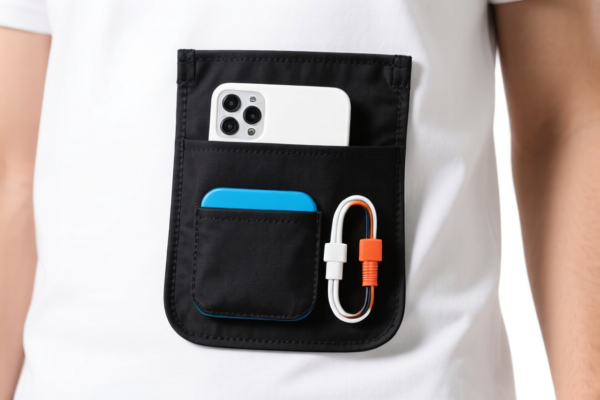
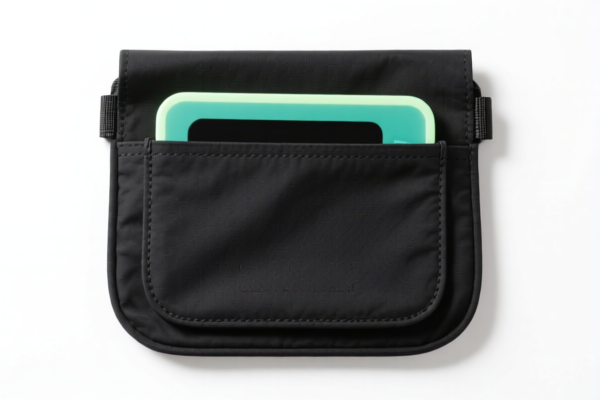


AI Analysis
🍑 Jodhpur Pants Pocket Accessories: The Ultimate HS Code & Duty Guide (2026 Edition)
🌐 HS Code Reference & Clearance Strategy | 2026 Tax Regime Deep Dive | Professional Customs Logistics
📌 I. Product Definition & Classification: Are You Really Shipping "Accessories"?
Jodhpur pants (or breeches) are a distinctive style of riding habit featuring a tight fit from the waist to just below the knee, then flaring out. The "Pocket Accessories" referenced here are not the pockets themselves, but the functional hardware components (buttons, snaps, decorative fasteners) used to secure or decorate these pockets or the pants' placket.
In international trade, the critical classification battle lies between "Buttons" (General Fasteners), "Other Articles of Costume Accessories" (Jewelry-like items), and "Parts of Buttons".
⚠️ Key Differentiation Logic: - If the item is a functional button/closure used in pairs or sets to fasten clothing → Chapter 9606. - If the item is a decorative, jewelry-like fastener (often metal, imitation gold/silver) that looks more like an accessory than a standard button → Chapter 7117. - If the item is a general clothing fastener (eyelets, hooks, eyes) used for matching purposes → Chapter 8308.
📦 II. HS Code Classification Details (2026 Authoritative Regime Comparison)
Based on the 2026 US Tariff Schedule and the logic of "Common Sense Material Inference" (metal/plastic for hardware), here is the breakdown for Jodhpur Pants Pocket Accessories:
| HS Code | Product Description & Rationale | Applicable Scenario | Material Logic |
|---|---|---|---|
| 8308.10.00.00 | Classified as: "Hooks, Eyes, Snaps, and other fasteners" (Clothing Accessories). Rationale: Matches "Hook/Eye" morphology for clothing accessories. Material inferred as Metal based on common use. |
Functional Fasteners: Metal hooks, eyes, or snaps used on the pocket flap or leg. | ✅ Metal (Base inference: Metal hooks/eyes) |
| 9606.30.80.00 | Classified as: "Parts of Buttons" (Other). Rationale: "Pocket Accessories" = "Button Parts". Material inferred as Metal/Plastic (Ductile logic). Fits the "Other" bucket for non-standard button parts. |
Button Components: Shank backs, button casings, or specialized parts for the jodhpur button. | ✅ Metal/Plastic (General "Other" category) |
| 7117.11.00.00 | Classified as: "Imitation Jewelry" (Articles of Costume). Rationale: Morphology fits "Button" shape, but Material is Base Metal/Non-Precious, serving as "Jewelry-like" decoration. |
Decorative Fasteners: Shiny, gold/silver-plated buttons that look like costume jewelry. | ✅ Base Metal (Imitation Jewelry logic) |
| 9606.22.00.00 | Classified as: "Buttons, Press Studs, Press Studs & Press Studs & Parts" (Non-textile covered). Rationale: "Jodhpur Pocket Accessory" = "Button/Press Stud". Inferred Non-textile base (Metal/Plastic). |
Standard Buttons: Press studs, standard flat buttons, or shank buttons used on the pants. | ✅ Non-Textile Base (Standard hardware) |
🔍 Critical Note: - 9606 is the most common for functional buttons (standard clothing). - 7117 is the trap for fashion-decorative items (highly taxed imitation jewelry). - 8308 is used specifically for hooks/eyes/snaps that aren't technically "buttons".
💰 III. 2026 US Tariff Rate Breakdown (Comprehensive & Detailed)
✅ Market: USA
✅ Origin: China (CN)
✅ Effective Date: 2026 (Current Regime)
✅ Base Rate: Most Favored Nation (MFN)
🎯 1. HS Code 8308.10.00.00 — Hooks, Eyes, Snaps (Clothing)
The "Metal Hook/Eye" Pathway
| Tax Component | Rate | Calculation Logic |
|---|---|---|
| Base Duty (MFN) | 1.1¢/kg | Specific Duty (per kg) + 2.9% (Ad Valorem) |
| Section 301 (Section 301) | +25.0% | Additional duty on "Clothing Accessories" |
| Section 122 (Trade Act 122) | +10.0% | Additional duty on specific metal goods |
| Total Effective Rate | ~38.0% + Weight Fee | Complex Calculation |
📌 Explanation: - This code often has a Specific Duty (cents per kg) plus an ad valorem percentage. - The 25% Section 301 is the biggest cost driver for Chinese origin. - Section 122 adds another 10% on top of the base. - Total: 1.1¢/kg + 38.9% (Base 2.9% + 25% + 10%).
🎯 2. HS Code 9606.30.80.00 — Parts of Buttons (Other)
The "Button Part" Pathway
| Tax Component | Rate | Calculation Logic |
|---|---|---|
| Base Duty (MFN) | 6.0% | Standard Ad Valorem |
| Section 301 (Section 301) | +25.0% | Additional duty on "Miscellaneous Manufactures" |
| Section 122 (Trade Act 122) | +10.0% | Additional duty on metal/plastic parts |
| Total Effective Rate | 41.0% | Simple Ad Valorem |
📌 Explanation: - Clean 6% base rate, but the 35% combined附加税 (25% + 10%) makes the Total 41.0%. - This is a high-cost classification, but often the safest for "Button Parts" if they aren't pure jewelry.
🎯 3. HS Code 7117.11.00.00 — Imitation Jewelry (Base Metal)
The "Fashion/Jewelry" Pathway
| Tax Component | Rate | Calculation Logic |
|---|---|---|
| Base Duty (MFN) | 8.0% | Standard Ad Valorem |
| Section 301 (Section 301) | +7.5% | Note: Section 301 rate for 7117 is often different (7.5% in some schedules) |
| Section 122 (Trade Act 122) | +10.0% | Additional duty |
| Total Effective Rate | 25.5% | Lowest Taxation Option |
📌 Strategic Insight: - Wait! This is the LOWEST rate! (25.5% vs 41% or 38%). - Why? If the accessory is designed to look like jewelry (shiny, plated, decorative), it may fall under 7117 rather than 9606. - Risk: Customs may reclassify "Button" to "Button Part" if it's clearly functional, not jewelry. You must prove it's an "Accessory of Costume" (Jewelry style).
🎯 4. HS Code 9606.22.00.00 — Buttons (Other)
The "Standard Button" Pathway
| Tax Component | Rate | Calculation Logic |
|---|---|---|
| Base Duty (MFN) | 0.0% | Free Entry (Base rate) |
| Section 301 (Section 301) | +25.0% | Heavy duty on "Clothing" |
| Section 122 (Trade Act 122) | +10.0% | Heavy duty |
| Total Effective Rate | 35.0% | Moderate/High |
📌 Explanation: - The Base Rate is 0%, which sounds great! - However, the 35% combined tax (25% + 10%) is very high. - This is the standard rate for most Chinese buttons.
🛠️ IV. Clearance Practical Advice (Avoid the "Trap"!)
✅ 1. The "De Minimis" Warning
❌ CRITICAL: NO DE MINIMIS EXEMPTION for these items! - Unlike small packages ($800 threshold), these HS Codes (8308, 9606, 7117, 9606) are subject to Section 301 and Section 122. - Rule: You cannot use Section 321 (de minimis) to bypass these duties if the goods are classified here. They must be entered on a formal CBP entry (Form 7501).
✅ 2. Product Description Optimization (Naming Strategy)
Your Commercial Invoice and Packing List must match the HS Code Rationale.
| If you want... | Use this Description on Invoice | HS Code to Target |
|---|---|---|
| Lowest Tax (25.5%) | "Costume Jewelry Buttons, Gold Plated, Decorative Accessory for Equestrian Wear" | 7117.11.00.00 |
| Standard Button | "Metal Button, Shire Style, 20mm Diameter" | 9606.22.00.00 |
| Functional Part | "Button Backs, Plastic/Metal Parts for Pants" | 9606.30.80.00 |
| Hook/Tab | "Metal Hook & Eye Fasteners for Jodhpur Pants" | 8308.10.00.00 |
🔥 Key Tip: If the item is decorative and looks like jewelry, argue for 7117. If it is purely functional, you are stuck with 9606 or 8308.
✅ 3. Material Declaration
- Do NOT say "Metal" if it's plastic.
- Do NOT say "Plastic" if it's metal.
- Accuracy is Key: If the item is a "Button" but made of Base Metal, it might trigger 7117 (if jewelry-like) or 9606 (if functional).
- Evidence: Provide photos showing the plating, weight, and finish.
📌 V. Common Mistakes & Pitfalls (The "Blood and Tears" List)
❌ Mistake 1: Calling "Buttons" "Jewelry" without proof. 👉 Consequence: Customs reclassifies to 9606 (35-41% tax) instead of 7117 (25.5%). You pay 15% more.
❌ Mistake 2: Using "De Minimis" (Section 321) for these goods. 👉 Consequence: Seizure or Forced Entry. These items are specifically targeted by Section 301/122. The $800 exemption does not apply if the classification triggers these specific duties.
❌ Mistake 3: Mixing "Metal Buttons" with "Plastic Buttons" in one shipment without splitting. 👉 Consequence: Customs may audit the whole shipment and apply the highest duty rate (41%) to everything.
❌ Mistake 4: Failing to declare the Section 122 (10% surcharge) explicitly. 👉 Consequence: Post-audit penalty. The 10% is mandatory for Chinese origin goods in this category.
🎯 VI. Strategic Summary & Recommendation
🏆 Best Classification Strategy
| Goal | Recommended HS Code | Total Tax | Strategy |
|---|---|---|---|
| Lowest Duty | 7117.11.00.00 |
25.5% | Argue it is "Imitation Jewelry" (Decorative, Plated, Costume Accessory). |
| Safest/Standard | 9606.22.00.00 |
35.0% | If clearly a functional button (no jewelry look). |
| Avoid | 9606.30.80.00 |
41.0% | Highest cost. Only use if it's a specific "part" and not a button. |
| Specific | 8308.10.00.00 |
38.9% | Use only for Hooks/Eyes, not buttons. |
💡 Final Expert Advice:
- Audit Your Product: Are your "Pocket Accessories" functional buttons or decorative costume jewelry?
- If Decorative → Push for 7117.11.00.00 (25.5%).
- If Functional → Accept 9606.22.00.00 (35%).
- Documentation: Prepare a Material Analysis Report and Product Design Sketch to prove the "Jewelry" nature if you want the lower tax rate.
- Compliance: Never attempt to bypass duties via De Minimis. These goods are high-priority for US Customs audits.
📣 Action Plan:
🚀 Step 1: Review your product photos. Are they "Jewelry-like"? 🚀 Step 2: If yes, draft a Commercial Invoice using "Imitation Jewelry Accessories". 🚀 Step 3: If no, declare as "Buttons" under
9606.22.00.00. 🚀 Step 4: Do NOT use de minimis. File a formal entry.
✨ Precision Classification = Cost Savings!
💼 Don't let a 15% tax rate difference destroy your margin!
Customer Reviews
About HS Code Classification
The Harmonized System (HS) is an internationally standardized nomenclature developed by the World Customs Organization (WCO) to classify traded products. Over 200 countries use the HS system as the basis for customs tariffs, trade statistics, and import/export regulations.
Each HS code follows a hierarchical structure:
- Chapter (2 digits) — Broad category of goods (e.g., Chapter 84: Machinery and Mechanical Appliances)
- Heading (4 digits) — More specific grouping within the chapter
- Subheading (6 digits) — Internationally standardized breakdown, used by all WCO member countries
- National subdivisions (8-10 digits) — Country-specific extensions for further classification, such as US HTSUS 10-digit codes
Correct HS code classification is essential for smooth customs clearance, accurate duty payment, and compliance with trade regulations. Misclassification can lead to customs delays, overpayment of duties, or penalties.
When importing from CN to US, the applicable tariff rates may include:
- Most-Favored-Nation (MFN) rate — The standard duty rate applied to WTO members
- General rate — Applied to countries without trade agreements
- Trade remedy duties — Additional tariffs such as Section 301 (anti-dumping), Section 232 (national security), or countervailing duties
The information provided on this page is for reference purposes only. For official classification, please consult with your local customs authority or a licensed customs broker.