Jogging stroller with suspension
CN → US| HS Code | Tariff Rate | Origin | Destination | Doc |
|---|---|---|---|---|
| 8716805090 | 38.2% | CN | US | Official Doc |
| 9503000071 | 10.0% | CN | US | Official Doc |
| 9503000073 | 10.0% | CN | US | Official Doc |
Product Images
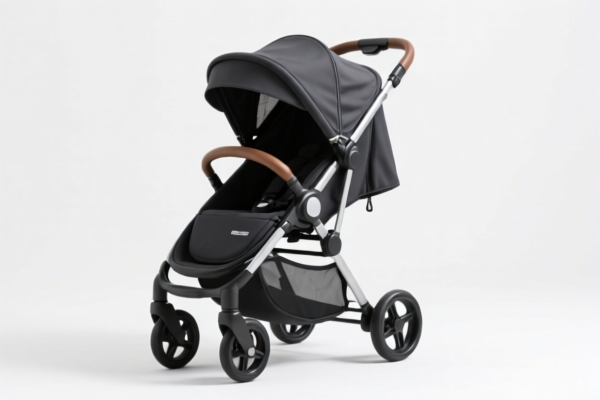
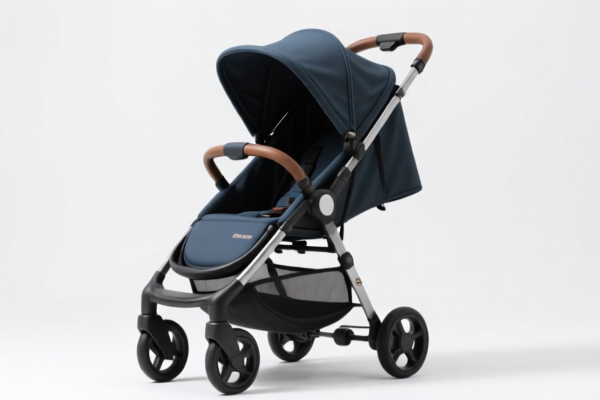
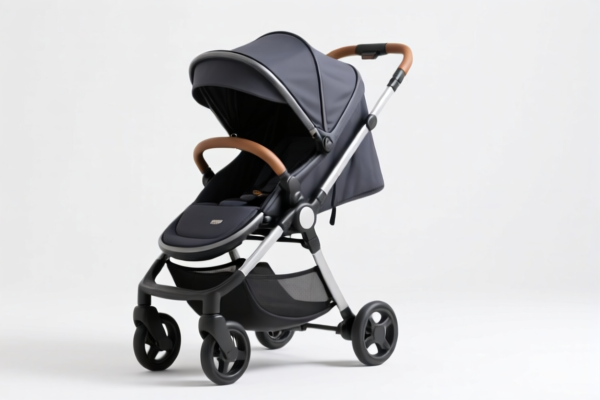
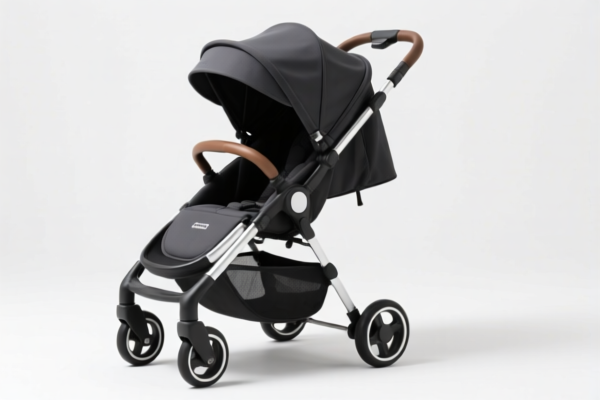
AI Analysis
🛒 Jogging Stroller with Suspension (跑步步行婴儿车/带悬挂系统婴儿车)
🌐 HS Code Reference & Customs Clearance Guide | 2026 Latest Tariff Analysis | Professional Clearance Strategy
📌 I. Product Definition & Classification: What is a "Jogging Stroller"?
A jogging stroller is a specialized type of infant transport device designed for running or fast walking. Its key characteristics include large, air-filled tires for shock absorption, a fixed front wheel (usually), and a harness system for securing the child. In international trade, the classification debate often centers on whether it is considered a "non-motorized vehicle" or a "toy/children's appliance."
⚠️ Key Classification Distinction:
- If viewed as a vehicle for transporting persons/goods: It falls under Chapter 87 (Vehicles other than railway/trolleybus).
- If viewed as a toy or recreational item for children: It falls under Chapter 95 (Toys, games, and sports equipment).
📦 II. HS Code Classification Details (2026 Latest Tariff Authority Comparison)
Based on the provided data, there are three potential HS Codes. The choice depends on the primary function and structural design emphasized during declaration.
| HS Code | Product Description | Application Scenario | Key Characteristics |
|---|---|---|---|
8716.80.50.90 |
Other vehicles (Non-motorized) | Adult-led transport, functional utility focus | Fits the "basket" category of vehicles; focuses on the mechanical structure for movement. |
9503.00.00.71 |
Dolls' carriages / Strollers | Child-focused, recreational/educational | Emphasizes the "stroller/pusher" form factor; viewed as a child's appliance/toy. |
9503.00.00.73 |
Other toys / Wheeled toys | Play-oriented, doll cars, recreational | Views the stroller as a "wheeled toy" or recreational item for children. |
🔍 Critical Insight:
-8716.80.50.90is the "catch-all" for non-motorized vehicles. It is often used when the stroller is marketed more as a functional transport tool than a toy.
-9503.00.00.71&9503.00.00.73fall under Toys. They are preferred when the item is clearly intended for child use/recreation, though this attracts different regulatory scrutiny (e.g., CPSIA in the US).
💰 III. 2026 Latest Tariff Rate Breakdown (Including Surcharges & Policy Add-ons)
✅ Applicable Country: United States (US)
✅ Origin: China (CN)
✅ Effective Date: Post-November 2025 (Current Active Rates)
🎯 1. 8716.80.50.90 —— Other Vehicles (Non-Motorized)
| Item | Content |
|---|---|
| Base Tariff | 3.2% (ad valorem) |
| Additional Tariff (Section 301) | +25.0% |
| 122 Tariff (IEEPA/China Add-on) | +10.0% |
| Total Tariff Rate | 38.2% |
| Tax Calculation | CIF Value × 38.2% |
| De Minimis Exemption | ❌ Not Eligible (High tariff prevents $800 de minimis use) |
| Legal Basis Path | USITC:8716.80.50.90 → Section 301: 25% → IEEPA: 10% |
📌 Explanation:
- This classification attracts the highest total burden among the options.
- The 25% Section 301 tariff is applied to almost all Chinese-made non-motorized vehicles.
- The 10% "122 Tariff" is an additional surcharge specifically targeting Chinese imports under recent emergency powers.
- Total: 38.2%. This is a high-cost classification.
🎯 2. 9503.00.00.71 —— Dolls' Carriages / Strollers
| Item | Content |
|---|---|
| Base Tariff | 0.0% |
| Additional Tariff (Section 301) | 0.0% |
| 122 Tariff (IEEPA/China Add-on) | +10.0% |
| Total Tariff Rate | 10.0% |
| Tax Calculation | CIF Value × 10.0% |
| De Minimis Exemption | ❌ Not Eligible (Despite low rate, origin is China) |
| Legal Basis Path | USITC:9503.00.00.71 → IEEPA: 10% |
📌 Note:
- The Base Tariff is 0%, and Section 301 does not apply to this specific toy/stroller subheading.
- Only the 10% IEEPA surcharge applies.
- Total: 10.0%. This is the most cost-effective option for tariff purposes.
🎯 3. 9503.00.00.73 —— Other Toys / Wheeled Toys
| Item | Content |
|---|---|
| Base Tariff | 0.0% |
| Additional Tariff (Section 301) | 0.0% |
| 122 Tariff (IEEPA/China Add-on) | +10.0% |
| Total Tariff Rate | 10.0% |
| Tax Calculation | CIF Value × 10.0% |
| De Minimis Exemption | ❌ Not Eligible |
| Legal Basis Path | USITC:9503.00.00.73 → IEEPA: 10% |
📌 Note:
- Similar to9503.00.00.71, this code benefits from 0% base and 0% Section 301.
- Only the 10% IEEPA surcharge applies.
- Total: 10.0%.
🛠️ IV. Customs Clearance Practical Advice (Real-World Pitfall Guide)
✅ 1. Document Checklist (Indispensable)
| Document | Must Provide | Description |
|---|---|---|
| ✅ Product Specification Sheet | ✔️ | Must detail: Wheel type (air-filled/solid), suspension system, max weight, age range. |
| ✅ Product Photos | ✔️ | Clear images of the stroller, handles, harness, and suspension mechanism. |
| ✅ Material Composition | ✔️ | List materials (e.g., Aluminum frame, Polyester fabric, Rubber tires). |
| ✅ Child Safety Certification | ✔️ | CRITICAL for HS 9503: ASTM F833, CPSIA, CPC (Consumer Product Safety Certification). |
| ✅ Commercial Invoice | ✔️ | Must clearly state "Jogging Stroller" or "Stroller for Children." |
| ✅ Packing List | ✔️ | Include assembly parts, manual, and safety harness. |
✅ 2. Declaration Strategy (Key Mnemonics)
🔥 "Function Determines Code, Toy Status Lowers Tax!"
| Scenario | Correct Declaration | Risk of Wrong Declaration |
|---|---|---|
| Marketed as "Sports/Running Equipment" | 8716.80.50.90 |
Lowers tariff? NO → 38.2% (High Cost) |
| Marketed as "Baby Gear/Toy" | 9503.00.00.71 or 73 |
Lowers tariff? YES → 10.0% (Best Cost) |
| Mixed Bundle (Stroller + Toy Car) | Split Declaration | Complication: Different codes/taxes |
| Missing Safety Cert (for HS 9503) | DO NOT USE HS 9503 | Customs will reject or reclassify to 8716 (38.2%) + Fines |
📌 Key Reminder:
- If you declare under 9503, you MUST prove it is for children's use. If customs suspects it's primarily for adult jogging without child restraint, they may force reclassification to 8716.
- The Suspension System is a functional feature, but it doesn't automatically trigger "Vehicle" classification if the primary use is child transport/toy.
✅ 3. Special Cases & Handling
| Situation | Handling Advice |
|---|---|
| High-End Jogging Stroller | If it has complex suspension, motorized assist, or adult-sized wheels, customs might lean toward 8716. Provide clear "Child Use" documentation. |
| Lack of CPSIA/CPC | Cannot use 9503. Must use 8716 (38.2%) or face detention. |
| OEM/Private Label | Ensure the invoice matches the brand and model exactly. Discrepancies can lead to audits. |
| Importing with Accessories | Declare as a single unit. Do not split stroller and wheels. |
🌍 V. Global Market Comparison (2026 Latest)
| Country/Region | Recommended HS Code | Tariff (China Origin) | Key Requirements |
|---|---|---|---|
| 🇺🇸 USA | 9503.00.00.71 |
10.0% | CPSIA, CPC, ASTM F833 |
| 🇨🇳 China | 9503.00.00.71 |
0% | CCC (if applicable), GB Standards |
| 🇪🇺 EU | 9503.00.00.71 |
0% | CE, EN1888 Safety Standard |
| 🇬🇧 UK | 9503.00.00.71 |
0% | UKCA, BS EN 1888 |
| 🇦🇺 Australia | 9503.00.00.71 |
5% | AS/NZS 2088 |
📌 Conclusion:
- USA is the most sensitive market due to Section 301 and IEEPA tariffs.
- Choosing HS 9503 in the US saves 28.2% in tariffs compared to HS 8716.
- Europe and Asia generally have lower or zero tariffs for toys/strollers, but strict safety standards (EN1888, GB) apply.
📌 VI. Common Errors & Pitfalls (Lessons Learned)
❌ Error 1: Declaring a child stroller as a "Vehicle" (8716) to avoid toy regulations.
👉 Result: High tariff (38.2%) + potential misclassification penalties.
❌ Error 2: Declaring as a "Toy" (9503) without CPSIA/CPC certification.
👉 Result: Customs detention, forced return, or fines. US CBP strictly enforces toy safety.
❌ Error 3: Vague description ("Stroller") without specifying "For Children" or "Jogging."
👉 Result: Customs officer discretion may lead to 8716 (38.2%). Always specify "Jogging Stroller for Children."
❌ Error 4: Ignoring the "Suspension" feature in marketing.
👉 Result: If marketed as "Fitness Equipment for Adults," it may be classified as 8716. Emphasize Child Safety Harness and Age Range.
✅ Correct Approach:
"Jogging Stroller with Suspension System, 3-Wheel Design, 5-Point Harness, for Children 6 Months - 5 Years, ASTM F833 Certified, Model XYZ."
🎯 VII. Conclusion: Professional Declaration, Cost Savings!
🎯 Remember the Mnemonic:
🔹 "Toy Code 10%, Vehicle Code 38%, Safety Certs Mandatory!"
🔹 "If it's for Kids, Use 9503. If it's for Fitness, Use 8716 (but pay more)."
🔹 "No CPC for 9503? Stay Away from US Port!"
📌 Pro Tip:
If your stroller is originally from Vietnam, Mexico, or India, you may qualify for IEEPA exemptions or lower Section 301 rates. Always check the Country of Origin carefully.
Consider applying for an Advance Ruling from US CBP if your product has ambiguous features (e.g., adult-sized frame but child harness).
📣 Immediate Action:
📞 Consult a licensed customs broker.
📸 Provide high-res photos of the harness and wheels.
📄 Obtain CPSIA/CPC for US market entry.
🚀 Clear Customs Smoothly, Reduce Costs, Boost Profits!
✨ Professional Clearance Starts with Accurate Classification!
💼 Every Percent of Tariff Matters!
Customer Reviews
About HS Code Classification
The Harmonized System (HS) is an internationally standardized nomenclature developed by the World Customs Organization (WCO) to classify traded products. Over 200 countries use the HS system as the basis for customs tariffs, trade statistics, and import/export regulations.
Each HS code follows a hierarchical structure:
- Chapter (2 digits) — Broad category of goods (e.g., Chapter 84: Machinery and Mechanical Appliances)
- Heading (4 digits) — More specific grouping within the chapter
- Subheading (6 digits) — Internationally standardized breakdown, used by all WCO member countries
- National subdivisions (8-10 digits) — Country-specific extensions for further classification, such as US HTSUS 10-digit codes
Correct HS code classification is essential for smooth customs clearance, accurate duty payment, and compliance with trade regulations. Misclassification can lead to customs delays, overpayment of duties, or penalties.
When importing from CN to US, the applicable tariff rates may include:
- Most-Favored-Nation (MFN) rate — The standard duty rate applied to WTO members
- General rate — Applied to countries without trade agreements
- Trade remedy duties — Additional tariffs such as Section 301 (anti-dumping), Section 232 (national security), or countervailing duties
The information provided on this page is for reference purposes only. For official classification, please consult with your local customs authority or a licensed customs broker.