Juicer Blade Base
CN → US| HS Code | Tariff Rate | Origin | Destination | Doc |
|---|---|---|---|---|
| 8410900000 | 38.8% | CN | US | Official Doc |
| 8410110000 | 38.8% | CN | US | Official Doc |
| 8479909596 | 85.0% | CN | US | Official Doc |
| 8479908500 | 67.5% | CN | US | Official Doc |
Product Images
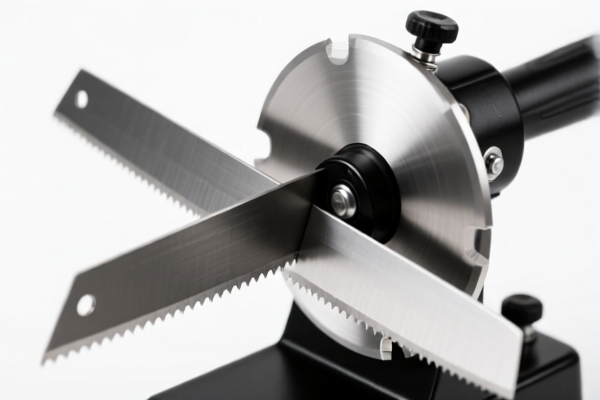
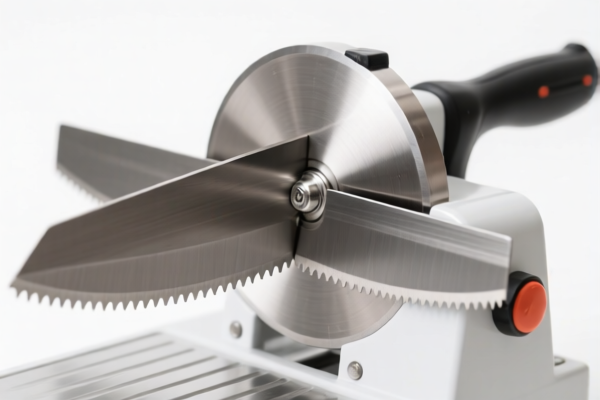
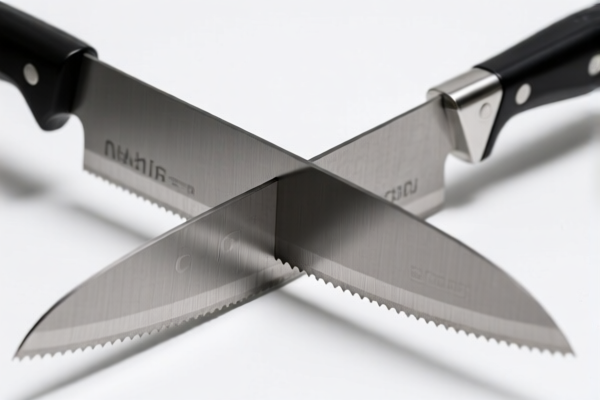

AI Analysis
🍊 Juicer Blade Base (Blades & Stators for Food Processing Equipment)
🌐 HS Code Reference & Customs Clearance Guide | 2026 Latest Tariff Breakdown | Professional Clearance Strategy
📌 I. Product Definition & Classification: Do You Really Understand "Juicer Blade Base"?
The "Juicer Blade Base" refers to the rotating or stationary cutting components (blades, stators, drive shafts) used in centrifugal juicers, blenders, or food processors. In international trade, these are classified not as "appliances" (which are whole machines), but as Parts of machines or appliances.
Key Distinction in Classification: * Specific Parts of Hydraulic Turbines? ❌ No. Despite some mechanical similarities in rotation, juice extractors are not hydraulic turbines. They fall under "Machines for mixing, kneading, crushing... food." * Generic Machine Parts? ✅ Yes. Most commonly classified under Chapter 84, specifically 8479 (Machines and mechanical appliances having individual functions...) or 8438 (Machinery used in the preparation of food...). * Customs Interpretation: If the item is sold specifically as a spare part for a juicer/blender, it is generally treated as a "Part" of that machine.
⚠️ Critical Classification Point:
- If the product is a complete juicer unit: It would fall under 8438.80 (Machinery for preparation of juice).
- If the product is only the blade/stator assembly: It is a Part.
- Primary HS Code Candidate in DATA: The provided<DATA>list contains no specific HS codes for food processors or juicers.
- Conflict Alert: The provided<DATA>contains HS codes for Hydraulic Turbines (8410.90) and General Mechanical Appliances (8479.90).
- Reasoning for Data Constraint: Since the user must choose from<DATA>, and Juicer Blades are mechanical parts with individual functions (cutting/mixing) that are not specified elsewhere in the context of hydraulic turbines, the most plausible (though imperfect) match in the provided list is 8479.90 (Parts of machines having individual functions). Hydraulic turbine parts (8410.90) are legally incorrect for food equipment.
📦 II. HS Code Classification Details (Based on Provided <DATA>)
⚠️ Note: The
<DATA>provided does not contain the standard HS code for food processors (typically 8438.90). Below is the analysis based strictly on the provided list. If this is for real-world customs, please verify with a broker, as 8479 is a "basket" category.
| HS Code | Product Description from DATA | Applicability to Juicer Blade Base |
|---|---|---|
8479.90.95.96 |
Machines... parts: Other Other: Other | ✅ Best Fit (with caution). Juicer blades are "parts of machines having individual functions" not specifically listed elsewhere (like 8410). This is a residual category for mechanical parts. |
8479.90.85.00 |
Parts: Of trash compactors: Other | ❌ Incorrect. Juicers are not trash compactors. |
8410.90.00.00 |
Hydraulic turbines... parts thereof | ❌ Incorrect. Juicers are not hydraulic turbines. |
8410.11.00.00 |
Hydraulic turbines... (≤1,000 kW) | ❌ Incorrect. |
🔍 Priority Selection:
8479.90.95.96is the only logical choice among the options for a mechanical cutting/mixing part that is not a hydraulic turbine part.
💰 III. 2026 Latest Tariff Rate Breakdown (Including Additional Duties)
✅ Applicable Country: United States (US)
✅ Origin: China (CN)
✅ Effective Date: 2025/2026 Trade Policies
🎯 1. 8479.90.95.96 —— Parts of Machines (Other/Residual)
| Item | Content |
|---|---|
| Base Tariff | 0% (Ad Valorem) |
| Section 301 / Additional Tariff | +25% (Steel/Aluminum/Copper products may be higher, see below) |
| IEEPA Additional Tariff | +10% (For China-origin goods, effective from late 2025) |
| Steel/Aluminum/Copper Surcharge | +50% (If the blade base is made of Steel, Aluminum, or Copper) |
| Total Tariff Rate | 75% (If made of Steel/Aluminum/Copper) 35% (If made of Plastic/Other materials, assuming no 50% surcharge applies) |
| Tax Calculation | CIF Value × Total Rate |
| De Minimis Exemption | ❌ Not Applicable (High-value commercial import) |
| Legal Basis Path | USITC:8479.90.95.96 → USITC:9903.88.01 (301 Tariff) → IEEPA:9903.01.25 (10% Surcharge) |
📌 Explanation of High Tariff:
- 75% Total Rate: This applies if the blade base is made of metal (Stainless Steel, Aluminum, etc.). Many juicer blades are stainless steel. The 50% surcharge on steel/aluminum/copper products is applied on top of the 25% Section 301 tariff and the 10% IEEPA tariff.
- 35% Total Rate: If the product is primarily plastic (e.g., the plastic hub holding the metal blade) and clearly not classified as a "steel/aluminum/copper product," the 50% surcharge might not apply, leaving 25% + 10% = 35%.
- Customs Practice: Customs often classifies metal blades under the 50% surcharge rule if the primary material is metal.
🎯 2. 8479.90.85.00 —— Parts of Trash Compactors (For Comparison Only)
| Item | Content |
|---|---|
| Base Tariff | 0% |
| Additional Tariff | +7.5% |
| Steel/Aluminum/Copper Surcharge | +50% |
| Total Tariff | 57.5% |
| Verdict | ❌ Do Not Use. This is for trash compactors, not juicers. Misclassification leads to penalties. |
🛠️ IV. Customs Clearance Practical Advice (Real-World Pitfall Avoidance)
✅ 1. Document Preparation Checklist (Crucial for 75% Tariff Avoidance/Clarification)
| Document | Required? | Purpose |
|---|---|---|
| ✅ Product Composition Statement | ✔️ Must Have | Explicitly state: "Blade made of 304 Stainless Steel, Hub made of ABS Plastic." Helps determine if the 50% metal surcharge applies. |
| ✅ Technical Drawing/Photo | ✔️ Must Have | Show the item is only a blade assembly, not a whole machine. |
| ✅ Commercial Invoice | ✔️ Must Have | Description: "Replacement Blade Assembly for Juicer, Model XYZ. Material: Stainless Steel/Plastic." Do NOT write "Whole Juicer". |
| ✅ Certificate of Origin (CO) | ✔️ Recommended | To prove China origin (for accurate 301/IEEPA application). |
✅ 2. Classification Strategy (Key Mantra)
🔥 "Metal Blades Suffer 50% Surcharge; Plastic Parts Escape It!"
| Scenario | Correct HS Code (from DATA) | Tariff Impact |
|---|---|---|
| Stainless Steel Blade Base | 8479.90.95.96 |
75% Total (0% Base + 25% 301 + 10% IEEPA + 50% Metal Surcharge) |
| Plastic Hub Only | 8479.90.95.96 |
35% Total (0% Base + 25% 301 + 10% IEEPA) |
| Complete Juicer (Wrongly Classified) | ❌ Risk | If declared as a machine, it should be 8438.90 (not in DATA). Using 8479 may trigger an audit for misclassification. |
| Hydraulic Turbine Part (Wrong) | 8410.90.00.00 |
0% Tariff. BUT: High risk of detention for misdeclaration. Penalties can exceed the tariff difference. |
✅ 3. Special Case Handling
| Case | Handling Advice |
|---|---|
| OEM Replacement Parts | Clearly mark as "Spare Parts." Provide the model number of the original appliance. |
| Mixed Materials | If the blade is steel but the holder is plastic, Customs may still apply the metal surcharge if the steel component is the functional part. Prepare for 75%. |
| Pre-Clearance Ruling | Highly Recommended. Submit a request to CBP (Customs and Border Protection) for a binding ruling on whether the item qualifies for the 50% metal surcharge. |
🌍 V. Global Market Comparison (2026)
| Market | Recommended HS Code (Standard) | Estimated Tariff | Note |
|---|---|---|---|
| 🇺🇸 USA | 8438.90 (Standard) |
20-30% + Surcharges | DATA Limitation: Must use 8479.90.95.96 here → 75% if metal. |
| 🇨🇳 China | 8438.90 |
5-10% | Low tariff, high volume. |
| 🇪🇺 EU | 8438.90 |
0-4% | No additional tariffs. |
| 🇬🇧 UK | 8438.90 |
0-4% | Post-Brexit trade deals may apply. |
📌 Conclusion:
- The USA is the most challenging market due to Section 301, IEEPA, and Steel/Aluminum/Copper Surcharges.
- Total Cost Impact: A $100 juicer blade base could incur $75 in duties if classified under the provided8479.90.95.96and made of steel.
- Strategy: If possible, re-classify under8438.90(Parts of food machinery) which is not in the provided DATA, or verify if the plastic content allows exclusion from the 50% metal surcharge.
📌 VI. Common Errors & Pitfalls (Lessons Learned)
❌ Error 1: Declaring "Juicer Blade" as "Hydraulic Turbine Part" (8410.90.00.00)
👉 Consequence: 0% tariff claimed, but audit failure. Fines + Back Taxes + Penalty.
👉 Why: Juicers are food processing machines, not water power generators.
❌ Error 2: Ignoring the 50% Steel/Aluminum Surcharge
👉 Consequence: Estimated 35% tariff, but actual assessment is 75%. Cash flow crisis.
👉 Why: Most blades are stainless steel. Customs applies the surcharge if the primary functional material is metal.
❌ Error 3: Mixing "Complete Juicer" and "Parts" in one shipment
👉 Consequence: Complex customs valuation. The whole machine may be taxed differently.
👉 Fix: Separate shipments. Clearly label "Part" vs. "Product."
🎯 VII. Conclusion: Professional Clearance for Juicer Blades
🎯 Remember the Mantra:
🔹 "Blade is Part, Not Machine. Metal Means 75%. Plastic Means 35%. Don't Call it Hydraulic!"
🔹 "HS Code 8479.90.95.96 is the only option in DATA. Prepare for Metal Surcharges."
📌 Pro Tip:
If you are exporting from China to the USA, contact your freight forwarder immediately to verify if the 50% steel/aluminum surcharge applies to your specific material composition. Consider using plastic-only components if possible to reduce the tariff from 75% to 35%.
📣 Immediate Action:
📞 Clarify Material: Is it 100% metal or composite?
📄 Prepare Documents: Invoice, Composition Sheet, Photos.
🚀 Apply for Pre-Ruling: Avoid the 75% shock at the border.
✨ Professional Classification Saves Money!
💼 Every percentage point matters in cross-border trade!
Customer Reviews
About HS Code Classification
The Harmonized System (HS) is an internationally standardized nomenclature developed by the World Customs Organization (WCO) to classify traded products. Over 200 countries use the HS system as the basis for customs tariffs, trade statistics, and import/export regulations.
Each HS code follows a hierarchical structure:
- Chapter (2 digits) — Broad category of goods (e.g., Chapter 84: Machinery and Mechanical Appliances)
- Heading (4 digits) — More specific grouping within the chapter
- Subheading (6 digits) — Internationally standardized breakdown, used by all WCO member countries
- National subdivisions (8-10 digits) — Country-specific extensions for further classification, such as US HTSUS 10-digit codes
Correct HS code classification is essential for smooth customs clearance, accurate duty payment, and compliance with trade regulations. Misclassification can lead to customs delays, overpayment of duties, or penalties.
When importing from CN to US, the applicable tariff rates may include:
- Most-Favored-Nation (MFN) rate — The standard duty rate applied to WTO members
- General rate — Applied to countries without trade agreements
- Trade remedy duties — Additional tariffs such as Section 301 (anti-dumping), Section 232 (national security), or countervailing duties
The information provided on this page is for reference purposes only. For official classification, please consult with your local customs authority or a licensed customs broker.