Jump Ring
CN → US| HS Code | Tariff Rate | Origin | Destination | Doc |
|---|---|---|---|---|
| 7326200090 | 88.9% | CN | US | Official Doc |
| 7326190010 | 87.9% | CN | US | Official Doc |
| 3926909989 | 22.8% | CN | US | Official Doc |
| 8302496055 | 90.7% | CN | US | Official Doc |
| 8302498040 | 38.5% | CN | US | Official Doc |
Product Images



AI Analysis
🔗 Jump Rings (开口圈)
🌐 HS Code Classification & Customs Clearance Guide | 2026 Latest Tariff Analysis | Professional Entry Strategies
📌 I. Product Definition: What Exactly is a "Jump Ring"?
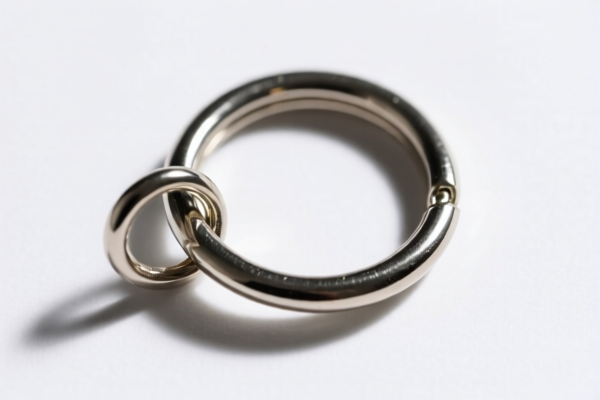
A Jump Ring (commonly known in Chinese as 开口圈) is a small, usually circular piece of metal with a split or cut, allowing it to be opened, inserted onto another object, and closed again. It is primarily used as a connector in jewelry making, keychains, bag hardware, and industrial applications.
In international trade, the classification of a jump ring depends heavily on its material (Iron/Steel vs. Plastic) and its specific function (General Hardware vs. Decorative Accessory).
⚠️ Key Distinction:
- If made of Iron/Steel and classified as general metal goods → High tariffs due to Section 232/122 actions.
- If made of Plastic → Lower base tariffs.
- If classified as Mounting Hardware → Potential for lower rates, but complex legal paths apply.
📦 II. HS Code Classification Details (2026 Latest Tariff对照)
Based on the provided data, here are the five possible HS Codes for Jump Rings, ranked by likelihood and tax implications:
| HS Code | Product Description / Summary | Material Type | Total Tax Rate |
|---|---|---|---|
| 7326.20.00.90 | Other articles of iron or steel; ring-shaped structures | Iron/Steel | 88.9% |
| 7326.19.00.10 | Other articles of iron or steel; generic "other" category | Iron/Steel | 87.9% |
| 8302.49.60.55 | Mounting hardware, fittings, and similar articles | Metal | 90.7% |
| 8302.49.80.40 | Other mounting hardware/accessories (catch-all) | Metal | 38.5% |
| 3926.90.99.89 | Other articles of plastic / general plastics | Plastic | 22.8% |
🔍 Critical Observation:
- The majority of metal jump rings fall under Chapter 73 (Iron/Steel) or Chapter 83 (Base Metal Articles).
- Chapter 73 codes (7326.xx) incur extremely high tariffs (~88-89%) due to the combination of base rates and multiple surcharges.
- Chapter 83 Code (8302.49.80.40) offers the most favorable rate for metal rings (~38.5%) by categorizing them as "mounting hardware/accessories" rather than generic steel goods.
- Chapter 39 Code (3926.xx) is only applicable if the jump ring is made of plastic.
💰 III. 2026 Latest Tariff Rate Breakdown (Detailed Policy Analysis)
✅ Applicable Country: United States (US)
✅ Origin: China (CN)
✅ Effective Date: Includes subsequent imports (based on 122/232/301 clauses)
🎯 1. 7326.20.00.90 —— Other Iron/Steel Articles (Ring-shaped)
| Item | Details |
|---|---|
| Base Duty | 3.9% |
| Section 301 Surcharge | +25.0% |
| Section 122 Surcharge | +10% (Steel/Aluminum/Copper Products) |
| Section 232 Surcharge | +50% (Steel/Aluminum/Copper Products) |
| Total Rate | 88.9% |
| Calculation | CIF Value × 88.9% |
| De Minimis Eligibility | ❌ Not Eligible (High duty rates exclude small packages) |
📌 Explanation:
- This classification treats the jump ring as a generic "steel product."
- It triggers ALL major trade barriers: Section 301 (Trade War), Section 122, and Section 232 (National Security).
- Result: Extremely high cost; often uneconomical for low-value items.
🎯 2. 7326.19.00.10 —— Other Iron/Steel Articles (Generic)
| Item | Details |
|---|---|
| Base Duty | 2.9% |
| Section 301 Surcharge | +25.0% |
| Section 122 Surcharge | +10% (Steel/Aluminum/Copper Products) |
| Section 232 Surcharge | +50% (Steel/Aluminum/Copper Products) |
| Total Rate | 87.9% |
| Calculation | CIF Value × 87.9% |
| De Minimis Eligibility | ❌ Not Eligible |
📌 Note:
- Slightly lower base rate (2.9% vs 3.9%) compared to 7326.20, but surcharges remain identical.
- Still falls squarely under "Steel Products," triggering the full penalty.
🎯 3. 3926.90.99.89 —— Other Plastic Articles (If Applicable)
| Item | Details |
|---|---|
| Base Duty | 5.3% |
| Section 301 Surcharge | +7.5% |
| Section 122 Surcharge | +10% (Note: Data suggests 122 applies, though often limited to metals; verify if steel content >0%) |
| Total Rate | 22.8% |
| Calculation | CIF Value × 22.8% |
| De Minimis Eligibility | ⚠️ Check (Depends on current de minimis threshold updates) |
📌 Caution:
- This rate ONLY applies if the jump ring is 100% Plastic.
- If it is metal-coated plastic or contains any steel wire core, it may be reclassified to Chapter 73 or 83, voiding this lower rate.
🎯 4. 8302.49.60.55 —— Mounting Hardware (Specific)
| Item | Details |
|---|---|
| Base Duty | 5.7% |
| Section 301 Surcharge | +25.0% |
| Section 122 Surcharge | +10% (Steel/Aluminum/Copper Products) |
| Section 232 Surcharge | +50% (Steel/Aluminum/Copper Products) |
| Total Rate | 90.7% |
| Calculation | CIF Value × 90.7% |
| De Minimis Eligibility | ❌ Not Eligible |
📌 Warning:
- Despite being "Hardware," this specific subheading triggers all steel surcharges.
- It is the highest taxed option in the dataset. Avoid unless specific legal exemptions apply.
🎯 5. 8302.49.80.40 —— Other Mounting Hardware/Accessories (Recommended for Metal)
| Item | Details |
|---|---|
| Base Duty | 3.5% |
| Section 301 Surcharge | +25.0% |
| Section 122 Surcharge | +10% (Note: Data shows 122 applies here) |
| Section 232 Surcharge | ❌ Not Applied (No 50% charge) |
| Total Rate | 38.5% |
| Calculation | CIF Value × 38.5% |
| De Minimis Eligibility | ⚠️ Check |
📌 Strategic Advantage:
- This is the lowest tariff for metal jump rings in the dataset.
- It avoids the 50% Section 232 surcharge by classifying the item as a "Mounting Accessory" rather than a raw "Steel Article."
- Savings: ~50% lower than Chapter 73 codes!
🛠️ IV. Customs Clearance Practical Advice (Battle-Tested Strategy)
✅ 1. Preparation Checklist (Non-Negotiable)
| Document | Required? | Purpose |
|---|---|---|
| ✅ Product Specifications | ✔️ | Must state material (e.g., "Stainless Steel 304" vs "Plastic"). |
| ✅ High-Res Photos | ✔️ | Show the ring’s shape, size, and whether it has a coating. |
| ✅ Material Certificate | ✔️ | Crucial to prove if it is Plastic (3926) or Metal (7326/8302). |
| ✅ Commercial Invoice | ✔️ | Description must be precise: "Metal Jump Rings for Jewelry Assembly" or "Plastic Connector Rings." |
| ✅ Packing List | ✔️ | Include weight and quantity. |
✅ 2. Declaration Tactics (The "Golden Rules")
🔥 Rule #1: Material is King
- If Plastic: Declare as3926.90.99.89(22.8%).
- If Metal: Declare as8302.49.80.40(38.5%).
- NEVER declare metal jump rings as7326.xxunless you want to pay ~88% tax.🔥 Rule #2: Function Defines Function
- Use keywords like "Mounting Hardware," "Connector," "Accessory," or "Fitting" in your description.
- Avoid generic terms like "Steel Wire Product" or "Metal Ring" which trigger Chapter 73.
| Scenario | Correct HS Code | Tax Rate | Risk |
|---|---|---|---|
| Plastic Rings | 3926.90.99.89 |
22.8% | Low (if truly plastic) |
| Metal Rings (Best) | 8302.49.80.40 |
38.5% | Medium (requires strong justification as "hardware") |
| Metal Rings (Bad) | 7326.19.00.10 |
87.9% | High (Avoid) |
| Metal Rings (Worst) | 8302.49.60.55 |
90.7% | Extreme (Avoid) |
✅ 3. Special Considerations
| Situation | Strategy |
|---|---|
| Mixed Materials | If the ring is plastic with a steel core, it may still be classified as steel. Verify with a customs broker. |
| OEM Custom Rings | Provide design files to prove they are "custom fittings" rather than generic steel goods. |
| De Minimis (Section 321) | Check current status. High tariff rates (88%+) usually disqualify items from the $800 de minimis exemption. Plan for full duty payment. |
🌍 V. Global Market Comparison (2026 Outlook)
| Region | Recommended HS Code | Est. Duty | Key Requirement |
|---|---|---|---|
| 🇺🇸 USA | 8302.49.80.40 (Metal) |
38.5% | Precise "Mounting Accessory" description |
| 🇺🇸 USA | 3926.90.99.89 (Plastic) |
22.8% | Proof of 100% Plastic composition |
| 🇨🇳 China | Same HS Codes | Low/Zero | CCC Certification (if applicable) |
| 🇪🇺 EU | Varies by Material | Varies | CE/RoHS Compliance |
📌 Conclusion for US Imports:
- Plastic is the cheapest route (22.8%).
- Metal requires strategic classification under 8302.49.80.40 to save ~50% compared to standard steel classifications.
- Avoid any code under 7326 or 8302.49.60.55 unless you have a specific exemption.
📌 VI. Common Mistakes & Pitfalls (Learn from Others' Pain)
❌ Mistake 1: Calling metal jump rings "Steel Wire Products"
👉 Result: Classified under 7326, taxed at 88.9%.
👉 Fix: Call them "Metal Mounting Accessories" or "Hardware Connectors."
❌ Mistake 2: Using 8302.49.60.55 for standard jump rings
👉 Result: Taxed at 90.7% due to specific subheading penalties.
👉 Fix: Use 8302.49.80.40 (Other) which has no Section 232 surcharge.
❌ Mistake 3: Assuming all plastic items are exempt from Section 301
👉 Result: 3926 still has a 7.5% Section 301 charge.
👉 Fix: Factor this 7.5% into your cost calculation.
✅ Best Practice:
"Specify Material, Define Function, Choose 'Other' Hardware Codes."
🎯 VII. Conclusion: Smart Classification Saves Money!
🎯 Remember the Golden Formula:
🔹 Plastic = 22.8%
🔹 Metal (Smart) = 38.5%
🔹 Metal (Dumb) = 88-90%
📌 Pro Tip:
Before shipping, always request a pre-ruling from a customs broker if you are importing large volumes of metal jump rings. Confirm that 8302.49.80.40 is accepted for your specific product to avoid the 50% Section 232 penalty.
📣 Action Item:
📞 Contact a Customs Broker
📄 Prepare Material Certificates
🚀 Declare as "Mounting Hardware" for Metal Rings
💡 Your Profit Margin Depends on This 50% Savings!
✨ Professional Clearance Starts with Precise Classification!
💼 Every Percentage Point Counts in International Trade!
Customer Reviews
About HS Code Classification
The Harmonized System (HS) is an internationally standardized nomenclature developed by the World Customs Organization (WCO) to classify traded products. Over 200 countries use the HS system as the basis for customs tariffs, trade statistics, and import/export regulations.
Each HS code follows a hierarchical structure:
- Chapter (2 digits) — Broad category of goods (e.g., Chapter 84: Machinery and Mechanical Appliances)
- Heading (4 digits) — More specific grouping within the chapter
- Subheading (6 digits) — Internationally standardized breakdown, used by all WCO member countries
- National subdivisions (8-10 digits) — Country-specific extensions for further classification, such as US HTSUS 10-digit codes
Correct HS code classification is essential for smooth customs clearance, accurate duty payment, and compliance with trade regulations. Misclassification can lead to customs delays, overpayment of duties, or penalties.
When importing from CN to US, the applicable tariff rates may include:
- Most-Favored-Nation (MFN) rate — The standard duty rate applied to WTO members
- General rate — Applied to countries without trade agreements
- Trade remedy duties — Additional tariffs such as Section 301 (anti-dumping), Section 232 (national security), or countervailing duties
The information provided on this page is for reference purposes only. For official classification, please consult with your local customs authority or a licensed customs broker.