Jump Rings
CN → US| HS Code | Tariff Rate | Origin | Destination | Doc |
|---|---|---|---|---|
| 7326200090 | 88.9% | CN | US | Official Doc |
| 7326908688 | 87.9% | CN | US | Official Doc |
| 7117191500 | 25.5% | CN | US | Official Doc |
| 7117192000 | 28.5% | CN | US | Official Doc |
| 731815 | 0.0% | CN | US | Official Doc |
| 732690 | 0.0% | CN | US | Official Doc |
Product Images
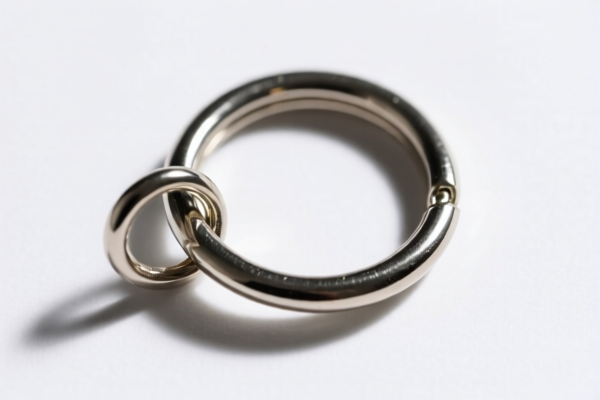
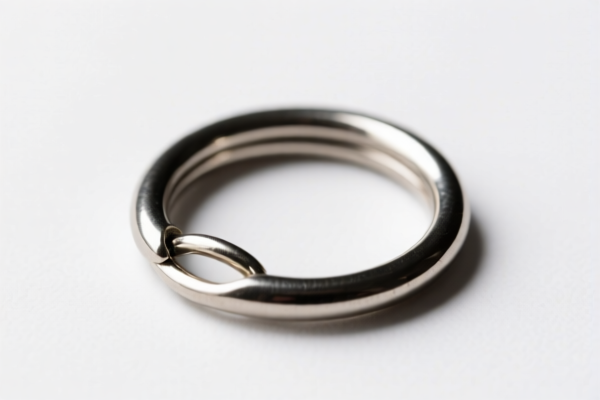
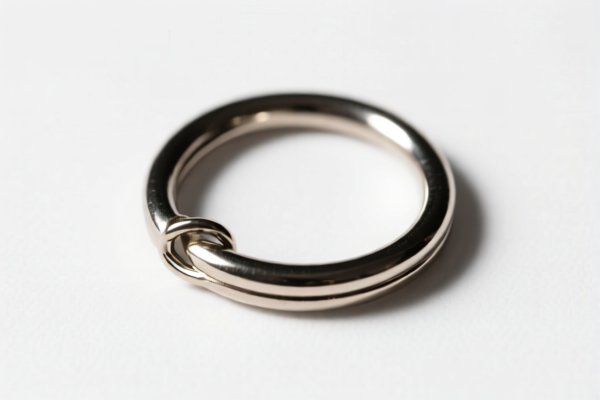
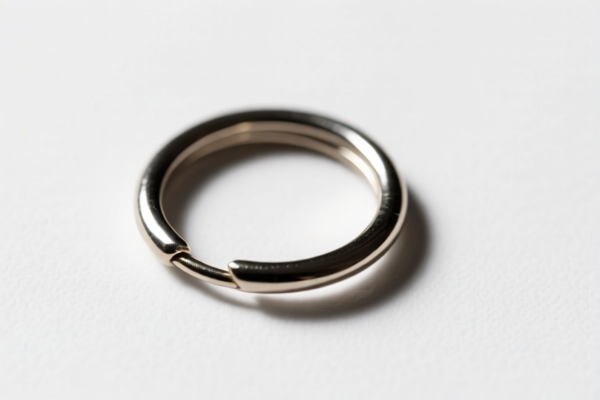
AI Analysis
💍 Jump Rings: The Invisible Backbone of Jewelry & Craft Supplies
🌐 HS Code Reference & Clearance Guide | 2026 Latest Tariff Analysis | Professional Customs Strategy
📌 I. Product Definition & Classification: What Exactly Are "Jump Rings"?
Jump rings are small, circular metal rings with a slit, used primarily in jewelry making, crafting, and accessory assembly to connect components (e.g., chains, pendants, beads, or keychains). They are essential "hardware" in the fashion and hobby industries.
In international trade, the classification of jump rings depends heavily on two factors:
1. Material Composition: Are they made of ferrous metals (iron/steel) or non-ferrous metals (brass, aluminum, copper)?
2. Intended Use: Are they classified as "Imitation Jewelry" (decorative, ready-to-wear components) or "Articles of Iron/Steel" (industrial/general use hardware)?
⚠️ Key Distinction Point:
- If the jump rings are plated (e.g., gold-plated, silver-plated) and marketed as jewelry components suitable for use in making imitation jewelry → They fall under Heading 7117.
- If they are plain steel/iron and used for general crafting or structural connection (not primarily decorative jewelry) → They fall under Chapter 73 (Articles of Iron or Steel).
- Note: Some non-ferrous jump rings (brass/aluminum) may also fall under 7326 if they are classified broadly as "other articles of iron or steel wire" due to HS nomenclature quirks, or potentially under other non-ferrous chapters if explicitly defined there (but DATA only provides 7326 for non-ferrous small rings).
📦 II. HS Code Classification Details (2026 Latest Tariff Authority Cross-Reference)
Based on the provided data, jump rings are classified into four primary HS Codes depending on value, material, and decorative status:
| HS Code | Product Description | Applicable Scenario | Material & Value Criteria |
|---|---|---|---|
7117.19.15.00 |
Imitation Jewelry: Other (Rope, curb, cable, chain...) | Decorative jewelry components; valued ≤ 33 cents/meter | Base metal, plated or not, set with imitation pearls/gems, valued low |
7117.19.20.00 |
Imitation Jewelry: Other (Rope, curb, cable, chain...) | Decorative jewelry components; valued > 33 cents/meter | Base metal, plated or not, set with imitation pearls/gems, valued high |
7326.20.00.90 |
Articles of Iron or Steel: Articles of Iron or Steel Wire | Plain steel jump rings; used for general crafts/accessories | Steel/Iron, not primarily decorative jewelry, or not meeting 7117 criteria |
7326.90.86.88 |
Articles of Iron or Steel: Other | General steel/iron metal rings/hardware | Steel/Iron, generic industrial or craft use, not wire-specific |
🔍 Critical Note for Non-Ferrous Jump Rings (Brass/Aluminum):
The provided data lists HS Codes731815and732690for non-ferrous jump rings but marks tax retrieval as "Failed/Error".
-731815: Typically refers to threaded goods, but sometimes used loosely for small steel/iron fittings.
-732690: "Other articles of iron or steel." Caution: This heading is for IRON/STEEL. If your jump rings are brass or aluminum, they DO NOT belong in Chapter 73 (Iron/Steel). They should likely be classified under Chapter 74 (Copper), 76 (Aluminum), or 71 (Imitation Jewelry if plated).
- However, since the data explicitly links "non-ferrous jump rings" to731815and732690with tax errors, we must flag this as a high-risk classification area. Misclassifying non-ferrous metals as iron/steel can lead to severe penalties.
💰 III. 2026 Latest Tariff Rate Breakdown (Including Surcharges & Policy Add-ons)
✅ Applicable Country: USA (US)
✅ Origin: China (CN)
✅ Effective Date: 2025–2026 (Current Trade Policy)
🎯 1. 7117.19.15.00 & 7117.19.20.00 —— Imitation Jewelry Components
| Item | Content |
|---|---|
| Base Tariff | 0.0% |
| Section 301 Surtax | 0.0% |
| Total Tariff | 0.0% |
| Tax Calculation | CIF Value × 0% = $0 |
| De Minimis Eligibility | ❌ No (General rule for China-origin goods under current scrutiny) |
| Legal Basis | HTSUS 7117.19 (Imitation Jewelry) |
📌 Explanation:
- Base Tariff: 0% under HTSUS for imitation jewelry of base metal.
- Surtax: 0% — Currently, imitation jewelry is NOT subject to the 25% Section 301 surtax that applies to many steel/aluminum/copper products.
- Result: 0% Total Duty is a huge advantage for decorative jewelry components.
- Value Threshold:
- If valued ≤ $0.33/meter →7117.19.15.00
- If valued > $0.33/meter →7117.19.20.00
- Key: Ensure products are clearly marketed as "Jewelry Components" or "Imitation Jewelry" to qualify for this 0% rate.
🎯 2. 7326.20.00.90 & 7326.90.86.88 —— Steel/Iron Jump Rings (General Hardware)
| Item | Content |
|---|---|
| Base Tariff | 3.9% (7326.20) / 2.9% (7326.90) |
| Section 301 Surtax | +50% (Steel, Aluminum, Copper Products Surtax) |
| Total Tariff | 78.9% (7326.20) / 77.9% (7326.90) |
| Tax Calculation | CIF Value × 78.9% or 77.9% |
| De Minimis Eligibility | ❌ No |
| Legal Basis | HTSUS 7326 + USITC Footnote for Steel/Aluminum/Copper Surtax |
📌 Explanation:
- Base Tariff: Low (2.9%–3.9%) for general iron/steel articles.
- Surtax: +50% due to the Section 301 Tariff on Steel, Aluminum, and Copper Products.
- Result: ~78% Total Duty is EXTREMELY HIGH.
- Key: If your jump rings are made of steel and are not classified as "imitation jewelry" (e.g., plain, unpolished, used in non-jewelry crafts), they may fall here. Avoid this classification if possible due to high duty.
⚠️ Special Note on Non-Ferrous Jump Rings (731815 & 732690)
| Item | Content |
|---|---|
| HS Code | 731815 / 732690 |
| Tax Status | ERROR: Failed to Retrieve |
| Risk Level | 🔴 HIGH |
| Recommendation | DO NOT USE these codes for non-ferrous metals without professional verification. |
📌 Critical Warning:
-732690is for IRON/STEEL. If you ship brass, aluminum, or copper jump rings under this code, it is a misclassification.
- Correct classification for non-ferrous jewelry parts may fall under:
- 7117 (if plated/imitation jewelry) → 0% Duty
- 7415 (Copper articles) → Variable Duty
- 7616 (Aluminum articles) → Variable Duty
- Action: Consult a customs broker to reclassify non-ferrous jump rings correctly. Misclassification can lead to audits, fines, and retroactive duties.
🛠️ IV. Customs Clearance Practical Advice (Battle-Tested Pitfall Guide)
✅ 1. Documentation Checklist (Mandatory)
| Document | Required | Explanation |
|---|---|---|
| ✅ Product Specification Sheet | ✔️ | Must specify: Material (e.g., "Stainless Steel 304," "Brass," "Gold-Plated Base Metal"), Diameter, Thickness, Finish. |
| ✅ Commercial Invoice | ✔️ | Clearly state: "Jump Rings for Jewelry Making" or "Steel Wire Rings for Industrial Use." Avoid vague terms like "Metal Rings." |
| ✅ Photo Evidence | ✔️ | Show rings in context (e.g., attached to a necklace for jewelry; bulk box for general craft). |
| ✅ Value Declaration | ✔️ | Provide price per meter or per 1,000 pcs to determine if 7117.19.15 or .20 applies. |
| ✅ Material Certificate | ✔️ | Proof of material (e.g., "95% Brass, 5% Zinc") if claiming non-ferrous classification. |
✅ 2. Declaration Strategy (Key Mnemonics)
🔥 “Jewelry? 0% Duty! Steel? 78% Duty! Non-Ferrous? Verify First!”
| Scenario | Correct HS Code | Duty Rate | Common Mistake |
|---|---|---|---|
| Gold-Plated Brass Jump Rings (Decorative) | 7117.19.15.00 or .20 |
0% | Misclassified as steel → 78% |
| Plain Steel Jump Rings (Industrial) | 7326.20.00.90 |
78.9% | Misclassified as jewelry → Underpayment |
| Aluminum Jump Rings (Craft) | ERROR in Data → Likely 7616 or 7117 if plated | Variable | Classified as 7326 (Iron) → Illegal |
| Mixed Bulk (Jewelry + Industrial) | Split Declaration | Mixed | Combined Declaration → Audit Risk |
✅ 3. Special Cases Handling
| Scenario | Handling Advice |
|---|---|
| OEM Custom Rings | Provide design specs to prove "Jewelry Component" status for 0% duty. |
| Plated Rings | Emphasize "Plated with Precious Metal" in description to support 7117 classification. |
| Non-Ferrous Error | If data shows 732690 for non-ferrous, override with professional broker advice. Do not blindly follow error codes. |
| High-Value Rings | If value > $0.33/meter, use 7117.19.20.00 (still 0% duty). |
🌍 V. Global Market Comparison (2026 Latest)
| Country/Region | Recommended HS Code | Duty Rate | Certification Required | Notes |
|---|---|---|---|---|
| 🇺🇸 USA | 7117.19.xx |
0% | N/A | Best for plated/jewelry components |
| 🇺🇸 USA | 7326.xx |
~78% | N/A | Avoid for steel unless no jewelry use |
| 🇨🇳 China | 7117.19 |
5–10% | CCC (if electrical) | Lower duty, but focus on export |
| 🇪🇺 EU | 7117.19 |
0–2.5% | REACH (Nickel Release) | Strict nickel limits for skin contact |
| 🇬🇧 UK | 7117.19 |
0–2.5% | UKCA | Post-Brexit alignment with EU |
📌 Conclusion:
- USA offers 0% duty for imitation jewelry components (7117), making it the most favorable market for plated/jewelry-grade jump rings.
- Steel hardware faces ~78% duty in the USA.
- Non-ferrous metals require correct classification to avoid errors and penalties.
📌 VI. Common Errors & Pitfall Guide (Lessons Learned)
❌ Error 1: Classifying brass jump rings as 7326.90.86.88 (Steel)
👉 Consequence: Misclassification, potential fraud charges, retroactive duties.
✅ Fix: Classify under correct non-ferrous heading (e.g., 7117 if plated/jewelry, or 7415/7616 if general hardware).
❌ Error 2: Declaring plain steel rings as "Jewelry" to get 0% duty
👉 Consequence: Customs audit, penalty, 78% duty + fine.
✅ Fix: Be honest about material and use. If steel and industrial, pay 78%.
❌ Error 3: Ignoring the $0.33/meter value threshold in 7117
👉 Consequence: Wrong sub-code, minor administrative issues.
✅ Fix: Calculate value per meter accurately.
🎯 VII. Conclusion: Professional Classification Saves Money!
🎯 Remember Mnemonics:
🔹 “Jewelry = 0%! Steel = 78%! Non-Ferrous = Verify!”
🔹 “Plated & Pretty? 7117! Plain & Industrial? 7326!”
📌 Pro Tip:
- If your jump rings are gold-plated, silver-plated, or colored base metal, always push for 7117 classification to enjoy 0% US Duty.
- For non-ferrous metals, never assume 7326 is correct. Seek professional classification advice.
- Pre-clearance Ruling: Consider applying for an Advance Ruling from US CBP if shipping large volumes.
📣 Immediate Action:
📞 Contact a licensed customs broker
📦 Provide material specs + photos
🚀 Minimize duties, maximize profit, clear customs smoothly!
✨ Precision in Classification, Profit in Trade!
💼 Your jump rings are small, but the duty implications are HUGE!
Customer Reviews
About HS Code Classification
The Harmonized System (HS) is an internationally standardized nomenclature developed by the World Customs Organization (WCO) to classify traded products. Over 200 countries use the HS system as the basis for customs tariffs, trade statistics, and import/export regulations.
Each HS code follows a hierarchical structure:
- Chapter (2 digits) — Broad category of goods (e.g., Chapter 84: Machinery and Mechanical Appliances)
- Heading (4 digits) — More specific grouping within the chapter
- Subheading (6 digits) — Internationally standardized breakdown, used by all WCO member countries
- National subdivisions (8-10 digits) — Country-specific extensions for further classification, such as US HTSUS 10-digit codes
Correct HS code classification is essential for smooth customs clearance, accurate duty payment, and compliance with trade regulations. Misclassification can lead to customs delays, overpayment of duties, or penalties.
When importing from CN to US, the applicable tariff rates may include:
- Most-Favored-Nation (MFN) rate — The standard duty rate applied to WTO members
- General rate — Applied to countries without trade agreements
- Trade remedy duties — Additional tariffs such as Section 301 (anti-dumping), Section 232 (national security), or countervailing duties
The information provided on this page is for reference purposes only. For official classification, please consult with your local customs authority or a licensed customs broker.