Jumper Cables
CN → US| HS Code | Tariff Rate | Origin | Destination | Doc |
|---|---|---|---|---|
| 8544429010 | 87.6% | CN | US | Official Doc |
| 8544429090 | 87.6% | CN | US | Official Doc |
Product Images
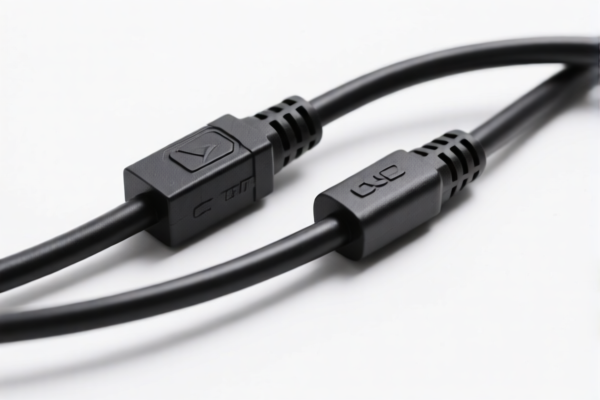
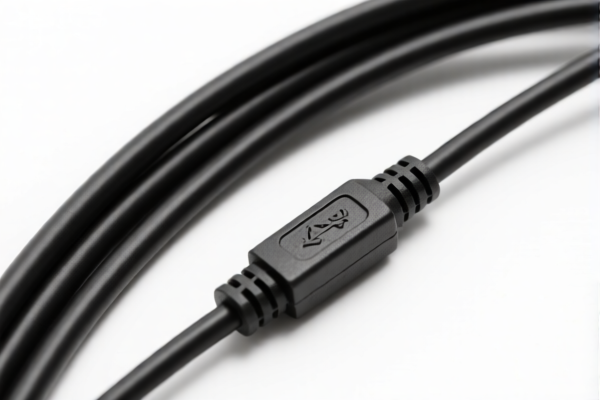
AI Analysis
⚡ Jumper Cables (Extension Cords & Booster Leads)
🌐 HS Code Reference & Customs Clearance Guide | 2026 Latest Tariff Analysis | Professional-Level Strategy
📌 1. Product Definition & Classification: Do You Really Understand "Jumper Cables"?
In international trade, "Jumper Cables" typically refer to two distinct types of products, but both fall under the same HS Chapter (8544) because they are insulated electric conductors. However, the critical distinction lies in the voltage and whether they are fitted with connectors.
Type A: Automotive Booster Cables (Jumper Cables)
Clips/clamps attached to insulated copper wires for starting vehicles. Usually low voltage (<1,000 V), fitted with large alligator clips.
Type B: Power Extension Cords
Standard household or industrial cords with plugs/connectors on ends. Also low voltage (<1,000 V).
⚠️ Key Classification Point:
- If the voltage is ≤ 1,000 V and it is an insulated conductor with connectors → It belongs to HS 8544.42.
- If it is > 1,000 V → It belongs to HS 8544.49/59 (Not covered in this specific data).
- No Connectors? If it’s bare wire or insulated wire without plugs/clips → It belongs to HS 8544.42.10 or 8544.42.90.90 (depending on other factors).
- With Connectors? → It belongs to HS 8544.42.90.10 (specifically for extension cords) or 8544.42.90.90 (other conductors with connectors).
📦 2. HS Code Classification Details (2026 Latest Tariff Authority Match)
Based strictly on the provided <DATA>, here are the two applicable HS codes:
| HS Code | Product Description | Applicable Scenario | Voltage Limit | Connectors? |
|---|---|---|---|---|
8544.42.90.10 |
Extension Cords (as defined in statistical note 6 to chapter 85) | Household/Industrial extension cords with plugs | ≤ 1,000 V | ✅ Yes |
8544.42.90.90 |
Other Insulated Conductors (fitted with connectors, not specified elsewhere) | Automotive jumper cables, specialized tool leads, non-extension cord connectors | ≤ 1,000 V | ✅ Yes |
🔍 Critical Note:
- HS 8544.42.90.10 is specifically for "Extension Cords." If your product is clearly a standard extension cord, this is the preferred code.
- HS 8544.42.90.90 is a catch-all for other insulated conductors with connectors ≤ 1,000 V. Automotive jumper cables (with alligator clips) typically fall here because they are not "extension cords" in the statutory sense.
- Voltage is Crucial: Both codes require voltage ≤ 1,000 V. If your jumper cables are for high-voltage industrial use (>1,000 V), these codes are incorrect.
💰 3. 2026 Latest Tariff Rate Breakdown (Including Additional Taxes)
✅ Applicable Country: United States (US)
✅ Origin: China (CN) (Based on the tax detail: "Steel, Aluminum, Copper Products Additional Tariff: 50%" implies Chinese origin under Section 301/IEEPA context)
✅ Effective Time: Current as of 2026
🎯 1. 8544.42.90.10 —— Extension Cords
| Item | Content |
|---|---|
| Base Tariff | 0.0% (ad valorem) |
| Additional Tariff (Section 301/IEEPA) | 50.0% (Specifically: "Steel, Aluminum, Copper Products Additional Tariff") |
| Total Tariff Rate | 50.0% |
| Tax Calculation | CIF Value × 50% |
| De Minimis Exemption | ❌ Not Applicable (High tariffs usually block de minimis) |
| Legal Basis Path | USITC:8544.42.90.10 → Additional Tariff: Copper Products |
📌 Explanation:
- The base tariff is 0%, but copper-containing products from China are subject to a 50% additional tariff.
- Jumper cables and extension cords are primarily made of copper wires.
- Total Cost Impact: 50% tariff is extremely high. Must be factored into pricing.
🎯 2. 8544.42.90.90 —— Other Insulated Conductors (e.g., Automotive Jumper Cables)
| Item | Content |
|---|---|
| Base Tariff | 0.0% (ad valorem) |
| Additional Tariff (Section 301/IEEPA) | 50.0% (Specifically: "Steel, Aluminum, Copper Products Additional Tariff") |
| Total Tariff Rate | 50.0% |
| Tax Calculation | CIF Value × 50% |
| De Minimis Exemption | ❌ Not Applicable |
| Legal Basis Path | USITC:8544.42.90.90 → Additional Tariff: Copper Products |
📌 Note:
- Same tariff structure as extension cords.
- Copper is the key material. Since both products contain insulated copper conductors, they are subject to the 50% additional tariff.
🛠️ 4. Customs Clearance Practical Advice (Actionable Pitfall Guide)
✅ 1. Preparation Checklist (Essential for 50% Tariff Declaration)
| Document | Required | Purpose |
|---|---|---|
| ✅ Product Specification Sheet | ✔️ | Must clearly state Voltage (≤1,000 V) and Material (Copper wire). |
| ✅ Bill of Materials (BOM) | ✔️ | To prove copper content. If aluminum is used, tariffs may differ (but data specifies "Copper Products" 50%). |
| ✅ Commercial Invoice | ✔️ | Clearly describe as "Jumper Cables" or "Extension Cords," not "Electronic Parts." |
| ✅ Photo of Product | ✔️ | Show connectors/clips and voltage rating label. |
| ✅ HS Code Pre-Ruling | ✔️ | Highly recommended due to the 50% tariff risk. |
✅ 2. Declaration Strategy (Key Rules)
🔥 “Voltage ≤1,000V, Copper Content, Tariff 50% - No Escape!”
| Scenario | Correct HS Code | Reason |
|---|---|---|
| Standard Extension Cord (Home/Office) | 8544.42.90.10 |
Statutory definition matches. |
| Automotive Jumper Cables (Clamps) | 8544.42.90.90 |
Not an "extension cord" per stats note; "Other" conductor. |
| High-Voltage Cables (>1,000 V) | Not in Data | Would be different HS code (8544.49/59). Do not use above codes. |
| Uninsulated Wire | Not in Data | Would be HS 74.08 (Copper wire). |
⚠️ Warning:
- Do not declare as "Accessories" or "Electrical Parts" to avoid 50% tariff. Misclassification leads to seizure, fines, and back-tariffs.
- Copper vs. Aluminum: If cables are aluminum, the 50% "Copper Products" tariff may not apply, but check "Aluminum Products" tariff status. (Note: Data specifically says "Copper Products Additional Tariff: 50%").
✅ 3. Special Situations
| Situation | Handling Advice |
|---|---|
| Mixed Packaging (Cables + Clamps + Bag) | Declare as one unit under the cable HS code. Do not split. |
| OEM Branded Cables | Same tariff. Brand does not affect HS or tariff rate. |
| Origin Non-China | If from Vietnam/Mexico, 50% tariff may be waived (check USMCA/ASEA rules). Major cost-saving opportunity! |
🌍 5. Global Market Comparison (2026)
| Country/Region | Recommended HS Code | Tariff (China Origin) | Notes |
|---|---|---|---|
| 🇺🇸 USA | 8544.42.90.10 / .90 |
50% | High due to copper tariffs. |
| 🇨🇳 China | 8544.42.90.10 / .90 |
~5-8% | Lower import duty for foreign goods. |
| 🇪🇺 EU | 8544.42 |
0-2.7% | No significant additional tariffs. |
| 🇬🇧 UK | 8544.42 |
2-4% | Post-Brexit rates vary. |
| 🇯🇵 Japan | 8544.42 |
0-3% | Low tariffs. |
📌 Conclusion:
- USA has the highest barrier due to the 50% additional tariff on copper products.
- Supply Chain Shift: Consider sourcing from non-China origins (e.g., Vietnam, Mexico) to avoid the 50% penalty.
📌 6. Common Mistakes & Pitfalls (Blood-Teaching Lessons)
❌ Mistake 1: Declaring "Jumper Cables" as "Electronic Components"
👉 Consequence: HS code mismatch → Penalty + Back Tariff (50%) + Delay.
❌ Mistake 2: Ignoring the "Voltage Limit"
👉 Consequence: If voltage >1,000 V, using 8544.42 is wrong → Seizure.
❌ Mistake 3: Not declaring "Copper Content"
👉 Consequence: Customs may doubt the 50% tariff applicability → Audit Risk.
❌ Mistake 4: Using "Extension Cord" for Automotive Jumper Cables
👉 Consequence: May be flagged for misclassification (though tax rate is same, accuracy matters for compliance).
✅ Correct Declaration Example:
"Automotive Jumper Cables, Insulated Copper Conductors, Voltage 12V, Fitted with Alligator Clips, Model XYZ, Origin: China"
🎯 7. Conclusion: Professional Declaration, Save Costs!
🎯 Remember the Formula:
🔹 ≤1,000V + Copper + China = 50% Tariff
🔹 Non-China Origin = Potential 0-5% Tariff
🔹 Accurate HS: 8544.42.90.10 (Extension) or .90 (Other)
📌 Pro Tip:
If you are importing to the USA, strongly consider sourcing from countries with Free Trade Agreements (e.g., Mexico, Vietnam) to avoid the 50% copper tariff. This can save half your product cost.
📣 Immediate Action:
📞 Verify Origin & Copper Content
📦 Apply for US Customs Pre-Ruling if unsure
🚀 Optimize Supply Chain to Reduce Tariff Burden
✨ Precision in Classification, Savings in Tariffs!
💼 Every Percentage Point Counts in Global Trade!
Customer Reviews
About HS Code Classification
The Harmonized System (HS) is an internationally standardized nomenclature developed by the World Customs Organization (WCO) to classify traded products. Over 200 countries use the HS system as the basis for customs tariffs, trade statistics, and import/export regulations.
Each HS code follows a hierarchical structure:
- Chapter (2 digits) — Broad category of goods (e.g., Chapter 84: Machinery and Mechanical Appliances)
- Heading (4 digits) — More specific grouping within the chapter
- Subheading (6 digits) — Internationally standardized breakdown, used by all WCO member countries
- National subdivisions (8-10 digits) — Country-specific extensions for further classification, such as US HTSUS 10-digit codes
Correct HS code classification is essential for smooth customs clearance, accurate duty payment, and compliance with trade regulations. Misclassification can lead to customs delays, overpayment of duties, or penalties.
When importing from CN to US, the applicable tariff rates may include:
- Most-Favored-Nation (MFN) rate — The standard duty rate applied to WTO members
- General rate — Applied to countries without trade agreements
- Trade remedy duties — Additional tariffs such as Section 301 (anti-dumping), Section 232 (national security), or countervailing duties
The information provided on this page is for reference purposes only. For official classification, please consult with your local customs authority or a licensed customs broker.