Jumper Cables for Car Battery
CN → US| HS Code | Tariff Rate | Origin | Destination | Doc |
|---|---|---|---|---|
| 8708998105 | 37.5% | CN | US | Official Doc |
| 8708998180 | 37.5% | CN | US | Official Doc |
| 8544300000 | 40.0% | CN | US | Official Doc |
| 8544429010 | 87.6% | CN | US | Official Doc |
Product Images
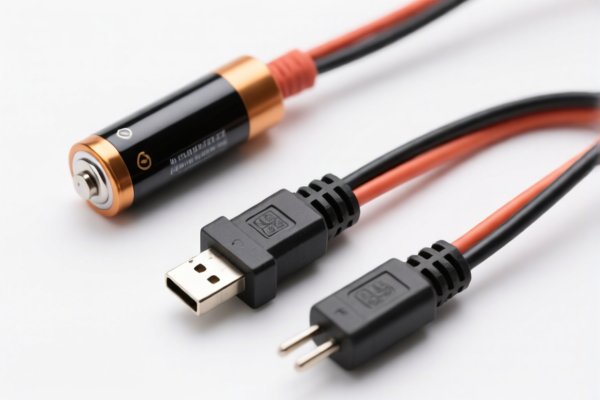
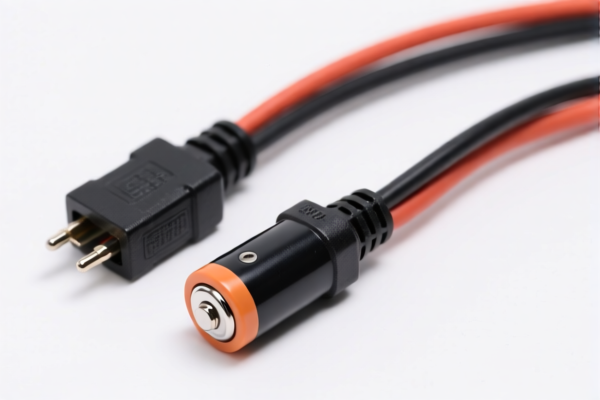
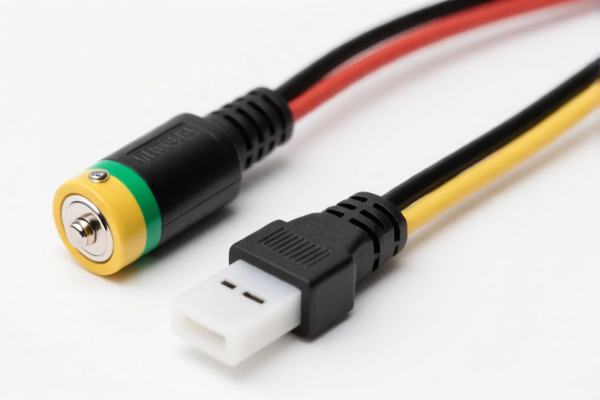
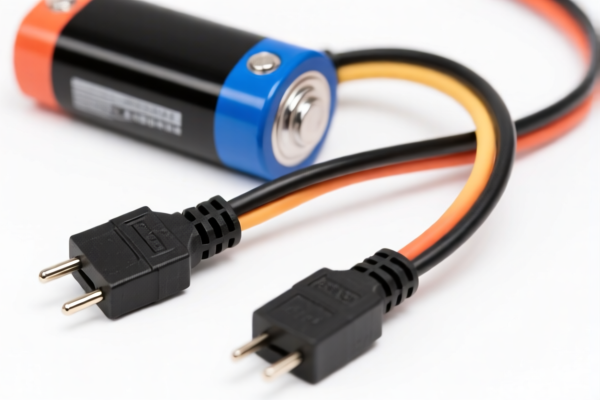
AI Analysis
🔋 Jumper Cables for Car Battery (Vehicle Wiring Sets)
🌐 HS Code Reference & Customs Clearance Guide | 2026 Latest Tariff Analysis | Professional Clearance Strategy
📌 I. Product Definition & Classification: What Are "Jumper Cables"?
Jumper cables, technically referred to in international trade as "Ignition wiring sets and other wiring sets of a kind used in vehicles, aircraft or ships," are essential electrical accessories. They consist of insulated electric conductors, typically equipped with heavy-duty clamps (connectors) at both ends, designed to transfer power between vehicle batteries.
Key Distinction in Classification:
The classification depends heavily on the voltage rating and the intended use context.
- Low Voltage (<1,000 V) Wiring Sets: Most automotive jumper cables operate at 12V or 24V. If they are specifically designed as "wiring sets" for vehicles (often including integrated connectors or specific configurations for engine starting/power distribution), they fall under 8544.30.00.00.
- Extension Cords/General Purpose Cables: If the product is marketed as a generic "extension cord" or a standalone cable without specific "vehicle wiring set" characteristics, it may fall under 8544.42.90.10.
⚠️ Critical Classification Point:
- If the product is explicitly described as "Jumper Cables," "Ignition Wiring Sets," or "Vehicle Wiring Sets" (even if used for battery charging in a car context), it is most accurately classified under 8544.30.00.00 in many customs jurisdictions when viewed as a functional set for vehicle ignition/power.
- However, if customs authorities view them as simple "Extension Cords" (a common pitfall for generic heavy-duty jumper cables), they may be misclassified under 8544.42.90.10, leading to drastically different tariff treatments.
📦 II. HS Code Classification Details (2026 Latest Tariff Authority Comparison)
| HS Code | Product Description | Applicable Scenario | Voltage Rating | Connector Type |
|---|---|---|---|---|
8544.30.00.00 |
Ignition wiring sets and other wiring sets of a kind used in vehicles, aircraft or ships | Vehicle battery jumpers, ignition harnesses, automotive electrical sets | N/A (Specific Vehicle Use) | Typically included (Clamps/Connectors) |
8544.42.90.10 |
Other electric conductors, for a voltage not exceeding 1,000 V: Fitted with connectors: Other Extension cords | Generic heavy-duty extension cables, standalone power cables not specifically "vehicle wiring sets" | ≤ 1,000 V | Fitted (e.g., Plugs/Clamps) |
8708.99.81.05 |
Parts and accessories of motor vehicles: Brake hoses of plastics, with attached fittings | Excluded: Brake hoses are mechanical fluid components, not electrical conductors | N/A | N/A |
8708.99.81.80 |
Parts and accessories of motor vehicles: Other parts and accessories | Excluded: This covers non-electrical/mechanical parts (e.g., brackets, filters) | N/A | N/A |
🔍 Important Note:
- HS Codes 8708.99.81.05 and 8708.99.81.80 are NOT applicable to jumper cables. These codes are for mechanical parts (like brake hoses). Jumper cables are electrical conductors (Chapter 85), not vehicle parts (Chapter 87).
- The core debate is between 8544.30.00.00 (Vehicle-specific wiring sets) and 8544.42.90.10 (General extension cords).
💰 III. 2026 Latest Tariff Rate Details (Including Additional Taxes)
✅ Applicable Country: United States (US)
✅ Origin: China (CN)
✅ Effective Date: Current trade policies (2025-2026)
🎯 1. 8544.30.00.00 —— Ignition Wiring Sets / Vehicle Wiring Sets
This code is for wiring sets specifically of a kind used in vehicles.
| Item | Content |
|---|---|
| Base Tariff | 5.0% (ad valorem) |
| Section 301 Additional Tariff | +25.0% |
| Total Tariff Rate | 30.0% |
| Tax Calculation | CIF Value × 30% |
| Legal Basis | HTSUS 8544.30.00.00 + USITC Footnote for China-origin goods |
📌 Explanation:
- Jumper cables classified as "vehicle wiring sets" attract the 5% base duty.
- Due to China-origin status, an additional 25% tariff is applied under Section 301.
- Total: 30%. This is a moderate-to-high tariff.
🎯 2. 8544.42.90.10 —— Other Extension Cords (Voltage ≤ 1,000 V)
This code is often used for jumper cables if they are deemed "extension cords" rather than specific "vehicle wiring sets."
| Item | Content |
|---|---|
| Base Tariff | 0.0% |
| Section 301 Additional Tariff | 0.0% (General) |
| Steel/Aluminum/Copper Products Surcharge | +50.0% (Specific to certain metal components) |
| Total Tariff Rate | 50.0% |
| Tax Calculation | CIF Value × 50% |
| Legal Basis | HTSUS 8544.42.90.10 + Special surcharges for copper/aluminum products |
📌 Critical Warning:
- While the base tariff is 0%, the 50% surcharge for copper/aluminum products applies to many electrical cables containing significant metal content.
- Total: 50% is HIGHER than the 30% rate for code 8544.30.00.00.
- Strategy: Classifying as 8544.30.00.00 (30%) is generally more favorable than 8544.42.90.10 (50%) for Chinese-origin jumper cables, provided the description supports "vehicle wiring sets."
🛠️ IV. Customs Clearance Practical Advice (Real-World Pitfall Avoidance)
✅ 1. Required Documentation List (Non-Negotiable)
| Document | Mandatory? | Description |
|---|---|---|
| ✅ Product Specification Sheet | ✔️ | Must detail voltage, wire gauge (AWG), clamp type, and intended use (e.g., "for automotive battery jumping"). |
| ✅ Product Photos (Clear) | ✔️ | Show the entire set, including clamps, insulation, and any branding. |
| ✅ Commercial Invoice | ✔️ | Clearly describe as "Jumper Cables for Automotive Use" or "Ignition Wiring Sets". Avoid vague terms like "Extension Cord" if possible. |
| ✅ Bill of Lading/Air Waybill | ✔️ | Ensure HS Code consistency across documents. |
| ✅ Certificate of Origin | ✔️ | Required for duty preference calculation (though no preference applies here due to tariffs). |
| ✅ FCC Declaration (if applicable) | ✔️ | If the cables include any electronic components (e.g., surge protection), FCC compliance may be needed. |
✅ 2. Declaration Tips (Key Mnemonic)
🔥 “Describe as Vehicle Wiring, Not Generic Extension!”
| Scenario | Correct Declaration | Incorrect Declaration | Consequence |
|---|---|---|---|
| Jumper Cables for Car | 8544.30.00.00 |
8544.42.90.10 |
Risk of 50% tariff instead of 30% |
| Jumper Cables with Clamps | 8544.30.00.00 (Ignition Wiring Sets) |
8708.99.81.80 (Vehicle Parts) |
Classification error; clearance delay |
| Generic Extension Cable | 8544.42.90.10 |
8544.30.00.00 |
Overpayment if not actually vehicle-specific |
Key Strategy:
- Emphasize "Vehicle Use" and "Wiring Set" in the product description.
- Avoid using "Extension Cord" unless it is explicitly a home/industrial extension cable.
- Do NOT classify as 8708 (Vehicle Parts). Jumper cables are electrical goods (Chapter 85), not mechanical parts (Chapter 87).
✅ 3. Special Cases Handling
| Case | Recommendation |
|---|---|
| OEM Custom Jumper Cables | Provide the client’s design spec sheet proving they are built for specific vehicle models. This strengthens the case for 8544.30.00.00. |
| Jumper Cables with Surge Protection | Still likely 8544.30.00.00 if the primary function is power transfer, but ensure FCC compliance documentation is ready. |
| Mixed Cargo (Cables + Mechanical Parts) | Do NOT combine under one HS Code. Separate electrical (85) from mechanical (87) parts. |
| Non-China Origin | If sourced from Vietnam or Mexico, verify if any exemptions apply to 8544.30.00.00 (currently limited, but check latest HTS updates). |
🌍 V. Global Market Customs Comparison (2026 Latest)
| Country/Region | Recommended HS Code | Tariff (China Origin) | Certification Requirements | Notes |
|---|---|---|---|---|
| 🇺🇸 USA | 8544.30.00.00 |
30% (5% base + 25% additional) | No special certs | Cheapest option vs. 8544.42.90.10 (50%) |
| 🇺🇸 USA | 8544.42.90.10 |
50% (0% base + 50% metal surcharge) | No special certs | Avoid if possible |
| 🇪🇺 EU | 8544.30.00 (Similar) |
Varies by exact subheading | CE Mark, RoHS | Generally lower tariffs than US |
| 🇨🇳 China | 8544.30.00 |
5% (Import Duty) | CCC (if applicable) | Low duty for domestic market |
| 🇬🇧 UK | 8544.30.00 |
4.5% | UKCA Mark | Post-Brexit rules apply |
📌 Conclusion:
- USA Tariff Strategy is Critical: Classifying as 8544.30.00.00 saves 20% in tariffs compared to 8544.42.90.10.
- Documentation is Key: The description "Ignition Wiring Sets" or "Vehicle Wiring Sets" must be prominent on the commercial invoice.
📌 VI. Common Errors & Pitfall Guide (Lessons from Blood & Tears)
❌ Error 1: Classifying Jumper Cables as 8708.99.81.80 (Vehicle Parts)
👉 Consequence: Wrong chapter! Electrical goods are Chapter 85. Clearance will be delayed, and penalties may apply.
❌ Error 2: Using "Extension Cord" in the description for 8544.30.00.00
👉 Consequence: Customs may reclassify to 8544.42.90.10, leading to 50% tariff instead of 30%.
❌ Error 3: Omitting "Vehicle Use" in the description
👉 Consequence: Ambiguity leads to random classification, possibly triggering the higher 50% rate.
✅ Correct Approach:
"Jumper Cables for Automotive Battery Jump Start, Ignition Wiring Set, 12V, Copper Conductors with Clamps, Model XYZ"
🎯 VII. Conclusion: Precise Classification Saves 20% Tariff!
🎯 Remember the Golden Rule:
🔹 "Vehicle Wiring = 30% (8544.30.00.00)"
🔹 "Extension Cord = 50% (8544.42.90.10)"
🔹 "Vehicle Parts (8708) = WRONG CHAPTER!"🔹 "Choose the right HS Code, save thousands, and clear customs smoothly!"
📌 Pro Tip:
If your product is marketed as a generic extension cord, you cannot avoid the 50% tariff by calling it "jumper cables." The classification must match the actual use and design. If it is designed specifically for vehicle ignition/start-up systems, 8544.30.00.00 is the correct and more economical choice.
📣 Immediate Action:
📞 Consult with a licensed customs broker
📄 Ensure your Commercial Invoice uses the term "Ignition Wiring Sets"
🚀 Optimize your tariff rate from 50% down to 30%!
✨ Professional Clearance Starts with Accurate Classification!
💼 Every Percentage Point Matters in International Trade!
Customer Reviews
About HS Code Classification
The Harmonized System (HS) is an internationally standardized nomenclature developed by the World Customs Organization (WCO) to classify traded products. Over 200 countries use the HS system as the basis for customs tariffs, trade statistics, and import/export regulations.
Each HS code follows a hierarchical structure:
- Chapter (2 digits) — Broad category of goods (e.g., Chapter 84: Machinery and Mechanical Appliances)
- Heading (4 digits) — More specific grouping within the chapter
- Subheading (6 digits) — Internationally standardized breakdown, used by all WCO member countries
- National subdivisions (8-10 digits) — Country-specific extensions for further classification, such as US HTSUS 10-digit codes
Correct HS code classification is essential for smooth customs clearance, accurate duty payment, and compliance with trade regulations. Misclassification can lead to customs delays, overpayment of duties, or penalties.
When importing from CN to US, the applicable tariff rates may include:
- Most-Favored-Nation (MFN) rate — The standard duty rate applied to WTO members
- General rate — Applied to countries without trade agreements
- Trade remedy duties — Additional tariffs such as Section 301 (anti-dumping), Section 232 (national security), or countervailing duties
The information provided on this page is for reference purposes only. For official classification, please consult with your local customs authority or a licensed customs broker.