Junction Box
CN → US| HS Code | Tariff Rate | Origin | Destination | Doc |
|---|---|---|---|---|
| 8538903000 | 38.5% | CN | US | Official Doc |
| 8538908160 | 38.5% | CN | US | Official Doc |
| 8544429090 | 87.6% | CN | US | Official Doc |
| 8544422000 | 85.0% | CN | US | Official Doc |
| 8536908530 | 35.0% | CN | US | Official Doc |
Product Images
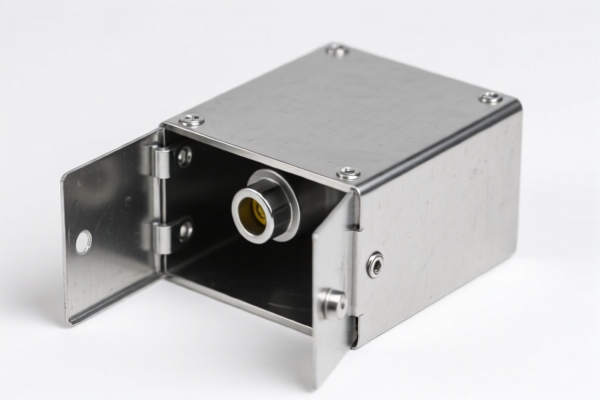
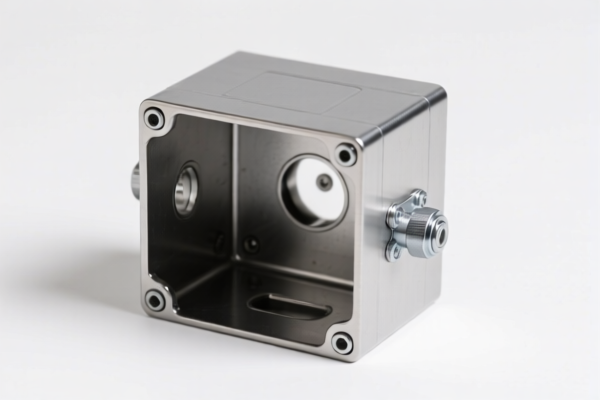
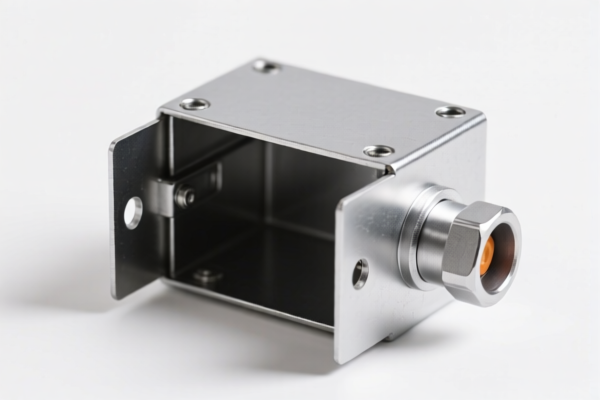
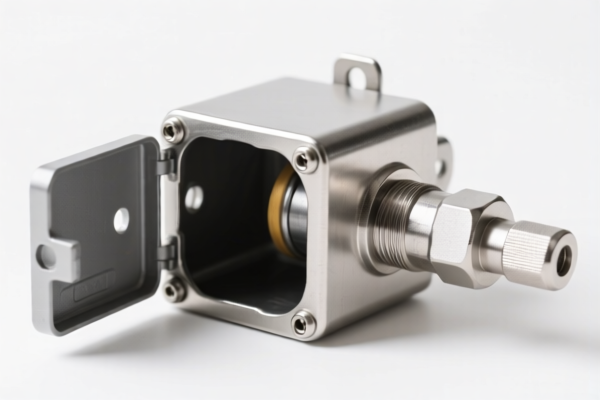
AI Analysis
🔌 Solar Junction Box (太阳能接线盒)
🌐 HS Code Reference & Customs Clearance Guide | 2026 Latest Tariff Analysis | Professional Strategy
📌 I. Product Definition & Classification: What is a "Junction Box"?
A Solar Junction Box is a critical component in photovoltaic (PV) systems. It serves as the connection point between solar panels and the inverter/grid. Its primary functions are electrical connection, circuit protection (diodes), and environmental sealing.
In international trade, its classification depends heavily on its physical structure and electrical function: 1. As an Electrical Component: If it contains internal circuitry (diodes) or serves as a control/distribution part, it often falls under Chapter 85 (Electrical machinery and equipment). 2. As a Wire/Conductor Assembly: If it is viewed primarily as an insulated wire with connectors (less common for standalone boxes but possible for cable assemblies), it may fall under 8544.
⚠️ Key Distinction Point: - If the box contains diodes/switches or acts as a control part for solar systems → Look at 8538 or 8536. - If the item is strictly an insulated wire/connector assembly with voltage ≤1,000V → Look at 8544.
📦 II. HS Code Classification Details (2026 Latest Tariff Authority Mapping)
Based on the provided data, here are the specific HS Code mappings for Solar Junction Boxes, along with their rationale:
| HS Code | Summary/Rationale | Key Classification Feature |
|---|---|---|
| 8538.90.30.00 | Falls under "Other parts of printing machinery/controls" or electrical connection components that fit the definition of "Other" parts of electrical apparatus. | Defined as an electrical connection component fitting the "Other" category for parts. |
| 8538.90.81.60 | Classified as a component for switch/control equipment. Its form matches "Other parts" for control/distribution-related components. | Matches use case as a control/distribution part for solar systems. |
| 8544.42.90.90 | Classified as a power connection assembly. It fits the characteristics of insulated conductors with connectors (voltage ≤1,000V). | Fits the logic of insulated electrical conductors with connectors. |
| 8544.42.20.00 | Classified as a component/accessory for solar systems. It aligns with the usage logic of electrical conductors for telecom/signal transmission. | Matches usage logic for conductors/connectors in solar/telecom contexts. |
| 8536.90.85.30 | Classified as an electrical connection device with voltage ≤1,000V. Material is inferred as electrical insulation or metal. | Directly fits voltage ≤1,000V electrical connection devices. |
🔍 Critical Note: - 8538 and 8536 codes generally attract lower base tariffs but are subject to additional levies. - 8544 codes involve wire/conductor classification, which can trigger higher material-based surcharges (especially for steel/aluminum/copper products).
💰 III. 2026 Latest Tariff Rate Details (Including Add-ons & Policy Levies)
✅ Applicable Country: United States (US)
✅ Origin: China (CN)
✅ Effective Time: Current rates apply as per the provided data.
🎯 1. HS Code: 8538.90.30.00 & 8538.90.81.60
These two codes share the same tax structure in the provided data.
| Item | Detail |
|---|---|
| Base Tariff | 3.5% |
| Section 301 Surcharge | +25.0% |
| Section 122 Surcharge | +10.0% |
| Total Effective Tax Rate | 38.5% |
| Tax Calculation | CIF Value × 38.5% |
| De Minimis Exemption | ❌ Not Eligible (Subject to full scrutiny) |
📌 Interpretation: - These codes are classified as "Parts of Electrical Machinery". - They are subject to the standard Section 301 (25%) and Section 122 (10%) surcharges on Chinese goods. - No additional material-based tariff applies here, making them potentially more cost-effective than 8544 codes if the material content is high in steel/aluminum.
🎯 2. HS Code: 8536.90.85.30
Electrical connection devices (Voltage ≤1,000V).
| Item | Detail |
|---|---|
| Base Tariff | 0.0% |
| Section 301 Surcharge | +25.0% |
| Section 122 Surcharge | +10.0% |
| Total Effective Tax Rate | 35.0% |
| Tax Calculation | CIF Value × 35.0% |
📌 Interpretation: - This code has a 0% Base Tariff, which is the lowest among all options. - However, it is still subject to the 35% total surcharge (25% + 10%). - Recommendation: This is likely the most economical option if the product strictly fits the description of an "electrical connection device" without triggering the "wire/conductor" classification of 8544.
🎯 3. HS Code: 8544.42.90.90
Insulated conductors with connectors (Voltage ≤1,000V).
| Item | Detail |
|---|---|
| Base Tariff | 2.6% |
| Section 301 Surcharge | +25.0% |
| Section 122 Surcharge | +10.0% |
| Additional Material Surcharge | +50.0% (For Steel, Aluminum, Copper products) |
| Total Effective Tax Rate | 87.6% |
| Tax Calculation | CIF Value × 87.6% |
📌 Interpretation: - ⚠️ High Risk Alert: This code triggers a 50% additional tariff for products containing steel, aluminum, or copper. - Solar junction boxes often contain metal housings or copper contacts. If customs determines the item is a "wire/conductor assembly" with these materials, the tax rate skyrockets. - Only consider this if the box is strictly plastic with no metal components AND classified as a wire assembly (rare for junction boxes).
🎯 4. HS Code: 8544.42.20.00
Conductors for telecom/signal transmission.
| Item | Detail |
|---|---|
| Base Tariff | 0.0% |
| Section 301 Surcharge | +25.0% |
| Section 122 Surcharge | +10.0% |
| Additional Material Surcharge | +50.0% (For Steel, Aluminum, Copper products) |
| Total Effective Tax Rate | 85.0% |
| Tax Calculation | CIF Value × 85.0% |
📌 Interpretation: - Similar to
8544.42.90.90, this code attracts the 50% material surcharge. - The base tariff is 0%, but the total rate is 85.0%. - Avoid unless the product is purely for signal transmission and has no metal parts.
🛠️ IV. Customs Clearance Practical Advice (Pitfall Avoidance Guide)
✅ 1. Preparation Checklist (Essential Documents)
| Document | Required | Explanation |
|---|---|---|
| ✅ Product Specification Sheet | ✔️ | Must detail: Voltage rating (≤1000V), IP rating (waterproof), internal components (diodes?). |
| ✅ Circuit Diagram/Internal Structure | ✔️ | Crucial to prove if it’s a "component" (8536/8538) or "wire/conductor" (8544). |
| ✅ Product Photos | ✔️ | Show connector type, housing material (plastic vs. metal), and labeling. |
| ✅ Commercial Invoice | ✔️ | Describe as "Solar Junction Box, Part of Photovoltaic System," NOT just "Box." |
| ✅ Material Composition Statement | ✔️ | Specify % of Plastic vs. Metal/Copper. Critical for avoiding the 50% surcharge if misclassified. |
✅ 2. Classification Strategy (Key Mnemonic)
🔥 "Parts Win, Wires Pinch, Metal Surcharge Kills the Profit!"
| Scenario | Recommended HS Code | Risk Level | Reason |
|---|---|---|---|
| Standard Solar Junction Box (Plastic housing, internal diodes) | 8536.90.85.30 or 8538.90.x.x | 🟢 Low | Base tax 0-3.5%, Total 35-38.5%. No 50% material surcharge. |
| Junction Box with Metal Housing/Copper Contacts | 8536.90.85.30 (Preferred) | 🟡 Medium | If misclassified as 8544, 50% surcharge applies. Argue it's a "device/component," not a "conductor." |
| Cable Assembly with Connector (No box, just wire+plug) | 8544.42.90.90 | 🔴 High | 87.6% total tax. Avoid unless it's strictly a wire. |
✅ 3. Special Handling Tips
| Situation | Advice |
|---|---|
| OEM Custom Boxes | Provide design drawings to prove it's a "part" of the solar system, not a generic wire. |
| Metal Components | If the box has aluminum casing, emphasize its function as an electrical enclosure/component (8536/8538) to avoid the 50% surcharge under 8544. |
| De Minimis (Section 321) | ❌ Do NOT rely on De Minimis for junction boxes from China. The surcharges (301+122) are not exempted. |
🌍 V. Global Market Comparison (2026 Snapshot)
| Market | Recommended HS Code | Est. Total Tax (China Origin) | Key Certification |
|---|---|---|---|
| 🇺🇸 USA | 8536.90.85.30 |
35.0% | UL, IEC 62852 |
| 🇪🇺 EU | 8536.90.85.30 |
0% - 2% | CE, RoHS |
| 🇨🇳 China | 8536.90.85.30 |
0% - 8% | CCC (if applicable) |
| 🇨🇦 Canada | 8536.90.85.30 |
0% (CUSMA) | CSA |
📌 Conclusion: - USA is the most expensive due to Section 301 + 122 surcharges. - Target the 8536/8538 codes to stay at 35-38.5% rather than risking 85-87% with 8544 codes.
📌 VI. Common Errors & Pitfalls (Lessons Learned)
❌ Error 1: Classifying Junction Box as 8544 (Wire/Conductor). 👉 Consequence: Triggers 50% additional tariff for metal/copper parts → Tax jumps to 85-87%. 👉 Fix: Argue it is a "Component/Part" (8536/8538) because it contains diodes and serves as a control junction.
❌ Error 2: Ignoring Section 122 surcharge. 👉 Consequence: Underestimating landed cost by 10%. 👉 Fix: Always include 10% in your calculation for Chinese goods.
❌ Error 3: Misdescribing as "Plastic Box" without electrical context. 👉 Consequence: Customs may reclassify as general plastic goods or deny entry. 👉 Fix: Use keywords: "Electrical," "Photovoltaic System," "Connection Device."
✅ Correct Description Example:
"Solar PV Junction Box, Electrical Connection Device, IP68 Rated, Voltage 1000V, Contains Internal Diodes, Model XYZ, UL Certified"
🎯 VII. Conclusion: Smart Classification Saves Money!
🎯 Remember the Golden Rules:
🔹 "8536/8538 is King for Junction Boxes (35-38%)."
🔹 "8544 is a Trap with the 50% Metal Surcharge (85-87%)."
🔹 "De Minimis is Dead for Chinese Electrical Parts."
📌 Pro Tip:
If your junction boxes use aluminum housings, you are at high risk of being hit by the 50% surcharge if misclassified under 8544. Insist on 8536.90.85.30 classification with strong documentation proving it is an electrical component/device, not a wire.
📣 Immediate Action:
📞 Consult a customs broker for an Advance Ruling on HS Code
8536.90.85.30before shipment. 🚀 Save 50% in taxes by choosing the right code!
✨ Professional Customs Clearance Starts with Accurate Classification! 💼 Every Percent Counts in Global Trade!
Customer Reviews
About HS Code Classification
The Harmonized System (HS) is an internationally standardized nomenclature developed by the World Customs Organization (WCO) to classify traded products. Over 200 countries use the HS system as the basis for customs tariffs, trade statistics, and import/export regulations.
Each HS code follows a hierarchical structure:
- Chapter (2 digits) — Broad category of goods (e.g., Chapter 84: Machinery and Mechanical Appliances)
- Heading (4 digits) — More specific grouping within the chapter
- Subheading (6 digits) — Internationally standardized breakdown, used by all WCO member countries
- National subdivisions (8-10 digits) — Country-specific extensions for further classification, such as US HTSUS 10-digit codes
Correct HS code classification is essential for smooth customs clearance, accurate duty payment, and compliance with trade regulations. Misclassification can lead to customs delays, overpayment of duties, or penalties.
When importing from CN to US, the applicable tariff rates may include:
- Most-Favored-Nation (MFN) rate — The standard duty rate applied to WTO members
- General rate — Applied to countries without trade agreements
- Trade remedy duties — Additional tariffs such as Section 301 (anti-dumping), Section 232 (national security), or countervailing duties
The information provided on this page is for reference purposes only. For official classification, please consult with your local customs authority or a licensed customs broker.