Kaolin Coated Paper and Paperboard
CN → US| HS Code | Tariff Rate | Origin | Destination | Doc |
|---|---|---|---|---|
| 4810131140 | 35.0% | CN | US | Official Doc |
| 4810191100 | 35.0% | CN | US | Official Doc |
| 4811909035 | 35.0% | CN | US | Official Doc |
| 4810921225 | 35.0% | CN | US | Official Doc |
| 4810921435 | 35.0% | CN | US | Official Doc |
Product Images
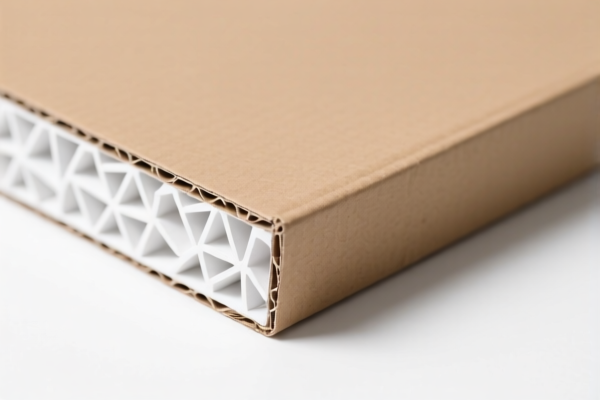
AI Analysis
📄 Kaolin Coated Paper and Paperboard (High Clay Content)
🌐 HS Code Reference & Customs Clearance Guide | 2026 Latest Tariff Analysis | Professional Clearance Strategy for US Imports from China
📌 I. Product Definition & Classification: What Exactly is "Kaolin Coated Paper"?
Kaolin coated paper and paperboard are high-value packaging and printing materials where kaolin clay (china clay) is applied as a coating to base paper or paperboard. This coating enhances smoothness, brightness, opacity, and printability, making it ideal for high-quality packaging (e.g., cosmetic boxes, food cartons) and commercial printing.
In international trade, classification depends heavily on: 1. Coating Weight & Composition: Kaolin content must be significant. 2. Paper Structure: Single-layer vs. multi-layer (laminated). 3. Surface Treatment: Whether it’s coated on one side or both. 4. Substrate Base: Is it purely paper, or is it laminated with other materials (e.g., foil, plastic)? If laminated, it may fall under Chapter 4811.
⚠️ Key Distinction Point:
- Purely coated paper/board (no other laminates) → Chapter 4810 (Kaolin-coated paper).
- Coated paper with additional surface treatment (e.g., polymer coating, foil lamination) → Chapter 4811 (Processed paper/paperboard).
- Misclassification Risk: Declaring laminated products as "purely coated" leads to severe penalties.
📦 II. HS Code Classification Details (2026 Official Tariff Schedule)
Based on the provided data, here are the precise HS codes, descriptions, and tax structures for kaolin-coated paper imported into the US from China.
| HS Code | Product Description | Key Characteristics | Layer/Structure |
|---|---|---|---|
4810.13.11.40 |
Kaolin-coated paper and paperboard | Single or double-sided coating, specific clay composition | Purely coated paper/board |
4810.19.11.00 |
Other kaolin-coated paper and paperboard | Non-specified coating types, still clay-based | Purely coated paper/board |
4811.90.90.35 |
Kaolin-coated paper & board with additional treatment | Coated + surface treatment (e.g., polymer, resin) | Coated + Treated (Chapter 4811) |
4810.92.12.25 |
Multi-layer large-sheet kaolin-coated paper | Multi-ply construction, large format | Multi-layer laminated paper |
4810.92.14.35 |
Multi-layer large-size kaolin-coated sheet | Multi-ply, large dimensions, specific grade | Multi-layer laminated paper |
🔍 Critical Reminder:
- 4810 Series: Applies to paper/board where kaolin is the primary coating material.
- 4811 Series: Applies when additional surface treatments (beyond clay) are applied, or if the product falls under "other processed paper."
- Do not mix 4810 and 4811: Misdeclaring a 4811 product as 4810 (or vice versa) triggers customs audits and potential seizure.
💰 III. 2026 Latest Tariff Rate Breakdown (Including Additional Duties & Policy Surcharges)
✅ Applicable Country: United States (US)
✅ Origin: China (CN)
✅ Effective Date: From November 10, 2025 (including subsequent imports)
All five HS codes below share the same total tax rate due to their origin (China) and the nature of the goods (paper products subject to trade tensions).
🎯 General Tax Structure for All Listed HS Codes:
- Base Tariff: 0.0%
- Section 301 Additional Duty: 25.0%
- Section 122 Duty (IEEPA): 10.0%
- Total Effective Tax Rate: 35.0%
- Tax Calculation:
CIF Value × 35% - De Minimis Exemption: ❌ Not Available (All goods from China are subject to full tariff assessment under current US trade policy).
📌 Detailed Legal Basis Path:
Section 301 Tariff→ 25%IEEPA Section 122→ 10%- Combined: 35% total duty burden.
📌 Explanation:
- The 25% Section 301 duty is imposed under US Trade Law for products listed in the China tariff exclusion lists (paper products are included).
- The 10% IEEPA duty is levied under the International Emergency Economic Powers Act targeting specific Chinese imports.
- Total 35% is a high-cost barrier that must be factored into your landed cost calculation immediately.
🛠️ IV. Customs Clearance Practical Advice (Battle-Tested Pitfall Avoidance)
✅ 1. Required Documentation Checklist (No Exceptions)
| Document | Mandatory? | Purpose |
|---|---|---|
| ✅ Commercial Invoice | ✔️ | Must clearly state: "Kaolin Coated Paper," HS Code, Origin (China), CIF Value |
| ✅ Packing List | ✔️ | Detail weight, dimensions, and number of rolls/sheets |
| ✅ Product Specification Sheet | ✔️ | Include clay coating weight (gsm), paper base type, layer structure, and surface finish |
| ✅ Certificate of Origin (CO) | ✔️ | Confirm China origin to avoid origin fraud claims |
| ✅ Bill of Lading (B/L) | ✔️ | Consistent with invoice and packing list |
| ✅ Customs Broker Power of Attorney | ✔️ | Allow your broker to file Entry Summary (CBP Form 7501) |
💡 Pro Tip: Ensure your specification sheet explicitly mentions "kaolin" and "clay coating." If customs suspects titanium dioxide (TiO2) or polymer coating instead, they may reclassify under a different HS code with different duty implications.
✅ 2. Declaration Strategy (Key Mnemonics)
🔥 “Clay Coated, Check Layers, Declare 35%, Avoid Delays!”
| Scenario | Correct Declaration | Error Consequence |
|---|---|---|
| Single-layer kaolin-coated paper | 4810.13.11.40 or 4810.19.11.00 |
Misdeclaration → 35% + potential fine |
| Multi-layer kaolin-coated paper | 4810.92.12.25 or 4810.92.14.35 |
Under-declaration → Seizure |
| Coated + Polymer Treatment | 4811.90.90.35 |
Wrong HS → Delayed release, audit |
| Laminated with foil/plastic | Likely not in this list (may be Chapter 4811 or 4823) | Wrong chapter → Penalty |
📌 Note: If your product is laminated (e.g., paper + plastic + foil), it may not qualify for these HS codes. It might fall under
4823.90or4811.60. Always verify structure.
✅ 3. Special Cases & Handling
| Case | Handling Advice |
|---|---|
| OEM Custom Printed Kaolin Paper | Still classified under 4810/4811 if the primary function is the coating, not the printing. Printing is secondary. |
| Kaolin Paper with Water-based Coating | If water-based coating is applied over kaolin, it may move to 4811.90.90.35. Declare accordingly. |
| Samples vs. Commercial Quantity | Even samples from China are subject to 35% duty unless under de minimis ($800), but kaolin paper is often excluded from de minimis if deemed high-risk. Check CBP rulings. |
| Partial Exemption Requests | No exemption exists for these HS codes under current 2026 policy. Plan for 35% cost. |
🌍 V. Global Market Comparison (2026 Latest)
| Country/Region | Recommended HS Code | Tariff Rate (China Origin) | Certification Requirements | Notes |
|---|---|---|---|---|
| 🇺🇸 United States | 4810.xxxxxx.xx / 4811.xxxxxx.xx |
35% (0% base + 25% + 10%) | None standard | High tariff impact; plan pricing accordingly |
| 🇨🇳 China | 4810.xxxxxx.xx |
5%–8% (Import Duty) | N/A | Domestic market access |
| 🇪🇺 European Union | 4810.xxxxxx.xx |
0% (Under GSP/EBA if eligible) | REACH, FSC/PEFC for sustainability | Lower duty burden vs. US |
| 🇯🇵 Japan | 4810.xxxxxx.xx |
5%–7% | JIS standards | Moderate duty |
| 🇬🇧 United Kingdom | 4810.xxxxxx.xx |
5%–7% | UKCA marking (if applicable) | Post-Brexit tariff aligned with EU |
📌 Conclusion:
- The US is the highest-cost market for kaolin-coated paper from China due to the 35% combined tariff.
- EU and Japan offer significantly lower duty rates, making them more competitive if supply chain allows.
📌 VI. Common Mistakes & Pitfalls (Lessons Learned)
❌ Mistake 1: Declaring multi-layer paper as single-layer (4810.13 instead of 4810.92)
👉 Consequence: Customs may reclassify and issue a notice of liquidation with penalties.
❌ Mistake 2: Ignoring the "Additional Treatment" clause
👉 If your paper has a polymer topcoat over kaolin, it should be 4811.90.90.35, not 4810. Wrong code = Audit risk.
❌ Mistake 3: Assuming de minimis ($800) applies
👉 Kaolin-coated paper is NOT exempt from Section 301/122 duties under de minimis. Full 35% applies even on small shipments.
❌ Mistake 4: Vague description: "Coated Paper"
👉 Always specify: "Kaolin-coated paper, [gsm], [layers], for [use]". Vagueness delays clearance.
✅ Correct Declaration Example:
"Kaolin Coated Paper, 150gsm, Single Layer, Bright White, for Packaging Box Printing, HS Code 4810.13.11.40, Origin: China, CIF Value: $10,000"
🎯 VII. Conclusion: Professional Declaration, Cost Optimization, Efficiency!
🎯 Key Takeaways:
🔹 "35% Duty is Fixed for China-Origin Kaolin Paper. Plan for It!"
🔹 "Check Layers: Single vs. Multi vs. Treated. Wrong Code = Penalty."
🔹 "Documentation is Key: Specification Sheet Must Mention 'Kaolin'."
📌 Action Plan:
1. Verify Product Structure: Is it single-layer, multi-layer, or treated?
2. Select Correct HS Code: Use the table above.
3. Prepare Full Documentation: Invoice, Packing List, Specs, CO.
4. Engage Experienced Customs Broker: Ensure they understand Section 301/122 applicability.
5. Calculate Landed Cost: Include 35% duty in your pricing model.
📣 Immediate Next Steps:
📞 Contact your customs broker today.
📄 Provide product specs and request an Advance Ruling if uncertain.
🚀 Ensure smooth clearance, avoid delays, and protect your margins!
✨ Professional Customs Clearance Starts with Accurate Classification!
💼 Every percentage point of duty matters. Optimize your supply chain today!
Customer Reviews
About HS Code Classification
The Harmonized System (HS) is an internationally standardized nomenclature developed by the World Customs Organization (WCO) to classify traded products. Over 200 countries use the HS system as the basis for customs tariffs, trade statistics, and import/export regulations.
Each HS code follows a hierarchical structure:
- Chapter (2 digits) — Broad category of goods (e.g., Chapter 84: Machinery and Mechanical Appliances)
- Heading (4 digits) — More specific grouping within the chapter
- Subheading (6 digits) — Internationally standardized breakdown, used by all WCO member countries
- National subdivisions (8-10 digits) — Country-specific extensions for further classification, such as US HTSUS 10-digit codes
Correct HS code classification is essential for smooth customs clearance, accurate duty payment, and compliance with trade regulations. Misclassification can lead to customs delays, overpayment of duties, or penalties.
When importing from CN to US, the applicable tariff rates may include:
- Most-Favored-Nation (MFN) rate — The standard duty rate applied to WTO members
- General rate — Applied to countries without trade agreements
- Trade remedy duties — Additional tariffs such as Section 301 (anti-dumping), Section 232 (national security), or countervailing duties
The information provided on this page is for reference purposes only. For official classification, please consult with your local customs authority or a licensed customs broker.