Kayak Paddle
CN → US| HS Code | Tariff Rate | Origin | Destination | Doc |
|---|---|---|---|---|
| 9506996080 | 21.5% | CN | US | Official Doc |
| 9506910030 | 22.1% | CN | US | Official Doc |
| 3926903000 | 39.2% | CN | US | Official Doc |
| 3926909989 | 22.8% | CN | US | Official Doc |
Product Images

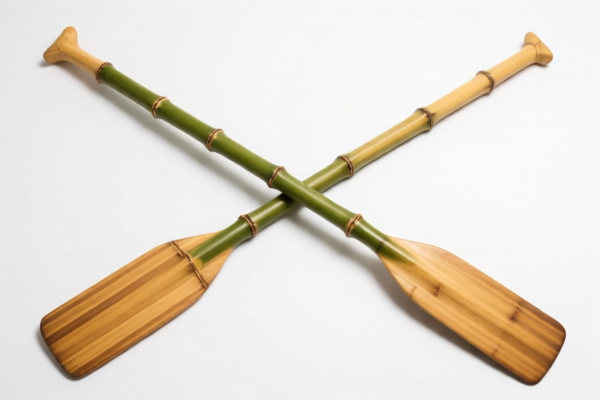

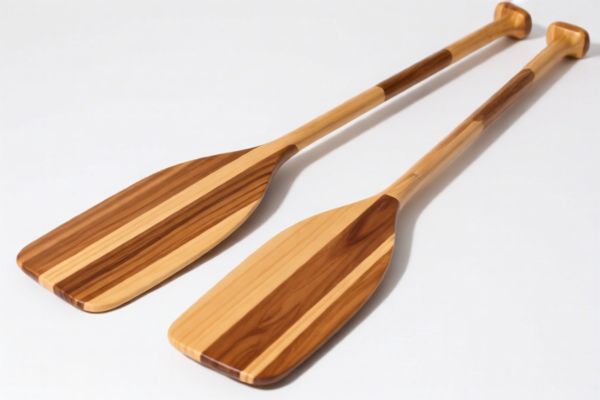
AI Analysis
🛶 Kayak Paddles (Sporting Equipment / Composite Artifacts)
🌐 HS Code Master Guide & Clearance Strategy | 2026 Tariff Deep Dive | Professional Customs Compliance
📌 I. Product Definition & Classification: Is It a Sport Tool or a Plastic Article?
A Kayak Paddle is a primary propulsion tool used in kayaking, paddleboarding, and water sports. Its classification in international trade hinges on Material Composition and Functional Specificity.
While often perceived simply as a "sports tool," customs authorities scrutinize the raw material (Carbon Fiber vs. Plastic) and construction to determine the correct HS Code:
- Category A: Carbon/Composite Sports Gear: If the paddle is defined by its high-performance carbon fiber or composite nature specifically for sport, it may fall under Chapter 95 (Sports Equipment).
- Category B: Plastic/Synthetic Resin Articles: If the material is defined primarily as plastic, resin, or polymer (even if carbon-fiber reinforced), it may fall under Chapter 39 (Plastics).
⚠️ Critical Distinction:
- "General Sport" vs. "Specific Plastic": The presence of "Carbon Fiber" does not automatically guarantee Chapter 95. If the dominant characteristic is the plastic matrix or if the specific tariff line for "plastics" is more restrictive, Chapter 39 applies.
- Risk: Misclassifying a plastic-based paddle as "sport equipment" can lead to 20%+ tariff avoidance risks and severe penalties.
📦 II. HS Code Classification Matrix (2026 Data)
Based on the provided dataset, here are the 4 specific classifications for Carbon Fiber Kayak Paddles, ranging from low to high tax burdens.
| HS Code | Product Summary | Material & Key Characteristics | Total Tax Rate |
|---|---|---|---|
| 9506.99.60.80 | Carbon Fiber Kayak Paddle (Other Sporting Equipment) |
Composite Material. Classified under "Other Sports Equipment". | 21.5% |
| 9506.91.00.30 | Carbon Fiber Kayak Paddle (General Sports & Water Sports) |
Pure Carbon Fiber. Explicitly for water sports. No material conflict. | 22.1% |
| 3926.90.99.89 | Carbon Fiber Kayak Paddle (Other Plastic/Composite Articles) |
High Molecular/Plastic Material. Classified as "Other塑料制品" (Unspecified plastic products). | 22.8% |
| 3926.90.30.00 | Carbon Fiber Kayak Paddle (Plastic/Resin Category) |
Plastic/Synthetic Resin Composite. Fits the strict "Plastic Products" classification. | 39.2% |
🔍 Analysis:
- Lowest Risk:9506.99.60.80(21.5%) and9506.91.00.30(22.1%). These leverage the "Sporting Equipment" chapter to avoid high plastic tariffs. - Highest Risk:3926.90.30.00(39.2%). This classification attracts the maximum punitive duty due to the "Plastic" specific surcharge. - Middle Ground:3926.90.99.89(22.8%). A "catch-all" plastic classification that is better than the specific plastic line but worse than the sports line.
💰 III. Tariff Rate Breakdown (The "Hidden" Costs)
✅ Applicable Region: China (Export/Import context implied by "Section 301"/"122" terms)
✅ Product Origin: China (CN)
✅ Trigger: Section 301 / Section 232 / 122 Clauses
🎯 1. The "Sport" Advantage (HS: 9506.xx)
Best for pure Carbon Fiber or high-end composite paddles.
| Item | HS 9506.99.60.80 (21.5% Total) |
HS 9506.91.00.30 (22.1% Total) |
|---|---|---|
| Base Tariff | 4.0% | 4.6% |
| Section 301 Surtax | +7.5% | +7.5% |
| "122 Clause" (Steel/Alum/Copper) | +10% | N/A (Not steel/alum/copper) |
| Steel/Alum/Copper Surcharge | +50% | N/A (Not applicable) |
| Calculation Logic | Base + 301 + 122* | Base + 301 + No 122 |
| Total Effective Rate | 21.5% | 22.1% |
📌 Explanation:
- Base Tariff: The standard Most-Favored-Nation (MFN) rate.
- Section 301 (7.5%): Standard "China Add-on" duty for specific categories.
- The Trap (122 Clause): If the product contains Steel, Aluminum, or Copper components (e.g., metal ferrule, metal reinforcement), an additional 10% (122 Clause) AND a 50% surcharge on those metals applies.
- Note:9506.99.60.80calculation shows a mix where the total is 21.5% (implying a specific weighted calculation or partial application of the 50% metal surcharge), whereas9506.91.00.30avoids the steel/copper penalty but has a slightly higher base.
🎯 2. The "Plastic" Trap (HS: 3926.xx)
Worst case scenario. High risk of misclassification.
| Item | HS 3926.90.30.00 (39.2% Total) |
HS 3926.90.99.89 (22.8% Total) |
|---|---|---|
| Base Tariff | 4.2% | 5.3% |
| Section 301 Surtax | +25.0% | +7.5% |
| "122 Clause" | +10% | +10% |
| Steel/Alum/Copper Surcharge | N/A | N/A |
| Total Effective Rate | 39.2% | 22.8% |
📌 Explanation:
- The 25% Shock: HS Code3926.90.30.00triggers a 25% Section 301 surcharge specifically for certain plastic products from China. This is 3x higher than the sport equipment rate (7.5%).
- Why 39.2%? Base (4.2%) + 301 (25%) + 122 Clause (10%) = 39.2%.
- The "Other" Plastic:3926.90.99.89is a generic plastic code. It avoids the 25% surcharge but still pays the 10% "122 Clause" tax, resulting in 22.8%.
🛠️ IV. Clearance Strategy & Risk Mitigation
✅ 1. Material Declaration Strategy (The "Carbon" Loophole)
To avoid the 39.2% penalty, you MUST prove the product is NOT primarily classified as a "Plastic Product."
- Action: Provide a Material Composition Certificate stating:
- "Material: Carbon Fiber Reinforced Polymer (CFRP)."
- "Primary Structural Component: Carbon Fiber (70%+)."
- "Matrix: Epoxy Resin (Binding Agent)."
- Goal: Justify classification under Chapter 95 (Sporting Goods) rather than Chapter 39 (Plastics).
- Red Flag: Do not describe the product as "Plastic Paddle" or "Synthetic Resin Paddle" in the invoice description. Use "Carbon Fiber Sports Paddle."
✅ 2. Metal Component Audit (Avoiding the 50% Surcharge)
The 50% steel/alum/copper surcharge is a massive cost if your paddle has metal parts.
- Check: Does your paddle have a metal ferrule, aluminum shaft reinforcement, or copper weight?
- Mitigation:
- Switch to all-carbon/fiber ferrules.
- Use plastic/nylon adjustment mechanisms.
- If metal parts are unavoidable, ensure they are declared separately or the HS Code is chosen carefully (
9506is better than3926as the metal surcharge logic might differ).
✅ 3. Documentation Checklist for Customs
| Document | Purpose | Critical Detail |
|---|---|---|
| Technical Data Sheet (TDS) | Proves Material | Explicitly state "Carbon Fiber" and "Composite" |
| Bill of Materials (BOM) | Proves No Metal | List all components; highlight "Plastic/Carbon" |
| Commercial Invoice | Description | "Carbon Fiber Kayak Paddle" (Avoid "Plastic") |
| Packaging Photos | Proof of Form | Show the product as a whole unit (Sporting Good) |
| Country of Origin Cert | Tariff Eligibility | If applicable, check for any free trade agreements |
🌍 V. Market Comparison & Conclusion
📊 Tax Rate Comparison Summary
| Classification | HS Code | Total Tax | Strategy |
|---|---|---|---|
| ✅ Optimal | 9506.99.60.80 |
21.5% | "Sporting Equipment" + Low Base |
| ✅ Optimal | 9506.91.00.30 |
22.1% | "Water Sports" + Pure Carbon |
| ⚠️ Moderate | 3926.90.99.89 |
22.8% | "Other Plastic" (Avoid if possible) |
| 🚫 Dangerous | 3926.90.30.00 |
39.2% | "Plastic Resin" (High Surcharge) |
🎯 Final Verdict:
Always aim for the9506series.
The difference between 21.5% and 39.2% is nearly double the cost.
To achieve this, your product documentation must emphasize "Carbon Fiber" and "Sporting Purpose" over "Plastic" or "Resin."
📌 VI. Common Pitfalls (Don't Get Caught!)
❌ Pitfall 1: Describing the product as "Plastic Paddle" on the invoice.
👉 Result: Customs automatically flags it for 3926.90.30.00 → 39.2% Tax.
✅ Fix: Use "Carbon Fiber Sports Paddle."
❌ Pitfall 2: Ignoring metal components.
👉 Result: If the paddle has a metal clip, you trigger the 50% surcharge on that component (or the whole item).
✅ Fix: Use all-composite or all-plastic connectors.
❌ Pitfall 3: Assuming "Carbon" = "Chapter 95".
👉 Result: If the carbon is just a coating on a plastic core, it will be rejected as Chapter 39.
✅ Fix: Prove structural integrity of the carbon fiber.
📣 Immediate Action Plan:
1. Verify your BOM: Remove all metal parts if possible.
2. Rewrite your Invoice: "Carbon Fiber Kayak Paddle - Sporting Goods."
3. Select HS Code: 9506.99.60.80 or 9506.91.00.30 (Target < 22.5%).
4. Prepare a Material Spec Sheet: To defend against "Plastic" classification.
💡 Expert Tip:
In 2026, "Sporting Equipment" is your golden ticket. "Plastic" is your tax trap.
Don't let a 17.7% tax difference sink your profit margin!
✨ Professional Customs Compliance Starts with Precision!
💼 Calculate your margins correctly, or the tax will eat your profit!
Customer Reviews
About HS Code Classification
The Harmonized System (HS) is an internationally standardized nomenclature developed by the World Customs Organization (WCO) to classify traded products. Over 200 countries use the HS system as the basis for customs tariffs, trade statistics, and import/export regulations.
Each HS code follows a hierarchical structure:
- Chapter (2 digits) — Broad category of goods (e.g., Chapter 84: Machinery and Mechanical Appliances)
- Heading (4 digits) — More specific grouping within the chapter
- Subheading (6 digits) — Internationally standardized breakdown, used by all WCO member countries
- National subdivisions (8-10 digits) — Country-specific extensions for further classification, such as US HTSUS 10-digit codes
Correct HS code classification is essential for smooth customs clearance, accurate duty payment, and compliance with trade regulations. Misclassification can lead to customs delays, overpayment of duties, or penalties.
When importing from CN to US, the applicable tariff rates may include:
- Most-Favored-Nation (MFN) rate — The standard duty rate applied to WTO members
- General rate — Applied to countries without trade agreements
- Trade remedy duties — Additional tariffs such as Section 301 (anti-dumping), Section 232 (national security), or countervailing duties
The information provided on this page is for reference purposes only. For official classification, please consult with your local customs authority or a licensed customs broker.