Kazoo
CN → US| HS Code | Tariff Rate | Origin | Destination | Doc |
|---|---|---|---|---|
| 9207900080 | 22.5% | CN | US | Official Doc |
| 9207900040 | 22.5% | CN | US | Official Doc |
| 9205901900 | 17.5% | CN | US | Official Doc |
| 9205906000 | 17.5% | CN | US | Official Doc |
Product Images
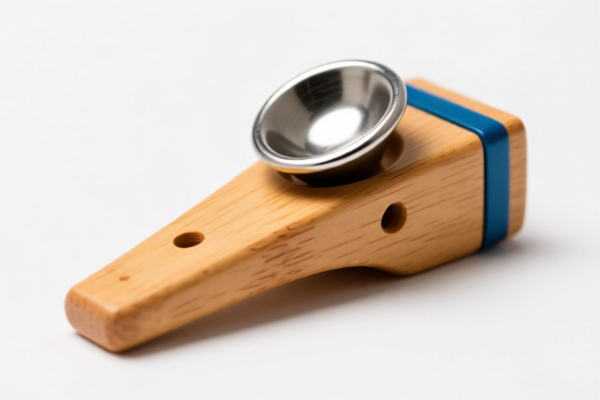
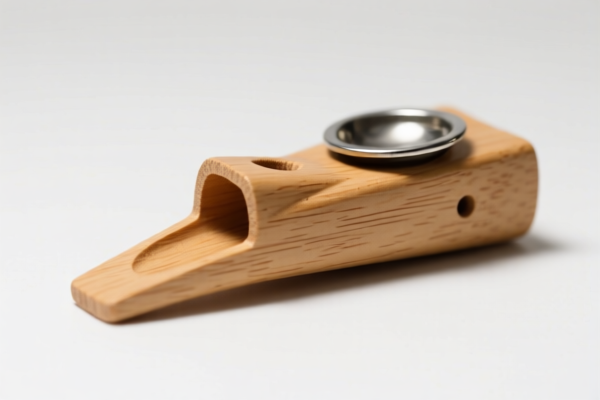
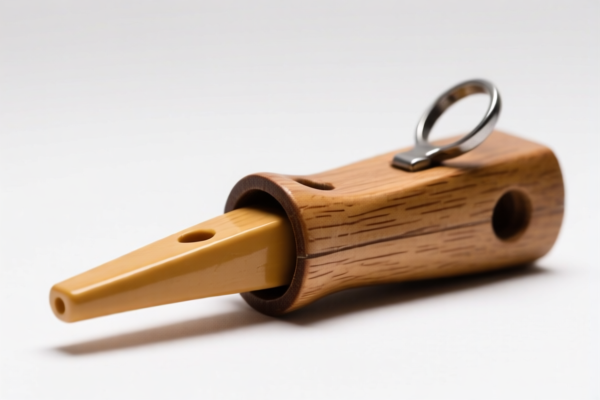
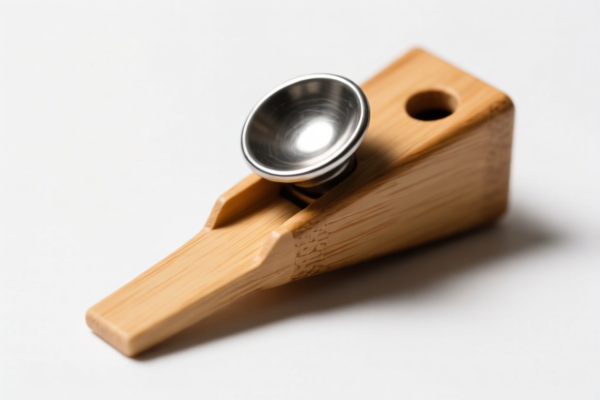
AI Analysis
🎺 Kazoo (The "Buzzing" Humming Tube)
🌐 HS Code Reference & Customs Clearance Guide | 2026 Latest Tariff Analysis | Professional Entry Strategies
📌 I. Product Definition & Classification: What Exactly is a "Kazoo"?
The Kazoo is a unique wind musical instrument. Unlike traditional wind instruments (like clarinets or trumpets) that use reeds or lip vibration, the Kazoo produces sound through a vibrating membrane (often plastic or wax paper) when the player hums into it. It is often categorized as a "mouth organ" or a simple wind instrument.
In international trade, it is critical to distinguish between: 1. Electric Kazoos: Instruments that require electrical amplification or contain electronic components. 2. Non-Electric Kazoos: Traditional acoustic instruments (metal, plastic, or wood) that produce sound purely acoustically.
⚠️ Key Distinction:
- If the Kazoo is acoustic (no battery, no plug, no internal electronics) → It falls under Chapter 92 (Musical Instruments), specifically Wind Instruments or Mouth Organs.
- If the Kazoo is electric (e.g., a "digital kazoo" with MIDI output, speakers, or amplification) → It falls under 9207.90.00.80 (Other electric musical instruments).
📦 II. HS Code Classification Details (2026 Latest Tariff Reference)
Based on the provided , here are the relevant HS Codes and their corresponding tax implications. Note that standard acoustic Kazoos are typically classified as "Mouth Organs" or "Other Wind Instruments."
| HS Code | Product Description | Applicable Scenario | Electrical? |
|---|---|---|---|
9205.90.19.00 |
Wind musical instruments... Other: Accordions and similar instruments; mouth organs: Mouth organs | Most Acoustic Kazoos. Traditional plastic/metal kazoos, toy instruments, and simple mouth-blown buzzers are often classified here as "Mouth Organs." | ❌ No |
9207.90.00.80 |
Musical instruments... amplified electrically... Other Other | Electric/Digital Kazoos. If the instrument includes electronic components for amplification, MIDI connectivity, or sound generation beyond the acoustic membrane. | ✅ Yes |
9207.90.00.40 |
Musical instruments... amplified electrically... Other Fretted stringed instruments | Not Applicable. This code is for guitars, ukuleles, etc. Do not use for Kazoos. | N/A |
9205.90.60.00 |
Wind musical instruments... Other: Other | Alternative for Acoustic Kazoos. If customs authorities do not consider the Kazoo a "Mouth Organ" (which technically implies free reeds like harmonicas), it may fall under "Other Wind Instruments." | ❌ No |
🔍 Critical Note:
- Harmonicas vs. Kazoos: Harmonicas are explicitly "Mouth Organs." Kazoos are ambiguous. Some customs brokers classify Kazoos under9205.90.19.00(Mouth Organs), while others may argue for9205.90.60.00(Other Wind Instruments). Check with local customs or obtain a binding ruling. - Electric Kazoos: Any Kazoo with a battery, USB, or speaker must go under 9207.
💰 III. 2026 Tariff Rate Breakdown (Including Surtaxes)
✅ Applicable Country: United States (US)
✅ Origin: China (CN)
✅ Effective Time: 2025 November 10 onwards (for subsequent imports)
🎯 1. 9205.90.19.00 —— Acoustic Kazoo / Mouth Organ (Most Likely for Standard Kazoos)
| Item | Detail |
|---|---|
| Base Tariff | 0.0% (ad valorem) |
| Surtax (Section 301 / Additional) | +7.5% |
| Total Tariff | 7.5% |
| Tax Calculation | CIF Value × 7.5% |
| De Minimis Eligibility | ❌ Not Eligible for $800 de minimis exemption if subject to Section 301 surtax (verify current CBP enforcement on small packages of musical instruments). |
| Legal Basis Path | USITC:9205.90.19.00 → SECTION_301:9205.90.19.00 |
📌 Explanation:
- Base Rate 0%: Standard trade agreement rate for many musical instruments.
- Surtax 7.5%: This reflects the "Additional Duties" imposed on specific Chinese imports. Note: The shows a 7.5% surtax for this code. This is significantly lower than the 25% often applied to electronics.
- Why 7.5%?: Some musical instruments are excluded from the highest tier of Section 301 tariffs. However, always verify if the Kazoo is considered "consumable" or "toy" which might have different rates.
🎯 2. 9205.90.60.00 —— Other Wind Instruments (Alternative for Acoustic Kazoos)
| Item | Detail |
|---|---|
| Base Tariff | 0.0% |
| Surtax (Section 301 / Additional) | +7.5% |
| Total Tariff | 7.5% |
| Tax Calculation | CIF Value × 7.5% |
| De Minimis Eligibility | ❌ Not Eligible |
| Legal Basis Path | USITC:9205.90.60.00 → SECTION_301:9205.90.60.00 |
📌 Explanation:
- If classified as "Other Wind Instruments" rather than "Mouth Organs," the tariff is identical (7.5%).
- This provides a tariff-neutral outcome regardless of whether you classify it as a mouth organ or a general wind instrument.
🎯 3. 9207.90.00.80 —— Electric Kazoo (Amplified Electronically)
| Item | Detail |
|---|---|
| Base Tariff | 5.0% |
| Surtax (Section 301 / Additional) | +7.5% |
| Total Tariff | 12.5% |
| Tax Calculation | CIF Value × 12.5% |
| De Minimis Eligibility | ❌ Not Eligible |
| Legal Basis Path | USITC:9207.90.00.80 → SECTION_301:9207.90.00.80 |
📌 Explanation:
- Base Rate 5%: Higher than acoustic instruments.
- Surtax 7.5%: Same surtax rate as above.
- Total 12.5%: Significantly higher than acoustic variants. Avoid this code unless the instrument is genuinely electronic.⚠️ Important:
-9207.90.00.40(Fretted Stringed Instruments) has 0% Total Tax. Do not misclassify a Kazoo as a stringed instrument to avoid taxes. This is fraud and will lead to severe penalties.
🛠️ IV. Customs Clearance Practical Advice (Avoid Pitfalls)
✅ 1. Documentation Checklist (Mandatory)
| Document | Required? | Notes |
|---|---|---|
| ✅ Product Description | ✔️ | Must specify: "Kazoo, Plastic, Acoustic, No Electricity." Avoid vague terms like "Toy Instrument." |
| ✅ Material Composition | ✔️ | Specify: "Plastic body, plastic membrane." |
| ✅ Function Description | ✔️ | "Sound produced by humming through a vibrating membrane. No electronic components." |
| ✅ Pictures | ✔️ | Clear photo showing no batteries, no wires, no USB ports. |
| ✅ Commercial Invoice | ✔️ | List HS Code and country of origin (China). |
| ✅ Packing List | ✔️ | Include net weight and quantity. |
✅ 2. Declaration Tips (Key Mnemonics)
🔥 "Acoustic is 7.5%, Electric is 12.5%, Stringed is Fraud!"
| Scenario | Correct HS Code | Error if Wrong |
|---|---|---|
| Standard Plastic Kazoo | 9205.90.19.00 or 9205.90.60.00 |
If misdeclared as toy: Higher duty or seizure. |
| Electric/Digital Kazoo | 9207.90.00.80 |
If misdeclared as acoustic: Evade 5% base + 7.5% surtax = 12.5% shortfall. |
| Kazoo with Speaker | 9207.90.00.80 |
Must declare as electric. |
| Kazoo Set (with harmonica) | Separate Lines | Harmonica may have different classification. Don't lump unless identical. |
✅ 3. Special Cases
| Case | Recommendation |
|---|---|
| Kazoo as a "Toy" | If marketed as a toy (e.g., for toddlers), it might fall under Chapter 95. However, if it's a "musical instrument" for education/performance, Chapter 92 is safer. Check if it exceeds typical toy dimensions or sound pressure. |
| Bulk Imports (Containers) | Ensure the commercial invoice clearly states "Harmonica/Kazoo - Acoustic Wind Instrument" to avoid CBP questioning. |
| De Minimis ($800) | Risk Alert: CBP has increasingly scrutinized Section 301 surtaxes on de minimis shipments. Even if under $800, the 7.5% surtax may still apply and be collected from the recipient. Do not assume tax-free for small packages. |
🌍 V. Global Market Comparison (2026 Latest)
| Country/Region | Recommended HS Code | Tariff (China Origin) | Notes |
|---|---|---|---|
| 🇺🇸 USA | 9205.90.19.00 |
7.5% (Surtax Included) | Most common for acoustic kazoos. |
| 🇨🇳 China | 9205.90.19.00 |
0% - 5% | Import duty varies; no surtax. |
| 🇪🇺 EU | 9205.90.19 |
0% | Generally 0% for musical instruments. |
| 🇬🇧 UK | 9205.90.19 |
0% - 5% | Post-Brexit rules apply. |
| 🇯🇵 Japan | 9205.90.19 |
0% | Favorable for musical instruments. |
📌 Conclusion:
- The US is the most tax-sensitive market for Kazoos due to the 7.5% surtax.
- Europe and Japan offer 0% tariffs, making them more attractive for importers.
📌 VI. Common Errors & Pitfalls (Blood Lessons)
❌ Error 1: Classifying an Electric Kazoo as Acoustic (9205)
👉 Consequence: Underpayment of 5% base + 7.5% surtax = 12.5% total evasion. Leads to fines, seizure, and audits.
❌ Error 2: Using 9207.90.00.40 (Stringed Instruments) for Kazoos to get 0% tax
👉 Consequence: Severe Fraud. Kazoos are not stringed instruments. Penalties can include 100% of value + legal fees.
❌ Error 3: Calling it a "Toy" to avoid Chapter 92 classification
👉 Consequence: If CBP determines it's a musical instrument (which it is), they will reclassify and apply Chapter 92 rates + possible fraud penalties.
✅ Correct Practice:
"Kazoo, Plastic, Acoustic, Wind Instrument, Model XYZ, No Electronics"
🎯 VII. Conclusion: Professional Declaration, Cost Saving!
🎯 Remember the Mnemonic:
🔹 "Acoustic Kazoo = 7.5%, Electric Kazoo = 12.5%, Stringed = 0% (But FRAUD!)"
🔹 "Chapter 92 for Music, Chapter 95 for Toys, But Kazoo is Music!"
📌 Pro Tip:
- If you are importing large volumes, consider applying for an HTSUS Exclusion if available for musical instruments (though rare for kazoo-specific items).
- Always keep samples for customs inspection to prove it is acoustic.
📣 Immediate Action:
📞 Confirm with your freight forwarder: "Is my Kazoo classified as
9205.90.19.00or9205.90.60.00?"
🚀 Declare accurately: Avoid misclassification to ensure smooth customs clearance and avoid 12.5% vs 7.5% discrepancies.
✨ Professional Customs Clearance Starts with Accurate Classification!
💼 Your profit margin depends on correct HS Codes!
Customer Reviews
About HS Code Classification
The Harmonized System (HS) is an internationally standardized nomenclature developed by the World Customs Organization (WCO) to classify traded products. Over 200 countries use the HS system as the basis for customs tariffs, trade statistics, and import/export regulations.
Each HS code follows a hierarchical structure:
- Chapter (2 digits) — Broad category of goods (e.g., Chapter 84: Machinery and Mechanical Appliances)
- Heading (4 digits) — More specific grouping within the chapter
- Subheading (6 digits) — Internationally standardized breakdown, used by all WCO member countries
- National subdivisions (8-10 digits) — Country-specific extensions for further classification, such as US HTSUS 10-digit codes
Correct HS code classification is essential for smooth customs clearance, accurate duty payment, and compliance with trade regulations. Misclassification can lead to customs delays, overpayment of duties, or penalties.
When importing from CN to US, the applicable tariff rates may include:
- Most-Favored-Nation (MFN) rate — The standard duty rate applied to WTO members
- General rate — Applied to countries without trade agreements
- Trade remedy duties — Additional tariffs such as Section 301 (anti-dumping), Section 232 (national security), or countervailing duties
The information provided on this page is for reference purposes only. For official classification, please consult with your local customs authority or a licensed customs broker.