Keel Support
CN → US| HS Code | Tariff Rate | Origin | Destination | Doc |
|---|---|---|---|---|
| 8607193090 | 38.6% | CN | US | Official Doc |
| 8607199000 | 37.6% | CN | US | Official Doc |
| 7326190080 | 87.9% | CN | US | Official Doc |
| 7326908688 | 87.9% | CN | US | Official Doc |
Product Images

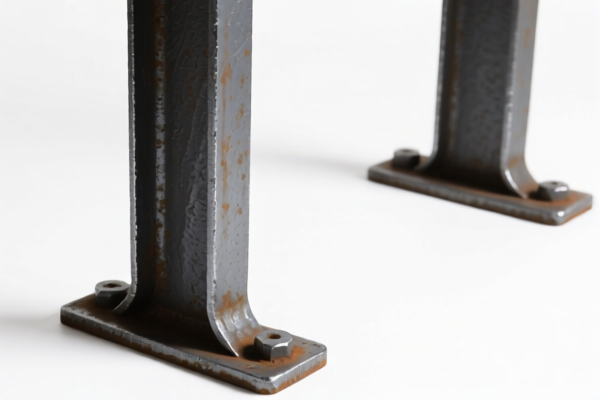

AI Analysis
🚢 Keel Support: Classification, Tariffs & Customs Clearance Guide (2026)
Part of Railway or Tramway Locomotives/Rolling Stock & Ferrous Articles
🌐 HS Code Reference & Global Trade Strategy | 2026 Tariff Breakdown | Critical Clearance Tips
📌 1. What is a "Keel Support"?
In the context of railway and tramway logistics, a "Keel Support" typically refers to:
- Structural components of a truck assembly (bogies), used to support the vehicle frame or maintain stability during operation.
- Forged or stamped steel parts that reinforce the underframe of rail vehicles.
- Generic ferrous articles if not specifically designed for rail rolling stock.
⚠️ Critical Classification Trigger:
- If the part is specifically designed for rail vehicles (heading 8605/8606), it falls under HS 8607.19.30.90.
- If it is a general steel part not tailored for rail use, it may fall under HS 7326.19.00.80 or 7326.90.86.88.
📦 2. HS Code Classification Matrix (2026 Tariff Schedule)
| HS Code | Product Description | Applicable Scenario | Key Classification Criteria |
|---|---|---|---|
| 8607.19.30.90 | Parts of truck assemblies (bogie frames, keel supports) for vehicles of heading 8605/8606 | Specifically designed rail/ tram parts | Must be integral to rail rolling stock; not general steel. |
| 8607.19.90.00 | Other parts of rail/ tram truck assemblies | Non-specific rail parts (e.g., generic brackets) | Not tailored for specific rail vehicle models. |
| 7326.19.00.80 | Other forged/stamped iron/steel articles (non-rail specific) | General steel parts (e.g., automotive, industrial) | No rail-specific design; generic forging/stamping. |
| 7326.90.86.88 | Other iron/steel articles (non-rail, non-forged) | Machined or welded steel components | Not forged/stamped; generic ferrous use. |
🔍 Key Insight:
- 8607.19.30.90 and 8607.19.90.00 are zero-tariff for rail-specific parts.
- 7326.19.00.80 and 7326.90.86.88 face 77.9% total tariffs due to steel/aluminum/copper surcharges.
💰 3. 2026 Tariff Breakdown (China Origin)
✅ Rail-Specific Parts (HS 8607.19.30.90 / 8607.19.90.00)
| Item | Details |
|---|---|
| Base Tariff | 0.0% |
| Additional Tariff | 0.0% |
| Total Tariff | 0.0% |
| Policy Basis | Duty-free for railway/ tram components under WTO/China tariff exemptions. |
| Risk | None if properly documented as rail-specific. |
📌 Note: Zero tariff applies only if the part is certified for rail use (e.g., UIC standards, rail manufacturer specs).
❌ Generic Steel Parts (HS 7326.19.00.80 / 7326.90.86.88)
| Item | Details |
|---|---|
| Base Tariff | 2.9% |
| Steel/Aluminum/Copper Surcharge | 50% (USITC Footnote 9903.88.01) |
| Additional 25% Tariff | For "steel articles" (China-origin) |
| Total Tariff | 77.9% |
| Policy Basis | Section 301 tariffs + USITC surcharges on ferrous goods. |
| Risk | Extremely high – 77.9% can make exports unprofitable. |
📌 Critical Warning:
- 7326.19.00.80 and 7326.90.86.88 are NOT for rail parts! Misclassification here leads to massive penalties.
- 77.9% tariff includes:
- 2.9% base duty
- 25% "Section 301" surcharge
- 50% "Steel/Aluminum/Copper" surcharge
- Total = 77.9%
🛠️ 4. Customs Clearance Strategy (Avoiding 77.9% Pitfalls)
✅ Step 1: Prove Rail-Specific Design
| Document | Requirement |
|---|---|
| Technical Drawings | Show rail vehicle compatibility (e.g., UIC 870 standard). |
| Manufacturer Certificate | "Certified for railway/ tram rolling stock (Headings 8605/8606)". |
| Product Photos | Highlight rail-specific mounting points (e.g., bogie frame integration). |
| End-User Letter | Confirm the part is for rail vehicle assembly only. |
✅ Step 2: Avoid Generic Classification
| Do | Don't |
|---|---|
| Use "Keel Support for Railway Bogie" as the commodity name. | Use "Steel Bracket" or "General Support Part". |
| Declare "Rail Vehicle Part" in the HS Code description. | Declare "Forged Steel Article". |
| Submit rail industry compliance docs (UIC, EN 15085). | Submit generic ISO/CE certs (not rail-specific). |
✅ Step 3: Pre-Verification (Critical!)
🚨 Red Flag: If customs suspects the part is generic steel, they will:
1. Reclassify to 7326.19.00.80 or 7326.90.86.88.
2. Apply 77.9% tariff retroactively.
3. Seize goods for misdeclaration.💡 Pro Tip: Request a Binding Tariff Ruling (BTR) from customs before shipping to confirm HS 8607.19.30.90 eligibility.
🌍 5. Global Market Comparison (2026)
| Market | HS 8607.19.30.90 | HS 7326.19.00.80 | Action Required |
|---|---|---|---|
| 🇺🇸 USA | 0% | 77.9% | Must prove rail-specificity |
| 🇪🇺 EU | 0% | 12% (steel surcharge) | UIC certification required |
| 🇨🇳 China | 0% | 77.9% (domestic surcharge) | Export to China? Avoid 7326 codes! |
| 🇯🇵 Japan | 0% | 8.5% | Rail standards proof needed |
📌 Key Takeaway:
- 77.9% tariff is unique to the US for generic steel parts.
- EU/Japan have lower surcharges, but still require rail-specific proof.
🚫 6. Common Mistakes & Solutions
| Mistake | Consequence | Solution |
|---|---|---|
| Generic name ("Steel Support") | 77.9% tariff + seizure | Use "Railway Bogie Keel Support" + UIC docs |
| No rail certification | Customs reclassifies to 7326 | Submit manufacturer rail compliance certs |
| Missing end-user letter | Tariff applied retroactively | Include rail operator confirmation |
| Splitting parts (e.g., "bolt + bracket") | Higher total tax | Declare as single rail assembly part |
🎯 7. Final Checklist for Zero-Tariff Clearance
✅ 1. Commodity Name: "Keel Support for Railway Bogie (Heading 8605/8606)"
✅ 2. HS Code: 8607.19.30.90 (or 8607.19.90.00 if non-specific)
✅ 3. Docs: UIC/EN 15085 certs + End-user rail operator letter
✅ 4. Packaging: Labeled "Rail Vehicle Part – Not for General Steel Use"
✅ 5. Pre-Ruling: Secure BTR (Binding Tariff Ruling) from customs
🚀 Conclusion
🔹 "Rail-Specific = 0% Tariff; Generic Steel = 77.9% Disaster!"
🔹 Prove rail use with UIC certs to avoid 77.9% penalties.
🔹 Never declare "Keel Support" as a generic steel part – it’s a costly mistake.📌 Final Warning:
If your part is NOT for rail/ tram vehicles, do not use HS 8607. Use 7326 codes and accept the 77.9% tariff.
📣 Action Required:
📞 Contact Customs Broker: "We need a Binding Tariff Ruling for 'Keel Support for Railway Bogie'."
📄 Submit: UIC 870 certs + End-user rail operator letter.
✅ Result: 0% tariff for rail-specific parts!
✨ Your rail parts deserve zero tax – prove they belong to the tracks!
💼 Don’t let 77.9% kill your margin – classify correctly from Day 1!
Customer Reviews
About HS Code Classification
The Harmonized System (HS) is an internationally standardized nomenclature developed by the World Customs Organization (WCO) to classify traded products. Over 200 countries use the HS system as the basis for customs tariffs, trade statistics, and import/export regulations.
Each HS code follows a hierarchical structure:
- Chapter (2 digits) — Broad category of goods (e.g., Chapter 84: Machinery and Mechanical Appliances)
- Heading (4 digits) — More specific grouping within the chapter
- Subheading (6 digits) — Internationally standardized breakdown, used by all WCO member countries
- National subdivisions (8-10 digits) — Country-specific extensions for further classification, such as US HTSUS 10-digit codes
Correct HS code classification is essential for smooth customs clearance, accurate duty payment, and compliance with trade regulations. Misclassification can lead to customs delays, overpayment of duties, or penalties.
When importing from CN to US, the applicable tariff rates may include:
- Most-Favored-Nation (MFN) rate — The standard duty rate applied to WTO members
- General rate — Applied to countries without trade agreements
- Trade remedy duties — Additional tariffs such as Section 301 (anti-dumping), Section 232 (national security), or countervailing duties
The information provided on this page is for reference purposes only. For official classification, please consult with your local customs authority or a licensed customs broker.