Kettle Lid
CN → US| HS Code | Tariff Rate | Origin | Destination | Doc |
|---|---|---|---|---|
| 8309900085 | 37.6% | CN | US | Official Doc |
| 8309900080 | 37.6% | CN | US | Official Doc |
| 7612905000 | 35.0% | CN | US | Official Doc |
| 3923500000 | 40.3% | CN | US | Official Doc |
| 7612901090 | 40.7% | CN | US | Official Doc |
| 3923109000 | 38.0% | CN | US | Official Doc |
Product Images
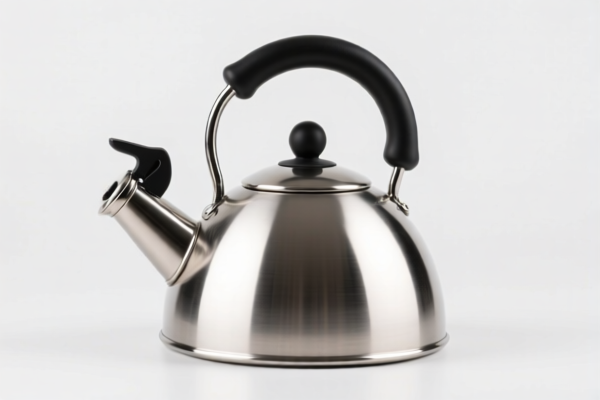
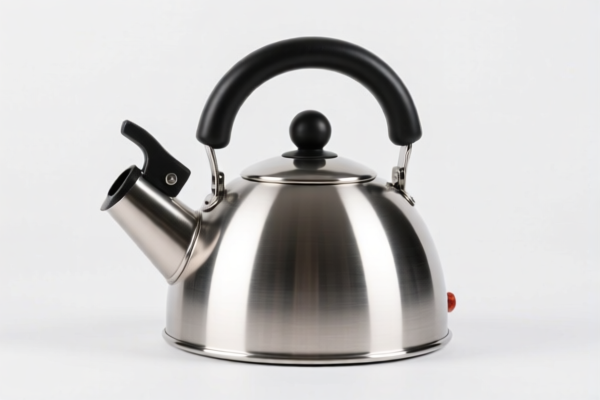
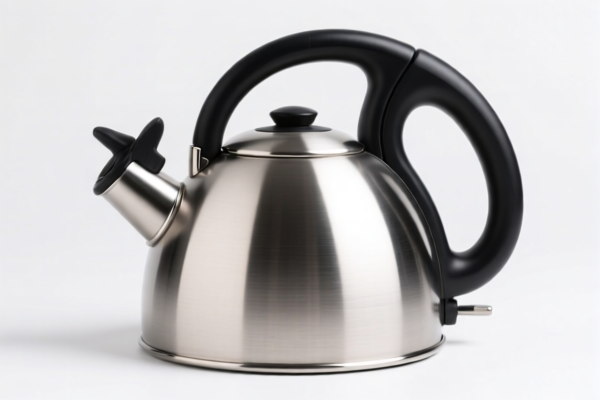
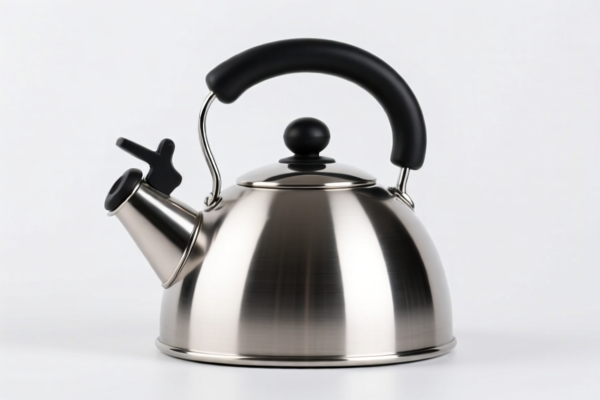
AI Analysis
🫖 Kettle Lid (罐水壶盖子)
🌐 HS Code Reference & Customs Clearance Guide | 2026 Latest Tariff Analysis | Professional Clearance Strategy
📌 1. Product Definition and Classification: Do You Really Understand "Kettle Lids"?
A Kettle Lid is a critical accessory for water boilers, kettles, and thermal containers. In international trade, the classification of this item is strictly determined by its material. While its form is always a "lid" or "cap," customs authorities do not classify it under a single HS Code. Instead, it is categorized based on the raw material used (Metal, Aluminum, Plastic, etc.).
⚠️ Key Classification Point:
- Plastic Lids → Classified under Chapter 39 (Plastics)
- Metal Lids (General) → Classified under Chapter 83 (Base Metal Articles)
- Aluminum Lids → Classified under Chapter 76 (Aluminum)
- Accessories vs. Components: If classified as a general container accessory, it may fall under different subheadings within the same chapter.
📦 2. HS Code Classification Details (2026 Latest Tariff Authority Comparison)
Based on the provided data, here are the specific HS Codes and their corresponding tax implications:
| HS Code | Product Description | Material Inference | Application Scenario |
|---|---|---|---|
8309.90.00.85 |
Kettle Lid, Form: Lid | Other Base Metal | General metal lids (non-aluminum/non-steel specific) |
8309.90.00.80 |
Kettle Lid, Form: Lid | Metal | General metal lids (broad category) |
7612.90.50.00 |
Kettle Lid, Function: Container Accessory | Aluminum | Aluminum lids classified as general container accessories |
3923.50.00.00 |
Kettle Lid, Form: Lid | Plastic | Plastic lids (cap-like form) |
7612.90.10.90 |
Kettle Lid, Function: Container Attachment | Aluminum | Aluminum lids classified specifically as container attachments |
3923.10.90.00 |
Kettle Lid, Function: Packaging/Containing | Plastic | Plastic lids classified as packaging/containing goods |
🔍 Critical Reminder:
- Do not assume "Metal" equals one code.8309(General Base Metal) and7612(Aluminum) have different base tariff rates. - Plastic classification varies by function: Is it a simple lid (3923.50) or a packaging/containing item (3923.10)? This affects the base rate. - All listed HS Codes are subject to additional tariffs due to current trade policies (See Section 3).
💰 3. 2026 Latest Tariff Rate Breakdown (Including Additional Taxes & Policy Surcharges)
✅ Applicable Country: United States (US)
✅ Origin: China (CN)
✅ Effective Time: Current (Includes Section 301 & IEEPA surcharges)
🎯 1. 8309.90.00.85 & 8309.90.00.80 —— Other Base Metal Lids
| Item | Content |
|---|---|
| Base Tariff | 2.6% (ad valorem) |
| Section 301 Surcharge | +25.0% (Added Tariff) |
| Section 122 Surcharge | +10.0% (IEEPA/Specific Provision) |
| Total Tax Rate | 37.6% |
| Tax Calculation | CIF Value × 37.6% |
| De Minimis Eligibility | ❌ No (High tax rate excludes de minimis benefit) |
| Legal Basis Path | USITC:8309.90.00.8X → Section 301: 25% → Section 122: 10% |
📌 Explanation:
- The 2.6% base rate applies to general base metal articles. - The 25% Section 301 tariff is standard for Chinese metal goods. - The 10% Section 122 tariff is an additional layer, pushing the total to 37.6%.
🎯 2. 7612.90.50.00 & 7612.90.10.90 —— Aluminum Lids
| Item | Content |
|---|---|
| Base Tariff | 0.0% (7612.90.50.00) / 5.7% (7612.90.10.90) |
| Section 301 Surcharge | +25.0% (Added Tariff) |
| Section 122 Surcharge | +10.0% (IEEPA/Specific Provision) |
| Total Tax Rate | 35.0% (...50.00) / 40.7% (...10.90) |
| Tax Calculation | CIF Value × [Total Rate] |
| De Minimis Eligibility | ❌ No |
| Legal Basis Path | USITC:7612.90.1X/5X → Section 301: 25% → Section 122: 10% |
📌 Note:
-7612.90.50.00has a 0% base rate, making it the cheapest option at 35.0% total. -7612.90.10.90has a 5.7% base rate, resulting in a 40.7% total. - Optimization Tip: If your product is confirmed Aluminum, classify it under7612.90.50.00to save 5.7% + Section 301/122 on the base value.
🎯 3. 3923.50.00.00 & 3923.10.90.00 —— Plastic Lids
| Item | Content |
|---|---|
| Base Tariff | 5.3% (3923.50.00.00) / 3.0% (3923.10.90.00) |
| Section 301 Surcharge | +25.0% (Added Tariff) |
| Section 122 Surcharge | +10.0% (IEEPA/Specific Provision) |
| Total Tax Rate | 40.3% (...50.00) / 38.0% (...10.90) |
| Tax Calculation | CIF Value × [Total Rate] |
| De Minimis Eligibility | ❌ No |
| Legal Basis Path | USITC:3923.1X/5X → Section 301: 25% → Section 122: 10% |
📌 Note:
-3923.10.90.00has a lower base rate (3.0%), leading to a 38.0% total. -3923.50.00.00has a higher base rate (5.3%), leading to a 40.3% total. - Comparison: Plastic lids are generally more expensive than Aluminum lids (35.0%) due to higher base tariffs.
🛠️ 4. Customs Clearance Practical Advice (Battle-Tested Pitfall Avoidance)
✅ 1. Documentation Checklist (Essential for All HS Codes)
| Document | Required? | Description |
|---|---|---|
| ✅ Product Specification Sheet | ✔️ | Must clearly state Material (e.g., "100% Food-Grade Plastic," "Aluminum Alloy") |
| ✅ Material Test Report | ✔️ | Certificate of Analysis (CoA) to prove material composition |
| ✅ Product Photos | ✔️ | Clear images showing shape, material texture, and any markings |
| ✅ Commercial Invoice | ✔️ | Must match the HS Code’s "Summary" description exactly |
| ✅ Packing List | ✔️ | Detail quantities and weights per HS Code |
✅ 2. Classification Strategy (Key Mantra)
🔥 "Material First, Function Second! 'Lid' is Not a Code, 'Aluminum' is Key!"
| Scenario | Correct HS Code | Incorrect Approach | Consequence |
|---|---|---|---|
| Aluminum Lid | 7612.90.50.00 |
Classifying as 8309 (Other Base Metal) |
Potential audit; may accept but 7612 is more precise |
| Plastic Lid (Cap Shape) | 3923.50.00.00 |
Classifying as 3923.10 |
If function is "packaging," 3923.10 is cheaper (38.0%) |
| Plastic Lid (Packaging) | 3923.10.90.00 |
Classifying as 3923.50 |
Overpaying 2.3% (40.3% vs 38.0%) |
| Metal Lid (General) | 8309.90.00.80 |
Misdeclaring as Plastic | Severe penalty for fraud/misclassification |
✅ 3. Special Considerations
| Situation | Handling Advice |
|---|---|
| Mixed Material Lids (e.g., Plastic Top + Metal Rim) | Classify based on the principal material or the material giving the essential character. If in doubt, consult a customs broker for an Advance Ruling. |
| OEM Custom Lids | Provide customer design specs. Ensure the material matches the invoice. |
| Small Quantity Samples | Even for samples, if CIF > $800, de minimis does not apply due to high tariffs (35-40%). |
| Aluminum vs. Steel | If the lid is steel, it may still fall under 8309 (if not specified otherwise) or 73 (Steel articles). Check if it qualifies for 7612 (Aluminum) or 8309 (Other). |
🌍 5. Global Market Comparison (2026 Latest)
| Country/Region | Recommended HS Code | Total Tariff (China Origin) | Notes |
|---|---|---|---|
| 🇺🇸 USA | 7612.90.50.00 (Alu) |
35.0% | Lowest total rate among options |
| 🇺🇸 USA | 8309.90.00.80 (Metal) |
37.6% | Higher than Aluminum |
| 🇺🇸 USA | 3923.10.90.00 (Plastic) |
38.0% | Highest base rate among plastics |
| 🇨🇳 China | N/A (Import) | 5-10% | Low base rate, no Section 301/122 |
| 🇪🇺 EU | N/A (Import) | 0-4% | No Section 301/122, but CBAM may apply to metals |
| 🇬🇧 UK | N/A (Import) | 0-4% | Post-Brexit tariffs apply |
📌 Conclusion:
- The US market imposes significant barriers (35-40%) due to Section 301 and Section 122 tariffs. - Aluminum lids (7612.90.50.00) are the most cost-effective for import into the US among the given options. - Plastic lids are generally more expensive due to higher base tariffs.
📌 6. Common Errors & Pitfall Guide (Lessons Learned)
❌ Error 1: Classifying an Aluminum lid as 8309 (Other Base Metal)
👉 Consequence: Higher base rate (2.6% vs 0%), leading to a 5.7% higher total tax.
❌ Error 2: Classifying a Plastic lid as 3923.50 when it functions as 3923.10 (Packaging)
👉 Consequence: Paying 40.3% instead of 38.0%, an unnecessary 2.3% cost increase.
❌ Error 3: Assuming De Minimis ($800) applies
👉 Consequence: Illegal. High tariff rates (>30%) often exclude shipments from de minimis benefits. All shipments must be properly declared and taxed.
❌ Error 4: Vague Description ("Kettle Part")
👉 Consequence: Customs request for additional information, delay in clearance, potential penalty.
✅ Correct Approach:
"Kettle Lid, Aluminum, Shape: Cap, Function: Container Accessory, Model XYZ, Certified Food-Grade"
🎯 7. Conclusion: Professional Classification, Cost Optimization!
🎯 Remember the Mantra:
🔹 "Aluminum is King! (
7612), Plastic is Expensive (3923), Metal is Middle (8309)!"
🔹 "Base Rate Matters! 0% Base + 35% Total vs 5% Base + 40% Total!"
📌 Pro Tip:
- If your supplier can provide Aluminum lids, choose
7612.90.50.00for the lowest total tax (35.0%).- If you must use Plastic, ensure the function is clearly Packaging/Containing to qualify for
3923.10.90.00(38.0%) instead of3923.50.00.00(40.3%).- Always verify material composition with test reports to avoid misclassification audits.
📣 Immediate Action:
📞 Contact a licensed customs broker for an HS Code Pre-Ruling
🚀 Optimize your supply chain by selecting Aluminum components where possible to minimize US import duties.
✨ Professional Clearance Starts with Accurate Classification!
💼 Every Percentage Point of Tariff Counts!
Customer Reviews
About HS Code Classification
The Harmonized System (HS) is an internationally standardized nomenclature developed by the World Customs Organization (WCO) to classify traded products. Over 200 countries use the HS system as the basis for customs tariffs, trade statistics, and import/export regulations.
Each HS code follows a hierarchical structure:
- Chapter (2 digits) — Broad category of goods (e.g., Chapter 84: Machinery and Mechanical Appliances)
- Heading (4 digits) — More specific grouping within the chapter
- Subheading (6 digits) — Internationally standardized breakdown, used by all WCO member countries
- National subdivisions (8-10 digits) — Country-specific extensions for further classification, such as US HTSUS 10-digit codes
Correct HS code classification is essential for smooth customs clearance, accurate duty payment, and compliance with trade regulations. Misclassification can lead to customs delays, overpayment of duties, or penalties.
When importing from CN to US, the applicable tariff rates may include:
- Most-Favored-Nation (MFN) rate — The standard duty rate applied to WTO members
- General rate — Applied to countries without trade agreements
- Trade remedy duties — Additional tariffs such as Section 301 (anti-dumping), Section 232 (national security), or countervailing duties
The information provided on this page is for reference purposes only. For official classification, please consult with your local customs authority or a licensed customs broker.