Keyboard and Mouse Converter
CN → US| HS Code | Tariff Rate | Origin | Destination | Doc |
|---|---|---|---|---|
| 8542390090 | 60.0% | CN | US | Official Doc |
| 8542310075 | 10.0% | CN | US | Official Doc |
| 8543706000 | 35.0% | CN | US | Official Doc |
| 8543709860 | 37.6% | CN | US | Official Doc |
| 8471801000 | 35.0% | CN | US | Official Doc |
Product Images
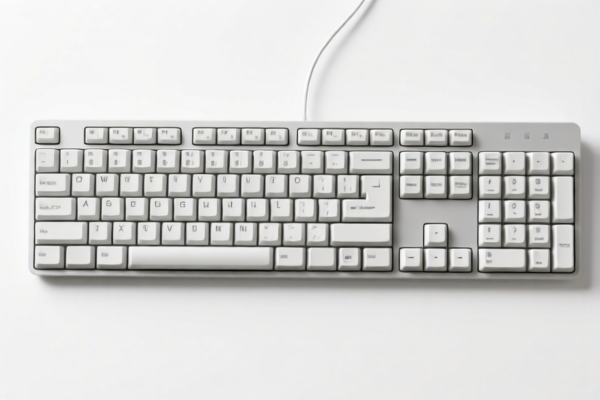

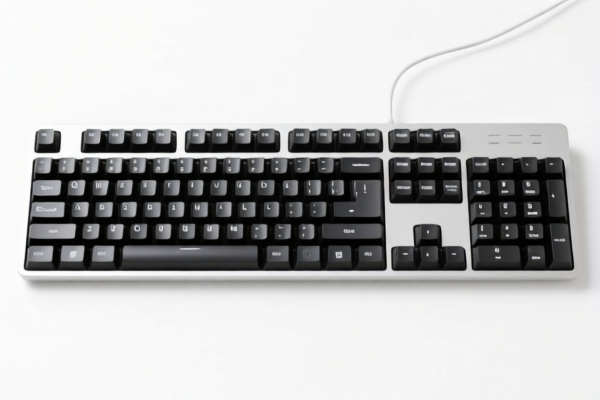
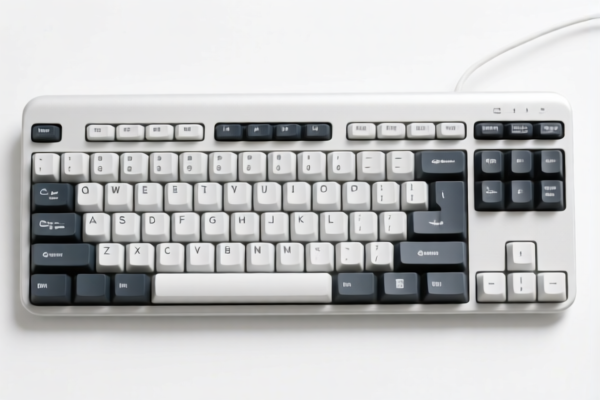
AI Analysis
🖱️ Keyboard & Mouse Converter: The Ultimate HS Code Classification & Tariff Guide (2026)
🌐 HS Code Reference & Customs Clearance Guide | 2026 Latest Tariff Analysis | Professional Entry Strategies
📌 I. Product Definition & Classification: What Exactly Is a "K&M Converter"?
A Keyboard and Mouse (K&M) Converter is a peripheral device that translates input signals between different protocols (e.g., converting PS/2 to USB, or Mac keyboard layouts to Windows). In international trade, its classification depends heavily on its core function and internal logic.
Based on common industry practices and logical inference, these converters fall into two main categories: 1. Logic/Control Units: If the core function is signal processing via integrated circuits (acting as a microcontroller). 2. General Electronic Apparatus: If the function is simple physical/electrical connection without complex data processing logic.
⚠️ Key Distinction Point:
- If the device acts as a translator/adapter for automatic data processing machines (like a hub or control unit) → Likely 8471.80.10.00.
- If the device is considered a specific Integrated Circuit (IC) component → Likely 8542.31.00.75.
- If it’s a standalone electronic device with specific conversion functions not covered elsewhere → Likely 8543.70.60.00 or 8543.70.98.60.
📦 II. HS Code Classification Details (2026 Latest Tariff Authority Comparison)
| HS Code | Product Description | Application Scenario | Logic/Function Core |
|---|---|---|---|
8542.31.00.75 |
Processors and Controllers, Others | Core logic circuit; acts as a controller for input devices. | ✅ Processor/Controller Logic |
8542.39.00.90 |
Electronic Integrated Circuits, Other | Non-specific functional IC; general-purpose circuit component. | ✅ General IC Function |
8471.80.10.00 |
Units for Automatic Data Processing Machines | Control or adaptation unit connecting keyboards/mice to hosts. | ✅ Data Processing Unit |
8543.70.60.00 |
Other Machines & Apparatus (Specific) | Designed for specific connection/conversion networks. | ✅ Specific Network Apparatus |
8543.70.98.60 |
Other Machines & Apparatus (General) | Independent electronic device; generic "other" category. | ✅ Standalone Electronic Device |
🔍 Key Reminder:
- 8542 codes imply the item is primarily an integrated circuit or controller chip. - 8471 implies the item is part of the computer system ecosystem (input/output adaptation). - 8543 implies the item is a standalone electronic apparatus with specific functions. - No material conflict: All categories assume plastic/metal casing with electronic components, which fits all descriptions.
💰 III. 2026 Latest Tariff Rate Details (Including Surtaxes & Policy Add-ons)
✅ Applicable Country: United States (US)
✅ Origin: China (CN)
✅ Effective Date: Post-November 2025 (Current Policy)
🎯 1. 8542.31.00.75 — Processors and Controllers (Others)
Best for converters acting as microcontrollers/logic translators.
| Item | Content |
|---|---|
| Base Duty | 0.0% (ad valorem) |
| Section 301 Surtax | 0.0% |
| IEEPA Surcharge (122 Clause) | +10.0% |
| Total Tax Rate | 10.0% |
| Tax Calculation | CIF Value × 10% |
| De Minimis Exemption? | ❌ No (Not applicable for this tariff line under current restrictions) |
| Legal Basis Path | IEEPA:9903.01.24 → USITC:8542.31.00.75 |
📌 Explanation:
- This is the lowest tax option if the converter is viewed as a logic controller. - The 10% is the standard IEEPA surcharge for Chinese electronics. - No additional 301 Section 301 tariffs apply here, making it highly cost-effective.
🎯 2. 8542.39.00.90 — Other Electronic Integrated Circuits
For non-specific functional ICs.
| Item | Content |
|---|---|
| Base Duty | 0.0% |
| Section 301 Surtax | +50.0% |
| IEEPA Surcharge (122 Clause) | +10.0% |
| Total Tax Rate | 60.0% |
| Tax Calculation | CIF Value × 60% |
| De Minimis Exemption? | ❌ No |
| Legal Basis Path | IEEPA:9903.01.25 → USITC:8542.39.00.90 → FOOTNOTE:9903.88.01 |
📌 Warning:
- High Risk Category. The 50% Section 301 surcharge makes this extremely expensive. - Only use if your product is strictly defined as a non-specific IC component and cannot be classified as a controller (8542.31).
🎯 3. 8543.70.60.00 — Other Machines & Apparatus (Specific Connection)
For devices designed specifically to connect/convert network signals.
| Item | Content |
|---|---|
| Base Duty | 0.0% |
| Section 301 Surtax | +25.0% |
| IEEPA Surcharge (122 Clause) | +10.0% |
| Total Tax Rate | 35.0% |
| Tax Calculation | CIF Value × 35% |
| De Minimis Exemption? | ❌ No |
| Legal Basis Path | IEEPA:9903.01.24 → USITC:8543.70.60.00 |
📌 Explanation:
- Moderate tax burden. - Suitable if the device is seen as a "connection apparatus" rather than a data processing unit.
🎯 4. 8543.70.98.60 — Other Machines & Apparatus (General)
For standalone electronic devices with independent functions.
| Item | Content |
|---|---|
| Base Duty | 2.6% |
| Section 301 Surtax | +25.0% |
| IEEPA Surcharge (122 Clause) | +10.0% |
| Total Tax Rate | 37.6% |
| Tax Calculation | CIF Value × 37.6% |
| De Minimis Exemption? | ❌ No |
| Legal Basis Path | IEEPA:9903.01.24 → USITC:8543.70.98.60 |
📌 Note:
- Slightly higher than8543.70.60.00due to the 2.6% base duty. - Acts as a "catch-all" for electronic devices not fitting other specific 8543 subheadings.
🎯 5. 8471.80.10.00 — ADP Machine Units (Control/Adaptation)
Best for converters viewed as input device adapters for computers.
| Item | Content |
|---|---|
| Base Duty | 0.0% |
| Section 301 Surtax | +25.0% |
| IEEPA Surcharge (122 Clause) | +10.0% |
| Total Tax Rate | 35.0% |
| Tax Calculation | CIF Value × 35% |
| De Minimis Exemption? | ❌ No |
| Legal Basis Path | IEEPA:9903.01.24 → USITC:8471.80.10.00 |
📌 Explanation:
- Strong Candidate. Many K&M converters are viewed as "adaptation units" for automatic data processing machines. - Tax rate is identical to8543.70.60.00(35%), but 8471 is often more logically aligned with "peripherals." - No base duty, only surcharges.
🛠️ IV. Customs Clearance Practical Advice (Battle-Tested Pitfall Avoidance)
✅ 1. Document Checklist (Non-Negotiable)
| Document | Required | Purpose |
|---|---|---|
| ✅ Product Specifications | ✔️ | Define interface types (USB/PS2), voltage, and conversion protocol. |
| ✅ Circuit Diagram/Block Diagram | ✔️ | Crucial to prove if it’s a Controller (8542.31) or Apparatus (8543/8471). |
| ✅ Product Photos (Label & Internal) | ✔️ | Show branding, model, and any regulatory marks (FCC/CE). |
| ✅ Functional Description | ✔️ | Explain how it works (e.g., "Translates PS/2 signal to USB HID protocol"). |
| ✅ Commercial Invoice | ✔️ | Must match HS Code description precisely. |
| ✅ Packing List | ✔️ | Confirm no other items are mixed in. |
✅ 2. Declaration Strategy (Key Mnemonic)
🔥 "Logic First, Then Function; Name Precise, Rate Down!"
| Scenario | Correct Declaration | Wrong Declaration |
|---|---|---|
| Device contains a microcontroller/chip acting as logic | 8542.31.00.75 (10%) |
Calling it a "Cable" or "Accessory" → Higher rates or seizure |
| Device is a computer peripheral adapter | 8471.80.10.00 (35%) |
Calling it "General Electronics" → Ambiguity |
| Device is a simple signal splitter | 8543.70.60.00 (35%) |
Calling it "IC" → Over-complication |
✅ 3. Special Cases
| Situation | Handling Advice |
|---|---|
| OEM Custom Converter | Provide design schematics to prove control logic → Supports 8542.31.00.75. |
| Bluetooth/K&M Dongle | Ensure it’s classified as a receiver/adapter → 8471.80.10.00 is common. |
| Mac/PC Layout Converter | Emphasize "Software-less" hardware translation if possible → Supports 8543 or 8471. |
🌍 V. Global Market Customs Comparison (2026 Latest)
| Country/Region | Recommended HS Code | Tariff (China Origin) | Certification | Notes |
|---|---|---|---|---|
| 🇺🇸 USA | 8542.31.00.75 |
10.0% | FCC | Lowest US Rate |
| 🇨🇳 China | 8542.31.00.75 |
0%~5% | CCC | No surcharges |
| 🇪🇺 EU | 8543.70.99.80 |
0% | CE | No surcharges |
| 🇬🇧 UK | 8543.70.90.00 |
0% | UKCA | Post-Brexit alignment |
| 🇯🇵 Japan | 8543.70.90.00 |
0% | PSE | Free Trade Agreement possible |
📌 Conclusion:
- USA is the most complex market due to Section 301 and IEEPA tariffs. - Aim for8542.31.00.75if your device has a clear microcontroller/logic function → 10% Total Duty. - Avoid8542.39.00.90(60%) unless absolutely necessary.
📌 VI. Common Errors & Pitfalls (Lessons Learned)
❌ Error 1: Classifying a complex logic converter as a simple "Cable" or "Accessory"
👉 Consequence:海关可能拒绝或要求补税,税率波动大 → Delays or Higher Costs.
❌ Error 2: Ignoring the "Controller" aspect and using generic 8543 codes when 8542 applies
👉 Consequence: Missing out on the 10% tax rate → Cost Increase from 10% to 35-60%.
❌ Error 3: Providing vague descriptions like "Electronic Adapter"
👉 Consequence: Customs asks for clarification → Inspection Delay.
❌ Error 4: Using 8542.39.00.90 without justification
👉 Consequence: 60% Tax is avoidable with better classification.
✅ Correct Approach:
"Keyboard/Mouse Protocol Converter, Model XYZ, with Microcontroller for Signal Translation, USB Input/PS2 Output, FCC Certified"
🎯 VII. Conclusion: Smart Classification Saves Money!
🎯 Key Takeaway:
🔹 "Controller Logic = 10% (Best)"
🔹 "ADP Unit/Adapter = 35%"
🔹 "General IC = 60% (Worst)"🔹 "Don't let a $10 device cost $6 in taxes. Classify as a Controller if possible!"
📌 Pro Tip:
If your converter uses a standard microcontroller (e.g., STM32, Arduino-compatible), emphasize its role as a processor/controller in your documentation. This supports classification under 8542.31.00.75, saving you significant tariffs in the US market.
📣 Action Required:
📞 Consult a licensed customs broker + Provide circuit diagrams + Apply for Pre-Ruling if importing large volumes.
🚀 Optimize your HS Code, Optimize your Margin!
✨ Professional Clearance Starts with Accurate Classification!
💼 Every Percentage Point Matters in 2026!
Customer Reviews
About HS Code Classification
The Harmonized System (HS) is an internationally standardized nomenclature developed by the World Customs Organization (WCO) to classify traded products. Over 200 countries use the HS system as the basis for customs tariffs, trade statistics, and import/export regulations.
Each HS code follows a hierarchical structure:
- Chapter (2 digits) — Broad category of goods (e.g., Chapter 84: Machinery and Mechanical Appliances)
- Heading (4 digits) — More specific grouping within the chapter
- Subheading (6 digits) — Internationally standardized breakdown, used by all WCO member countries
- National subdivisions (8-10 digits) — Country-specific extensions for further classification, such as US HTSUS 10-digit codes
Correct HS code classification is essential for smooth customs clearance, accurate duty payment, and compliance with trade regulations. Misclassification can lead to customs delays, overpayment of duties, or penalties.
When importing from CN to US, the applicable tariff rates may include:
- Most-Favored-Nation (MFN) rate — The standard duty rate applied to WTO members
- General rate — Applied to countries without trade agreements
- Trade remedy duties — Additional tariffs such as Section 301 (anti-dumping), Section 232 (national security), or countervailing duties
The information provided on this page is for reference purposes only. For official classification, please consult with your local customs authority or a licensed customs broker.