Kilogram Scale
CN → US| HS Code | Tariff Rate | Origin | Destination | Doc |
|---|---|---|---|---|
| 8423100010 | 10.0% | CN | US | Official Doc |
| 9031499000 | 35.0% | CN | US | Official Doc |
| 9016006000 | 38.3% | CN | US | Official Doc |
| 8423100060 | 10.0% | CN | US | Official Doc |
| 9031808085 | 35.0% | CN | US | Official Doc |
Product Images
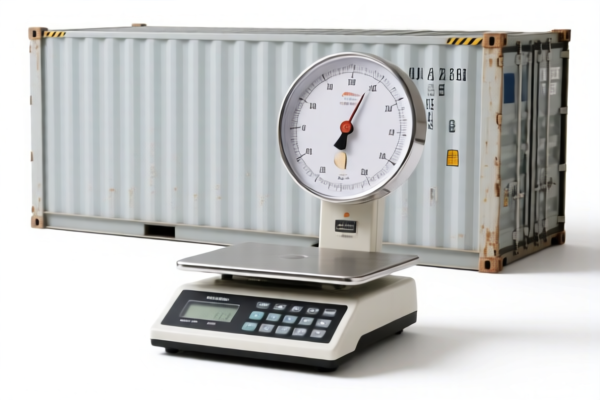
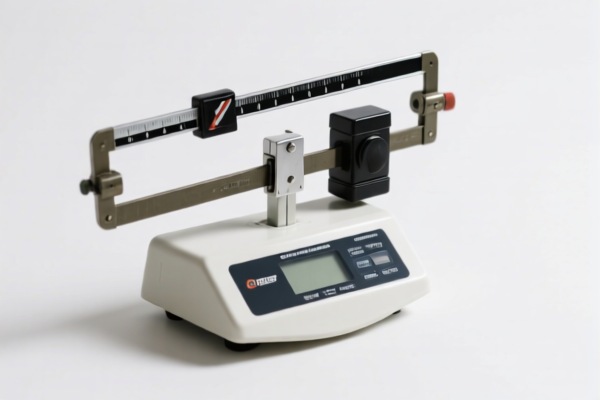
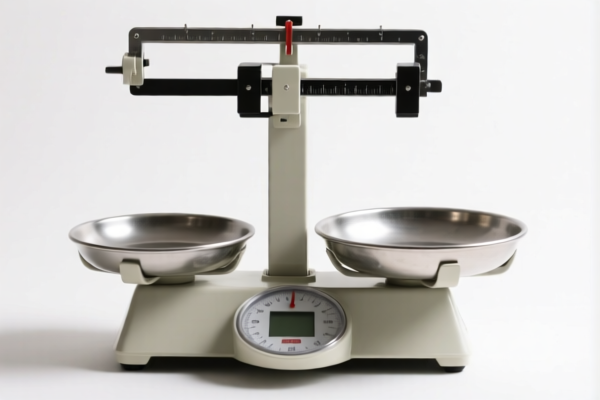
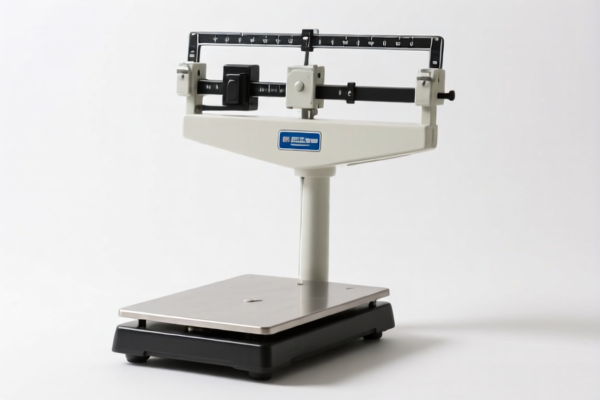
AI Analysis
⚖️ Weight Scale / Bathroom Scale
🌐 HS Code Reference & Customs Clearance Guide | 2026 Latest Tariff Analysis | Professional Compliance Strategy
📌 I. Product Definition & Classification: What Exactly is a "Kilogram Scale"?
A "Kilogram Scale" (often referred to as a Bathroom Scale, Personal Scale, or Digital Weight Scale) is a device used to measure body weight or small object mass. In international trade, its classification is critical because the presence or absence of specific mechanical components and the intended usage determine the HS Code, which in turn drastically affects the duty rate.
There are two main competitive classification paths: 1. Domestic Use / Personal Weighing: Classified under Chapter 84 (Machinery for weighing). This is the most common and favorable classification for standard digital bathroom scales. 2. General Measuring Instrument: Classified under Chapter 90 (Instruments and appliances for physical or chemical analysis). This path is riskier and incurs significantly higher tariffs due to USITC Section 301 and IEEPA penalties.
⚠️ Key Distinction Point:
- If the scale is designed for personal/household use (measuring body weight, simple digital display, no complex data analysis) → It is typically a Weighing Machine (HS 8423).
- If the scale is a high-precision analytical instrument or part of a larger measurement system → It may be classified as an Optical/Other Measuring Instrument (HS 9031 or 9016).
- Warning: Many automated classifiers incorrectly place digital scales in Chapter 90. Do not accept this without verification, as the tax difference is massive.
📦 II. HS Code Classification Matrix (2026 Latest Tariff Authority)
Based on the provided data, here is the precise breakdown of potential HS Codes and their implications.
| HS Code | Product Description | Applicability | Total Tax Rate |
|---|---|---|---|
| 8423.10.00.10 | Personal Weighing Machine (Digital/Bathroom Scale) | Home use, personal body weight measurement | 10.0% |
| 8423.10.00.60 | Personal Weighing Machine (General Category) | Household/personal use, fits shape/usage criteria | 10.0% |
| 9031.49.90.00 | Other Optical Instruments / Measuring Devices | Misclassification risk: Classified as "Other Measuring Instrument" | 35.0% |
| 9031.80.80.85 | Other Measuring/Checking Instruments (General) | Broad category for unspecified measuring machines | 35.0% |
| 9016.00.60.00 | Balances (High Precision) | If classified as a "Balance" rather than a "Scale" | 38.3% |
🔍 Critical Insight:
- Codes8423.10.00.10and8423.10.00.60represent the correct classification for standard personal bathroom scales. They carry a 10% total tax.
- Codes9031and9016represent higher-risk classifications. If Customs views your digital scale as a "measuring instrument" (Chapter 90), you will face 35%–38.3% total taxes due to additional duties.
- Avoid9031and9016unless your product is a high-precision laboratory balance or has special optical/measurement features not typical for consumer scales.
💰 III. 2026 Latest Tariff Rate Breakdown (Detailed Tax Clause Explanation)
✅ Applicable Market: United States (US)
✅ Country of Origin: China (CN)
✅ Effective Date: November 10, 2025 onwards
🎯 1. Correct Classification: 8423.10.00.10 & 8423.10.00.60
Category: Personal Weighing Machines / Domestic Scales
| Item | Detail |
|---|---|
| Base Tariff | 0.0% (Ad Valorem) |
| Section 301 Additional Duty | 0.0% |
| IEEPA Additional Duty (122 Clause) | 10.0% |
| Total Effective Tax Rate | 10.0% |
| Calculation Basis | CIF Value × 10% |
| De Minimis Exemption | ❌ Not Eligible (Subject to full duty) |
| Legal Basis Path | IEEPA:9903.01.25 (122 Clause) → HTS:8423.10.00.10 |
📌 Explanation:
- Although the base tariff is 0%, the 122 Clause (IEEPA) imposes a flat 10% additional duty on these goods from China.
- Why is it only 10%? Because Chapter 84 scales are often exempt from or have lower Section 301 rates compared to Chapter 90 instruments, or the specific subheading triggers only the IEEPA levy.
- This is the optimal classification for importers.
🎯 2. High-Risk Classification: 9031.49.90.00 & 9031.80.80.85
Category: Other Measuring/Checking Instruments
| Item | Detail |
|---|---|
| Base Tariff | 0.0% |
| Section 301 Additional Duty | 25.0% |
| IEEPA Additional Duty (122 Clause) | 10.0% |
| Total Effective Tax Rate | 35.0% |
| Calculation Basis | CIF Value × 35% |
| De Minimis Exemption | ❌ Not Eligible |
| Legal Basis Path | USITC:9031.49.90.00 → IEEPA:9903.01.24 |
📌 Explanation:
- If your scale is misclassified as a "measuring instrument" (Chapter 90), it attracts the full Section 301 rate of 25% PLUS the IEEPA 10%.
- Total Tax: 35%. This is a 25 percentage point increase over the correct classification.
🎯 3. High-Precision Balance Classification: 9016.00.60.00
Category: Balances
| Item | Detail |
|---|---|
| Base Tariff | 3.3% |
| Section 301 Additional Duty | 25.0% |
| IEEPA Additional Duty (122 Clause) | 10.0% |
| Total Effective Tax Rate | 38.3% |
| Calculation Basis | CIF Value × 38.3% |
| De Minimis Exemption | ❌ Not Eligible |
| Legal Basis Path | USITC:9016.00.60.00 → IEEPA:9903.01.24 |
📌 Explanation:
- This rate applies if the scale is deemed a "Balance" (often implying higher precision or laboratory use).
- It includes a 3.3% base duty on top of the 35% additional duties.
- Avoid this classification for consumer bathroom scales.
🛠️ IV. Customs Clearance Practical Advice (Pitfall Avoidance Guide)
✅ 1. Documentation Checklist (Non-Negotiable)
| Document | Required? | Notes |
|---|---|---|
| ✅ Product Specification Sheet | ✔️ | Must clearly state "Personal Weighing Scale" or "Bathroom Scale." Avoid terms like "Analytical Instrument." |
| ✅ Circuit/Structure Diagram | ✔️ | Prove it uses a load cell and digital display, not complex optical/measurement sensors typical of Chapter 90. |
| ✅ Product Photos | ✔️ | Clear images showing brand, model, weight capacity (e.g., "Max 300 lbs"), and display. |
| ✅ Commercial Invoice | ✔️ | Description must read: "Digital Personal Weight Scale for Domestic Use." |
| ✅ FCC Certification | ✔️ | Required for electronic devices operating at 2.4GHz or similar frequencies (if applicable). |
| ✅ Origin Certificate | ✔️ | Confirms Country of Origin (China) to apply correct IEEPA rates. |
✅ 2. Declaration Strategy (Golden Rules)
🔥 Mnemonic: "Personal Use, Chapter 84, Save 25%!"
| Scenario | Correct Declaration | Incorrect Declaration | Consequence |
|---|---|---|---|
| Standard Bathroom Scale | 8423.10.00.10 |
9031.49.90.00 |
Pay 25% more tax (35% vs 10%) |
| Kitchen Food Scale | 8423.10.00.10 |
9031.80.80.85 |
Pay 25% more tax |
| High-Precision Lab Balance | 9016.00.60.00 |
8423.10.00.10 |
Under-declaration → Penalties/Fines |
| Scale with Bluetooth/App | 8423.10.00.10 |
9031.49.90.00 |
Misclassification → 35% Tax + Audit Risk |
✅ 3. Special Handling Tips
| Situation | Action |
|---|---|
| OEM Private Label | Ensure the description matches the functional use, not just the brand. |
| Smart Scales (Body Fat Analysis) | Still classify as 8423.10.00.10 if the primary function is weighing. The "body fat" feature is secondary. Do NOT move to Chapter 90. |
| Mixed Containers | If mixing scales with other goods, clearly separate the value. Do not lump into a generic "Electronics" line. |
| Customs Audit | Be prepared to show the load cell mechanism. If asked, explain it is a strain-gauge based weighing device, not an optical measuring instrument. |
🌍 V. Global Market Comparison (2026 Update)
| Market | Recommended HS Code | Total Tax Rate (China Origin) | Key Requirement |
|---|---|---|---|
| 🇺🇸 USA | 8423.10.00.10 |
10% (IEEPA only) | FCC, Accurate Desc. |
| 🇨🇳 China | 8423.10.00.10 |
5% - 8% | CCC (if applicable) |
| 🇪🇺 EU | 8423.89.00 |
0% - 3% | CE, WEEE Compliance |
| 🇬🇧 UK | 8423.89.00 |
0% | UKCA Mark |
| 🇨🇦 Canada | 8423.10.00 |
0% - 6% | CFC/CRTC if telecom-enabled |
📌 Conclusion:
- The USA is the most complex market due to IEEPA Section 122 and Section 301 interactions.
- Correctly claiming8423.10.00.10saves you 25% in tariffs compared to misclassifying as9031.
- In the EU/UK, scales generally have 0% duty, making the US market the primary concern for duty optimization.
📌 VI. Common Errors & Pitfalls (Lessons Learned)
❌ Error 1: Using generic term "Weighing Machine" without specifying "Personal/Domestic."
👉 Result: Customs may default to Chapter 90 "Other Instruments" → 35% Tax.
✅ Fix: Use "Personal Digital Bathroom Scale."
❌ Error 2: Including "Smart/App-Enabled" features leads to Chapter 90.
👉 Result: Incorrect classification as "Data Processing Equipment" or "Measuring Instrument."
✅ Fix: Emphasize Weight Measurement as the primary function. The app is merely a data viewer.
❌ Error 3: Confusing "Scale" (Chapter 84) with "Balance" (Chapter 90).
👉 Result: Higher base duty (3.3% + 35% = 38.3%).
✅ Fix: Scales (for heavy items/body weight) are Chapter 84. Balances (for precise lab work) are Chapter 90.
❌ Error 4: Ignoring IEEPA Section 122.
👉 Result: Underpayment of the 10% IEEPA duty even on Chapter 84 goods.
✅ Fix: Ensure 10% IEEPA is applied to ALL China-origin scales, regardless of HS Code in Chapter 84.
🎯 VII. Conclusion: Precision Saves Money!
🎯 Remember the Golden Rule:
🔹 "Personal Scale = Chapter 84 (10% Tax)"
🔹 "Misclassified Instrument = Chapter 90 (35% Tax)"
🔹 "Difference = 25% of CIF Value!"💡 Pro Tip:
If your scale has Bluetooth or Wi-Fi, you might be tempted to classify it under Chapter 85 (Electrical Machinery). However, the primary function determines the HS Code. Since it weighs, it stays in 8423. Ensure you have FCC ID ready for customs inspection.
📣 Immediate Action Required:
📞 Verify HS Code: Request a Pre-Ruling from US Customs if importing large volumes.
📄 Update Descriptions: Change "Smart Scale" to "Personal Digital Weight Scale" on invoices.
📉 Calculate Savings: Compare your current tax liability with the 10% rate. You might be overpaying by 25%!
✨ Accurate Classification is the First Step to Profitability!
💼 Don't let a wrong HS Code cost you 25% of your margin!
Customer Reviews
About HS Code Classification
The Harmonized System (HS) is an internationally standardized nomenclature developed by the World Customs Organization (WCO) to classify traded products. Over 200 countries use the HS system as the basis for customs tariffs, trade statistics, and import/export regulations.
Each HS code follows a hierarchical structure:
- Chapter (2 digits) — Broad category of goods (e.g., Chapter 84: Machinery and Mechanical Appliances)
- Heading (4 digits) — More specific grouping within the chapter
- Subheading (6 digits) — Internationally standardized breakdown, used by all WCO member countries
- National subdivisions (8-10 digits) — Country-specific extensions for further classification, such as US HTSUS 10-digit codes
Correct HS code classification is essential for smooth customs clearance, accurate duty payment, and compliance with trade regulations. Misclassification can lead to customs delays, overpayment of duties, or penalties.
When importing from CN to US, the applicable tariff rates may include:
- Most-Favored-Nation (MFN) rate — The standard duty rate applied to WTO members
- General rate — Applied to countries without trade agreements
- Trade remedy duties — Additional tariffs such as Section 301 (anti-dumping), Section 232 (national security), or countervailing duties
The information provided on this page is for reference purposes only. For official classification, please consult with your local customs authority or a licensed customs broker.