Kimchi Jar
CN → US| HS Code | Tariff Rate | Origin | Destination | Doc |
|---|---|---|---|---|
| 6914908000 | 40.6% | CN | US | Official Doc |
| 6912002000 | 38.0% | CN | US | Official Doc |
| 6914108000 | 44.0% | CN | US | Official Doc |
| 6912005000 | 16.0% | CN | US | Official Doc |
| 7013105000 | 43.5% | CN | US | Official Doc |
Product Images

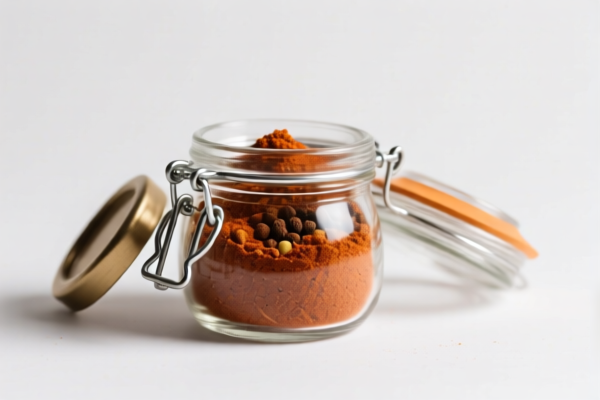
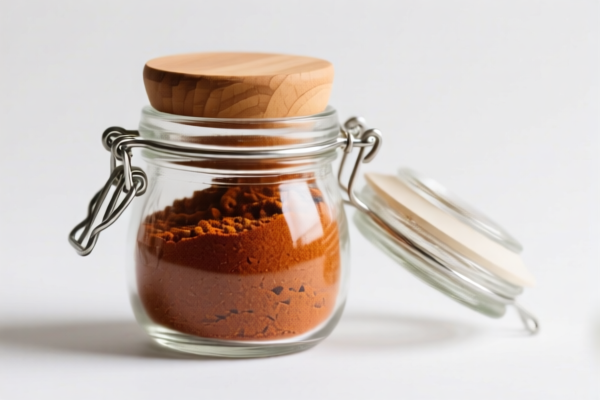

AI Analysis
🥣 Kimchi Jar (Fermentation Vessel)
🌐 HS Code Reference & Customs Clearance Guide | 2026 Latest Tariff Analysis | Professional Entry Strategy
📌 Section 1: Product Definition & Classification: Do You Truly Understand "Kimchi Jars"?
Kimchi jars are essential ceramic vessels used in the fermentation of kimchi, a staple Korean fermented vegetable dish. In international trade, they are classified based on material (porcelain vs. non-porcelain ceramic), form (utensil, pot, container), and intended use (kitchenware, household items).
The key distinction for HS Code classification lies in:
- Material Composition: Is it porcelain (fired at high temperature, white/translucent) or stoneware/clay (non-porcelain, opaque)?
- Form & Function: Is it a general utensil, a specific pot/jar, or a kitchen storage container?
- Intended Use: Is it for kitchen/food preparation, household storage, or general decoration?
⚠️ Critical Classification Points:
- Porcelain vessels (e.g., white, glossy, translucent) → Typically fall under 6914.10.80.00 (Cereal/porcelain pots/jars).
- Non-porcelain ceramic vessels (e.g., earthenware, stoneware, colored, opaque) → Typically fall under 6912.00.20.00 or 6912.00.50.00 (Kitchen/utensil items).
- Ceramic storage containers not classified as utensils → May fall under 6914.90.80.00 (Other ceramic articles).
- Glass-ceramic hybrids → Fall under 7013.10.50.00 (Glass-ceramic kitchen storage).
📦 Section 2: HS Code Classification Details (2026 Tariff Reference Table)
| HS Code | Product Description | Application Scenario | Material Type |
|---|---|---|---|
6914.90.80.00 |
Ceramic articles, vessel form, classified as "other ceramic articles" | General ceramic storage, decorative fermentation jars, non-kitchen-specific use | Ceramic (non-porcelain or unspecified) |
6912.00.20.00 |
Non-porcelain ceramic articles, intended for kitchen utensils | Traditional earthenware kimchi pots, stoneware fermentation vessels | Non-porcelain ceramic (stoneware, earthenware) |
6914.10.80.00 |
Porcelain ceramic articles, vessel form (pot/jar), classified as "other ceramic articles" | High-quality porcelain kimchi jars, white glazed fermentation containers | Porcelain |
6912.00.50.00 |
Ceramic tableware/kitchenware, intended for household items | Modern ceramic kimchi jars, household kitchen storage | Porcelain or non-porcelain (household use) |
7013.10.50.00 |
Glass-ceramic articles, intended for kitchen storage | Glass-ceramic hybrid kimchi containers, heat-resistant fermentation vessels | Glass-ceramic composite |
🔍 Key Clarification:
- Porcelain Kimchi Jars → Must be classified under 6914.10.80.00 if they are "vessels/pots" made of porcelain.
- Non-Porcelain Ceramic Jars → If used as kitchen utensils → 6912.00.20.00; if for general household storage → 6912.00.50.00.
- Glass-Ceramic Jars → Only if the material is a hybrid (e.g., Pyrex-style) → 7013.10.50.00.
- Ambiguous Cases → If the jar is "other ceramic" not fitting other categories → 6914.90.80.00.
💰 Section 3: 2026 Latest Tariff Rate Breakdown (Including Surtaxes, Policy Add-ons)
✅ Applicable Country: United States (US)
✅ Country of Origin: China (CN)
✅ Effective Date: From November 10, 2025 (including subsequent imports)
🎯 1. 6914.90.80.00 — Ceramic Articles, Vessel Form ("Other Ceramic")
| Item | Content |
|---|---|
| Base Tariff | 5.6% |
| Additional USITC Surtax | +25.0% (Section 301 Tariff) |
| Section 122 Tariff (China-specific) | +10.0% (Targeted China import surcharge) |
| Total Tariff Rate | 40.6% |
| Tax Calculation | CIF Value × 40.6% |
| De Minimis Exemption Eligible? | ❌ No (Deny de minimis) |
| Legal Basis Path | Section 301:9903.88.01 → Section 122:9903.10.00 → USITC:6914.90.80.00 |
📌 Explanation:
- "Section 301 surtax of 25%" is part of the US-China trade war measures.
- "Section 122 surcharge of 10%" is a targeted China-specific tax.
- Total 40.6% is a high tariff rate, requiring advance planning!
🎯 2. 6912.00.20.00 — Non-Porcelain Ceramic Kitchen Utensils
| Item | Content |
|---|---|
| Base Tariff | 28.0% |
| Additional USITC Surtax | 0.0% (No 301 surtax applied) |
| Section 122 Tariff | +10.0% |
| Total Tariff Rate | 38.0% |
| Tax Calculation | CIF Value × 38.0% |
| De Minimis Exemption Eligible? | ❌ No |
| Legal Basis Path | Section 122:9903.10.00 → USITC:6912.00.20.00 |
📌 Note:
- Lower base tariff (28%) but still 38% total due to Section 122.
- Applies to stoneware, earthenware, clay-based kimchi jars used in kitchens.
🎯 3. 6914.10.80.00 — Porcelain Ceramic Vessels (Pots/Jars)
| Item | Content |
|---|---|
| Base Tariff | 9.0% |
| Additional USITC Surtax | +25.0% |
| Section 122 Tariff | +10.0% |
| Total Tariff Rate | 44.0% |
| Tax Calculation | CIF Value × 44.0% |
| De Minimis Exemption Eligible? | ❌ No |
| Legal Basis Path | Section 301:9903.88.01 → Section 122:9903.10.00 → USITC:6914.10.80.00 |
📌 Warning:
- Highest tariff (44%) among ceramic jars!
- Applies to white, glazed, translucent porcelain fermentation jars.
- Not eligible for any de minimis exemptions.
🎯 4. 6912.00.50.00 — Ceramic Tableware/Kitchenware (Household Use)
| Item | Content |
|---|---|
| Base Tariff | 6.0% |
| Additional USITC Surtax | 0.0% |
| Section 122 Tariff | +10.0% |
| Total Tariff Rate | 16.0% |
| Tax Calculation | CIF Value × 16.0% |
| De Minimis Exemption Eligible? | ❌ No |
| Legal Basis Path | Section 122:9903.10.00 → USITC:6912.00.50.00 |
📌 Best Option:
- Lowest tariff (16%) among all kimchi jar categories!
- Applies to household-use ceramic jars (even if non-porcelain) not strictly defined as "utensils".
- Ideal for modern, multi-functional kimchi storage jars.
🎯 5. 7013.10.50.00 — Glass-Ceramic Kitchen Storage
| Item | Content |
|---|---|
| Base Tariff | 26.0% |
| Additional USITC Surtax | +7.5% |
| Section 122 Tariff | +10.0% |
| Total Tariff Rate | 43.5% |
| Tax Calculation | CIF Value × 43.5% |
| De Minimis Exemption Eligible? | ❌ No |
| Legal Basis Path | Section 301:9903.88.01 → Section 122:9903.10.00 → USITC:7013.10.50.00 |
📌 Special Note:
- High tariff (43.5%) for glass-ceramic hybrids.
- Only applies if the jar is glass-ceramic composite (e.g., thermal-shock resistant).
- Not recommended unless necessary for product performance.
🛠️ Section 4: Customs Clearance Practical Advice (Avoid Pitfalls)
✅ 1. Documentation Checklist (Mandatory)
| Document | Required | Description |
|---|---|---|
| ✅ Product Specification Sheet | ✔️ | Include dimensions, capacity, material type (porcelain/non-porcelain), glaze type |
| ✅ Material Certificate | ✔️ | Specify if porcelain (white, translucent) or stoneware/clay |
| ✅ Product Photos (including label) | ✔️ | Show jar shape, markings, intended use (kitchen vs. household) |
| ✅ Third-Party Test Report | ✔️ | FDA compliance (food contact), RoHS, lead/cadmium safety |
| ✅ Commercial Invoice | ✔️ | Clearly state "Kimchi Fermentation Jar" + HS Code |
| ✅ Certificate of Origin (CO) | ✔️ | If not China, may reduce tariffs |
| ✅ Packing List | ✔️ | Detail units, packaging, and whether includes lid/rim |
✅ 2. Declaration Tips (Key Mantra)
🔥 "Material Matters, Use Defines Code, Name Must Be Precise!"
| Scenario | Correct Declaration | Wrong Declaration |
|---|---|---|
| Porcelain Kimchi Jar | 6914.10.80.00 |
Misclassified as 6912.00.20.00 → 44% vs. 38% |
| Stoneware Kitchen Kimchi Pot | 6912.00.20.00 |
Misclassified as 6914.90.80.00 → 38% vs. 40.6% |
| Modern Household Ceramic Jar | 6912.00.50.00 |
Misclassified as 6914.10.80.00 → 16% vs. 44% |
| Glass-Ceramic Fermentation Container | 7013.10.50.00 |
Misclassified as 6912.00.50.00 → 43.5% vs. 16% |
✅ 3. Special Cases Handling
| Scenario | Recommendation |
|---|---|
| OEM Custom Kimchi Jars | Provide client order + design specs to avoid "non-standard" classification |
| Jars with Silicone Seals/Lids | Declare as "Kimchi Fermentation Jar with Seal", do not split |
| Jars for Medical/Industrial Use | If not food-related, may qualify for non-food classification (lower tax) |
| Mixed Material Jars | If >50% ceramic, declare as ceramic; if glass-ceramic hybrid, use 7013.10.50.00 |
🌍 Section 5: Global Market Comparison (2026)
| Country/Region | Recommended HS Code | Tariff | Certification Required | Notes |
|---|---|---|---|---|
| 🇺🇸 United States | 6912.00.50.00 |
16% (Best Option) | FDA + RoHS | Porcelain jars face 44% |
| 🇨🇳 China | 6912.00.50.00 |
6% | CCC + RoHS | No additional surcharges |
| 🇪🇺 EU | 6912.00.50.00 |
0% (if CE compliant) | CE + Food Contact | No surcharges |
| 🇦🇺 Australia | 6912.00.50.00 |
5% | RCM | No surcharges |
| 🇯🇵 Japan | 6912.00.50.00 |
0% | JIS | No surcharges |
📌 Conclusion:
- US is the only market with high surcharges (Section 301 + Section 122);
- Best strategy: Declare as6912.00.50.00(Household Use) for 16% total tariff in US.
- Avoid porcelain classification (6914.10.80.00) unless absolutely necessary.
📌 Section 6: Common Errors & Pitfalls (Lessons Learned)
❌ Mistake 1: Classifying porcelain kimchi jars as 6912.00.50.00
👉 Consequence: 44% tariff instead of 16% → Overpayment + Fines!
❌ Mistake 2: Declaring "Kitchen Utensil" for a household storage jar
👉 Consequence: 38% tariff instead of 16% → Unnecessary Cost!
❌ Mistake 3: Not specifying material (porcelain vs. stoneware)
👉 Consequence: Customs delays or reclassification → 10-20% penalty!
❌ Mistake 4: Calling it "Fermentation Pot" without context
👉 Consequence: Misclassification as 6914.90.80.00 → 40.6% instead of 16%!
✅ Best Practice:
"Kimchi Fermentation Jar, Household Use, Ceramic (Non-Porcelain), 10L Capacity, FDA Compliant, Model XYZ"
🎯 Section 7: Conclusion: Precision Classification = Cost Savings!
🎯 Remember the Mantra:
🔹 "Material First, Use Second, Name Exact!"
🔹 "HS Code Determines Tax, 16% vs. 44% is Huge!"
🔹 "Household Use =6912.00.50.00= 16% in US!"
📌 Pro Tips:
- If your kimchi jars are manufactured in Vietnam, Mexico, or Thailand, you may qualify for Section 122 exemptions (0%–5% tariff)!
- Apply for Advance Ruling from US Customs before shipment to lock in favorable classification.
- Consider rebranding as "Kitchen Storage Container" instead of "Kimchi Jar" to avoid "utensil" classification.
📣 Take Action Now:
📞 Contact a licensed customs broker + Submit product specs + Request HS Code Advance Ruling
🚀 Ensure your kimchi jars clear US customs smoothly, minimize costs, and maximize profit!
✨ Professional Classification, From the First Line!
💼 Every Cent Saved Counts in Global Trade!
Customer Reviews
About HS Code Classification
The Harmonized System (HS) is an internationally standardized nomenclature developed by the World Customs Organization (WCO) to classify traded products. Over 200 countries use the HS system as the basis for customs tariffs, trade statistics, and import/export regulations.
Each HS code follows a hierarchical structure:
- Chapter (2 digits) — Broad category of goods (e.g., Chapter 84: Machinery and Mechanical Appliances)
- Heading (4 digits) — More specific grouping within the chapter
- Subheading (6 digits) — Internationally standardized breakdown, used by all WCO member countries
- National subdivisions (8-10 digits) — Country-specific extensions for further classification, such as US HTSUS 10-digit codes
Correct HS code classification is essential for smooth customs clearance, accurate duty payment, and compliance with trade regulations. Misclassification can lead to customs delays, overpayment of duties, or penalties.
When importing from CN to US, the applicable tariff rates may include:
- Most-Favored-Nation (MFN) rate — The standard duty rate applied to WTO members
- General rate — Applied to countries without trade agreements
- Trade remedy duties — Additional tariffs such as Section 301 (anti-dumping), Section 232 (national security), or countervailing duties
The information provided on this page is for reference purposes only. For official classification, please consult with your local customs authority or a licensed customs broker.