Kitchen Electronic Scale
CN → US| HS Code | Tariff Rate | Origin | Destination | Doc |
|---|---|---|---|---|
| 9016006000 | 38.3% | CN | US | Official Doc |
| 9016002000 | 38.9% | CN | US | Official Doc |
| 8423100010 | 10.0% | CN | US | Official Doc |
| 9031808085 | 10.0% | CN | US | Official Doc |
| 9031499000 | 35.0% | CN | US | Official Doc |
| 8423810040 | 35.0% | CN | US | Official Doc |
Product Images
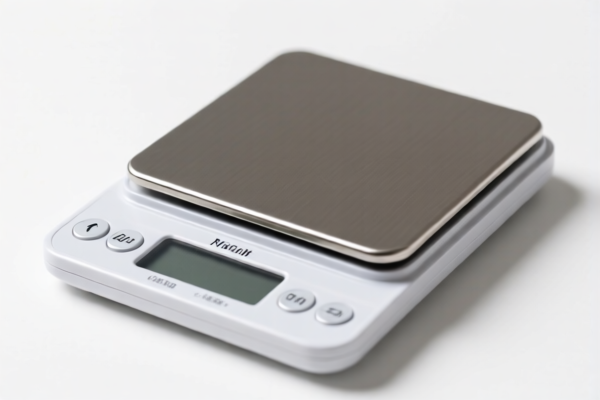
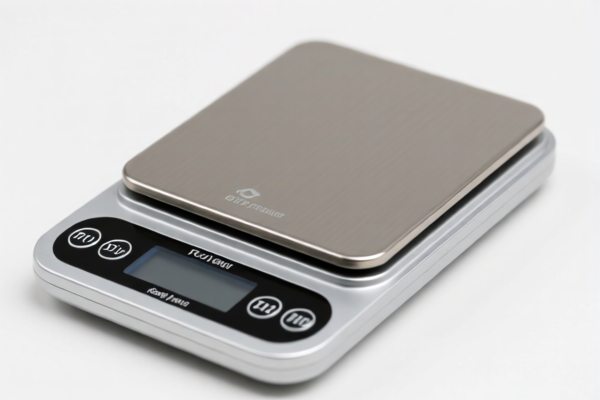
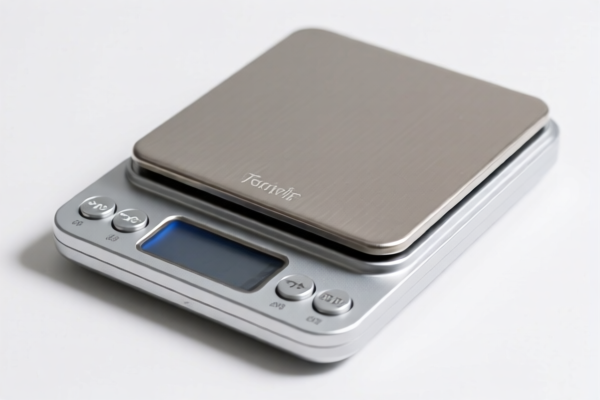
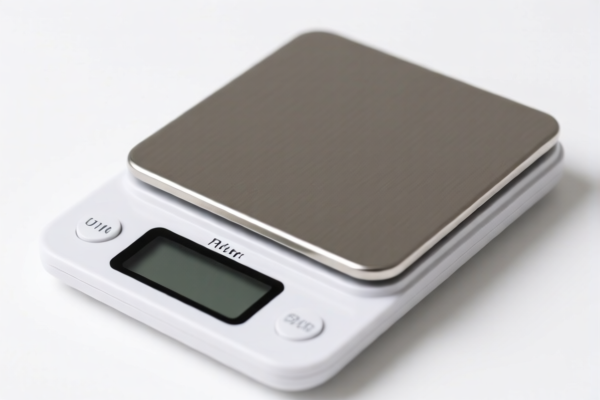
AI Analysis
🍳 Kitchen Electronic Scale (Digital Weighing Devices)
🌐 HS Code Reference & Customs Clearance Guide | 2026 Latest Tariff Analysis | Professional Clearance Strategy
📌 One, Product Definition & Classification: Do You Really Know "Kitchen Scales"?
A Kitchen Electronic Scale is a precision weighing device primarily used in domestic, culinary, or light commercial settings. It typically converts mechanical pressure into electrical signals to display weight digitally.
In international trade, classification depends heavily on usage, technology, and capacity:
1. Home/Kitchen Digital Scales:
Designed specifically for household food preparation, baking, or portion control. Usually compact, battery-operated, with low capacity (e.g., ≤5kg or ≤30kg).
2. Precision Laboratory/Analytical Scales:
High-sensitivity scales used for chemical analysis or jewelry weighing. Often classified under measuring instruments rather than household scales if they meet specific sensitivity standards (e.g., ≥5cg).
3. Industrial/General Purpose Digital Weighing Machines:
Broader category including digital balances used for general weighing tasks not limited to kitchen or lab use.
⚠️ Key Distinction Point:
- If explicitly designed for home/kitchen use → Typically falls under 8423.10 (Household scales).
- If it is a high-precision digital scale with sensitivity ≤5cg, it may be classified as a balance/scale under 9016 (Measuring/Checking instruments).
- If it is a general digital weighing machine (not specifically kitchen or lab), it falls under 8423.81 or 9031 (Other measuring instruments).
📦 Two, HS Code Classification Details (2026 Latest Tariff Authority Comparison)
Based on the provided data, here are the potential HS Codes for Kitchen Electronic Scales, categorized by their technical characteristics and intended use:
| HS Code | Product Description | Application Scenario | Key Classification Criteria |
|---|---|---|---|
8423.10.00.10 |
Household scales & digital electronic types, for kitchen weighing | Home baking, food prep, portion control | ✅ Specifically for kitchen/household use |
8423.81.00.40 |
Digital electronic weighing machine, for weighing, ≤30kg capacity | General digital scales, compact commercial scales | ✅ Digital, under 30kg, not specified as kitchen-only |
9031.80.80.85 |
Measuring instruments, for weighing, falls under "Other" (catch-all) | General weighing devices not fitting other specific categories | ✅ Catch-all for measuring instruments; no specific kitchen/lab designation |
9016.00.60.00 |
Balances & scales, other types with sensitivity ≥5cg | High-precision scales, jewelry, lab-grade kitchen scales | ✅ High sensitivity (≥5 centigrams), precision weighing |
🔍 Critical Reminder:
-8423.10.00.10is the most accurate for standard home kitchen scales.
- If the scale is marketed as a "precision scale" or "jewelry scale" but used in a kitchen, it might be classified under9016.00.60.00due to higher sensitivity.
-8423.81.00.40applies to digital scales not specifically for home use (e.g., general-purpose digital scales).
-9031.80.80.85is a fallback category if the scale doesn’t fit into the more specific descriptions above.
💰 Three, 2026 Latest Tariff Rate Breakdown (Including Surtaxes, Policy Add-ons)
✅ Applicable Country: United States (US)
✅ Country of Origin: China (CN)
✅ Effective Date: November 10, 2025 onwards (including subsequent imports)
🎯 1. 8423.10.00.10 —— Household Scales & Digital Electronic Types (Kitchen Weighing)
| Item | Content |
|---|---|
| Base Tariff | 0% (ad valorem) |
| USITC Surtax | 0% (No Section 301 surtax applied) |
| IEEPA Surtax | +10% (Against China/Hong Kong products, from Nov 10, 2025) |
| Total Tariff | 10% |
| Tax Calculation | CIF Value × 10% |
| De Minimis Eligibility | ❌ Not Eligible (deny_de_minimis) |
| Legal Basis Path | IEEPA:9903.01.25 → IEEPA:9903.01.24 → USITC:8423.10.00.10 |
📌 Explanation:
- Base Tariff 0%: Household scales enjoy zero base duty.
- IEEPA 10%: The only additional tariff is the 122 Clause Tariff (IEEPA), which is 10% for Chinese-origin kitchen scales.
- No Section 301 Surcharge: Unlike many other electronics, kitchen scales under8423.10do not incur the 25% Section 301 tariff.
- Total Cost Impact: Only 10% added to the CIF value. This is the most cost-effective classification for standard kitchen scales.
🎯 2. 8423.81.00.40 —— Digital Electronic Weighing Machine (≤30kg, General Purpose)
| Item | Content |
|---|---|
| Base Tariff | 0% |
| USITC Surtax | +25% (Section 301) |
| IEEPA Surtax | +10% |
| Total Tariff | 35% |
| Tax Calculation | CIF Value × 35% |
| De Minimis Eligibility | ❌ Not Eligible |
| Legal Basis Path | IEEPA:9903.01.25 → IEEPA:9903.01.24 → USITC:8423.81.00.40 → FOOTNOTE:9903.88.01 |
📌 Note:
- If your scale is not specifically marketed for kitchen use (e.g., a general-purpose digital scale for small business), it may fall here.
- Total 35%: Includes 25% Section 301 + 10% IEEPA.
- High Cost: This classification is significantly more expensive than8423.10.00.10.
🎯 3. 9016.00.60.00 —— Balances & Scales, High Sensitivity (≥5cg)
| Item | Content |
|---|---|
| Base Tariff | 3.3% |
| USITC Surtax | +25% (Section 301) |
| IEEPA Surtax | +10% |
| Total Tariff | 38.3% |
| Tax Calculation | CIF Value × 38.3% |
| De Minimis Eligibility | ❌ Not Eligible |
| Legal Basis Path | IEEPA:9903.01.25 → IEEPA:9903.01.24 → USITC:9016.00.60.00 → FOOTNOTE:9903.88.01 |
📌 Note:
- Applies to high-precision scales (e.g., jewelry scales, lab-grade kitchen scales).
- Highest Base Tariff (3.3%): Unlike household scales, precision instruments have a base duty.
- Total 38.3%: Highest among the options. Avoid this classification unless the scale is explicitly a precision instrument.
🎯 4. 9031.80.80.85 —— Measuring Instruments, Other (Catch-All)
| Item | Content |
|---|---|
| Base Tariff | 0% |
| USITC Surtax | 0% (No Section 301 applied) |
| IEEPA Surtax | +10% |
| Total Tariff | 10% |
| Tax Calculation | CIF Value × 10% |
| De Minimis Eligibility | ❌ Not Eligible |
| Legal Basis Path | IEEPA:9903.01.25 → IEEPA:9903.01.24 → USITC:9031.80.80.85 |
📌 Note:
- This is a fallback category for measuring instruments not covered elsewhere.
- Same 10% Rate as household scales (8423.10.00.10), but no Section 301 surcharge.
- Risk: If customs determines the scale should be classified under8423.81, you may face back taxes and penalties. Only use if the product truly doesn’t fit other categories.
📦 Five, 9031.49.90.00 —— Other Optical/Mechanical Measuring Instruments
⚠️ Note: This code is less likely for electronic kitchen scales unless they involve optical/mechanical hybrid systems. However, based on the data:
| Item | Content |
|---|---|
| Base Tariff | 0% |
| USITC Surtax | +25% (Section 301) |
| IEEPA Surtax | +10% |
| Total Tariff | 35% |
| De Minimis Eligibility | ❌ Not Eligible |
📌 Note:
- Only applicable if the scale involves optical or mechanical measurement principles (rare for standard digital kitchen scales).
- 35% Total: Includes 25% Section 301 + 10% IEEPA.
- Not Recommended for standard digital kitchen scales.
🛠️ Six, Customs Clearance Practical Advice (Avoid Pitfalls Guide)
✅ 1. Document Checklist (All Required)
| Document | Must Provide | Description |
|---|---|---|
| ✅ Product Specification Sheet | ✔️ | Includes capacity, sensitivity, power source, materials |
| ✅ Product Photos (with Label) | ✔️ | Clear view of model number, brand, input/output specs |
| ✅ Commercial Invoice | ✔️ | Clearly state "Kitchen Electronic Scale" or "Household Digital Scale" |
| ✅ Packing List | ✔️ | Detail contents to avoid misclassification |
| ✅ FCC/CE Certification | ✔️ | If applicable, for electronic compliance |
| ✅ Declaration of Use | ✔️ | Explicitly state "For Household/Kitchen Use" to support 8423.10.00.10 |
✅ 2. Declaration Tips (Key Rules)
🔥 "Declare Usage, Specify Capacity, Avoid Ambiguity!"
| Scenario | Correct Declaration | Wrong Practice |
|---|---|---|
| Standard Home Kitchen Scale | 8423.10.00.10 – "Digital Kitchen Scale, for Home Use" |
Declare as "Weighing Machine" → 8423.81 → 35% |
| High-Precision Jewelry/Lab Scale | 9016.00.60.00 – "Precision Balance, Sensitivity ≥5cg" |
Declare as "Kitchen Scale" → Misclassification Risk |
| General Purpose Digital Scale | 8423.81.00.40 – "Digital Weighing Scale, ≤30kg" |
Do not claim "Kitchen Use" |
| Unclear/Custom Device | 9031.80.80.85 – "Measuring Instrument, Other" |
Only if truly no other category fits |
✅ 3. Special Cases
| Scenario | Handling Advice |
|---|---|
| OEM Kitchen Scales | Provide design specs + invoice stating "Household Use" to support 8423.10.00.10 |
| Scale with Accessories (Platter, Power Adapter) | Declare as one unit under 8423.10.00.10; do not split |
| Smart Scale (Bluetooth/Wi-Fi) | Still classified as 8423.10.00.10 if for kitchen use; electronics part does not change main function |
| Commercial Kitchen Scale (>30kg) | May fall under 8423.81.00.40 or higher; check capacity carefully |
🌍 Seven, Global Market Clearance Comparison (2026 Latest)
| Country/Region | Recommended HS Code | Tariff Rate | Certification Requirement | Notes |
|---|---|---|---|---|
| 🇺🇸 USA | 8423.10.00.10 |
10% (10% IEEPA only) | FCC (if electronic) | Best rate for kitchen scales |
| 🇨🇳 China | 8423.10.00.10 |
5% | CCC (if applicable) | No surtax |
| 🇪🇺 EU | 8423.10.00.10 |
0% (if GSP) | CE, RoHS | No additional duties |
| 🇦🇺 Australia | 8423.10.00.10 |
5% | RCM | No surtax |
| 🇯🇵 Japan | 8423.10.00.10 |
0% | PSE | No surtax |
📌 Conclusion:
- USA is the only market with significant additional tariffs on Chinese-origin goods.
- Correct classification (8423.10.00.10) saves 25% (Section 301) compared to8423.81.00.40.
- Always declare "Kitchen/Household Use" to qualify for the lower 10% rate.
📌 Eight, Common Mistakes & Pitfalls (Lessons Learned)
❌ Mistake 1: Declaring a kitchen scale as "General Weighing Machine" (8423.81.00.40)
👉 Consequence: Tariff jumps from 10% to 35% → Extra 25% cost!
❌ Mistake 2: Not specifying "Household Use" on the invoice
👉 Consequence: Customs may reclassify to 8423.81 or 9031 → Back taxes + delays
❌ Mistake 3: Splitting scale + accessories into separate lines
👉 Consequence: Accessories may be taxed separately at high rates → Total cost increases
❌ Mistake 4: Using "Electronic Balance" for a kitchen scale
👉 Consequence: May be classified as 9016.00.60.00 → 38.3% Tariff instead of 10%
✅ Correct Practice:
"Digital Kitchen Scale, Household Use, 5kg Capacity, Model XYZ, FCC Certified"
🎯 Nine, Conclusion: Precision Classification, Maximize Profit!
🎯 Remember These Key Points:
🔹 "Kitchen Use = 10% Total Tax"
🔹 "General Use = 35% Total Tax"
🔹 "Precision/Lab = 38.3% Total Tax"
🔹 "Always declare 'Household/Kitchen Use' to avoid Section 301 surcharge!"🔹 "HS Code Determines Tax Rate, Declaration Clarity Saves Money!"
📌 Pro Tip:
If your scale is shipped from Vietnam, Mexico, or Thailand, you may qualify for IEEPA Exemptions, reducing tariffs to 0%~5%.
Recommend Advance Ruling (Pre-classification) to avoid customs disputes.
📣 Take Action Now:
📞 Consult a Professional Customs Broker + Provide Product Photos + Apply for HS Code Advance Ruling
🚀 Ensure Smooth Clearance, Lower Costs, Higher Margins!
✨ Professional Clearance Starts with Accurate Classification!
💼 Every Cent Counts – Get Your Tariff Right!
Customer Reviews
About HS Code Classification
The Harmonized System (HS) is an internationally standardized nomenclature developed by the World Customs Organization (WCO) to classify traded products. Over 200 countries use the HS system as the basis for customs tariffs, trade statistics, and import/export regulations.
Each HS code follows a hierarchical structure:
- Chapter (2 digits) — Broad category of goods (e.g., Chapter 84: Machinery and Mechanical Appliances)
- Heading (4 digits) — More specific grouping within the chapter
- Subheading (6 digits) — Internationally standardized breakdown, used by all WCO member countries
- National subdivisions (8-10 digits) — Country-specific extensions for further classification, such as US HTSUS 10-digit codes
Correct HS code classification is essential for smooth customs clearance, accurate duty payment, and compliance with trade regulations. Misclassification can lead to customs delays, overpayment of duties, or penalties.
When importing from CN to US, the applicable tariff rates may include:
- Most-Favored-Nation (MFN) rate — The standard duty rate applied to WTO members
- General rate — Applied to countries without trade agreements
- Trade remedy duties — Additional tariffs such as Section 301 (anti-dumping), Section 232 (national security), or countervailing duties
The information provided on this page is for reference purposes only. For official classification, please consult with your local customs authority or a licensed customs broker.