Kitchen Knife Set
CN → US| HS Code | Tariff Rate | Origin | Destination | Doc |
|---|---|---|---|---|
| 8211929030 | 0.0% | CN | US | Official Doc |
| 8211100000 | 0.0% | CN | US | Official Doc |
| 8215200000 | 0.0% | CN | US | Official Doc |
Product Images
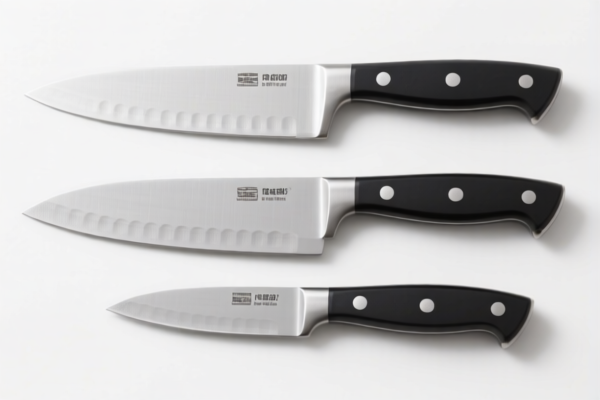
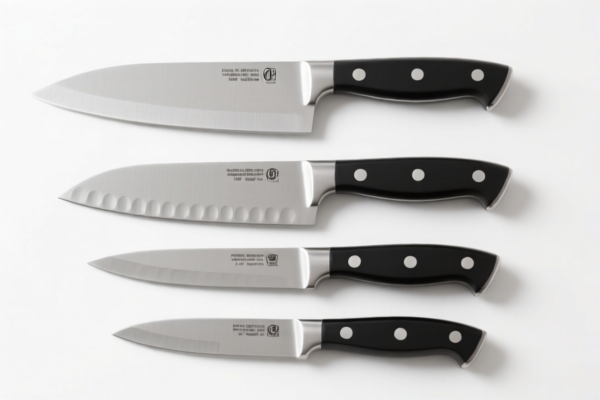
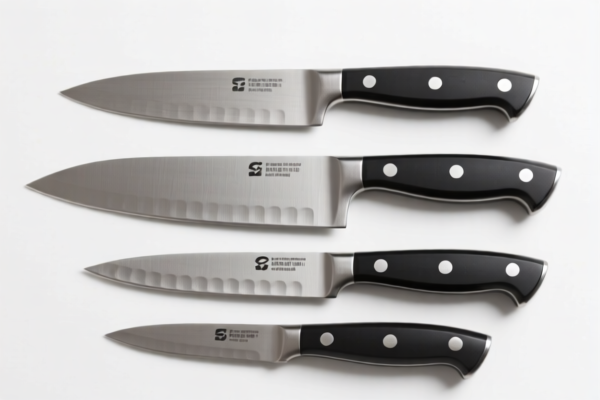
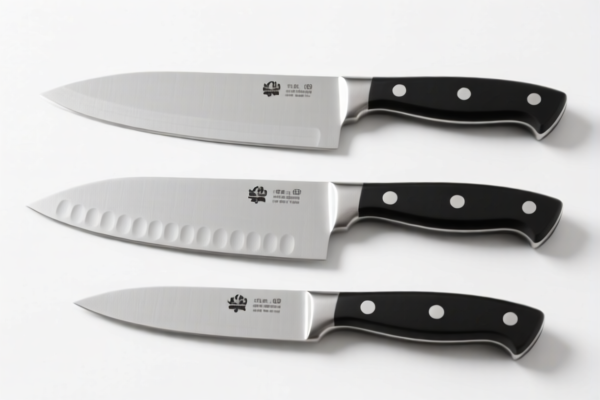
AI Analysis
🍴 Kitchen Knife Sets (Kitchen Knife Sets)
🌐 HS Code Reference & Customs Clearance Guide | 2026 Latest Tariff Analysis | Professional Clearance Strategy
📌 1. Product Definition & Classification: What Exactly Is a "Kitchen Knife Set"?
Kitchen knife sets are essential tools in culinary arts, but they are not a single unified commodity in international trade. Their classification depends entirely on material, specific function, and structural design. In customs classification, three distinct HS Codes apply based on the product's characteristics.
Fixed Blade Kitchen/Slaughter Knives: Knives with rigid, fixed blades specifically designed for kitchen prep or slaughterhouse use.
Cutlery Sets (Various Forms): Sets containing cutting blades, often sold as a complete package for general kitchen use, meeting the definition of "sets of cutlery."
Table/Kitchen Utensils (Metal): Metal accessories or tools that may include knives but are classified broadly under general kitchen utensils rather than sharp cutlery.
⚠️ Key Distinction Points:
- If the knives have fixed blades and are for slaughter/kitchen → 8211.92.90.30 / 8211.10.00.00
- If they are metal table/kitchen utensils (not strictly classified as cutlery blades) → 8215.20.00.00
- Crucial Note: The tax rate varies significantly between these codes due to US trade policy additions (Section 301 & 122).
📦 2. HS Code Classification Details (2026 Latest Tariff Authority Comparison)
| HS Code | Product Description | Applicable Scenario | Blade Type |
|---|---|---|---|
8211.92.90.30 |
Kitchen knife sets, fixed blades, for kitchen & slaughter | Professional kitchen, slaughterhouse tools | ✅ Fixed |
8211.10.00.00 |
Kitchen knife sets, assorted forms, containing cutting blades | General home/kitchen knife sets | ✅ Cutting Edge |
8215.20.00.00 |
Table/kitchen utensils, mainly metal | Metal kitchen tools, non-cutlery classification | ❌ Not primarily cutlery |
🔍 Key Reminder:
- 8211 Codes: Apply to actual knives with cutting edges.
- 8215 Code: Applies to utensils (spoons, forks, non-cutting metal tools). Misclassifying a knife set as "utensils" to avoid higher taxes is a common customs error that can lead to penalties.
- Set Rule: If sold as a set, the essential character determines the code, but tax liabilities are calculated on the entire set value.
💰 3. 2026 Latest Tariff Rate Details (Including Additional Taxes & Policy Add-ons)
✅ Applicable Country: United States (US)
✅ Origin: China (CN)
✅ Effective Date: Current trade policies including Section 301 & Section 122
🎯 1. 8211.92.90.30 & 8211.10.00.00 —— Kitchen Knife Sets (Fixed/Assorted Blades)
These two codes share identical tax structures under current US trade policy for Chinese-origin goods.
| Item | Content |
|---|---|
| Basic Duty Rate | $0.004 each + 6.1% (ad valorem) |
| Section 301 Additional Duty | +7.5% |
| Section 122 Duty | +10% |
| Total Effective Rate | 6.1% + 17.5% (Additional) + $0.004/unit |
| Tax Calculation | (CIF Value × 23.6%) + ($0.004 × Quantity) |
| De Minimis Exemption | ❌ Not Eligible (High risk of scrutiny) |
| Legal Basis Path | HTSUS:8211.92.90.30 / 8211.10.00.00 → Section 301: 7.5% → Section 122: 10% |
📌 Explanation:
- The "6.1%" is the standard USMF (Merchandise Processing Fee) and basic tariff.
- The "7.5%" is the Section 301 additional tariff on Chinese cutlery.
- The "10%" is the Section 122 duty (often applied to industrial materials or specific categories, but listed here as per data for these HS codes).
- Total Burden: ~23.6% + per-unit fee. This is a high-cost category.
🎯 2. 8215.20.00.00 —— Table/Kitchen Utensils (Metal)
This code applies if the product is classified as general metal utensils rather than sharp cutlery.
| Item | Content |
|---|---|
| Basic Duty Rate | Rate applicable to the article in the set (varies, often lower) |
| Section 301 Additional Duty | +25.0% |
| Section 122 Duty | +10% |
| Total Effective Rate | Base Rate + 35.0% (Additional) |
| Tax Calculation | CIF Value × (Base Rate + 35%) |
| De Minimis Exemption | ❌ Not Eligible |
| Legal Basis Path | HTSUS:8215.20.00.00 → Section 301: 25.0% → Section 122: 10% |
📌 Note:
- Although the base rate might be lower, the 35% additional duty (25% Sec 301 + 10% Sec 122) makes this significantly more expensive than the 8211 codes if the base rate is high.
- Warning: Misdeclaring knives as "utensils" to use this code is risky. Customs may reclassify and impose penalties.
🛠️ 4. Customs Clearance Practical Advice (Real-World Pitfall Guide)
✅ 1. Required Documentation Checklist (Non-Negotiable)
| Document | Mandatory? | Description |
|---|---|---|
| ✅ Product Specification Sheet | ✔️ | Must clearly state: "Kitchen Knife Set," blade material (e.g., Stainless Steel 420J2), handle material, and number of pieces. |
| ✅ Photos of Product & Packaging | ✔️ | Show the knives clearly. If blades are fixed, state it. If it's a block set, show the block. |
| ✅ Commercial Invoice | ✔️ | Must list HS Codes explicitly: 8211.92.90.30 or 8211.10.00.00. Do not use generic terms like "Metal Tools." |
| ✅ Packing List | ✔️ | Detail quantity of knives vs. accessories (blocks, sharpeners). Accessories must not exceed 10-15% of value to avoid reclassification. |
| ✅ Material Declaration | ✔️ | Confirm origin of steel (China) to trigger correct Section 301/122 duties. |
✅ 2. Declaration Tips (Key Mantras)
🔥 "Declare by Function, Not by Material! Fixed Blades = 8211. Sets = Complete Value Tax!"
| Scenario | Correct Declaration | Wrong Action |
|---|---|---|
| Professional Chef's Knife Set | 8211.10.00.00 |
Declare as "Metal Utensils" (8215) → High Penalty Risk |
| Slaughterhouse Fixed-Blade Set | 8211.92.90.30 |
Declare as "General Cutlery" → Rate Mismatch |
| Knives + Wooden Block | Declare as Set under HS Code | Separate declaration for block → Complexity & Delay |
| Plastic-Handled Knives | Still 8211.xxxx (Blade determines class) |
Declare as "Plastic Goods" → Wrong Classification |
✅ 3. Special Circumstances Handling
| Scenario | Handling Advice |
|---|---|
| OEM Custom Knife Sets | Provide client design drawings. Ensure blade edge type (serrated vs. plain) matches description. |
| Knife Sharpeners Included | If sharpeners are essential accessories, they are included in the set value. Do not separate. |
| Gift Sets | If sold as a gift with non-cutlery items (e.g., salt & pepper shakers), the essential character (knives) still dictates 8211 classification. |
| Origin Marking | Ensure every knife blade is marked "Made in China" to comply with country of origin labeling laws. |
🌍 5. Global Market Comparison (2026 Latest)
| Country/Region | Recommended HS Code | Tariff (China Origin) | Certification Requirements | Notes |
|---|---|---|---|---|
| 🇺🇸 USA | 8211.10.00.00 / 8211.92.90.30 |
~23.6% + $0.004/unit | FDA (if food contact), CPSIA (if kids' set) | Highest additional duties |
| 🇨🇳 China | 8211.10.00.00 |
6.5% - 8% | CCC (if applicable) | Lower base rate, no Sec 301 |
| 🇪🇺 EU | 8211.92 / 8215.20 |
0% - 2.7% | LFGB / REACH (Food Contact) | No additional tariffs |
| 🇬🇧 UK | 8211.92 / 8215.20 |
0% - 2.5% | UKCA / Food Safety Standards | Post-Brexit rules apply |
| 🇯🇵 Japan | 8211.92 |
3.4% - 4.4% | JIS Standards | Strict food contact material rules |
📌 Conclusion:
- USA is the most expensive market for Chinese kitchen knife sets due to Section 301 (7.5-25%) and Section 122 (10%) tariffs.
- EU/UK/Japan offer significantly lower tariff burdens but require strict food safety certifications (LFGB, REACH).
- Strategy: Consider origin diversification (e.g., Vietnam, Indonesia) if targeting the US to avoid high tariffs, or absorb costs if targeting non-US markets.
📌 6. Common Mistakes & Pitfall Guide (Blood & Tears Lessons)
❌ Mistake 1: Classifying Knife Sets as "Metal Utensils" (8215) to avoid higher 8211 duties
👉 Consequence: Customs reclassification → Back taxes + Penalties + Delayed shipment.
Fact: Knives with cutting edges are explicitly excluded from 8215.
❌ Mistake 2: Ignoring Section 122 & 301 in Cost Calculations
👉 Consequence: Profit margin wiped out by unexpected 17.5%-35% additional tariffs.
Fact: Always calculate landed cost including all additional duties.
❌ Mistake 3: Undeclarating Accessories (Blocks, Sharpeners) Separately
👉 Consequence: If accessories exceed value threshold, whole set may be re-evaluated, causing delays.
Fact: Keep accessories as minor components (<10-15% of total value).
❌ Mistake 4: Using Vague Descriptions Like "Cutting Tools"
👉 Consequence: CBP (Customs and Border Protection) may issue a Request for Information (RFI), holding cargo for weeks.
Fact: Use precise terms: "Stainless Steel Kitchen Knife Set, Fixed Blade, Model XYZ."
✅ Correct Practice:
"Kitchen Knife Set, 5-Piece, Stainless Steel Blades, Wooden Block, Model ABC, Made in China, HS Code 8211.10.00.00"
🎯 7. Conclusion: Professional Declaration, Save Time, Reduce Costs!
🎯 Remember the Mantra:
🔹 "Blades are 8211, Utensils are 8215. Don't Mix Them Up!"
🔹 "Section 301 + 122 = High Cost. Plan Your Price Accordingly!"
🔹 "Set Value is Taxed as a Whole. Keep Accessories Minimal!"
📌 Pro Tip:
- If your knife set is sourced from Vietnam, Thailand, or Indonesia, check for USMCA/ASEAN FTAs to potentially avoid Section 301/122 duties.
- Apply for a Binding Ruling from CBP if unsure about classification (especially for hybrid products).
- Consider DDPU (De Minimis) Exclusion: Small packages (under $800) may still be subject to Section 301/122 duties if not properly exempted.
📣 Immediate Action:
📞 Contact a Licensed Customs Broker + Provide Detailed Product Photos + Request HS Code Pre-Ruling
🚀 Ensure Smooth Customs Clearance, Avoid Surprises, Maximize Profit Margins!
✨ Professional Clearance Starts with Accurate Classification!
💼 Every Cent of Tax Is Calculated Precisely!
Customer Reviews
About HS Code Classification
The Harmonized System (HS) is an internationally standardized nomenclature developed by the World Customs Organization (WCO) to classify traded products. Over 200 countries use the HS system as the basis for customs tariffs, trade statistics, and import/export regulations.
Each HS code follows a hierarchical structure:
- Chapter (2 digits) — Broad category of goods (e.g., Chapter 84: Machinery and Mechanical Appliances)
- Heading (4 digits) — More specific grouping within the chapter
- Subheading (6 digits) — Internationally standardized breakdown, used by all WCO member countries
- National subdivisions (8-10 digits) — Country-specific extensions for further classification, such as US HTSUS 10-digit codes
Correct HS code classification is essential for smooth customs clearance, accurate duty payment, and compliance with trade regulations. Misclassification can lead to customs delays, overpayment of duties, or penalties.
When importing from CN to US, the applicable tariff rates may include:
- Most-Favored-Nation (MFN) rate — The standard duty rate applied to WTO members
- General rate — Applied to countries without trade agreements
- Trade remedy duties — Additional tariffs such as Section 301 (anti-dumping), Section 232 (national security), or countervailing duties
The information provided on this page is for reference purposes only. For official classification, please consult with your local customs authority or a licensed customs broker.