Kitchen Silicone Spatula
CN → US| HS Code | Tariff Rate | Origin | Destination | Doc |
|---|---|---|---|---|
| 3924104000 | 13.4% | CN | US | Official Doc |
| 3924101000 | 13.4% | CN | US | Official Doc |
Product Images
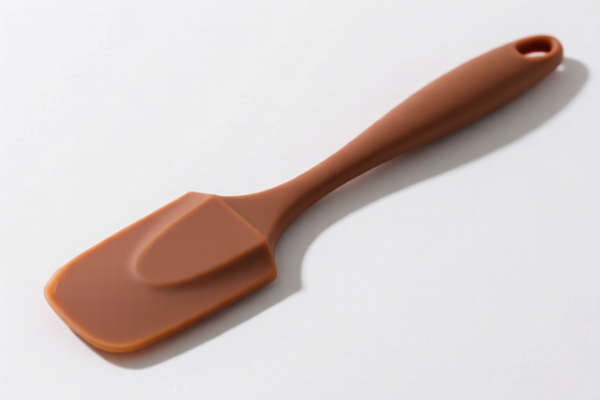
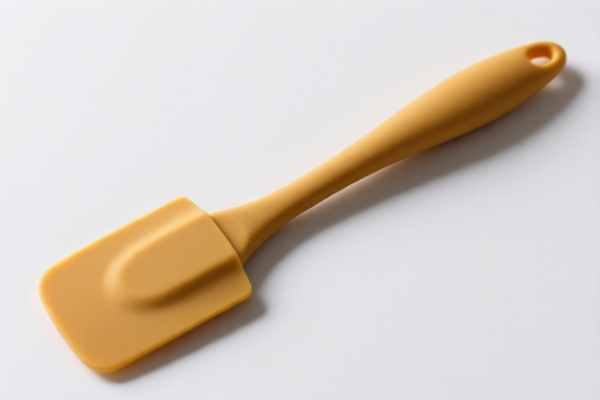
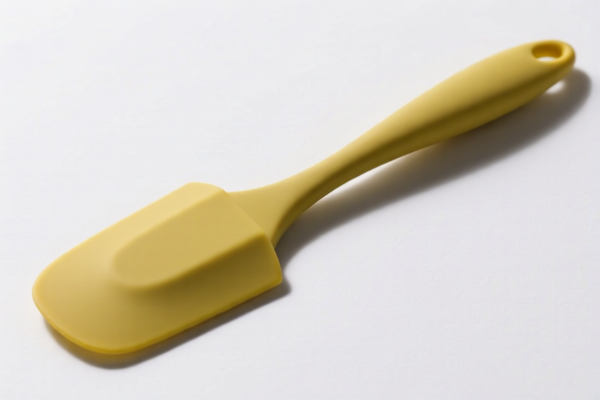
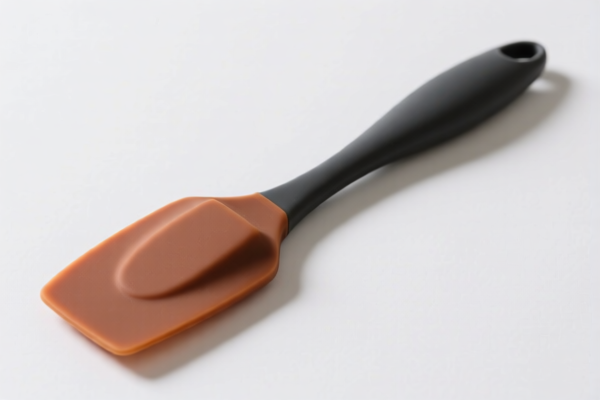
AI Analysis
🥄 Kitchen Silicone Spatula (厨房硅胶刮刀)
🌐 HS Code Reference & Clearance Guide | 2026 Latest Tariff Analysis | Professional Clearance Strategy
📌 1. Product Definition & Classification: What is a "Kitchen Silicone Spatula"?
Silicone spatulas are essential tools in modern kitchens, designed for mixing, spreading, and scraping bowls. In international trade, they fall under Plastics. Specifically, they are classified as Tableware or Kitchenware made of plastic materials.
⚠️ Key Classification Point:
- Silicone (Siloxane) is legally classified as a Plastic in Chapter 39 of the HS Code system.
- If it is a general-purpose mixing/scraping tool → 3924.10.40.00
- If it is specifically a dispenser (e.g., for ketchup/salt) → 3924.10.10.00
(Note: Standard spatulas for mixing/baking are rarely "dispensers." Most fall under "Other" tableware/kitchenware.)
📦 2. HS Code Classification Details (2026 Tariff Authority Match)
Based strictly on the provided <DATA>:
| HS Code | Product Description | Applicability for Silicone Spatula |
|---|---|---|
3924.10.40.00 |
Tableware, kitchenware... of plastics: Tableware and kitchenware: Other | ✅ Primary Choice for standard mixing, baking, or scraping spatulas. They are "other" household articles/kitchenware not specifically listed as dispensers. |
3924.10.10.00 |
Tableware, kitchenware... of plastics: Tableware and kitchenware: Salt, pepper, mustard and ketchup dispensers and similar dispensers | ❌ Generally Incorrect unless the spatula is part of a specific dispenser set or is itself a dispenser nozzle. Pure spatulas do not "dispense" in this context. |
🔍 Key Reminder:
- Do not confuse "Silicone Spatula" (a tool) with "Silicone Dispenser" (a container/nose for pouring).
- If the product is a simple spatula with a handle, use 3924.10.40.00.
- If the product is a squeeze bottle with a silicone tip that acts as a dispenser, use 3924.10.10.00.
💰 3. 2026 Latest Tariff Rate Details (Clear Tax Breakdown)
✅ Applicable Country: United States (US)
✅ Origin: China (CN) [Assumed based on typical export contexts, but rates apply to the HS codes provided]
✅ Effective Date: Current
🎯 1. 3924.10.40.00 —— Kitchenware, Other (Including Standard Silicone Spatulas)
| Item | Content |
|---|---|
| Base Tariff Rate | 3.4% |
| Additional Tariff (Section 301) | 0.0% |
| Total Tax Rate | 3.4% |
| Tax Calculation | CIF Value × 3.4% |
| De Minimis Eligibility | ✅ Yes (if value < $800, often duty-free under Section 321, but the rate above applies for formal entry) |
| Legal Basis | HTSUS:3924.10.40.00 |
📌 Explanation:
- This is a low-risk, low-tariff classification.
- Unlike electronics or steel, plastic household items like spatulas do not currently face the 25% Section 301 tariffs (which typically apply to Chapter 84, 85, etc., or specific steel/aluminum).
- The total duty is simply the base Most Favored Nation (MFN) rate of 3.4%.
🎯 2. 3924.10.10.00 —— Dispensers (Only if classified as such)
| Item | Content |
|---|---|
| Base Tariff Rate | 3.4% |
| Additional Tariff (Section 301) | 0.0% |
| Total Tax Rate | 3.4% |
| Tax Calculation | CIF Value × 3.4% |
| De Minimis Eligibility | ✅ Yes |
📌 Note:
- The tax rate is identical (3.4%) for both codes in the provided data.
- However, misclassification can lead to customs audits. Stick to3924.10.40.00for standard spatulas.
🛠️ 4. Clearance Practical Advice (Avoid Pitfalls)
✅ 1. Documentation Checklist
| Document | Required? | Notes |
|---|---|---|
| ✅ Commercial Invoice | ✔️ | Must clearly state "Silicone Spatula" or "Kitchen Utensil." Avoid vague terms like "Plastic Tool." |
| ✅ Packing List | ✔️ | List quantity and weight per box. |
| ✅ Product Photos | ✔️ | Show the spatula clearly. If it's a set, show the packaging. |
| ✅ Material Statement | ✔️ | Confirm material is "Food-Grade Silicone" (Silicones are plastics). |
✅ 2. Declaration Tips
🔥 Golden Rule:
"Be Specific, Be Accurate: 'Silicone' = 'Plastic' in Customs."
| Scenario | Correct HS Code | Why? |
|---|---|---|
| Single silicone spatula for baking | 3924.10.40.00 |
It is "Other" kitchenware. |
| Set of silicone spatulas (different shapes) | 3924.10.40.00 |
Treated as a set of kitchenware. |
| Silicone spatula sold as part of a dispenser bottle | 3924.10.10.00 |
Only if the primary function is dispensing. |
| Metal spatula with silicone tip | Not Covered | The provided data is for 100% Plastic/Silicone. Metal handles may change classification to Chapter 73 or 82. |
⚠️ Warning:
- If your spatula has a wooden handle or metal core, it might not qualify for 3924.10.40.00. It could be classified under Chapter 44 (Wood) or 73/82 (Metal).
- The provided<DATA>only covers plastic/silicone articles. Ensure your product is predominantly plastic/silicone to use these codes.
✅ 3. Special Situations
| Situation | Advice |
|---|---|
| Food Contact Compliance | Ensure products meet FDA (US) or LFGB (EU) standards for food-contact silicone. Customs may request safety data sheets. |
| Anti-Dumping Duties | Currently, silicone spatulas are NOT subject to anti-dumping duties in the US. |
| De Minimis (Section 321) | For shipments under $800 USD, no duty or tax is collected if using Section 321. This code is ideal for low-value e-commerce shipments. |
🌍 5. Global Market Comparison (Contextual)
| Country | Recommended HS Code | Tax Rate | Notes |
|---|---|---|---|
| 🇺🇸 USA | 3924.10.40.00 |
3.4% | No Section 301. Very competitive. |
| 🇨🇳 China | 3924.10.40.00 |
~8-10% | Import duties may vary. |
| 🇪🇺 EU | 3924.10.00 |
~3.7% + VAT | VAT is significant (19-27%). |
| 🇬🇧 UK | 3924.10.00 |
~3.7% + VAT | Post-Brexit rules apply. |
📌 Conclusion:
- The US market is highly favorable for silicone kitchenware with a low 3.4% duty rate and no additional penalties.
- Focus on accurate material declaration (100% silicone vs. hybrid) to avoid reclassification.
📌 6. Common Errors & Pitfalls (Blood Lessons)
❌ Error 1: Declaring "Spaghetti Spoon" or "Fork" when it's a "Spatula"
👉 Consequence: Minor classification error, but may trigger manual review. Always use "Spatula" or "Kitchen Utensil."
❌ Error 2: Assuming "Silicone" is "Rubber"
👉 Consequence: Rubber falls under Chapter 40. Silicone is Chapter 39. Wrong Chapter = Wrong Tax Code.
❌ Error 3: Mixing Metal-Handled Spatulas with Plastic Ones in the Same HS Code
👉 Consequence: If >50% of value is metal, it may move to Chapter 73/82. The provided 3.4% rate only applies to plastic/silicone articles.
❌ Error 4: Using 3924.10.10.00 for Non-Dispensers
👉 Consequence: While the tax is the same (3.4%), incorrect description leads to customs delays and potential fines for misdeclaration.
✅ Correct Practice:
"Silicone Kitchen Spatula, Heat Resistant, BPA Free, Model ABC, Material: 100% Silicone"
🎯 7. Conclusion: Professional Declaration, Cost Efficiency!
🎯 Remember the Rules:
🔹 "Silicone = Plastic (Ch. 39)"
🔹 "Spatula = Other Kitchenware (3924.10.40.00)"
🔹 "No Dispenser Function = Do Not Use .10 Code"
🔹 "Total Tax = 3.4% (Low Risk!)"
📌 Tips:
- For small shipments (<$800), utilize Section 321 (De Minimis) for duty-free entry in the US.
- For large volumes, ensure your supplier provides a Material Safety Data Sheet (MSDS) to prove it is silicone, not generic plastic, if requested.
- Pre-ruling: If you have hybrid products (metal handle + silicone head), consult a customs broker for Chapter 73/82 classification.
📣 Immediate Action:
📞 Contact your customs broker with the product photo.
🚀 Use HS Code 3924.10.40.00 for standard silicone spatulas to ensure smooth, low-cost clearance.
✨ Professional Clearance Starts with Accurate Classification!
💼 Your Profit Margin Depends on Your HS Code!
Customer Reviews
About HS Code Classification
The Harmonized System (HS) is an internationally standardized nomenclature developed by the World Customs Organization (WCO) to classify traded products. Over 200 countries use the HS system as the basis for customs tariffs, trade statistics, and import/export regulations.
Each HS code follows a hierarchical structure:
- Chapter (2 digits) — Broad category of goods (e.g., Chapter 84: Machinery and Mechanical Appliances)
- Heading (4 digits) — More specific grouping within the chapter
- Subheading (6 digits) — Internationally standardized breakdown, used by all WCO member countries
- National subdivisions (8-10 digits) — Country-specific extensions for further classification, such as US HTSUS 10-digit codes
Correct HS code classification is essential for smooth customs clearance, accurate duty payment, and compliance with trade regulations. Misclassification can lead to customs delays, overpayment of duties, or penalties.
When importing from CN to US, the applicable tariff rates may include:
- Most-Favored-Nation (MFN) rate — The standard duty rate applied to WTO members
- General rate — Applied to countries without trade agreements
- Trade remedy duties — Additional tariffs such as Section 301 (anti-dumping), Section 232 (national security), or countervailing duties
The information provided on this page is for reference purposes only. For official classification, please consult with your local customs authority or a licensed customs broker.