Kitchen Sink Tap
CN → US| HS Code | Tariff Rate | Origin | Destination | Doc |
|---|---|---|---|---|
| 8481801030 | 39.0% | CN | US | Official Doc |
| 8481805060 | 38.0% | CN | US | Official Doc |
Product Images
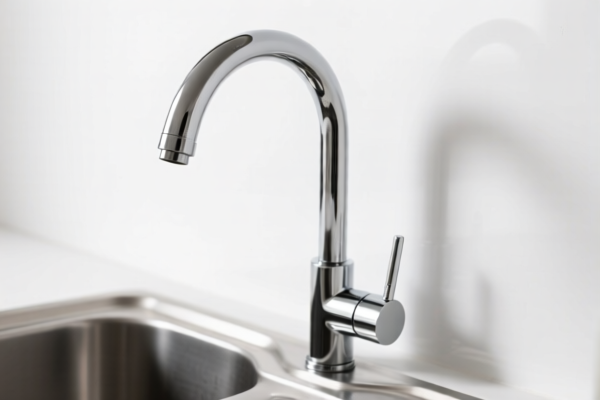
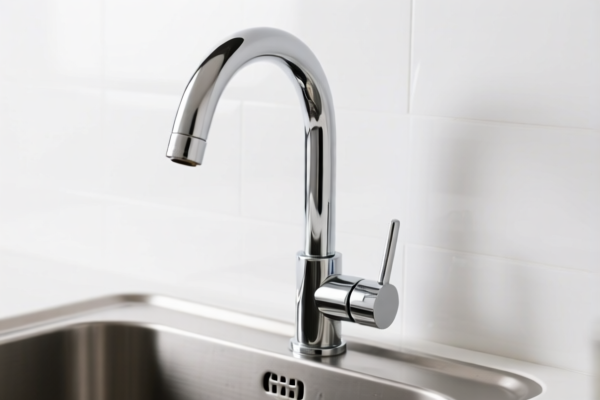
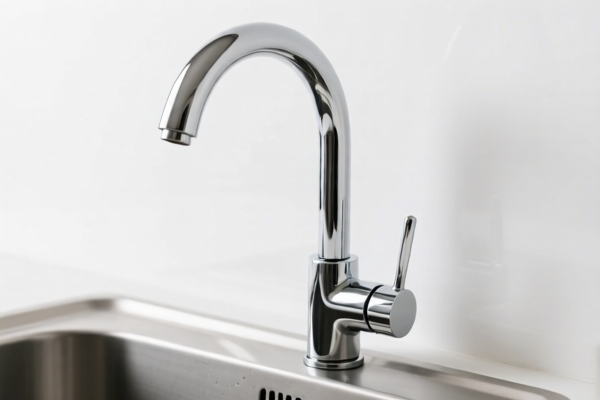
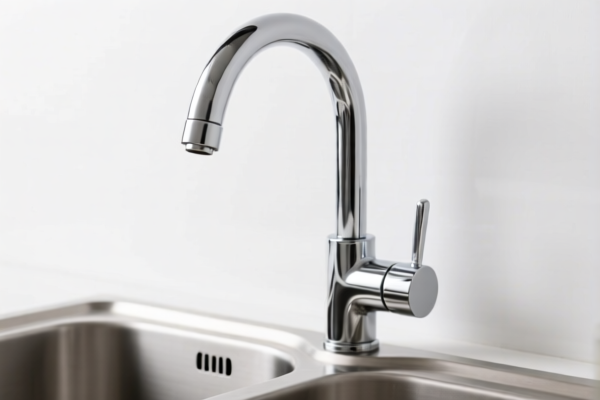
AI Analysis
🚰 Kitchen Sink Tap ( faucets for pipes, boiler shells, tanks, vats or the like)
🌐 HS Code Reference & Clearance Guide | 2026 Latest Tariff Analysis | Professional Customs Strategy
📌 Part I: Product Definition & Classification: Do You Really Understand "Kitchen Sink Taps"?
A kitchen sink tap is a hand-operated valve used to control the flow of water in a kitchen setting. In international trade, classification depends heavily on the material and the pressure rating. It is crucial to distinguish between copper taps with specific pressure limits and other materials, as this determines the HS Code and, consequently, the tax liability.
⚠️ Key Distinction Point:
- Copper Material: Only applies if the pressure rating is under 850 kPa. If it exceeds this limit, it falls under "Other appliances" or "Of other materials" depending on specific national subheadings, but the provided data specifically highlights the<850 kPaconstraint for the lower tax rate.
- Other Materials / High Pressure: If made of brass, stainless steel, or plastic (other than copper) OR if the pressure rating is 850 kPa or higher, it falls under different subheadings with different tax implications.
📦 Part II: HS Code Classification Details (Based on Provided Data)
| HS Code | Product Description | Applicable Scenario | Material & Pressure Constraint |
|---|---|---|---|
8481.80.10.30 |
Hand operated taps, cocks, valves... Of copper | Kitchen sink faucets | Material: Copper Pressure: Under 850 kPa Type: Sink and lavatory faucets |
8481.80.50.60 |
Hand operated taps, cocks, valves... Of other materials | Bath, shower, sink, lavatory faucets | Material: Non-copper (e.g., Brass, Stainless Steel, Plastic) Pressure: No specific <850 kPa restriction mentioned for this specific subheading in the provided text Type: Bath, shower, sink, lavatory faucets |
🔍 Critical Warning:
- Copper Taps: Must be strictly verified for pressure rating. If ≥ 850 kPa, it cannot use8481.80.10.30.
- Non-Copper Taps:8481.80.50.60is the catch-all for "other materials." This includes brass (often classified as other than copper in tariff nomenclatures unless specified otherwise), stainless steel, and plastic faucets.
💰 Part III: 2026 Latest Tariff Rate Details
✅ Applicable Region: Based on the provided tax data (likely US or similar jurisdiction with 0% base rate for non-copper).
✅ Origin: As per the provided data, tax rates are shown as 0% or 4%.
🎯 1. 8481.80.10.30 — Copper Sink/Lavatory Faucets (Pressure < 850 kPa)
| Item | Content |
|---|---|
| Base Tariff | 4.0% |
| Additional Tariff (Section 301/Other) | 0.0% |
| Total Tax Rate | 4.0% |
| Tax Calculation | CIF Value × 4.0% |
| Description | Hand operated appliances of copper having a pressure rating under 850 kPa. |
📌 Explanation:
- This is the only category in the provided data with a non-zero base tariff.
- Compliance Check: Ensure your copper tap’s maximum working pressure is certified below 850 kPa (approx. 123 psi). If it is 850 kPa or higher, this code is invalid, and you risk misclassification penalties.
🎯 2. 8481.80.50.60 — Hand Operated Faucets of Other Materials
| Item | Content |
|---|---|
| Base Tariff | 0.0% |
| Additional Tariff (Section 301/Other) | 0.0% |
| Total Tax Rate | 0.0% |
| Tax Calculation | CIF Value × 0.0% |
| Description | Bath, shower, sink, and lavatory faucets of other materials. |
📌 Explanation:
- Zero Duty: This is the most favorable tariff rate.
- Material Note: "Other materials" typically includes Brass (if not classified as copper alloy in this specific tariff line), Stainless Steel, and Plastic.
- Strategic Advantage: If your product is made of stainless steel or brass, using this code results in $0 tax, significantly reducing landed cost.
🛠️ Part IV: Customs Clearance Practical Advice (Real-World Pitfall Guide)
✅ 1. Preparation Checklist (Essential Documents)
| Document | Required | Explanation |
|---|---|---|
| ✅ Product Specification Sheet | ✔️ | Must clearly state Material (e.g., "Cast Brass" vs. "Copper") and Max Working Pressure (e.g., "600 kPa" or "125 PSI"). |
| ✅ Technical Drawing/Cross-section | ✔️ | To prove internal structure and material composition. Crucial for distinguishing "Copper" from "Brass" (which is copper alloy but often classified differently). |
| ✅ Certified Pressure Test Report | ✔️ | If claiming < 850 kPa for copper taps, provide a third-party lab report confirming the pressure rating. |
| ✅ Commercial Invoice | ✔️ | Clearly describe the goods: "Kitchen Sink Faucet, Material: [Specify], Pressure Rating: [Value] kPa." |
| ✅ Packing List | ✔️ | Ensure no mixed shipments of copper (<850kPa) and other materials to avoid confusion. |
✅ 2. Declaration Tips (Key Mnemonic)
🔥 "Material First, Pressure Second, Code Matches, Tax Saves!"
| Scenario | Correct HS Code | Risk if Misdeclared |
|---|---|---|
| Copper Tap, Pressure < 850 kPa | 8481.80.10.30 |
If declared as "Other Material" → Tax drops to 0% (Underpayment Risk) or vice versa if pressure is higher. |
| Copper Tap, Pressure ≥ 850 kPa | 8481.80.50.60 (if considered "other") or other "Of Copper" subheadings not in data |
If declared as <850 kPa → High Risk of Penalty for false declaration. |
| Brass/Stainless Steel/Plastic Tap | 8481.80.50.60 |
If declared as "Copper" → Higher tax (4%) than necessary, or misclassification if material is not pure copper. |
✅ 3. Special Considerations
| Situation | Handling Advice |
|---|---|
| Brass vs. Copper | In many tariff systems, "Copper" refers to pure copper or specific alloys. Brass (Copper-Zinc alloy) is often classified under "Other Materials" or specific brass codes. Check if your "Brass" tap qualifies for 8481.80.50.60 (0% tax) to save costs. |
| Mixed Materials | If a faucet has a copper body and plastic handle, the principal material determines the classification. Usually, the metallic part (body) dictates the code. |
| Smart/Electronic Faucets | The provided data specifies "Hand Operated". If your tap has sensors or motors, it does not fit these codes. It would likely fall under 8481.80.90 or other electronic valve categories, which are not covered in this specific data. |
🌍 Part V: Global Market Comparison (2026)
| Market | Recommended HS Code (Based on Data) | Tariff Rate | Key Requirement |
|---|---|---|---|
| 🇺🇸 USA (Data Source) | 8481.80.50.60 (Other Materials) |
0.0% | Clear material declaration. |
| 🇺🇸 USA (Copper <850kPa) | 8481.80.10.30 |
4.0% | Proof of pressure rating < 850 kPa. |
| 🇪🇺 EU | Similar codes often apply, but check local "Copper Alloy" definitions. | Varies (Often 1.7% - 4%) | CE Marking, Lead-Free Compliance (EU 1935/2004). |
| 🇨🇳 China | 8481.80 series |
Varies (Import Tariff ~5-7%) | CCC Certification may apply. |
📌 Conclusion:
- Zero Duty Strategy: If your kitchen sink tap is made of Brass, Stainless Steel, or Plastic, classify it under8481.80.50.60to enjoy 0% tax.
- Copper Caution: Pure copper taps are subject to a 4% tax ONLY IF the pressure is under 850 kPa. Ensure your technical data supports this claim.
📌 Part VI: Common Errors & Pitfalls (Blood & Tears Lessons)
❌ Error 1: Declaring a Brass tap as "Copper" to try for a specific copper code, only to be rejected.
👉 Consequence: Re-classification delay, potential fines. Brass is often "Other Material".
❌ Error 2: Declaring a High-Pressure Copper Tap (e.g., 1000 kPa) as < 850 kPa to use 8481.80.10.30.
👉 Consequence: Penalty for Misdeclaration. Customs may request lab tests. If failed, higher taxes + fines.
❌ Error 3: Ignoring Electronic Components.
👉 Consequence: If the tap is "Thermostatically Controlled" or "Sensor-Operated", it is NOT "Hand Operated". It falls under a different heading (e.g., 8481.30 or 8481.80.90), which may have different taxes. Do not force these into the "Hand Operated" codes.
✅ Correct Practice:
"Kitchen Sink Faucet, Hand Operated, Material: Brass, Pressure Rating: 600 kPa, Model: XYZ, Lead-Free Certified"
🎯 Part VII: Conclusion: Precise Classification Saves Money!
🎯 Remember the Mantra:
🔹 "Brass & Steel? Zero Percent! Copper? Check Pressure First! Electronics? Don't Force It!"
🔹 "0% Tax is yours if it's not Copper or if it's High-Pressure Copper!"
📌 Pro Tip:
If you are manufacturing Brass faucets, emphasize "Brass" in your customs documents. In many tariff schedules, "Copper" refers to specific subheadings for pure copper or specific alloys, while "Brass" falls under "Other Metals," qualifying for the 0% rate under 8481.80.50.60. Always verify the "Brass" classification with a local customs broker to ensure it fits "Other Materials."
📣 Immediate Action:
📞 Contact a Customs Broker + Provide Material Spec & Pressure Test Report + Verify "Brass vs. Copper" Classification
🚀 Optimize Your Tariff Rate from 4% to 0%!
✨ Professional Clearance Starts with Accurate Classification!
💼 Your Every Cent of Tax is Worth Saving!
Customer Reviews
About HS Code Classification
The Harmonized System (HS) is an internationally standardized nomenclature developed by the World Customs Organization (WCO) to classify traded products. Over 200 countries use the HS system as the basis for customs tariffs, trade statistics, and import/export regulations.
Each HS code follows a hierarchical structure:
- Chapter (2 digits) — Broad category of goods (e.g., Chapter 84: Machinery and Mechanical Appliances)
- Heading (4 digits) — More specific grouping within the chapter
- Subheading (6 digits) — Internationally standardized breakdown, used by all WCO member countries
- National subdivisions (8-10 digits) — Country-specific extensions for further classification, such as US HTSUS 10-digit codes
Correct HS code classification is essential for smooth customs clearance, accurate duty payment, and compliance with trade regulations. Misclassification can lead to customs delays, overpayment of duties, or penalties.
When importing from CN to US, the applicable tariff rates may include:
- Most-Favored-Nation (MFN) rate — The standard duty rate applied to WTO members
- General rate — Applied to countries without trade agreements
- Trade remedy duties — Additional tariffs such as Section 301 (anti-dumping), Section 232 (national security), or countervailing duties
The information provided on this page is for reference purposes only. For official classification, please consult with your local customs authority or a licensed customs broker.