Kitchen Spatula Rack
CN → US| HS Code | Tariff Rate | Origin | Destination | Doc |
|---|---|---|---|---|
| 7615109100 | 70.6% | CN | US | Official Doc |
| 7615107180 | 63.1% | CN | US | Official Doc |
| 3924104000 | 13.4% | CN | US | Official Doc |
| 3924905650 | 20.9% | CN | US | Official Doc |
| 7323999030 | 88.4% | CN | US | Official Doc |
| 7323999080 | 88.4% | CN | US | Official Doc |
Product Images
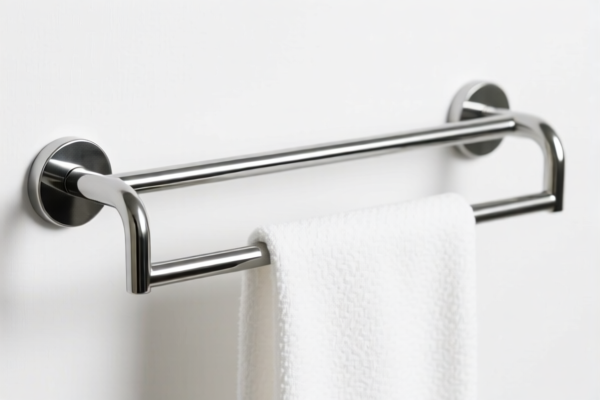

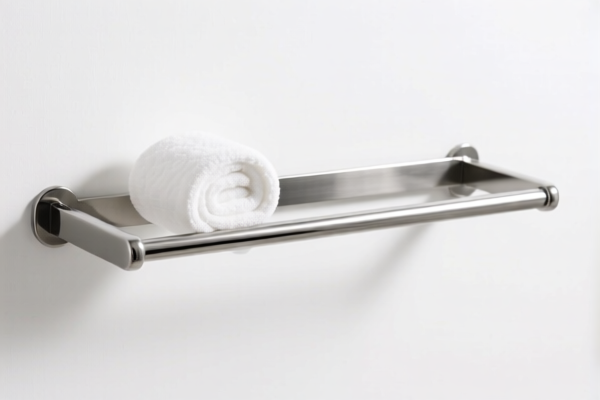

AI Analysis
🍳 Kitchen Spatula Rack (Tableware & Kitchenware of Plastic/Metal)
🌐 HS Code Reference & Customs Clearance Guide | 2026 Latest Tariff Analysis | Professional Clearance Strategy 📌 Part 1: Product Definition & Classification: Do You Really Know Your "Spatula Rack"?
A Kitchen Spatula Rack is a household article used for storing cooking utensils such as spatulas, ladles, and spoons. In international trade, its classification depends entirely on the material it is made of (Plastic, Iron/Steel, or Aluminum) and its specific design/features (e.g., non-stick coating, enameled, coated).
Key Distinctions:
* Plastic Racks: Generally fall under Chapter 39. If it’s a simple tableware/kitchenware item, it’s 3924.10.40.00. If it’s a generic household article not specifically tableware, it might be 3924.90.56.50.
* Iron/Steel Racks: Fall under Chapter 73. If it’s suitable for food contact (e.g., holding hot pots/utensils), it’s 7323.99.90.30. If it’s a general household item not specifically for food contact or a "other" category, it’s 7323.99.90.80.
* Aluminum Racks: Fall under Chapter 76. If it’s a general household article, it’s 7615.10.91.00. If it’s specifically "cooking/kitchen ware" that is not enameled/glazed and has no non-stick interior finishes, it’s 7615.10.71.80.
⚠️ Critical Point:
- The Material dictates the Chapter (39, 73, or 76).
- The Use Case (Food Contact vs. General Storage) dictates the specific subheading in metal chapters.
- Surface Treatment (Enameled/Non-stick) drastically changes the Aluminum tariff.
📦 Part 2: HS Code Classification Details (2026 Latest Tariff Authority对照)
| HS Code | Product Description | Applicable Scenario | Material | Key Differentiator |
|---|---|---|---|---|
3924.10.40.00 |
Tableware and kitchenware, of plastics: Other | Plastic rack specifically used for tableware/kitchenware storage | Plastic | Must be classified as "Tableware/Kitchenware" |
3924.90.56.50 |
Other tableware, kitchenware, household articles, of plastics: Other | General plastic household storage item, not strictly "tableware" | Plastic | Broader "Household Article" category |
7323.99.90.30 |
Iron/Steel household articles: Other: Other Kitchen/tableware suitable for food or drink contact | Steel rack holding pots/spatulas (food contact zone) | Iron/Steel | Food Contact classification |
7323.99.90.80 |
Iron/Steel household articles: Other: Other | Steel rack not primarily for direct food contact or generic storage | Iron/Steel | "Other" household article |
7615.10.91.00 |
Aluminum household articles: Other | General aluminum storage rack | Aluminum | General household use |
7615.10.71.80 |
Aluminum cooking/kitchen ware: Not enameled/glazed, no non-stick finish | Aluminum rack, plain metal, no special coating | Aluminum | No enameled/glazed/non-stick |
🔍 Important Reminder:
- Plastic racks are generally lower risk and lower tax (see below).
- Metal racks (Steel/Aluminum) are subject to significant additional tariffs due to US-China trade policies (Section 301 & IEEPA).
- For Aluminum, the presence of a non-stick coating or enamel can change the HS code to a different subheading, potentially altering the tax base (though additional tariffs often still apply).
💰 Part 3: 2026 Latest Tariff Rate Breakdown (Detailed)
✅ Applicable Country: United States (US)
✅ Origin: China (CN)
✅ Effective Time: Current rates apply (Section 301 & IEEPA measures)
🎯 1. 3924.10.40.00 & 3924.90.56.50 —— Plastic Kitchen Spatula Racks
| Item | Content |
|---|---|
| Basic Tariff | 3.4% (for 3924.10.40.00) / 0.0% (for 3924.90.56.50) |
| Additional Tariff (Section 301) | 0.0% |
| Total Tariff | 3.4% (for 3924.10.40.00) / 0.0% (for 3924.90.56.50) |
| Tax Calculation | CIF Value × 3.4% or 0% |
| Note | Plastic items are generally exempt from the heavy 25-50% additional tariffs applied to steel/aluminum. |
📌 Explanation:
- 3924.10.40.00: Carries a 3.4% basic duty. No additional tariffs.
- 3924.90.56.50: Carries a 0.0% basic duty. No additional tariffs.
- Conclusion: Plastic racks are the most cost-effective option for export to the US due to minimal taxation.
🎯 2. 7323.99.90.30 & 7323.99.90.80 —— Iron/Steel Kitchen Spatula Racks
| Item | Content |
|---|---|
| Basic Tariff | 3.4% |
| Section 301 Additional Tariff | +25.0% |
| Additional Tariff (Steel/Al/Cu List) | +50.0% |
| Total Tariff | 78.4% |
| Tax Calculation | CIF Value × 78.4% |
| Legal Basis | HTSUS: 7323.99.90 → Footnote 9903.15.01 (25%) + Footnote 9903.05.03 (50%) |
📌 Explanation:
- Steel products from China are hit with both the standard Section 301 tariff (25%) and the new additional tariff for steel/aluminum/copper products (50%).
- Total Burden: 78.4% is an extremely high tariff.
- Risk: High cost impact on profitability. Must be carefully priced in.
🎯 3. 7615.10.91.00 & 7615.10.71.80 —— Aluminum Kitchen Spatula Racks
| Item | Content |
|---|---|
| Basic Tariff | 3.1% |
| Section 301 Additional Tariff | +7.5% (Standard) or +50% (Specific List) |
| Additional Tariff (Steel/Al/Cu List) | +50.0% |
| Total Tariff (Worst Case) | 60.6% (for 7615.10.91.00) |
| Total Tariff (Alternative) | 53.1% (for 7615.10.71.80) |
| Tax Calculation | CIF Value × 60.6% or 53.1% |
| Legal Basis | HTSUS: 7615.10 → Footnote 9903.05.03 (50% for Al) |
📌 Explanation:
- Aluminum is also subject to the 50% additional tariff under the steel/aluminum/copper list.
- 7615.10.91.00: Total tax 60.6%.
- 7615.10.71.80: Total tax 53.1% (Note: The base rate or specific footnote application may vary slightly, but the 50% add-on is critical).
- Comparison: Still significantly cheaper than Steel (78.4%), but much higher than Plastic (0-3.4%).
🛠️ Part 4: Customs Clearance Practical Advice (Battle-Tested Guide)
✅ 1. Preparation Checklist (Non-Negotiable)
| Document | Required | Explanation |
|---|---|---|
| ✅ Product Specification Sheet | ✔️ | Must clearly state Material (Plastic/Steel/Aluminum), dimensions, and intended use. |
| ✅ Material Certificate | ✔️ | Crucial for metal items to prove origin and material type (e.g., SUS304 Steel, 6061 Aluminum). |
| ✅ High-Res Photos | ✔️ | Show the entire rack, hooks, and any branding. For metal, show lack of coating if claiming 7615.10.71.80. |
| ✅ Commercial Invoice | ✔️ | Must match HS Code description. Use terms like "Plastic Kitchen Utensil Holder" or "Steel Cooking Rack". |
| ✅ Packing List | ✔️ | Include net/gross weight. Ensure quantity matches invoice. |
| ✅ Country of Origin Cert. | ✔️ | Essential for determining eligibility for any potential exemptions (though unlikely for China-origin metal). |
✅ 2. Declaration Strategy (Key Mantras)
🔥 "Material First, Use Second, Description Precise!"
| Scenario | Correct Declaration | Wrong Practice | Consequence |
|---|---|---|---|
| Plastic Rack | 3924.10.40.00 |
Declare as "Plastic Holder" without material detail | Risk of reclassification to higher duty |
| Steel Rack (Food Contact) | 7323.99.90.30 |
Declare as "Home Decor" (9403.50) |
78.4% vs ~3-6% (Huge penalty!) |
| Aluminum Rack (No Coating) | 7615.10.71.80 |
Declare as "Enameled Aluminum" | Wrong subheading → Potential audit/penalty |
| Mixed Material Rack | Separate by component | Lump sum declaration | Customs will split and tax each part |
📌 Critical Tip:
- Do NOT describe steel/aluminum racks as "Decorative" or "Furniture" to avoid tariffs. Customs officers are trained to look at the primary function (holding kitchenware). If it holds pots/spatulas, it's Chapter 73/76.
- For Aluminum, if the rack has a non-stick coating, ensure it doesn't fall into a subheading that might be viewed differently. However, the 50% tariff likely still applies to aluminum products from China.
✅ 3. Special Cases & Risk Mitigation
| Situation | Handling Advice |
|---|---|
| OEM/ODM Orders | Provide the end-user's specification sheet. Proves the item is a "kitchen article" and not generic. |
| Plastic + Metal Parts | If the rack is 90% plastic with metal hooks, try to argue for Plastic HS Code (3924...). However, if metal is structural, it may go to metal chapter. |
| Bundled Sales | If sold with spatulas, declare separately. Don't lump into one HS Code unless they are functionally inseparable kits. |
| Origin Evasion | Do NOT falsely declare origin as Vietnam/Malaysia. US CBP conducts rigorous audits on steel/aluminum. Penalties are severe. |
🌍 Part 5: Global Market Clearance Comparison (2026)
| Country/Region | Recommended HS Code (Plastic) | Tariff (Plastic) | Recommended HS Code (Steel) | Tariff (Steel) | Remarks |
|---|---|---|---|---|---|
| 🇺🇸 USA | 3924.10.40.00 |
3.4% (No Addl) | 7323.99.90.30 |
78.4% | Plastic is king for cost savings. |
| 🇨🇳 China | 3924.10.40.00 |
3.4% | 7323.99.90.30 |
9-13% (Import Duty) | China imports steel/aluminum at standard rates. |
| 🇪🇺 EU | 3924.10.40.00 |
0% (Often) | 7323.99.90 |
~1.7-4.7% | EU has lower tariffs but strong anti-dumping on some metals. |
| 🇬🇧 UK | 3924.10.40.00 |
0% | 7323.99.90 |
~4.7% | Post-Brexit UK follows similar patterns to EU. |
📌 Conclusion:
- USA: Avoid Steel/Aluminum from China if possible due to 78.4% / 60.6% tariffs. Plastic is the safe, low-cost choice.
- EU/UK: Metal tariffs are manageable. Focus on quality and CE/UKCA marking.
📌 Part 6: Common Mistakes & Pitfalls (Lessons Learned)
❌ Mistake 1: Declaring a Steel Rack as "Home Decor" (9403.50.90)
👉 Result: CBP reclassifies to 7323.99.90.30 → Back taxes + Penalty + 78.4% retroactive.
❌ Mistake 2: Ignoring the "Food Contact" distinction for Steel
👉 Result: Misclassifying 7323.99.90.30 as 7323.99.90.80 (though tax is same, description must be accurate to avoid delays).
❌ Mistake 3: Assuming Plastic Racks are Always 3924.10.40.00
👉 Result: If the rack is clearly a "household article" not specifically tableware, 3924.90.56.50 (0% tax) might be more accurate and beneficial. Review product design.
✅ Correct Approach:
"Plastic Kitchen Utensil Holder, Model XYZ, Food-Grade PP Material, for Storing Spatulas and Ladles."
🎯 Part 7: Conclusion: Smart Classification Saves Millions!
🎯 Remember the Mantra:
🔹 "Plastic = Low Tax (0-3.4%), Metal = High Tax (53-78.4%)!"
🔹 "Material Defines the Chapter, Use Defines the Subheading!"
📌 Pro Tip:
If your supply chain allows, consider sourcing Plastic Racks from China for the US market to minimize tariff exposure. For Steel/Aluminum, ensure you have a solid pricing model that absorbs the 50-78% tariff, or explore Third-Country Transshipment (with strict legal compliance) to mitigate risks.
📣 Immediate Action:
📞 Contact your customs broker to validate the HS Code based on the exact material composition.
🚀 Review your BOM (Bill of Materials) to confirm if any metal components trigger the higher tariffs.
✨ Professional Clearance Starts with Accurate Classification!
💼 Every percentage point of tax impacts your bottom line!
Customer Reviews
About HS Code Classification
The Harmonized System (HS) is an internationally standardized nomenclature developed by the World Customs Organization (WCO) to classify traded products. Over 200 countries use the HS system as the basis for customs tariffs, trade statistics, and import/export regulations.
Each HS code follows a hierarchical structure:
- Chapter (2 digits) — Broad category of goods (e.g., Chapter 84: Machinery and Mechanical Appliances)
- Heading (4 digits) — More specific grouping within the chapter
- Subheading (6 digits) — Internationally standardized breakdown, used by all WCO member countries
- National subdivisions (8-10 digits) — Country-specific extensions for further classification, such as US HTSUS 10-digit codes
Correct HS code classification is essential for smooth customs clearance, accurate duty payment, and compliance with trade regulations. Misclassification can lead to customs delays, overpayment of duties, or penalties.
When importing from CN to US, the applicable tariff rates may include:
- Most-Favored-Nation (MFN) rate — The standard duty rate applied to WTO members
- General rate — Applied to countries without trade agreements
- Trade remedy duties — Additional tariffs such as Section 301 (anti-dumping), Section 232 (national security), or countervailing duties
The information provided on this page is for reference purposes only. For official classification, please consult with your local customs authority or a licensed customs broker.