Kitchen Utensil Set
CN → US| HS Code | Tariff Rate | Origin | Destination | Doc |
|---|---|---|---|---|
| 7323997000 | 65.3% | CN | US | Official Doc |
| 7323930045 | 62.0% | CN | US | Official Doc |
| 7615103025 | 70.6% | CN | US | Official Doc |
| 7615107180 | 63.1% | CN | US | Official Doc |
| 8215200000 | 0.0% | CN | US | Official Doc |
Product Images
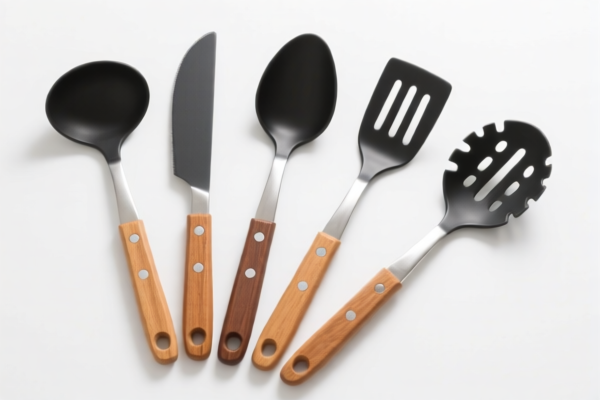
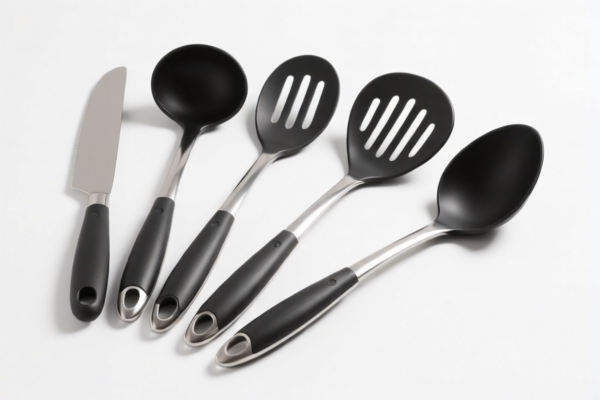
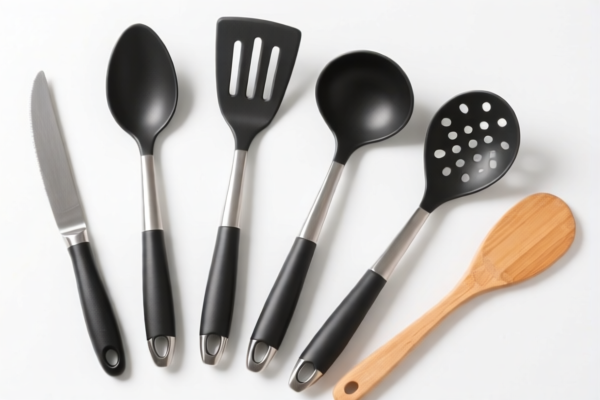

AI Analysis
🍳 Kitchen Utensil Set (Cookware & Cutlery Sets)
🌐 HS Code Reference & Customs Clearance Guide | 2026 Latest Tariff Analysis | Professional Entry Strategies
📌 I. Product Definition & Classification: Do You Really Understand "Kitchen Utensils"?
A "Kitchen Utensil Set" is a broad category in international trade, encompassing everything from heavy-duty pots and pans to delicate cutlery and serving tools. In customs classification, the key differentiators are Material, Usage, and Form (Set vs. Individual).
1. Cookware Sets (Pots/Pans):
Used for cooking, typically made of iron, steel, or aluminum. Often sold as a bundled set.
2. Tableware/Cutlery Sets:
Used for eating or serving at the table (spoons, forks, knives), often made of stainless steel.
⚠️ Key Classification Point:
- If the set consists primarily of pots/pans (cooking vessels) → Look to Chapter 73 (Iron/Steel) or Chapter 76 (Aluminum).
- If the set consists primarily of cutlery/tablespoons → Look to Chapter 82 (Cutlery).
- Material Matters: The tax rate varies significantly between Iron/Steel (Ch 73/82) and Aluminum (Ch 76).
📦 II. HS Code Classification Details (2026 Latest Tariff Authority)
Based on the provided data, here are the five most likely HS Code matches for a "Kitchen Utensil Set," ranked by material and usage specificity.
| HS Code | Product Description | Primary Material | Form/Usage | Key Identifier |
|---|---|---|---|---|
7323.99.70.00 |
Table, kitchen or other household articles and parts thereof, of iron or steel | Iron or Steel | Set (Cookware) | Heavy-duty cookware sets |
7323.93.00.45 |
Table, kitchen or other household articles and parts thereof, of stainless steel | Stainless Steel (Metal) | Set (Cooking) | General metal cookware sets |
7615.10.30.25 |
Table, kitchen or other household articles and parts thereof, of aluminum; with enamel or non-stick lining | Aluminum | Cookware | Enamel/Non-stick pots |
7615.10.71.80 |
Table, kitchen or other household articles and parts thereof, of aluminum | Aluminum | Cookware | Lightweight aluminum goods |
8215.20.00.00 |
Sets of table or kitchen cutlery | Metal (Mixed/General) | Set (Cutlery/Table) | Spoon/Fork/Knife sets |
🔍 Critical Distinction:
- Cookware (Pots/Pans): Falls under 7323 (Iron/Steel) or 7615 (Aluminum).
- Cutlery (Spoons/Forks): Falls under 8215.
- Misclassification Risk: Declaring an aluminum pot as "Iron/Steel" (7323) will lead to inspection delays. Declaring a stainless steel spoon set as "Aluminum Cookware" (7615) will result in wrong tariff application.
💰 III. 2026 Latest Tariff Rate Breakdown (Including Surcharges)
✅ Applicable Market: United States (US)
✅ Origin: China (CN)
✅ Effective Date: Includes current 122 Section surcharges and Section 301/IEEPA implications
🎯 1. 7323.99.70.00 – Iron/Steel Cookware Sets
| Item | Content |
|---|---|
| Base Duty | 5.3% |
| Section 301 Surtax | 0.0% (Note: Data shows 0.0%, but verify current status) |
| Section 122 Surtax (Steel/Alu/Cu) | 50.0% |
| Total Tax Rate | 65.3% |
| Tax Detail | Base: 5.3% + Section 301: 0.0% + Section 122: 50% |
📌 Explanation:
- Section 122 (10% Steel/Alu/Cu Surtax): The data explicitly mentions a 50% surcharge for steel/aluminum/copper products under Section 122. This is a massive burden.
- Total Cost: You are paying 65.3% on top of the CIF value. This is extremely high.
🎯 2. 7323.93.00.45 – Stainless Steel Cookware Sets
| Item | Content |
|---|---|
| Base Duty | 2.0% |
| Section 301 Surtax | 0.0% |
| Section 122 Surtax (Steel/Alu/Cu) | 50.0% |
| Total Tax Rate | 62.0% |
| Tax Detail | Base: 2.0% + Section 301: 0.0% + Section 122: 50% |
📌 Note:
- Lower base duty than general steel (7323.99), but still hit hard by the 50% Section 122 surcharge.
- Total: 62.0%.
🎯 3. 7615.10.30.25 – Aluminum Cookware (Enamel/Non-Stick)
| Item | Content |
|---|---|
| Base Duty | 3.1% |
| Section 301 Surtax | 7.5% |
| Section 122 Surtax (Steel/Alu/Cu) | 50.0% |
| Total Tax Rate | 70.6% |
| Tax Detail | Base: 3.1% + Section 301: 7.5% + Section 122: 50% |
📌 Warning:
- Aluminum goods attract both Section 301 (7.5%) AND Section 122 (50%).
- Total: 70.6%. This is the highest tax burden in the list. Non-stick coatings do not exempt you from these surcharges.
🎯 4. 7615.10.71.80 – Aluminum Cookware (Lightweight)
| Item | Content |
|---|---|
| Base Duty | 3.1% |
| Section 301 Surtax | 0.0% |
| Section 122 Surtax (Steel/Alu/Cu) | 50.0% |
| Total Tax Rate | 63.1% |
| Tax Detail | Base: 3.1% + Section 301: 0.0% + Section 122: 50% |
📌 Comparison:
- Slightly lower than the enamel version (7615.10.30.25) because it may not trigger the extra 7.5% Section 301 surcharge (depending on specific subheading rules).
- Total: 63.1%. Still very high due to the 50% Section 122.
🎯 5. 8215.20.00.00 – Cutlery Sets (Spoons/Forks/Knives)
| Item | Content |
|---|---|
| Base Duty | "The rate of duty applicable to that article in the set subject to..." |
| Section 301 Surtax | 25.0% |
| Section 122 Surtax | 10.0% |
| Total Tax Rate | Variable (Base + 35.0%) |
| Tax Detail | Base + Section 301: 25% + Section 122: 10% |
📌 Explanation:
- This HS code applies to cutlery sets (tablespoons, forks, knives), NOT pots/pans.
- The total rate is Base Duty + 35%. If the base duty is, for example, 6%, the total would be 41%.
- Lower than Cookware: Cutlery avoids the massive 50% Section 122 surcharge applied to bulk cookware materials, paying only 10% instead.
- Key: Ensure the set is indeed cutlery. If it includes pots, it cannot use this code.
🛠️ IV. Customs Clearance Practical Advice (Real-World Pitfall Guide)
✅ 1. Documentation Checklist (Must-Have)
| Document | Required | Notes |
|---|---|---|
| ✅ Product Specification Sheet | ✔️ | Must list material (e.g., "Carbon Steel," "Aluminum Alloy 3003"), dimensions, and set composition. |
| ✅ Product Photos (Set & Individual Items) | ✔️ | Clearly show if it's a cookware set (pots) or cutlery set (spoons). Crucial for HS Code distinction. |
| ✅ Commercial Invoice | ✔️ | Itemize each piece in the set. Do not just write "Kitchen Set." Write "Set of 5 Pots (Iron)" or "Set of 12 Spoons (Stainless Steel)." |
| ✅ Packing List | ✔️ | Confirm weight and volume. Heavy iron sets attract more scrutiny. |
| ✅ Country of Origin Certificate | ✔️ | Essential for verifying China origin (triggering Section 122/301). |
✅ 2. Declaration Strategy (Key Mnemonic)
🔥 "Material First, Form Second, Don't Mix Cookware with Cutlery!"
| Scenario | Correct Declaration | Wrong Declaration | Consequence |
|---|---|---|---|
| Iron Pots Set | 7323.99.70.00 (Iron/Steel Cookware) |
8215.20.00.00 (Cutlery) |
Audit & Penalty: High risk of misclassification. |
| Aluminum Non-Stick Pan | 7615.10.30.25 (Alu w/ Coating) |
7323.93.00.45 (Steel) |
Inspection Delay: Material mismatch leads to hold. |
| Spoon/Fork Set | 8215.20.00.00 (Cutlery Set) |
7323.99.70.00 (Cookware) |
Wrong Tax: May overpay or underpay duties incorrectly. |
| Mixed Set (Pot + Spoon) | Separate Lines | Single Line "Kitchen Set" | Rejection: Customs will split the shipment, potentially applying highest tax rate to all items. |
✅ 3. Special Handling for High-Tariff Goods
| Issue | Solution |
|---|---|
| 50% Section 122 Surcharge | This is unavoidable for Chinese-made iron/steel/aluminum cookware. Factor this into your pricing immediately. |
| Aluminum vs. Steel | Aluminum (7615) has a slightly lower base (3.1%) but still faces 50% surcharge. Steel (7323) has variable base (2-5%) + 50% surcharge. No significant difference in total tax; both are ~62-65%. |
| Cutlery Advantage | If your "Utensil Set" is mostly spoons/forks, use 8215.20.00.00. Total tax is ~35% + Base, which is much lower than cookware (~65%+). |
🌍 V. Global Market Comparison (2026)
| Market | Recommended HS Code (Cookware) | Approx. Total Tax (China Origin) | Notes |
|---|---|---|---|
| 🇺🇸 USA | 7323.99.70.00 or 7615.10.xxxx |
62% - 70.6% | Heavy Section 122 (50%) + Section 301 penalties. |
| 🇨🇳 China | 7323.99.70.00 |
~10-15% | Standard Import VAT + Duty. No Section 122. |
| 🇪🇺 EU | 7323.99 or 7615.10 |
~0% - 4% | Usually low or zero duty. No Section 122. |
| 🇬🇧 UK | 7323.99 or 7615.10 |
~0% - 4% | Post-Brexit tariff schedules. |
📌 Conclusion:
- The US market is the most expensive due to the 50% Section 122 surcharge on metal cookware.
- EU/UK/China offer significantly better margins.
- Strategy: If targeting the US, consider non-metal materials (e.g., plastic, silicone, bamboo utensils) which fall under different HS codes (e.g., Chapter 39, 44, 42) with 0% Section 122.
📌 VI. Common Mistakes & Pitfalls (Lessons Learned)
❌ Mistake 1: Declaring an Aluminum Pot as "Stainless Steel"
👉 Result: Customs inspection reveals aluminum. Penalty + 50% Surcharge applied retroactively.
❌ Mistake 2: Combining Cutlery and Cookware in One Line Item
👉 Result: Customs may apply the higher tax rate (Cookware ~65%) to the entire set (including cutlery), inflating costs unnecessarily.
❌ Mistake 3: Ignoring the "Set" Definition
👉 Result: If a set contains one item of a different material (e.g., a wooden handle on a steel pan), the entire set may be classified under the dominant material or the component that gives essential character. Be precise.
❌ Mistake 4: Assuming "Kitchen Utensil" is a Single Code
👉 Result: There is no single code. You MUST select based on Material (73 vs 76 vs 82) and Use (Cook vs Eat).
✅ Correct Practice:
"Set of 5 Stainless Steel Pots, 16-20cm diameter, with Glass Lids, Model XYZ. HS: 7323.93.00.45."
"Set of 12 Stainless Steel Tablespoons, Model ABC. HS: 8215.20.00.00."
🎯 VII. Conclusion: Professional Declaration Saves Money!
🎯 Remember the Mnemonic:
🔹 "Steel/Alu Cookware = ~65% Tax (Section 122!)";
🔹 "Cutlery Sets = ~35% Tax (Section 122 Only 10%!)";
🔹 "Non-Metal = Low Tax!"
📌 Pro Tip:
If your product is not made of Iron, Steel, or Aluminum (e.g., Silicone Spatulas, Wooden Spoons, Plastic Containers), you can avoid the 50% Section 122 surcharge.
Recommendation: Consider diversifying into Non-Metal Kitchen Utensils for the US market to drastically reduce customs costs.
📣 Immediate Action:
📞 Verify Material Composition: Is it Iron, Steel, Aluminum, or Stainless Steel?
📞 Define "Set": Is it Cookware (Pots) or Cutlery (Spoons)?
📞 Apply Correct HS Code: Use the table above to select the precise code.
🚀 Optimize Costs: If tax is too high, explore non-metal alternatives or third-party country sourcing (e.g., Vietnam, Mexico) for Section 122 exemptions.
✨ Professional Customs Clearance Starts with Accurate Classification!
💼 Your Profit Margin Depends on Your HS Code!
Customer Reviews
About HS Code Classification
The Harmonized System (HS) is an internationally standardized nomenclature developed by the World Customs Organization (WCO) to classify traded products. Over 200 countries use the HS system as the basis for customs tariffs, trade statistics, and import/export regulations.
Each HS code follows a hierarchical structure:
- Chapter (2 digits) — Broad category of goods (e.g., Chapter 84: Machinery and Mechanical Appliances)
- Heading (4 digits) — More specific grouping within the chapter
- Subheading (6 digits) — Internationally standardized breakdown, used by all WCO member countries
- National subdivisions (8-10 digits) — Country-specific extensions for further classification, such as US HTSUS 10-digit codes
Correct HS code classification is essential for smooth customs clearance, accurate duty payment, and compliance with trade regulations. Misclassification can lead to customs delays, overpayment of duties, or penalties.
When importing from CN to US, the applicable tariff rates may include:
- Most-Favored-Nation (MFN) rate — The standard duty rate applied to WTO members
- General rate — Applied to countries without trade agreements
- Trade remedy duties — Additional tariffs such as Section 301 (anti-dumping), Section 232 (national security), or countervailing duties
The information provided on this page is for reference purposes only. For official classification, please consult with your local customs authority or a licensed customs broker.