Knife Storage Rack
CN → US| HS Code | Tariff Rate | Origin | Destination | Doc |
|---|---|---|---|---|
| 7326903500 | 92.8% | CN | US | Official Doc |
| 7326908688 | 87.9% | CN | US | Official Doc |
| 4421999880 | 38.3% | CN | US | Official Doc |
| 4421919880 | 38.3% | CN | US | Official Doc |
| 3926909989 | 22.8% | CN | US | Official Doc |
Product Images
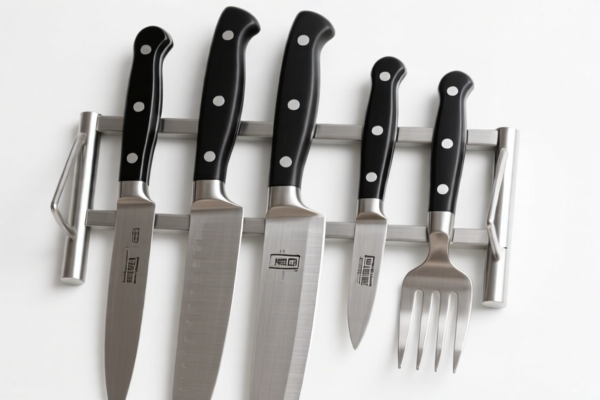
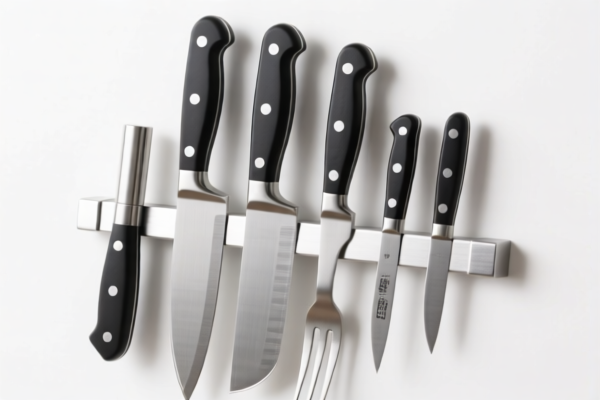
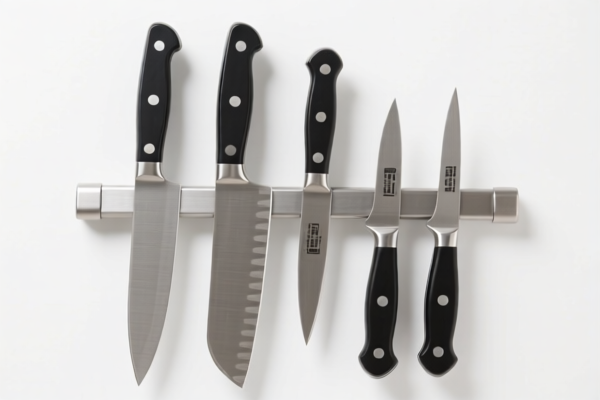
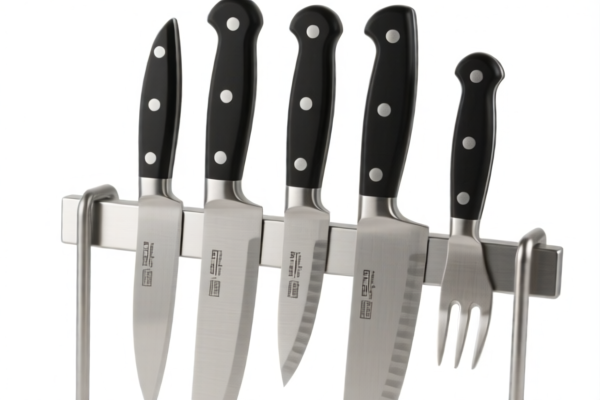
AI Analysis
🗡️ Knife Storage Rack (Cutlery Organizers & Holders)
🌐 HS Code Reference & Clearance Guide | 2026 Latest Tariff Analysis | Strategic Customs Strategy
📌 I. Product Definition & Classification: Do You Really Understand "Knife Racks"?
Knife storage racks, also known as cutlery organizers, knife blocks, or knife racks, are essential household or kitchen tools used to store knives, scissors, and other sharp utensils. In international trade, they are primarily classified based on their material composition. The HS Code varies significantly depending on whether the rack is made of metal, wood, or plastic.
1. Metal Racks (Iron/Steel):
These are rigid structures made primarily of iron or steel wire, sheet metal, or cast metal. They often feature slots, magnetic strips, or tiered shelves.
* Key Feature: High durability, often chrome-plated or stainless steel.
2. Wooden Racks:
Made from solid wood, bamboo, or engineered wood (MDF/Plywood). These include traditional wooden blocks with knife slots or wall-mounted wooden rails.
* Key Feature: Aesthetic appeal, often used for aesthetic kitchen decor.
3. Plastic Racks:
Made from ABS, PP, or other polymers. These are lightweight, often stackable, and may include drain trays for wet utensils.
* Key Feature: Cost-effective, corrosion-resistant, common in modern kitchens.
⚠️ Key Distinction Point:
- If the product is metal → It falls under Chapter 73.
- If the product is wood/bamboo → It falls under Chapter 44.
- If the product is plastic → It falls under Chapter 39.
- Note: Do not classify based on the knives inside. The rack itself is the goods being imported. If knives are included, they may be subject to separate anti-dumping duties, but this guide focuses on the rack.
📦 II. HS Code Classification Details (2026 Latest Tariff Authority Comparison)
Based on the provided data, here are the applicable HS Codes for Knife Storage Racks, categorized by material:
| HS Code | Product Description | Material | Applicable Scenario |
|---|---|---|---|
7326.90.35.00 |
Metal Storage Containers/Boxes | Iron/Steel | Metal racks with enclosed sides or box-like structures for storing utensils. |
7326.90.86.88 |
Other Articles of Iron/Steel (General) | Iron/Steel | Open-frame metal racks, wire racks, or steel structures not specifically listed elsewhere. |
4421.99.98.80 |
Other Wooden Articles (General) | Wood/Bamboo | Wooden knife blocks, wooden wall racks, or bamboo organizers. |
4421.91.98.80 |
Other Wooden/Bamboo Articles | Wood/Bamboo | Specific wooden storage items not covered in more specific wood subheadings. |
3926.90.99.89 |
Other Plastic Articles (General) | Plastic | Plastic knife blocks, plastic drawer organizers, or plastic wall-mounted racks. |
🔍 Critical Reminder:
- Metal Racks: Choose between7326.90.35.00(if box-like/container) or7326.90.86.88(if open-frame/general article). The latter is more common for simple wire racks.
- Wooden Racks: Both4421.99.98.80and4421.91.98.80carry the same tax rate. Use4421.99.98.80for general wooden items and4421.91.98.80if it fits specific "other wooden" definitions.
- Plastic Racks:3926.90.99.89is the standard catch-all for plastic kitchenware organizers.
💰 III. 2026 Latest Tariff Rate Details (Including Additional Taxes & Policy Add-ons)
✅ Applicable Country: United States (US)
✅ Origin: China (CN)
✅ Effective Time: 2025/2026 (Current Trade Environment)
🎯 1. Metal Knife Racks (HS: 7326.90.35.00 / 7326.90.86.88)
| Item | Content |
|---|---|
| Base Tariff | 7.8% (for .35) / 2.9% (for .86) |
| Section 301 Tariff | +25.0% |
| Section 122 Tariff (Steel/Aluminum/Copper) | +10.0% |
| Specific Add-on (Steel/Aluminum/Copper Items) | +50.0% |
| Total Effective Rate | 87.9% ~ 92.8% |
| Tax Calculation | CIF Value × (Base + 25% + 10% + 50%) |
| De Minimis Exemption | ❌ NOT AVAILABLE |
📌 Explanation:
- Base Tariff: Varies by specific metal subheading.
- Section 301: 25% on almost all Chinese steel products.
- Section 122: 10% additional duty on steel/aluminum/copper imports under Section 232.
- Specific Add-on: An additional 50% tariff applies to certain steel/aluminum/copper articles.
- Total: Metal racks are heavily taxed due to their material (steel). Expect nearly 90%+ in total duties.
🎯 2. Wooden/Bamboo Knife Racks (HS: 4421.99.98.80 / 4421.91.98.80)
| Item | Content |
|---|---|
| Base Tariff | 3.3% |
| Section 301 Tariff | +25.0% |
| Section 122 Tariff | +10.0% |
| Total Effective Rate | 38.3% |
| Tax Calculation | CIF Value × 38.3% |
| De Minimis Exemption | ❌ NOT AVAILABLE |
📌 Explanation:
- Wood products do not fall under the steel/aluminum specific 50% add-on.
- They are still subject to the standard Section 301 (25%) and Section 122 (10%) tariffs.
- Total: 38.3% is significantly lower than metal but still substantial.
🎯 3. Plastic Knife Racks (HS: 3926.90.99.89)
| Item | Content |
|---|---|
| Base Tariff | 5.3% |
| Section 301 Tariff | +7.5% |
| Section 122 Tariff | +10.0% |
| Total Effective Rate | 22.8% |
| Tax Calculation | CIF Value × 22.8% |
| De Minimis Exemption | ❌ NOT AVAILABLE |
📌 Explanation:
- Plastic items face lower Section 301 tariffs (7.5%) compared to steel (25%).
- They still incur the Section 122 (10%) tariff.
- Total: 22.8% is the most cost-effective option among the three materials.
🛠️ IV. Customs Clearance Practical Advice (Real-World Pitfall Avoidance)
✅ 1. Required Documentation Checklist (Must-Have)
| Document | Required | Description |
|---|---|---|
| ✅ Product Specifications | ✔️ | Material (Steel/Wood/Plastic), Dimensions, Weight, Capacity. |
| ✅ Product Photos | ✔️ | Clear images showing the rack alone, with slots, and any magnetic features. |
| ✅ Commercial Invoice | ✔️ | Must clearly state "Knife Storage Rack" and material (e.g., "Stainless Steel Knife Rack"). |
| ✅ Packing List | ✔️ | Detail the number of units per carton, gross/net weight. |
| ✅ Country of Origin Certificate | ✔️ | Proof that goods are made in China (or other eligible country). |
| ✅ Lab Test Reports (if applicable) | ✔️ | FDA compliance for food-contact surfaces (if wood/plastic touches food directly). |
✅ 2. Declaration Tips (Key Mantra)
🔥 "Material Defines Code, Don't Mix Knives, Clear Labels Save Money!"
| Scenario | Correct Declaration | Incorrect Practice |
|---|---|---|
| Metal Rack Only | 7326.90.86.88 |
Misdeclaring as "Home Decor" (Chapter 94) → High risk of penalty. |
| Wooden Block Only | 4421.99.98.80 |
Declaring as "Kitchen Utensil" without material specification → Delay. |
| Plastic Organizer | 3926.90.99.89 |
Declaring as "Storage Box" (Chapter 39) but with wrong subheading → Rate mismatch. |
| Rack + Knives Included | Separate HS Codes | Packing knives with the rack and declaring one HS Code → Illegal Misclassification. |
⚠️ Crucial Note: If you import knives along with the racks, the knives have their own HS codes (typically
8211.9x.xxxx) and are subject to severe anti-dumping duties in the US (often 100-200%+). Do not combine them. Declare racks and knives separately, or only import racks.
✅ 3. Special Cases & Handling
| Scenario | Handling Advice |
|---|---|
| Magnetic Metal Racks | Declare as metal articles (7326.90.xxxx). Ensure no magnetic content exceeds threshold for special transport rules. |
| Wooden Racks with Chemical Treatment | May require ISPM 15 marking (fumigation) to prevent pest issues. Provide Fumigation Certificate. |
| Plastic Racks with Metal Springs | Classify as plastic if metal parts are minor accessories. Declare as 3926.90.99.89. |
| OEM Custom Designs | Provide design drawings to Customs if asked, to prove classification matches physical product. |
🌍 V. Global Market Comparison (2026 Latest)
| Country/Region | Recommended HS Code | Estimated Tariff (China Origin) | Certification Requirements | Notes |
|---|---|---|---|---|
| 🇺🇸 USA | 3926.90.99.89 (Plastic) |
22.8% (Plastic) 38.3% (Wood) ~90% (Metal) |
FDA (if food contact) | Highest duties for metal; plastic is cheapest. |
| 🇨🇳 China | 3926.90.99.89 |
5.3% | CCC (if electronic, otherwise N/A) | Low base tariff, no Section 301. |
| 🇪🇺 EU | 3926.90.99.89 |
6.0% ~ 9.5% | CE, REACH, LFGB (Food Safety) | No Section 301/122; focus on environmental standards. |
| 🇬🇧 UK | 3926.90.99.89 |
6.0% ~ 9.5% | UKCA, Food Safety | Post-Brexit rules apply; similar to EU. |
| 🇦🇺 Australia | 3926.90.99.89 |
5.0% | ACCC (Safety Standards) | Low tariffs; strict product safety laws. |
📌 Conclusion:
- The USA is the most expensive market for Knife Racks from China due to multiple layered tariffs.
- Plastic racks are the most tariff-efficient for US exports (22.8%).
- Metal racks are the most expensive due to steel-specific add-ons. Consider sourcing metal racks from non-China origins if possible.
📌 VI. Common Mistakes & Pitfall Guide (Lessons Learned)
❌ Mistake 1: Declaring a Plastic Rack as Wood or vice versa
👉 Consequence: Customs reclassification → Penalty + Back Taxes.
❌ Mistake 2: Importing Knives with the rack under one HS Code
👉 Consequence: Anti-dumping duty evasion → Seizure of goods + Massive fines (100-200%+).
❌ Mistake 3: Ignoring Section 122 Tariffs for Metal/Rubber/Plastic mix
👉 Consequence: Underpayment → Audit and Retroactive Taxes.
❌ Mistake 4: Failing to provide Fumigation Certificates for Wooden Racks
👉 Consequence: USDA rejection → Return or Destruction of Cargo.
✅ Correct Practice:
"Stainless Steel Knife Storage Rack, Model XYZ, 12 Slots, Chrome Plated, No Knives Included. Material: Iron/Steel."
🎯 VII. Conclusion: Professional Classification, Save Costs, Ensure Clearance!
🎯 Remember the Mantra:
🔹 "Plastic Cheapest, Wood Middle, Metal Most Expensive!"
🔹 "Never Mix Knives and Racks!"
🔹 "Declare Material Clearly, Avoid Re-Inspection!"
📌 Pro Tip:
If your Knife Racks are manufactured in Vietnam, Thailand, or Malaysia, you may be eligible for Section 301 Exclusions or lower tariff rates under trade agreements (e.g., CPTPP, RCEP).
Recommendation: Apply for a Pre-Ruling from US Customs and Border Protection (CBP) to confirm the correct HS Code and avoid surprises at the port.
📣 Immediate Action:
📞 Contact a licensed US Customs Broker + Provide Product Material Specs + Apply for HS Code Pre-Ruling
🚀 Ensure your Knife Racks Clear Customs Smoothly, Maximize Profit Margins!
✨ Professional Clearance Starts with Accurate Classification!
💼 Every Penny of Duty Counts!
Customer Reviews
About HS Code Classification
The Harmonized System (HS) is an internationally standardized nomenclature developed by the World Customs Organization (WCO) to classify traded products. Over 200 countries use the HS system as the basis for customs tariffs, trade statistics, and import/export regulations.
Each HS code follows a hierarchical structure:
- Chapter (2 digits) — Broad category of goods (e.g., Chapter 84: Machinery and Mechanical Appliances)
- Heading (4 digits) — More specific grouping within the chapter
- Subheading (6 digits) — Internationally standardized breakdown, used by all WCO member countries
- National subdivisions (8-10 digits) — Country-specific extensions for further classification, such as US HTSUS 10-digit codes
Correct HS code classification is essential for smooth customs clearance, accurate duty payment, and compliance with trade regulations. Misclassification can lead to customs delays, overpayment of duties, or penalties.
When importing from CN to US, the applicable tariff rates may include:
- Most-Favored-Nation (MFN) rate — The standard duty rate applied to WTO members
- General rate — Applied to countries without trade agreements
- Trade remedy duties — Additional tariffs such as Section 301 (anti-dumping), Section 232 (national security), or countervailing duties
The information provided on this page is for reference purposes only. For official classification, please consult with your local customs authority or a licensed customs broker.