Knitted Ornament
CN → US| HS Code | Tariff Rate | Origin | Destination | Doc |
|---|---|---|---|---|
| 9503000090 | 10.0% | CN | US | Official Doc |
| 9503000073 | 10.0% | CN | US | Official Doc |
| 6117809570 | 32.1% | CN | US | Official Doc |
| 6117808500 | 32.1% | CN | US | Official Doc |
| 6307909891 | 24.5% | CN | US | Official Doc |
Product Images
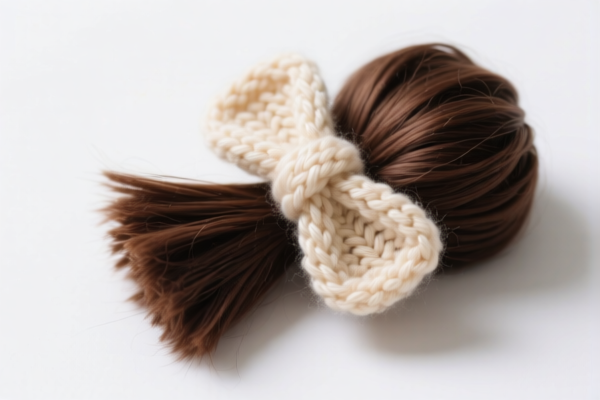
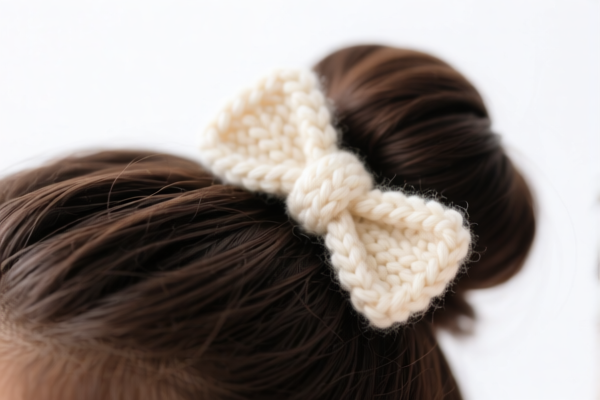
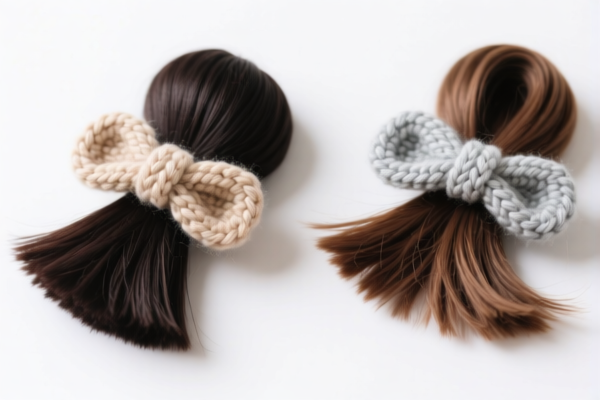
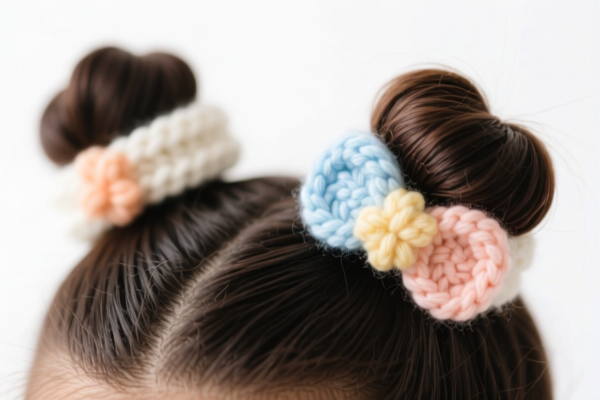
AI Analysis
🧶 Knitted Ornament (Knitted Props/Decor)
🌐 HS Code Reference & Clearance Guide | 2026 Latest Tariff Analysis | Professional Strategy for US Customs
📌 I. Product Definition & Classification: What Exactly is a "Knitted Ornament"?
A "Knitted Ornament" is a broad category typically referring to decorative items, party props, or costume accessories made from knitted or crocheted yarn. In international trade, its classification depends heavily on its intended use and material structure.
Two Main Interpretations: 1. Toy/Entertainment Props: If used for children's play, costume parties, or as accessories for toys/models → Classified under Chapter 95 (Toys). 2. Textile Accessories/Articles: If used as fashion accessories, clothing trim, or general household decoration → Classified under Chapter 61/63 (Textiles & Apparel).
⚠️ Key Distinction Point:
- If the item is clearly a toy, model accessory, or party prop →归入 9503 (Toys).
- If the item is a fashion accessory or general textile good →归入 6117 or 6307 (Textiles).
- Risk: Misclassification leads to massive duty differences (10% vs. 32.1% vs. 24.5%).
📦 II. HS Code Classification Details (2026 Latest Tariff Authority Comparison)
| HS Code | Product Description | Applicable Scenario | Tax Rate (Total) |
|---|---|---|---|
9503.00.00.90 |
Other toys, models, and accessories; knitted props as "catch-all" items | Party props, generic toy accessories, non-specific decorative items | 10.0% |
9503.00.00.73 |
Other toys and models; knitted props as auxiliary entertainment tools | Costume accessories for toys, play props, decorative items for play | 10.0% |
6117.80.95.70 |
Other made-up clothing accessories; knitted/crocheted, other materials | Fashion accessories, knitted trim, non-specific textile accessories | 32.1% |
6117.80.85.00 |
Other made-up clothing accessories; knitted/crocheted, as apparel accessories | Clothing trim, decorative bands for garments, fashion-focused props | 32.1% |
6307.90.98.91 |
Other made-up articles; knitted/crocheted, other finished textile articles | General household decoration, non-apparel/textile accessories, generic props | 24.5% |
🔍 Key Reminder:
- Toys/Props (9503) enjoy the lowest total tax rate (10%) but require proof of entertainment/play use.
- Textile Accessories (6117) incur the highest total tax rate (32.1%) due to combined base + Section 301 + IEEPA taxes.
- General Textiles (6307) sit in the middle (24.5%), suitable for non-toy, non-apparel decorative items.
💰 III. 2026 Latest Tariff Rate Breakdown (Including Add-on Taxes & Policy Surcharges)
✅ Applicable Country: United States (US)
✅ Origin: China (CN)
✅ Effective Date: November 10, 2025 (and subsequent imports)
🎯 1. 9503.00.00.90 & 9503.00.00.73 —— Toys/Models/Props
| Item | Content |
|---|---|
| Base Duty Rate | 0% (ad valorem) |
| USITC Add-on Duty (Section 301) | +0.0% (No additional 25% tariff for this specific subheading) |
| IEEPA Add-on Duty (Section 122/301 Variant) | +10.0% (Targeting China-origin goods under specific trade measures) |
| Total Tax Rate | 10.0% |
| Tax Calculation | CIF Value × 10% |
| De Minimis Eligibility | ❌ No (Subject to strict scrutiny if value exceeds thresholds) |
| Legal Basis Path | IEEPA:122 Clause 10% → USITC:9503.00.00.90/73 |
📌 Explanation:
- These codes benefit from a 0% base duty, making them highly competitive.
- The 10% IEEPA tax is the only significant add-on.
- Total effective rate: 10% — significantly lower than textile alternatives.
🎯 2. 6117.80.95.70 & 6117.80.85.00 —— Knitted/Crocheted Clothing Accessories
| Item | Content |
|---|---|
| Base Duty Rate | 14.6% (ad valorem) |
| USITC Add-on Duty (Section 301) | +7.5% (Specific rate for textile/apparel accessories) |
| IEEPA Add-on Duty | +10.0% (General China-origin surcharge) |
| Total Tax Rate | 32.1% |
| Tax Calculation | CIF Value × 32.1% |
| De Minimis Eligibility | ❌ No |
| Legal Basis Path | Base:14.6% → USITC:7.5% → IEEPA:10% |
📌 Warning:
- This is the most expensive classification.
- Even if the item is small or light, the 14.6% base + 7.5% 301 + 10% IEEPA creates a heavy burden.
- Avoid unless the item is strictly defined as "clothing accessory" and cannot be classified as a toy.
🎯 3. 6307.90.98.91 —— Other Made-up Textile Articles
| Item | Content |
|---|---|
| Base Duty Rate | 7.0% (ad valorem) |
| USITC Add-on Duty (Section 301) | +7.5% |
| IEEPA Add-on Duty | +10.0% |
| Total Tax Rate | 24.5% |
| Tax Calculation | CIF Value × 24.5% |
| De Minimis Eligibility | ❌ No |
| Legal Basis Path | Base:7.0% → USITC:7.5% → IEEPA:10% |
📌 Note:
- A middle-ground option if the item is neither a toy nor a clothing accessory.
- Suitable for home decor, banners, or general decorative props that don't fit the "toy" definition.
🛠️ IV. Clearance Practical Advice (Real-World Pitfall Avoidance Guide)
✅ 1. Documentation Checklist (Non-Negotiable)
| Document | Required | Explanation |
|---|---|---|
| ✅ Product Specification Sheet | ✔️ | Must clearly state: "Knitted Ornament/Prop", material (e.g., acrylic yarn), weight, dimensions. |
| ✅ Product Photos | ✔️ | Show the item in context (e.g., held by a child for play, or hung as decor). |
| ✅ Declaration of Intended Use | ✔️ | Explicitly state: "Intended for play/toy use" (for 9503) or "General decoration" (for 6307). |
| ✅ Commercial Invoice | ✔️ | Describe as "Knitted Toy Accessory" or "Knitted Decorative Prop" — avoid vague terms like "Textile Item". |
| ✅ Packing List | ✔️ | Itemized list to prove quantity and value. |
✅ 2. Declaration Strategy (Key Tips)
🔥 "Define Use First, Then Choose Code!"
| Scenario | Recommended HS Code | Reason |
|---|---|---|
| Costume Party Props / Doll Accessories | 9503.00.00.90 / 9503.00.00.73 |
Fits "Toy/Model Accessory" definition → 10% Tax |
| Children's Play Items | 9503.00.00.90 |
Explicitly a toy → 10% Tax |
| Home Decoration (No Play Use) | 6307.90.98.91 |
Fits "Other Made-up Textile Articles" → 24.5% Tax |
| Clothing Trim / Fashion Accessory | 6117.80.95.70 |
Fits "Clothing Accessory" → 32.1% Tax (Avoid if possible) |
⚠️ Critical Warning:
- Do NOT declare a toy prop as a "Textile Accessory" to avoid inspection — it will lead to misclassification penalties.
- Do NOT declare a clothing trim as a "Toy" — if customs finds it's not for play, you'll owe the difference + penalties.
✅ 3. Special Cases
| Situation | Handling Advice |
|---|---|
| Mixed Shipments | Separate toys from general textiles. Declare toys under 9503 and decor under 6307. |
| "Knitted" Material Ambiguity | Provide yarn composition (e.g., 100% Acrylic). Knitted/crocheted is key for 6117/6307. |
| Customs Audit Risk | Keep samples. If audited, prove "toy intent" via photos of children using it or marketing materials targeting play. |
🌍 V. Global Market Comparison (2026 Latest)
| Country/Region | Recommended HS Code | Total Tax (China Origin) | Notes |
|---|---|---|---|
| 🇺🇸 USA | 9503.00.00.90 |
10.0% | Best rate. Must prove toy/prop use. |
| 🇺🇸 USA | 6117.80.95.70 |
32.1% | Highest rate. Avoid if possible. |
| 🇨🇳 China | 9503.00.00.90 |
~5-7% (Import Duty) | Lower base tax in China. |
| 🇪🇺 EU | 9503.00.90 |
~0-4% | No IEEPA/301 equivalent, but strict toy safety rules (CE). |
| 🇬🇧 UK | 9503.00.90 |
~0-5% | Post-Brexit rules apply. |
📌 Conclusion:
- USA is the most complex market due to IEEPA and Section 301 taxes.
- Classification as "Toy/Prop" (9503) saves ~22% in taxes compared to "Textile Accessory" (6117).
- Always prioritize9503if the item can be reasonably defined as a toy or prop.
📌 VI. Common Mistakes & Pitfall Avoidance (Blood-Teaching Lessons)
❌ Mistake 1: Declaring a party prop as a "General Textile Article" (6307)
👉 Consequence: Pay 24.5% instead of 10%. Overpay by 14.5%!
❌ Mistake 2: Declaring a clothing trim as a "Toy Accessory" (9503)
👉 Consequence: Customs rejects classification, imposes 32.1% retroactively + penalties.
❌ Mistake 3: Vague description: "Knitted Item"
👉 Consequence: Customs assigns worst-case scenario (6117 32.1%) due to lack of clarity.
❌ Mistake 4: Ignoring "Knitted" vs. "Woven"
👉 Consequence: 6117/6307 require knitted/crocheted specification. If woven, different codes apply.
✅ Correct Approach:
"Knitted Costume Prop, Acrylic Yarn, for Play/Party Use, Model XYZ"
→ Declared as9503.00.00.90→ 10% Total Tax
🎯 VII. Conclusion: Precision Classification Saves Money!
🎯 Remember the Mantra:
🔹 "Toy/Prop = 10% | Decor = 24.5% | Accessory = 32.1%"
🔹 "Prove Play Use, Get the 10% Rate!"
🔹 "Don't Let Vague Descriptions Cost You 22%!"
📌 Pro Tip:
- If your product is 100% knitted and used for decoration, consider
6307.90.98.91(24.5%) as a safe middle ground.- If it's for play or costumes, insist on
9503(10%).- Never use
6117unless it's strictly a clothing accessory.
📣 Immediate Action:
📞 Consult a Customs Broker | Provide Photos & Use Case | Apply for Advance Ruling if High Value
🚀 Clear Customs Smoothly, Minimize Tax, Maximize Profit!
✨ Professional Clearance Starts with Accurate Classification!
💼 Every Percent of Tax Saved is Pure Profit!
Customer Reviews
About HS Code Classification
The Harmonized System (HS) is an internationally standardized nomenclature developed by the World Customs Organization (WCO) to classify traded products. Over 200 countries use the HS system as the basis for customs tariffs, trade statistics, and import/export regulations.
Each HS code follows a hierarchical structure:
- Chapter (2 digits) — Broad category of goods (e.g., Chapter 84: Machinery and Mechanical Appliances)
- Heading (4 digits) — More specific grouping within the chapter
- Subheading (6 digits) — Internationally standardized breakdown, used by all WCO member countries
- National subdivisions (8-10 digits) — Country-specific extensions for further classification, such as US HTSUS 10-digit codes
Correct HS code classification is essential for smooth customs clearance, accurate duty payment, and compliance with trade regulations. Misclassification can lead to customs delays, overpayment of duties, or penalties.
When importing from CN to US, the applicable tariff rates may include:
- Most-Favored-Nation (MFN) rate — The standard duty rate applied to WTO members
- General rate — Applied to countries without trade agreements
- Trade remedy duties — Additional tariffs such as Section 301 (anti-dumping), Section 232 (national security), or countervailing duties
The information provided on this page is for reference purposes only. For official classification, please consult with your local customs authority or a licensed customs broker.