Knitted Robe and Hat Set
CN → US| HS Code | Tariff Rate | Origin | Destination | Doc |
|---|---|---|---|---|
| 6111206020 | 25.6% | CN | US | Official Doc |
| 6111305020 | 33.5% | CN | US | Official Doc |
| 6209205035 | 26.8% | CN | US | Official Doc |
| 6209303020 | 33.5% | CN | US | Official Doc |
Product Images
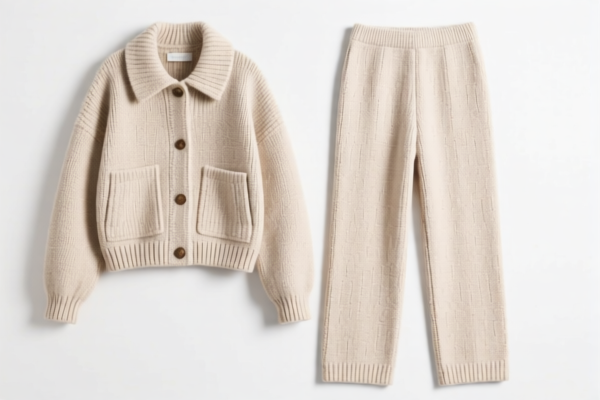
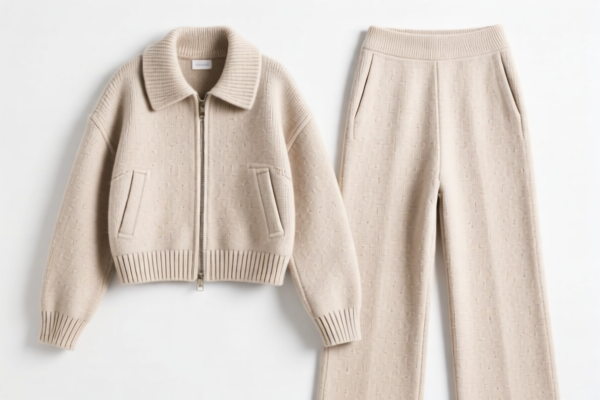
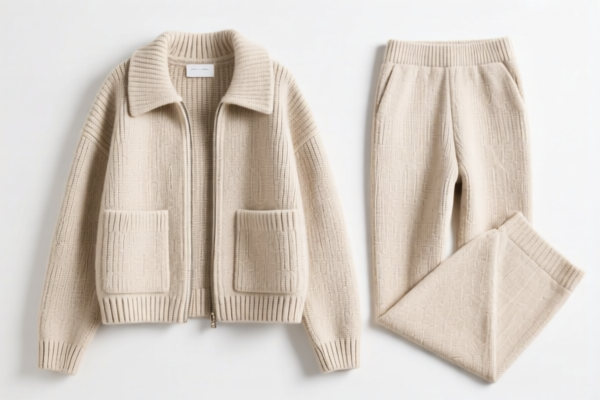
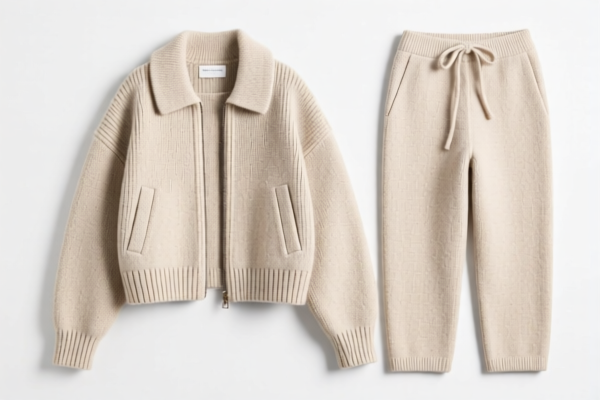
AI Analysis
👶 Knitted Robe and Hat Set for Babies (Infants)
Category: Babies' Garments & Clothing Accessories
🌐 HS Code Reference & Customs Clearance Guide | 2026 Latest Tariff Analysis | Professional Entry Strategy 📌 One, Product Definition & Classification: Do You Really Understand "Baby Sets"?
A Knitted Robe and Hat Set for babies is typically a coordinated outfit consisting of a hooded bathrobe (often with sleeves or open front) and a matching hat, designed for infants (usually under 2 years old). In international trade, these are strictly classified under "Babies' Garments and Clothing Accessories."
The critical distinction in classification lies in two factors: 1. Knitted or Crocheted? (Chapter 61 vs. Chapter 62) 2. Material Composition? (Cotton vs. Synthetic Fibers)
⚠️ Key Distinction Points: - If the items are knitted or crocheted (e.g., jersey, ribbing, lace knit) →归入 Chapter 61. - If the items are woven (e.g., terry cloth, flannel, non-knit fabric) →归入 Chapter 62. - Note: The data provided specifically covers Knitted items and Woven sets. Please verify your fabric construction.
📦 Two. HS Code Classification Details (Latest 2026 Tariff Authority Match)
Based on the provided <DATA>, the following HS Codes apply to Knitted babies' sets. Please note: The data includes woven codes (62xx) as well. If your product is KNITTED, only the 61xx codes below are relevant. If it is WEAVED (non-knit), use the 62xx codes.
| HS Code | Material | Product Type | Description | Applicability |
|---|---|---|---|---|
6111.20.60.20 |
Cotton | Knitted/Crocheted | Other Sets | 🧶 Cotton Knit Robe + Hat |
6111.30.50.20 |
Synthetic Fibers | Knitted/Crocheted | Other Sets | 🧵 Poly/Acrylic Knit Robe + Hat |
6209.20.50.35 |
Cotton | Woven (Non-Knit) | Other Sets | 👕 Cotton Woven Robe + Hat |
6209.30.30.20 |
Synthetic Fibers | Woven (Non-Knit) | Other Sets | 👚 Poly Woven Robe + Hat |
🔍 Critical Reminder: - Knitted vs. Woven: Check the fabric texture. If it stretches significantly in width and has loops (like a sweater), it is Knitted (Ch 61). If it is stiff like a shirt fabric or terry towel, it is likely Woven (Ch 62). - Material: "Cotton" means >85% cotton. "Synthetic" includes polyester, acrylic, nylon, etc. - "Other Sets": This category is for items not specifically named (like "sleepsuits"). A robe+hat combo fits here.
💰 Three. 2026 Latest Tariff Rate Details (Zero Duty!)
✅ Applicable Country: United States (US) ✅ Origin: China (CN) ✅ Effective Time: Current Data Applied
🎯 1. Cotton Knitted Sets (6111.20.60.20) & Woven Sets (6209.20.50.35)
| Item | Content |
|---|---|
| Base Tariff | 0.0% |
| Section 301 / Additional Tariff | 0.0% |
| Total Tax Rate | 0.0% |
| Tax Calculation | CIF Value × 0% = $0 |
| De Minimis Eligibility | ❓ See Note Below |
| Legal Basis | HTSUS 2026 Chapter 61/62 Specific Provisions |
🎯 2. Synthetic Fibers Knitted Sets (6111.30.50.20) & Woven Sets (6209.30.30.20)
| Item | Content |
|---|---|
| Base Tariff | 0.0% |
| Section 301 / Additional Tariff | 0.0% |
| Total Tax Rate | 0.0% |
| Tax Calculation | CIF Value × 0% = $0 |
| De Minimis Eligibility | ❓ See Note Below |
| Legal Basis | HTSUS 2026 Chapter 61/62 Specific Provisions |
📌 Explanation: - Zero Duty Advantage: Babies' clothing imports from China currently enjoy a 0% total tariff rate in the provided data. This is a significant cost-saving advantage compared to electronics or textiles for adults. - No "Add-On" Taxes: Unlike electronics or steel, these specific baby garment codes do not have the 25% or 10% IEEPA/USITC surcharges listed in the data. - Caution: Always verify if new trade policies (post-2026) have reinstated taxes on textile goods, as this area is subject to political change.
🛠️ Four. Customs Clearance Practical Advice (Battle-Tested Tips)
✅ 1. Documentation Checklist (Must-Have)
| Document | Required | Description |
|---|---|---|
| ✅ Product Photo | ✔️ | Clear image of the Robe + Hat set together. Show tags, size, and fabric texture. |
| ✅ Fabric Swatch/Test | ✔️ | Confirm if it is Knitted or Woven. This determines Chapter 61 vs. 62. |
| ✅ Composition Label | ✔️ | Must clearly state: "100% Cotton" or "100% Polyester" etc. |
| ✅ Size Chart | ✔️ | Define "Babies'" (typically 0-24 months). |
| ✅ Commercial Invoice | ✔️ | Describe as "Knitted/Crocheted Baby Robe and Hat Set, Cotton, Other." |
| ✅ Packing List | ✔️ | List units as "Sets" (1 Robe + 1 Hat = 1 Set), not individual items. |
✅ 2. Declaration Tips (Crucial for Speed)
🔥 "Describe the Set, Not Just the Robe!"
| Scenario | Correct Declaration | Wrong Practice |
|---|---|---|
| Knitted Cotton | "Knitted Cotton Baby Robe and Hat Set" → 6111.20.60.20 |
Only saying "Baby Robe" → Risk of misclassification |
| Synthetic Knit | "Synthetic Fiber Knitted Baby Set (Robe+Hat)" → 6111.30.50.20 |
Saying "Baby Clothes" → Too vague |
| Woven Terry | "Woven Cotton Terry Cloth Baby Bath Set" → 6209.20.50.35 |
Calling it "Knitted" → Major error |
| Mixed Material | If <85% cotton, declare as Synthetic | Misdeclaring material composition |
📌 Key Rule: - If the Robe and Hat are sold together as a single unit, declare as a Set. - If shipped separately, they may still be classified as accessories to each other, but declaring as a "Set" is safer and clearer for "Other Sets" categories.
✅ 3. Special Circumstances Handling
| Situation | Handling Advice |
|---|---|
| Flame Retardant? | If the robe is treated for flame resistance, it may move to 6104/6204 general wear, not "Babies'". Check if it fits "Babies'" definition (size < 2 yrs). |
| Accessories Only? | If the hat is the only item, it’s still under Babies' accessories. But if it’s a large adult-style hat for a baby, it might be questioned. |
| Gift Sets? | If packaged as a gift, ensure the invoice value reflects the fair market value of the set. |
| Origin Marking | Must have "Made in China" on the item or packaging for US imports. |
🌍 Five. Global Market Comparison (2026 Snapshot)
| Country/Region | Recommended HS Code | Tariff Rate | Certification | Note |
|---|---|---|---|---|
| 🇺🇸 USA | 6111.20.60.20 / 6209.20.50.35 |
0.0% | CPSIA (Lead/Phthalates) | Best for Duty-Free |
| 🇨🇳 China | 6111.20.60.20 / 6209.20.50.35 |
0% (Export) | CCC (if applicable) | No export tariff |
| 🇪🇺 EU | 6111.20.20 / 6209.20.10 |
~12% | CE + REACH | Higher duty than US |
| 🇯🇵 Japan | 6111.20.000 / 6209.20.000 |
~7-10% | FSC (Flame Safety) | Moderate duty |
| 🇬🇧 UK | 6111.20.20 / 6209.20.10 |
~12% | UKCA | Post-Brexit rules apply |
📌 Conclusion: - The USA offers the most favorable tariff treatment (0%) for these specific babies' garment codes from China in the provided data. - CPSIA Compliance is mandatory for US entry, regardless of the 0% tariff. Failure to comply leads to seizure, not just tax penalties.
📌 Six. Common Errors & Pitfalls (Blood and Tears Lessons)
❌ Error 1: Declaring a Woven terry robe as Knitted 👉 Consequence: Wrong Chapter (62 vs 61). Customs may reject the 0% rate if the code doesn't match the fabric. 👉 Fix: Send a fabric swatch to confirm knit structure.
❌ Error 2: Ignoring CPSIA Compliance 👉 Consequence: Goods held at port, fines up to $100,000+ per violation, even if duty is 0%. 👉 Fix: Provide Children’s Product Certificate (CPC) from CPSC-accredited lab.
❌ Error 3: Declaring "Other Clothing" instead of "Babies' Sets" 👉 Consequence: General apparel tariffs may apply (often 10-15%), missing the 0% benefit. 👉 Fix: Explicitly state "For Babies (0-24 months)" and "Set of 2 pieces".
❌ Error 4: Mixing Material Types 👉 Consequence: If the hat is cotton and the robe is polyester, it’s not a "Cotton Set." 👉 Fix: Declare the predominant fiber by weight, or if equal, the one that gives essential character.
✅ Correct Declaration Example:
"Babies' Knitted Robe and Hat Set, 100% Cotton, Size 6M, CPSIA Compliant, Made in China."
🎯 Seven. Conclusion: Professional Entry, Safe & Fast!
🎯 Remember the Mantra:
🔹 "Knitted or Woven? Cotton or Synthetic? Check the Code!" 🔹 "0% Duty is Great, But CPSIA is Mandatory!" 🔹 "Declare as a Set, Avoid Split Shipment Errors!"
📌 Pro Tip: If your baby garments are originating from Vietnam, Bangladesh, or India, check if preferential trade agreements (like GSP) still apply, though the US has largely phased out many GSP benefits. Always verify the Country of Origin for tax purposes.
📣 Immediate Action:
📞 Verify fabric type (Knit vs. Woven) 📞 Prepare CPSIA Lab Test Report 📞 Declare as "Set" with correct HS Code 🚀 Clear Customs Quickly, Keep Costs Low, Profit High!
✨ Professional Clearance Starts with Accurate Classification! 💼 Every Cent Saved in Tariff is Pure Profit!
Customer Reviews
About HS Code Classification
The Harmonized System (HS) is an internationally standardized nomenclature developed by the World Customs Organization (WCO) to classify traded products. Over 200 countries use the HS system as the basis for customs tariffs, trade statistics, and import/export regulations.
Each HS code follows a hierarchical structure:
- Chapter (2 digits) — Broad category of goods (e.g., Chapter 84: Machinery and Mechanical Appliances)
- Heading (4 digits) — More specific grouping within the chapter
- Subheading (6 digits) — Internationally standardized breakdown, used by all WCO member countries
- National subdivisions (8-10 digits) — Country-specific extensions for further classification, such as US HTSUS 10-digit codes
Correct HS code classification is essential for smooth customs clearance, accurate duty payment, and compliance with trade regulations. Misclassification can lead to customs delays, overpayment of duties, or penalties.
When importing from CN to US, the applicable tariff rates may include:
- Most-Favored-Nation (MFN) rate — The standard duty rate applied to WTO members
- General rate — Applied to countries without trade agreements
- Trade remedy duties — Additional tariffs such as Section 301 (anti-dumping), Section 232 (national security), or countervailing duties
The information provided on this page is for reference purposes only. For official classification, please consult with your local customs authority or a licensed customs broker.