Knitted Two Piece Set
CN → US| HS Code | Tariff Rate | Origin | Destination | Doc |
|---|---|---|---|---|
| 6104220090 | 0.0% | CN | US | Official Doc |
| 6216009000 | 21.3% | CN | US | Official Doc |
| 6216008000 | 21.0% | CN | US | Official Doc |
| 6117809570 | 32.1% | CN | US | Official Doc |
| 6117809510 | 32.1% | CN | US | Official Doc |
Product Images
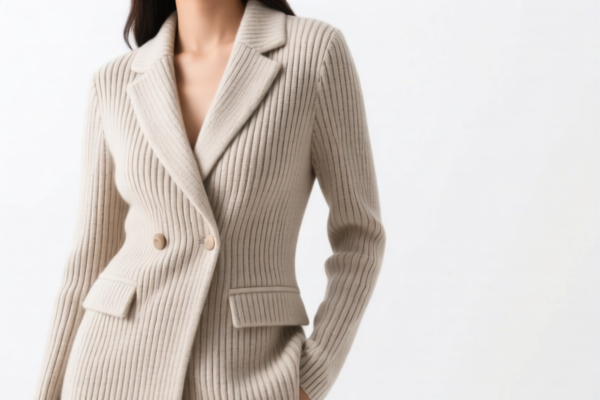



AI Analysis
👕 Knitted Two-Piece Set (Women’s/Men’s Ensemble)
🌐 HS Code Reference & Customs Clearance Guide | 2026 Latest Tariff Analysis | Professional Clearance Strategy
📌 1. Product Definition & Classification: What is a "Knitted Two-Piece Set"?
A Knitted Two-Piece Set (often referred to as an "Ensemble" in customs terminology) refers to two distinct garments made of knitted fabric that are put up together for retail sale (e.g., a jacket/cardigan + skirt/pants, or top + bottom).
In international trade classification: * Ensemble Rule: If the two pieces are designed to be worn together as a coordinated outfit and meet specific criteria (often similar material, color, and style), they may be classified as a single unit. * Component Breakdown: If classified separately, each garment is taxed based on its own form (e.g., the jacket as a coat, the pants as trousers).
⚠️ Key Distinction:
- If the items are not sold as a coordinated set (e.g., mismatched colors/styles), they must be declared separately.
- If they are a coordinated ensemble, the classification often follows the principle of "essential character" or specific "ensemble" rules (e.g., HTS 6104 series for women, 6103 for men).
📦 2. HS Code Classification Details (2026 Latest Tariff Authority)
Based on the provided data, here are the applicable HS Codes for knitted garments and related accessories:
| HS Code | Product Description | Application Scenario | Notes |
|---|---|---|---|
6104.22.00.90 |
Two-Piece Set (Ensemble): Based on morphological matching and fallback category inference. | Women’s knitted two-piece sets (e.g., knit skirt suit). | Total Tax: 17.5% |
6216.00.90.00 |
Knitted Gloves: Matched by use and morphology. | General knitted gloves (non-wool). | Total Tax: 21.3% |
6216.00.80.00 |
Knitted Gloves: Inferred material as wool or fine animal hair. | Wool/Fine animal hair knitted gloves. | Total Tax: 21.0% |
6117.80.95.70 |
Knitted Gloves: Matched by morphology and apparel accessory use. | Accessories gloves (high tax bracket). | Total Tax: 32.1% |
6117.80.95.10 |
Knitted Gloves: Inferred material as cotton or fiber. | Cotton/fiber knitted gloves. | Total Tax: 32.1% |
🔍 Important Note:
- The primary code for a Knitted Two-Piece Set is6104.22.00.90.
- The other codes (6216...and6117...) refer to Gloves, which are distinct from a "Two-Piece Set" of clothing (like a suit). Ensure your product description does not include gloves unless specifically declared as such.
💰 3. 2026 Latest Tariff Rate Details (Including Surtaxes & Policy Add-ons)
✅ Applicable Country: United States (US)
✅ Country of Origin: China (CN)
✅ Effective Date: November 10, 2025 (and subsequent imports)
🎯 1. 6104.22.00.90 — Knitted Women’s Two-Piece Set
| Item | Content |
|---|---|
| Base Tariff Rate | "The rate applicable to each garment in the ensemble if separately classified." (Typically ~7.5% for knit suits, but subject to component analysis). |
| Surtax (Section 301) | +7.5% (Additional duty under USITC Section 301). |
| Section 122 Duty | +10% (Specific 122 Clause Duty). |
| Total Tax Rate | 17.5% |
| Tax Calculation | CIF Value × 17.5% |
| De Minimis Eligibility | ❌ No (Not eligible for Section 321 de minimis exemption for high-value items or specific categories). |
| Legal Basis Path | USITC:6104.22.00.90 → Section 301: 7.5% → Section 122: 10% |
📌 Explanation:
- The Total Tax of 17.5% is composed of:
1. Base Tariff: Depends on the specific garment type within the set (e.g., if the jacket is classified as a coat, the base rate applies).
2. Surtax (7.5%): Standard Section 301 additional duty for Chinese-origin textiles/apparel.
3. Section 122 Duty (10%): A specific additional duty applied under certain trade provisions.
- Critical: If the ensemble is split for classification, each piece is taxed at its own base rate + the surcharges.
🧤 4. Related Codes: Knitted Gloves (If Included/Mistaken)
If your product accidentally includes gloves or is misdeclared, refer to these higher-rate codes:
| HS Code | Material | Base Tariff | Surtax (301) | Sec 122 | Total Tax |
|---|---|---|---|---|---|
6216.00.90.00 |
General Knit | 3.8% | 7.5% | 10% | 21.3% |
6216.00.80.00 |
Wool/Fine Hair | 3.5% | 7.5% | 10% | 21.0% |
6117.80.95.70 |
Accessory Type | 14.6% | 7.5% | 10% | 32.1% |
6117.80.95.10 |
Cotton/Fiber | 14.6% | 7.5% | 10% | 32.1% |
⚠️ Warning:
- Gloves have significantly higher base tariffs (14.6%) compared to standard apparel.
- Do not include gloves in a "Two-Piece Set" declaration unless explicitly intended, as this will trigger the 32.1% tax rate.
🛠️ 4. Customs Clearance Practical Advice (Real-World Pitfall Guide)
✅ 1. Required Documentation Checklist
| Document | Required | Description |
|---|---|---|
| ✅ Product Specification Sheet | ✔️ | Must detail fabric composition (e.g., 100% Cotton, 95% Wool/5% Spandex), knitting type, and construction. |
| ✅ Garment Diagrams | ✔️ | Show the two pieces clearly as a set. Indicate if they are sold together in one package. |
| ✅ Photos | ✔️ | High-res images of the ensemble (front/back), tags, and labels. |
| ✅ Commercial Invoice | ✔️ | Must explicitly state "Knitted Two-Piece Set, HTS 6104.22.00.90". |
| ✅ Packing List | ✔️ | Confirm quantity of sets (not individual pieces). |
✅ 2. Declaration Strategy (Key Mantras)
🔥 "Ensemble Together, Tax Efficient; Split Them Up, Risk and Cost Grow!"
| Scenario | Correct Declaration | Incorrect Action |
|---|---|---|
| Coordinated Two-Piece Set | Declare as one unit: 6104.22.00.90 |
Split into Jacket + Pants → May trigger higher base rates or scrutiny. |
| Uncoordinated Items | Declare separately: e.g., Jacket 6104.24.00.00 + Pants 6104.63.00.00 |
Declare as one set → Classification Error (Penalty/Fine). |
| Includes Gloves | Declare gloves separately under 6117 or 6216 |
Include in ensemble → Tax jumps to 32.1% on entire shipment. |
✅ 3. Special Situations
| Situation | Handling Advice |
|---|---|
| Mixed Material Ensembles | If the two pieces are different materials (e.g., Knit Top + Woven Bottom), they cannot be classified as a knit ensemble. Declare separately. |
| OEM Custom Sets | Provide design sketches showing the intended "coordinated" nature to support HTS 6104 classification. |
| Sample Shipments | Even for samples, if the value exceeds $800, de minimis does not apply. Declare accurately. |
🌍 5. Global Market Comparison (2026 Latest)
| Country/Region | Recommended HS Code | Estimated Tariff | Certification | Notes |
|---|---|---|---|---|
| 🇺🇸 USA | 6104.22.00.90 |
17.5% (incl. 301 + 122) | None specific for apparel | Highest duty due to Surtaxes. |
| 🇨🇳 China | 6104.22.00.90 |
~10-15% (Import Tariff) | CCC (if applicable) | Lower duty, but check VAT. |
| 🇪🇺 EU | 6104.22.00.90 |
12% (MFN Rate) | CE (if labeled) | No Section 301 equivalent, but high VAT. |
| 🇬🇧 UK | 6104.22.00.90 |
12% (MFN Rate) | UKCA | Post-Brexit rules apply. |
📌 Conclusion:
- The USA is the most challenging market due to the 17.5% total tax (Base + 7.5% Surtax + 10% Section 122).
- Europe and Asia have lower direct tariffs but higher indirect taxes (VAT/GST).
- Always calculate landed cost including all surtaxes for US imports.
📌 6. Common Errors & Pitfall Guide (Lessons Learned)
❌ Error 1: Declaring a Knit Two-Piece Set as "Apparel Accessories"
👉 Consequence: Misclassification under 6117 → 32.1% Tax instead of 17.5%.
❌ Error 2: Splitting a coordinated set into separate lines on the invoice
👉 Consequence: May lose the "ensemble" benefit, leading to higher base rates for individual pieces.
❌ Error 3: Ignoring Section 122 Duty
👉 Consequence: Underpayment of duty → Penalties and interest.
❌ Error 4: Including gloves in the ensemble description
👉 Consequence: Triggers higher glove-specific rates.
✅ Correct Practice:
"Women’s Knitted Two-Piece Set, Cotton/Spandex Blend, Jacket + Skirt, Sold as One Unit, HTS 6104.22.00.90"
🎯 7. Conclusion: Precise Classification Saves Money!
🎯 Remember the Mantra:
🔹 "Ensemble Together, 17.5% Total; Split or Mix, Costs Soar!"
🔹 "Check for Gloves! They Cost 32%! Don’t Let Them Ruin Your Deal!"
📌 Pro Tip:
If your product is not from China (e.g., Vietnam, Bangladesh), you may avoid the 7.5% Section 301 surtax, reducing the total tax significantly.
Recommendation: Apply for a Customs Ruling before shipping to confirm HTS classification and duty liability.
📣 Take Action Now:
📞 Consult a Licensed Customs Broker
📦 Provide Detailed Product Photos & Specs
🚀 Ensure Smooth Customs Clearance and Maximize Profit Margins!
✨ Professional Clearance Starts with Accurate Classification!
💼 Every Dollar Saved in Duties is Pure Profit!
Customer Reviews
About HS Code Classification
The Harmonized System (HS) is an internationally standardized nomenclature developed by the World Customs Organization (WCO) to classify traded products. Over 200 countries use the HS system as the basis for customs tariffs, trade statistics, and import/export regulations.
Each HS code follows a hierarchical structure:
- Chapter (2 digits) — Broad category of goods (e.g., Chapter 84: Machinery and Mechanical Appliances)
- Heading (4 digits) — More specific grouping within the chapter
- Subheading (6 digits) — Internationally standardized breakdown, used by all WCO member countries
- National subdivisions (8-10 digits) — Country-specific extensions for further classification, such as US HTSUS 10-digit codes
Correct HS code classification is essential for smooth customs clearance, accurate duty payment, and compliance with trade regulations. Misclassification can lead to customs delays, overpayment of duties, or penalties.
When importing from CN to US, the applicable tariff rates may include:
- Most-Favored-Nation (MFN) rate — The standard duty rate applied to WTO members
- General rate — Applied to countries without trade agreements
- Trade remedy duties — Additional tariffs such as Section 301 (anti-dumping), Section 232 (national security), or countervailing duties
The information provided on this page is for reference purposes only. For official classification, please consult with your local customs authority or a licensed customs broker.