Knitted or Crocheted Apparel and Accessories
CN → US| HS Code | Tariff Rate | Origin | Destination | Doc |
|---|---|---|---|---|
| 6109100070 | 34.0% | CN | US | Official Doc |
| 6112110010 | 32.4% | CN | US | Official Doc |
| 6109100027 | 34.0% | CN | US | Official Doc |
| 6217108500 | 24.6% | CN | US | Official Doc |
| 6217109550 | 32.1% | CN | US | Official Doc |
| 8448591000 | 17.5% | CN | US | Official Doc |
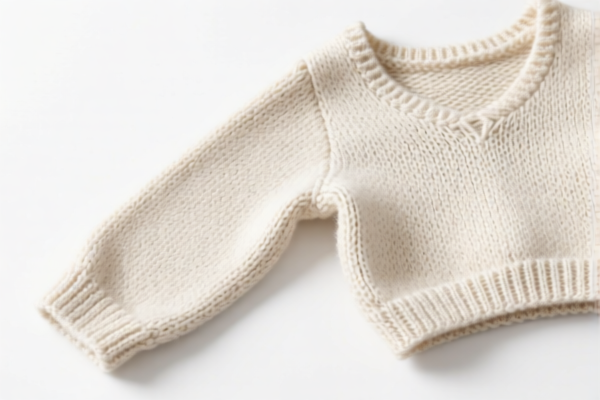
Product Images


AI Analysis
👕 Knitted or Crocheted Apparel & Accessories
🌐 HS Code Reference & Customs Clearance Guide | 2026 Latest Tariff Analysis | Professional通关 Strategy
📌 I. Product Definition & Classification: Do You Really Understand "Knitted Apparel"?
Knitted and crocheted clothing is a broad category covering T-shirts, sportswear, and textile accessories. In international trade, accurate classification depends on material composition, structure, and specific use. Misclassification can lead to significant tariff discrepancies due to the complex "Section 122" and "301 Clause" tariffs applicable to Chinese-origin goods.
⚠️ Key Distinction Points:
- Men’s/Women’s T-shirts are typically classified under 6109.
- Sports Garments (e.g., Gym Wear) are classified under 6112.
- Other Knitted Accessories (e.g., Patches, Buckles) fall under 6217.
- Material Matters: Cotton usually incurs higher base tariffs than synthetic fibers in some contexts, but the "Section 122" (10%) and "301 Clause" (7.5%) apply broadly to most of these categories.
📦 II. HS Code Classification Details (2026 Latest Tariff Authority Comparison)
| HS Code | Product Description | Application Scenario | Material/Type |
|---|---|---|---|
6109.10.00.70 |
T-shirts, singlets, and other vests, knitted or crocheted, of cotton | Casual wear, basic innerwear | ✅ Cotton |
6112.11.00.10 |
Men’s or boys’ swimming trunks and briefs, knitted or crocheted | Swimwear, sports gear | ✅ Knitted Fabric |
6109.10.00.27 |
T-shirts, singlets, and other vests, knitted or crocheted, of cotton or man-made fibers | General knitwear, mixed materials | ✅ Cotton/Man-made |
6217.10.85.00 |
Other made-up clothing accessories, knitted or crocheted; parts of garments | Accessories, non-core apparel parts | ✅ Knitted Accessory |
6217.10.95.50 |
Other made-up clothing accessories, knitted or crocheted; parts of garments | General accessories, no specific conflict | ✅ Knitted Accessory |
🔍 Key Reminder:
- 6109 is for T-shirts/Vests.
- 6112 is for Sports/Swimwear.
- 6217 is for Accessories/Parts (not complete garments).
- Section 122 (10%) and 301 Clause (7.5%) are mandatory for most of these items from China.
💰 III. 2026 Latest Tariff Rate Details (Including Surcharges & Policy Add-ons)
✅ Applicable Country: United States (US)
✅ Origin: China (CN)
✅ Effective Date: 2025 onwards (including subsequent imports)
🎯 1. 6109.10.00.70 —— T-shirts, Singlets, Vests (Cotton)
| Item | Content |
|---|---|
| Base Tariff | 16.5% |
| 301 Clause Surcharge | +7.5% |
| Section 122 Tariff | +10% |
| Total Tax Rate | 34.0% |
| Tax Calculation | CIF Value × 34.0% |
| De Minimis Exemption | ❌ Not Applicable |
| Legal Basis Path | Base: 16.5% → 301: 7.5% → Sec122: 10% |
📌 Explanation:
- Base 16.5%: Standard MFN tariff for cotton knitwear.
- 301 Clause 7.5%: Section 301 tariffs on Chinese goods.
- Section 122 10%: Additional tariff for specific textile/apparel categories.
- Total 34%: High cost, must be calculated into landed cost.
🎯 2. 6112.11.00.10 —— Men’s/Brothers’ Swimming Trunks (Knitted)
| Item | Content |
|---|---|
| Base Tariff | 14.9% |
| 301 Clause Surcharge | +7.5% |
| Section 122 Tariff | +10% |
| Total Tax Rate | 32.4% |
| Tax Calculation | CIF Value × 32.4% |
| De Minimis Exemption | ❌ Not Applicable |
| Legal Basis Path | Base: 14.9% → 301: 7.5% → Sec122: 10% |
📌 Note:
- Slightly lower base tariff than cotton T-shirts.
- Still subject to full 301 + Section 122 surcharges.
- Suitable for swimwear, active wear.
🎯 3. 6109.10.00.27 —— T-shirts (Cotton or Man-Made Fibers)
| Item | Content |
|---|---|
| Base Tariff | 16.5% |
| 301 Clause Surcharge | +7.5% |
| Section 122 Tariff | +10% |
| Total Tax Rate | 34.0% |
| Tax Calculation | CIF Value × 34.0% |
| De Minimis Exemption | ❌ Not Applicable |
| Legal Basis Path | Base: 16.5% → 301: 7.5% → Sec122: 10% |
📌 Note:
- Same rate as cotton T-shirts.
- Includes mixed materials (cotton + polyester).
- No advantage in material switching for this HS code.
🎯 4. 6217.10.85.00 —— Knitted Accessories (Non-301 Surcharges)
| Item | Content |
|---|---|
| Base Tariff | 14.6% |
| 301 Clause Surcharge | 0.0% |
| Section 122 Tariff | +10% |
| Total Tax Rate | 24.6% |
| Tax Calculation | CIF Value × 24.6% |
| De Minimis Exemption | ❌ Not Applicable |
| Legal Basis Path | Base: 14.6% → Sec122: 10% → No 301 |
📌 Key Advantage:
- No 301 Clause Surcharge (0%)!
- This is a significant cost saver compared to apparel (34%).
- Suitable for accessories, patches, straps, etc.
🎯 5. 6217.10.95.50 —— Knitted Accessories (With 301 Surcharges)
| Item | Content |
|---|---|
| Base Tariff | 14.6% |
| 301 Clause Surcharge | +7.5% |
| Section 122 Tariff | +10% |
| Total Tax Rate | 32.1% |
| Tax Calculation | CIF Value × 32.1% |
| De Minimis Exemption | ❌ Not Applicable |
| Legal Basis Path | Base: 14.6% → 301: 7.5% → Sec122: 10% |
📌 Note:
- Higher than6217.10.85.00due to 301 surcharge.
- Still slightly lower than apparel (34%).
- Verify if your accessory qualifies for6217.10.85.00to save 7.5%.
🛠️ IV. Customs Clearance Practical Advice (Pitfall Avoidance Guide)
✅ 1. Required Documents Checklist (Missing items will cause delays)
| Document | Required | Notes |
|---|---|---|
| ✅ Product Specification Sheet | ✔️ | Include material (Cotton/Poly), weight, size |
| ✅ Photos of Product & Labels | ✔️ | Show tags, logos, composition labels |
| ✅ Commercial Invoice | ✔️ | Clearly state "Knitted T-Shirt" or "Knitted Accessory" |
| ✅ Packing List | ✔️ | Detail inner/outer packaging, quantity |
| ✅ Certificate of Origin (CO) | ✔️ | If applicable for preferential rates (rare for these codes) |
| ✅ HS Code Pre-Ruling | ✔️ | Recommended for high-value shipments |
✅ 2. Declaration Tips (Key Mantra)
🔥 "Apparel vs. Accessory: 34% vs. 24.6%! Classify Correctly to Save Money!"
| Situation | Correct Declaration | Wrong Practice |
|---|---|---|
| T-Shirts | 6109.10.00.70 or .27 |
Misclassify as accessory → 34% |
| Swimwear | 6112.11.00.10 |
Misclassify as regular shirt → 32.4% |
| Accessories (e.g., Patches) | 6217.10.85.00 (if eligible) |
Use .95.50 → 32.1% (Higher) |
| Accessories (General) | 6217.10.95.50 |
Use apparel code → 34% (Higher) |
✅ 3. Special Cases Handling
| Situation | Handling Advice |
|---|---|
| OEM Custom Knitwear | Provide design drawings + material composition sheet |
| Mixed Shipment (Apparel + Accessories) | Separate HS Codes on invoice. Do not lump into one line. |
| Material Uncertainty | If material is "cotton or man-made," use 6109.10.00.27 (34%) |
| Accessories Eligibility | Ensure items are "made-up accessories" (e.g., buckles, loops) to qualify for 6217.10.85.00 |
🌍 V. Global Market Comparison (2026 Latest)
| Country/Region | Recommended HS Code | Tariff (China Origin) | Certification | Notes |
|---|---|---|---|---|
| 🇺🇸 USA | 6109.10.00.70 |
34.0% | None | High due to 301 + Sec122 |
| 🇺🇸 USA (Accessories) | 6217.10.85.00 |
24.6% | None | Best for accessories (No 301) |
| 🇨🇳 China | 6109.10.00.70 |
16.5% | CCC (if applicable) | No 301/Sec122 |
| 🇪🇺 EU | 6109.10.00 |
12% | CE/RoHS | No 301/Sec122 |
| 🇬🇧 UK | 6109.10.00 |
12% | UKCA | Post-Brexit rules |
📌 Conclusion:
- USA has the highest tariffs due to trade policies.
- Accessories (6217.10.85.00) are the most tax-efficient for knitwear-related imports (24.6% vs 34%).
- Consider shifting product mix to accessories if possible to reduce landed cost.
📌 VI. Common Mistakes & Pitfalls (Lessons from Experience)
❌ Mistake 1: Declaring T-shirts as "Textile Accessories" to avoid 301 tariff
👉 Consequence: Customs audit → Penalty + Back taxes!
Rule: If it’s a garment, declare as garment.
❌ Mistake 2: Using 6217.10.95.50 for accessories eligible for 6217.10.85.00
👉 Consequence: Pay extra 7.5% unnecessarily.
Rule: Verify if your accessory qualifies for the 0%-301 code.
❌ Mistake 3: Ignoring "Section 122" in cost calculation
👉 Consequence: Underestimating landed cost by 10%.
Rule: Always include Sec122 in profit margin analysis.
🎯 VII. Conclusion: Precision in Classification, Profit in Clearance
🎯 Remember the Mantra:
🔹 "Apparel 34%, Accessories 24.6%! Classify smart, save 9.4%!"
🔹 "301 Clause hits all, except specific accessories. Know your code!"
📌 Pro Tip:
If your accessories can be classified under 6217.10.85.00, you save 7.5% in 301 tariffs.
For apparel, the rate is fixed at 34% (Cotton) or 32.4% (Swimwear).
Optimize your product mix towards accessories where possible.
📣 Immediate Action:
📞 Consult a licensed customs broker for HS Code Pre-Ruling.
📸 Provide clear product photos and material specs.
🚀 Reduce tariff burden, clear customs smoothly, maximize profit!
✨ Professional Clearance, Starts with Accurate Classification!
💼 Every Percent Saved is Pure Profit!
Customer Reviews
About HS Code Classification
The Harmonized System (HS) is an internationally standardized nomenclature developed by the World Customs Organization (WCO) to classify traded products. Over 200 countries use the HS system as the basis for customs tariffs, trade statistics, and import/export regulations.
Each HS code follows a hierarchical structure:
- Chapter (2 digits) — Broad category of goods (e.g., Chapter 84: Machinery and Mechanical Appliances)
- Heading (4 digits) — More specific grouping within the chapter
- Subheading (6 digits) — Internationally standardized breakdown, used by all WCO member countries
- National subdivisions (8-10 digits) — Country-specific extensions for further classification, such as US HTSUS 10-digit codes
Correct HS code classification is essential for smooth customs clearance, accurate duty payment, and compliance with trade regulations. Misclassification can lead to customs delays, overpayment of duties, or penalties.
When importing from CN to US, the applicable tariff rates may include:
- Most-Favored-Nation (MFN) rate — The standard duty rate applied to WTO members
- General rate — Applied to countries without trade agreements
- Trade remedy duties — Additional tariffs such as Section 301 (anti-dumping), Section 232 (national security), or countervailing duties
The information provided on this page is for reference purposes only. For official classification, please consult with your local customs authority or a licensed customs broker.