Knitted or Crocheted Pullovers, Cardigans and Similar Articles
CN → US| HS Code | Tariff Rate | Origin | Destination | Doc |
|---|---|---|---|---|
| 6109901013 | 49.5% | CN | US | Official Doc |
| 6109901025 | 49.5% | CN | US | Official Doc |
| 6109901065 | 49.5% | CN | US | Official Doc |
| 6114303014 | 32.4% | CN | US | Official Doc |
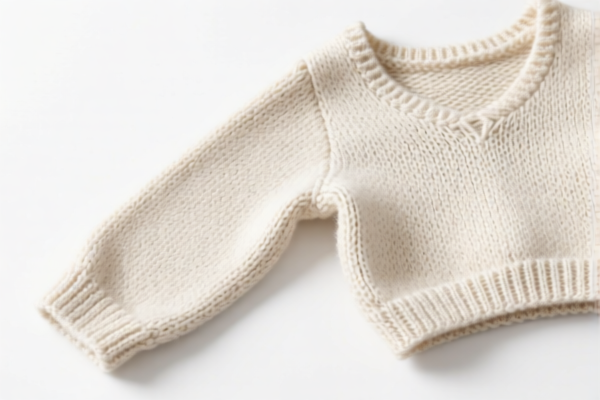
Product Images


AI Analysis
👕 Knitted or Crocheted Pullovers, Cardigans, and Similar Articles (Synthetic Fiber)
🌐 HS Code Reference & Customs Clearance Guide | 2026 Latest Tariff Analysis | Professional Clearance Strategy
📌 I. Product Definition & Classification: What Exactly Are We Importing?
In international trade, knitted or crocheted apparel made from synthetic fibers is a highly regulated category, particularly when importing into the United States from China. This category primarily covers:
- Pullovers: Garments without a front opening (e.g., T-shirts, sweatshirts, knit tops).
- Cardigans: Garments with a front opening that fastens (e.g., zip-up hoodies, button-down knit shirts).
- Similar Articles: Vest-like garments, tank tops, or other similar knitted/crocheted upper-body wear.
⚠️ Key Distinction:
- If the item is made of Synthetic Fibers (e.g., Polyester, Nylon, Acrylic), it falls under specific HS codes (see below).
- If it were made of Cotton, Wool, or Other Textiles, the HS codes and tax rates would be completely different.
- Note: This guide strictly applies to Synthetic Fiber products as per the provided data.
📦 II. HS Code Classification Details (2026 Latest Tariff Authority)
Based on the provided data, synthetic fiber knitted/crocheted apparel is classified under the following HS codes. The classification depends on the specific manufacturing details, though the tax rate remains consistent for the first three codes.
| HS Code | Product Description | Material Type | Key Characteristics |
|---|---|---|---|
6109.90.10.13 |
Knitted or crocheted pullovers, cardigans, and similar articles | Synthetic Fibers | T-shirts, knit tops, synthetic blends |
6109.90.10.25 |
Knitted or crocheted pullovers, cardigans, and similar articles | Synthetic Fibers | T-shirts, knit tops, synthetic blends |
6109.90.10.65 |
Knitted or crocheted pullovers, cardigans, and similar articles | Synthetic Fibers | T-shirts, knit tops, synthetic blends |
6114.30.30.14 |
Knitted or crocheted pullovers, cardigans, and similar articles | Synthetic Fibers | Specific sub-category for synthetic cardigans/pullovers |
🔍 Critical Clarification:
- Codes6109.90.10.13,6109.10.25, and6109.90.10.65are functionally similar in terms of tariff treatment but may differ in specific sub-cataloging requirements (e.g., fabric weight, specific synthetic type like polyester vs. acrylic).
- Code6114.30.30.14applies to a distinct sub-segment of synthetic knitted garments, often involving different weight or construction standards, resulting in a lower base tariff.
💰 III. 2026 Latest Tariff Rate Breakdown (Including Additional Duties & Policy Surcharges)
✅ Applicable Country: United States (US)
✅ Origin: China (CN)
✅ Effective Date: Current rates apply (including Section 122 and other surcharges)
🎯 1. HS Codes: 6109.90.10.13, 6109.90.10.25, 6109.90.10.65
Category: Standard Synthetic Knitted Pullovers/Cardigans
| Item | Content |
|---|---|
| Base Tariff Rate | 32.0% |
| Additional Surcharge | 7.5% |
| Section 122 Duty | 10.0% |
| Total Effective Tax Rate | 49.5% |
| Tax Calculation | CIF Value × 49.5% |
| De Minimis Exemption | ❌ Not Eligible (Due to Section 122 & other surcharges) |
| Legal Basis Path | Base Tariff 32% + Surcharge 7.5% + Section 122 10% |
📌 Explanation:
- The 32.0% base tariff is the standard Most Favored Nation (MFN) or standard duty for knitted synthetic apparel.
- The 7.5% surcharge is an additional tariff applied to specific Chinese textiles/apparel imports.
- The 10% Section 122 Duty is a specific provision targeting certain textile imports from China.
- Total: 49.5% is a very high effective rate. Importers must account for this in their cost structure.
🎯 2. HS Code: 6114.30.30.14
Category: Specific Synthetic Knitted Cardigans/Pullovers
| Item | Content |
|---|---|
| Base Tariff Rate | 14.9% |
| Additional Surcharge | 7.5% |
| Section 122 Duty | 10.0% |
| Total Effective Tax Rate | 32.4% |
| Tax Calculation | CIF Value × 32.4% |
| De Minimis Exemption | ❌ Not Eligible |
| Legal Basis Path | Base Tariff 14.9% + Surcharge 7.5% + Section 122 10% |
📌 Explanation:
- This code benefits from a lower base tariff (14.9%) compared to the 32.0% for other 6109 items.
- However, it is still subject to the same 7.5% surcharge and 10% Section 122 duty.
- Total: 32.4% is significantly cheaper than the 49.5% rate, but still substantial.
🛠️ IV. Customs Clearance Practical Advice (Real-World Pitfall Avoidance)
✅ 1. Preparation Checklist (Non-Negotiable)
| Document | Required | Notes |
|---|---|---|
| ✅ Commercial Invoice | ✔️ | Must clearly state "Knitted/Crocheted, Synthetic Fiber, Pullover/Cardigan" |
| ✅ Packing List | ✔️ | Detail quantity, weight, and dimensions |
| ✅ Product Description | ✔️ | Include material composition (e.g., "100% Polyester Knit") |
| ✅ Material Composition Statement | ✔️ | Crucial for proving synthetic vs. natural fiber |
| ✅ Origin Certificate | ✔️ | Confirm China origin for accurate tariff application |
| ✅ Labeling/Tagging Photos | ✔️ | Must show fiber content, country of origin, and care instructions |
⚠️ Warning:
- Mislabeling as Cotton or Wool to avoid synthetic fiber duties is illegal and will result in severe penalties, seizure, and back-taxes.
- Ensure the HS Code matches the exact product type (Pullover vs. Cardigan) to avoid misclassification fines.
✅ 2. Declaration Strategy (Key Tips)
| Situation | Correct Declaration | Incorrect Action |
|---|---|---|
| Standard T-shirt/Sweatshirt | 6109.90.10.13/25/65 |
Do not use 6114 code |
| Zip-up Hoodie/Button-Down | Check if it fits 6114.30.30.14 |
Do not misclassify complex garments |
| Mixed Fiber (e.g., 95% Poly, 5% Spandex) | Classify as Synthetic | Do not classify as "Other Textile" |
| Cotton Blend | ❌ Not Covered in This Guide | Do not use these HS codes for cotton |
🔥 Golden Rule:
"Synthetic Fiber + Knitted/Crocheted = High Tariff. Know Your Code. Know Your Rate."
✅ 3. Special Circumstances
| Situation | Handling Advice |
|---|---|
| Section 122 Exclusions | Currently, no exemptions are listed for these HS codes. Plan for the 10% duty. |
| De Minimis (Section 321) | ❌ Not Applicable. Shipments valued under $800 cannot enter duty-free if they fall under these HS codes due to Section 122 and surcharge rules. |
| Product Misclassification | If unsure, apply for an Advance Ruling from CBP before shipping. |
🌍 V. Global Market Comparison (2026 Latest)
| Country/Region | Recommended HS Code | Approx. Tariff | Notes |
|---|---|---|---|
| 🇺🇸 USA | 6109.90.10.13 / 6114.30.30.14 |
49.5% / 32.4% | High tariffs due to Section 122 & surcharges |
| 🇨🇳 China | 6109.90.10 / 6114.30.30 |
5%-12% | Lower import duties for finished apparel |
| 🇪🇺 EU | 6109.10 / 6110.20 |
12% | No Section 122; standard MFN rates apply |
| 🇬🇧 UK | 6109.10 / 6110.20 |
12% | Post-Brexit, similar to EU rates |
| 🇦🇺 Australia | 6109.10 / 6110.20 |
5% | Free Trade Agreement (ChAFTA) may apply |
📌 Conclusion:
- The US market is the most expensive for importing synthetic knitted apparel from China due to the 49.5% maximum rate.
- Consider supply chain diversification (e.g., sourcing from Vietnam, Bangladesh, or Mexico) to avoid high US tariffs.
📌 VI. Common Mistakes & Pitfall Guide (Lessons Learned)
❌ Mistake 1: Using "T-Shirt" instead of "Knitted Pullover"
👉 Consequence: Customs may reclassify, leading to delays and potential penalties.
✅ Fix: Use precise terminology: "Knitted or Crocheted Pullover, Synthetic Fiber."
❌ Mistake 2: Assuming De Minimis ($800) applies
👉 Consequence: Shipments are seized or assessed full duties + penalties.
✅ Fix: Never rely on De Minimis for these HS codes. Budget for 49.5% duty.
❌ Mistake 3: Misidentifying Material Composition
👉 Consequence: If declared as Cotton (lower tax) but found to be Synthetic (higher tax), back-taxes + fines apply.
✅ Fix: Provide lab test reports for fiber content if uncertain.
❌ Mistake 4: Ignoring Section 122
👉 Consequence: Underpaying the 10% duty.
✅ Fix: Ensure the 10% is included in all cost calculations.
🎯 VII. Conclusion: Professional Declaration, Cost Efficiency
🎯 Remember:
🔹 "Synthetic Knits are Heavy Taxed. 49.5% is the Max. 32.4% is the Min. Check Your Code!"
🔹 "No De Minimis. No Exemptions. Plan Your Budget Accordingly."
📌 Pro Tip:
- If you are importing large volumes, consider applying for an HTS Code Exclusion if available, or explore Free Trade Agreements by sourcing from non-China origins.
- Always consult with a licensed customs broker to verify the correct HS code (
6109.90.10.13/25/65vs.6114.30.30.14) based on your specific product design.
📣 Immediate Action Required:
📞 Contact a Customs Broker + Verify Fiber Content + Calculate Full Landed Cost
🚀 Avoid Surprises at the Border. Stay Compliant. Maximize Profit!
✨ Professional Clearance Starts with Accurate Classification!
💼 Every Dollar Saved is a Dollar Earned.
Customer Reviews
About HS Code Classification
The Harmonized System (HS) is an internationally standardized nomenclature developed by the World Customs Organization (WCO) to classify traded products. Over 200 countries use the HS system as the basis for customs tariffs, trade statistics, and import/export regulations.
Each HS code follows a hierarchical structure:
- Chapter (2 digits) — Broad category of goods (e.g., Chapter 84: Machinery and Mechanical Appliances)
- Heading (4 digits) — More specific grouping within the chapter
- Subheading (6 digits) — Internationally standardized breakdown, used by all WCO member countries
- National subdivisions (8-10 digits) — Country-specific extensions for further classification, such as US HTSUS 10-digit codes
Correct HS code classification is essential for smooth customs clearance, accurate duty payment, and compliance with trade regulations. Misclassification can lead to customs delays, overpayment of duties, or penalties.
When importing from CN to US, the applicable tariff rates may include:
- Most-Favored-Nation (MFN) rate — The standard duty rate applied to WTO members
- General rate — Applied to countries without trade agreements
- Trade remedy duties — Additional tariffs such as Section 301 (anti-dumping), Section 232 (national security), or countervailing duties
The information provided on this page is for reference purposes only. For official classification, please consult with your local customs authority or a licensed customs broker.