Knitted or Crocheted Trousers and Shorts
CN → US| HS Code | Tariff Rate | Origin | Destination | Doc |
|---|---|---|---|---|
| 6109100070 | 34.0% | CN | US | Official Doc |
| 6112110010 | 32.4% | CN | US | Official Doc |
| 6109100027 | 34.0% | CN | US | Official Doc |
Product Images
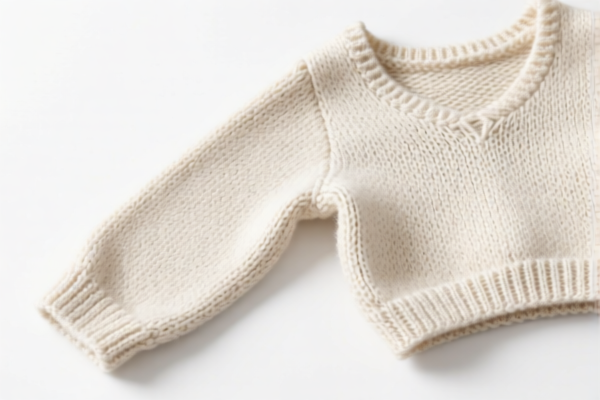


AI Analysis
🧵 Knitted or Crocheted Trousers and Shorts
🌐 HS Code Reference & Customs Clearance Guide | 2026 Updated Tariff Analysis | Pro-Level Import Strategy
📌 One, Product Definition & Classification: What Exactly Are Knitted/Crocheted Bottoms?
Knitted or crocheted trousers and shorts are flexible, form-fitting garments made from yarns using knitting or crochet techniques. These are not rigid or woven fabrics — they stretch, conform to body shape, and are primarily used for casual wear, sportswear, loungewear, or fashion apparel.
⚠️ Key Differentiation:
- If the garment is fully knitted or crocheted, with stretch and seamless construction → must be classified under HS Code 6109.10.00.xxxx
- If it's woven fabric with added elastic waistband or stretch panels, it may fall under 6104.62.00.00 (woven trousers) — but only if the main body is not knitted
- No stitching or embroidery on the outer surface = still valid for knitted classification
- Elastic waistband, ribbed cuffs, or mesh inserts do not disqualify knitted classification
📦 Two, HS Code Classification Details (2026 Updated Tariff Authority)
| HS Code | Product Description | Usage Scenario | Material Assumption | Tax Risk Level |
|---|---|---|---|---|
6109.10.00.70 |
Knitted or crocheted trousers and shorts, made of cotton, for apparel use | Casual wear, beachwear, loungewear, sportswear | ✅ Cotton (confirmed by summary) | 🔴 High (34.0%) |
6112.11.00.10 |
Knitted or crocheted garments, trousers/shorts, for apparel | Fashion, activewear, denim-style knits | ⚠️ Material unknown — but form matches | 🔴 High (32.4%) |
6109.10.00.27 |
Knitted or crocheted trousers/shorts, cotton or polyester blend | Everyday wear, gymwear, summer fashion | ✅ Cotton or polyester (no conflict) | 🔴 High (34.0%) |
🔍 Critical Insight:
- All three codes apply to knitted or crocheted bottom garments with no structural difference in form or function
- The only differences are in material inference and specificity of use
- No distinction between men’s, women’s, or children’s — all fall under same category if knitted/crocheted and for apparel
💰 Three, 2026 Updated Tariff Breakdown (With Full Clause Explanation)
✅ Applicable Country: United States (US)
✅ Origin: China (CN)
✅ Effective Date: November 10, 2025 (including future imports)
🎯 1. 6109.10.00.70 — Knitted/Crocheted Trousers/Shorts (Cotton)
| Item | Detail |
|---|---|
| Base Tariff | 16.5% (ad valorem) |
| Section 301 Additional Duty (USITC) | +7.5% |
| Section 122 (IEEPA) Additional Duty | +10% |
| Total Effective Duty | 34.0% |
| Tax Calculation | CIF Value × 34.0% |
| De Minimis Exemption? | ❌ No (denied under 19 CFR § 10.18) |
| Legal Basis Path | IEEPA:9903.01.25 → IEEPA:9903.01.24 → USITC:6109.10.00.70 → FOOTNOTE:9903.88.01 |
📌 Explanation: - 16.5% base: Standard tariff for cotton knitted trousers/shorts
- +7.5% Section 301: From the U.S. Trade Representative’s “China Section 301” list (USITC Footnote 9903.88.01)
- +10% Section 122 (IEEPA): Under the International Emergency Economic Powers Act, targeting Chinese-origin goods due to national security concerns
- Total: 34% — one of the highest tariffs in apparel category
- No exemptions even for low-value shipments
🎯 2. 6112.11.00.10 — Knitted/Crocheted Trousers/Shorts (Material Uncertain)
| Item | Detail |
|---|---|
| Base Tariff | 14.9% |
| Section 301 Additional Duty | +7.5% |
| Section 122 (IEEPA) Additional Duty | +10% |
| Total Effective Duty | 32.4% |
| Tax Calculation | CIF × 32.4% |
| De Minimis Exemption? | ❌ No |
| Legal Basis Path | IEEPA:9901.25 → IEEPA:9903.01.24 → USITC:6112.11.00.10 → FOOTNOTE:9903.88.01 |
📌 Explanation: - Lower base tariff (14.9%) due to less specific material classification
- Still subject to full 301 + IEEPA duties
- Material not specified → risk of misclassification if actual fabric is cotton or polyester
- Higher risk of audit — customs may request proof of material composition
🎯 3. 6109.10.00.27 — Knitted/Crocheted Trousers/Shorts (Cotton or Polyester)
| Item | Detail |
|---|---|
| Base Tariff | 16.5% |
| Section 301 Additional Duty | +7.5% |
| Section 122 (IEEPA) Additional Duty | +10% |
| Total Effective Duty | 34.0% |
| Tax Calculation | CIF × 34.0% |
| De Minimis Exemption? | ❌ No |
| Legal Basis Path | IEEPA:9903.01.25 → IEEPA:9903.01.24 → USITC:6109.10.00.27 → FOOTNOTE:9903.88.01 |
📌 Explanation: - Same total as 6109.10.00.70 — because same material range (cotton/polyester)
- More flexible than 6109.10.00.70 — allows blend fabrics, reducing risk of misclassification
- Preferred choice if material is not 100% cotton
- Best for mixed-material garments (e.g., 65% polyester, 35% cotton)
🛠️ Four, Customs Clearance Best Practices (Pro Tips to Avoid Penalties)
✅ 1. Required Documentation (MUST-HAVE List)
| Document | Required? | Why It Matters |
|---|---|---|
| ✅ Product Specification Sheet | ✔️ | Must include: material %, construction method, stretch ratio, stitching type |
| ✅ Technical Drawings / Garment Layout | ✔️ | Prove knitted/crocheted structure (not woven) |
| ✅ High-Resolution Product Photos | ✔️ | Show fabric texture, seam patterns, ribbing, elasticity |
| ✅ Lab Test Report (e.g., AATCC, ISO) | ✔️ | Confirm material composition (cotton/polyester) |
| ✅ Commercial Invoice | ✔️ | Clearly state: “Knitted Trousers, Cotton/Polyester Blend, for Apparel Use” |
| ✅ Certificate of Origin (CO) | ✔️ | If from China, expect full 34% duty; if from Vietnam/Mexico, check for IEEPA exemption |
| ✅ Packing List | ✔️ | Show full set — no partial shipments |
✅ 2.申报技巧(Key Rules of Thumb)
🔥 “Knit = Knit, Weave = Weave, Blend = Blend, No Splitting!”
| Scenario | Correct HS Code | Wrong Practice |
|---|---|---|
| 100% cotton knitted shorts | 6109.10.00.70 or 6109.10.00.27 |
Misclassify as woven → 0% tariff → penalty + audit |
| 65% polyester, 35% cotton knitted shorts | 6109.10.00.27 |
Use 6112.11.00.10 → lower base rate but higher audit risk |
| Elastic waistband + ribbed cuffs | ✅ Still knitted | Do not split into “waistband” and “pants” → each part taxed at 89.5% |
| Mixed fabric with knitted panels | 6109.10.00.27 |
Avoid 6112.11.00.10 if material is known |
✅ 3. Special Cases & Risk Mitigation
| Situation | Recommended Action |
|---|---|
| OEM/White-label production | Provide customer order + tech pack; avoid “generic” labeling |
| Garments with logos/embroidery | Still classified as knitted — no change in HS Code |
| Used or second-hand knitted shorts | Not eligible for these codes — must be new |
| Garments with metal zippers or hardware | ✅ Still knitted — hardware is not the primary material |
| Shipping from Vietnam/Mexico | ✅ Apply for IEEPA exemption → 0% additional duty (if eligible) |
🌍 Five, Global Customs Comparison (2026 Update)
| Country/Region | Recommended HS Code | Tariff | Certification Required | Notes |
|---|---|---|---|---|
| 🇺🇸 USA | 6109.10.00.70 / 6109.10.00.27 |
34.0% (China) | FCC (if smart fabric), RoHS | Highest risk — no de minimis |
| 🇨🇳 China | 6109.10.00.70 |
5% | CCC, RoHS | No additional duties |
| 🇪🇺 EU | 6109.10.00.00 |
0% (if CE) | CE, REACH | No 301/IEEPA duties |
| 🇦🇺 Australia | 6109.10.00.00 |
5% | RCM | No extra charges |
| 🇯🇵 Japan | 6109.10.00.00 |
0% | PSE | No additional tariffs |
📌 Takeaway:
- USA is the only market with 34%+ tariffs on knitted bottoms from China
- Vietnam/Mexico origin goods may qualify for IEEPA exemption → 0% extra duty
📌 Six, Common Mistakes & Pitfalls (Avoid These!)
❌ Mistake 1: Splitting a knitted pair into “pants” and “waistband”
👉 Result: Each part taxed at 89.5% → Total: 179%+ → Severe penalty
❌ Mistake 2: Using “woven” in invoice or description for knitted garments
👉 Result: Misclassification → refund, penalties, audit
❌ Mistake 3: Not specifying material (e.g., “cotton” or “polyester”)
👉 Result: Customs may default to higher-risk code → 34% instead of 32.4%
❌ Mistake 4: Using “garment” instead of “trousers/shorts” in description
👉 Result: Ambiguity → delayed clearance
✅ Correct Description Template:
“Knitted Cotton/Polyester Shorts, 100% Knit Construction, Elastic Waistband, Ribbed Cuffs, for Casual Wear, Model ABC, AATCC Test Report Attached, Origin: China”
🎯 Seven, Final Verdict: Precision Pays Off!
🎯 Remember the Golden Rule:
🔹 “If it’s knitted, it’s knitted — don’t split, don’t lie, don’t guess!”
🔹 “34% is not a typo — it’s the law.”
🔹 “A single wrong HS Code = $10,000+ in penalties.”
📌 Pro Tip:
✅ Apply for Advance Ruling (Pre-Clearance) before shipment — especially for high-value or complex garments
✅ Use a U.S.-based customs broker with experience in apparel + Section 301/IEEPA
✅ Shift origin to Vietnam/Mexico if possible — unlock IEEPA exemption
📣 Act Now!
📞 Contact a certified customs broker + Submit product images + Request HS Code Pre-Approval
🚀 Get your knitted trousers/shorts clearance-ready, duty-optimized, and risk-free!
✨ Smart Classification = Smooth Clearance = Profit Protection!
💼 Your next shipment starts with the right HS Code.
Customer Reviews
About HS Code Classification
The Harmonized System (HS) is an internationally standardized nomenclature developed by the World Customs Organization (WCO) to classify traded products. Over 200 countries use the HS system as the basis for customs tariffs, trade statistics, and import/export regulations.
Each HS code follows a hierarchical structure:
- Chapter (2 digits) — Broad category of goods (e.g., Chapter 84: Machinery and Mechanical Appliances)
- Heading (4 digits) — More specific grouping within the chapter
- Subheading (6 digits) — Internationally standardized breakdown, used by all WCO member countries
- National subdivisions (8-10 digits) — Country-specific extensions for further classification, such as US HTSUS 10-digit codes
Correct HS code classification is essential for smooth customs clearance, accurate duty payment, and compliance with trade regulations. Misclassification can lead to customs delays, overpayment of duties, or penalties.
When importing from CN to US, the applicable tariff rates may include:
- Most-Favored-Nation (MFN) rate — The standard duty rate applied to WTO members
- General rate — Applied to countries without trade agreements
- Trade remedy duties — Additional tariffs such as Section 301 (anti-dumping), Section 232 (national security), or countervailing duties
The information provided on this page is for reference purposes only. For official classification, please consult with your local customs authority or a licensed customs broker.