Knitted or Crocheted Wool or Fine Animal Hair Coat Parts
CN → US| HS Code | Tariff Rate | Origin | Destination | Doc |
|---|---|---|---|---|
| 5111117030 | 60.0% | CN | US | Official Doc |
| 5111196020 | 60.0% | CN | US | Official Doc |
| 6117101000 | 27.1% | CN | US | Official Doc |
| 6214200000 | 24.2% | CN | US | Official Doc |
| 6214900090 | 28.8% | CN | US | Official Doc |
Product Images
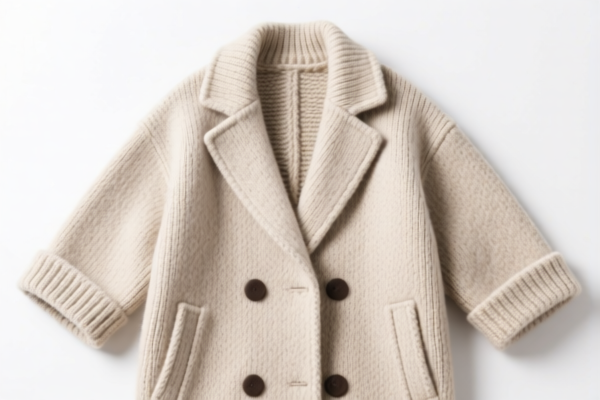
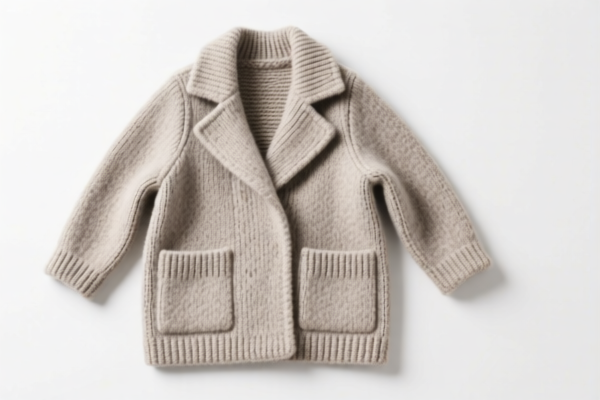
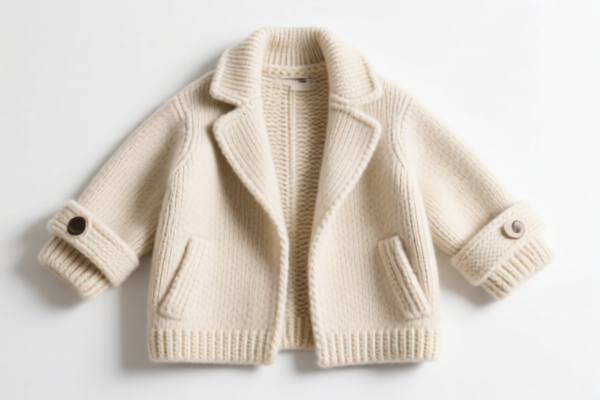

AI Analysis
🧶 Knitted or Crocheted Wool or Fine Animal Hair Coat Parts (Accessories)
🌐 HS Code Reference & Customs Clearance Guide | 2026 Latest Tariff Analysis | Specialized Clearance Strategy for Textile Accessories
📌 I. Product Definition & Classification: Do You Understand "Coat Parts"?
"Knitted or Crocheted Wool or Fine Animal Hair Coat Parts" refer to auxiliary components used in the assembly of outerwear, specifically those made from wool or fine animal hair fibers, constructed via knitting or crocheting techniques. In international trade, these items are not classified as complete garments but as accessories, parts, or specific textile articles depending on their functional description and material composition.
The classification hinges on three key factors: 1. Material: Must be wool or fine animal hair (e.g., cashmere, mohair, alpaca). 2. Construction: Must be knitted or crocheted (Chapter 60/61 logic) OR woven (Chapter 62 logic, depending on specific item type). 3. Function/Form: Is it a dedicated accessory (like a collar/lining), a specific article (like a scarf), or a general part?
⚠️ Critical Distinction:
- If it is a dedicated accessory (e.g., a collar piece, cuff, or decorative trim) specifically identifiable for coats → Chapter 61/62 Specifics.
- If it is a generic part/component of a garment → Chapter 51 Specifics.
- If it is a distinct article (like a scarf/shawl) that happens to be used for coats → Chapter 62 Specifics.
📦 II. HS Code Classification Details (2026 Latest Tariff Authority Comparison)
| HS Code | Product Description | Application Scenario | Tariff Level |
|---|---|---|---|
5111.11.70.30 |
Coat Parts: Knitted/crocheted wool accessories, material matching, form as accessories. | Dedicated trim pieces, collar bases, cuff bands specifically for wool coats. | 60.0% |
5111.19.60.20 |
Coat Parts: Knitted/crocheted wool accessories, material matching, form as parts/components. | General garment components, unstitched pieces, generic parts for assembly. | 60.0% |
6117.10.10.00 |
Coat Accessories: Knitted/crocheted garment accessories, material & form fully matched. | Finished knitted accessories (e.g., knitted collars, belts, decorative bands) ready for use. | 27.1% |
6214.20.00.00 |
Coat Accessories: Scarves, shawls, and similar articles, consistent material. | Scarves, stoles, or shawls made of wool/fine animal hair, used as coat companions. | 24.2% |
6214.90.00.90 |
Coat Accessories: Other textile material articles, material & form matching. | Other textile accessories not classified as scarves/shawls or dedicated knit accessories (e.g., woven wool trim). | 28.8% |
🔍 Key Reminder:
- Chapter 51 Items (5111.xxxx) are generally subject to the highest tariffs (60%) because they are viewed as "Parts" rather than finished "Accessories" or "Articles."
- Chapter 61 Item (6117.10.10.00) offers a significant advantage (27.1%) if the item can be classified as a complete "Knitted Accessory" rather than a raw part.
- Chapter 62 Items (6214.xxxx) apply if the item is a distinct article like a scarf or shawl, regardless of whether it is used on the coat.
💰 III. 2026 Latest Tariff Rate Details (Including Surtaxes & Policy Add-ons)
✅ Applicable Country: United States (US)
✅ Origin: China (CN)
✅ Effective Date: November 10, 2025 (and subsequent imports)
🎯 1. 5111.11.70.30 & 5111.19.60.20 —— Wool Coat Parts/Components (High Tariff Risk)
| Item | Content |
|---|---|
| Base Rate | 25.0% (MFN/General Rate) |
| Section 301 Surtax | +25.0% (USITC Footnote for Section 301 List 4) |
| Section 122 Clause Tariff | +10.0% (Specific clause for certain wool/textile parts) |
| Total Rate | 60.0% |
| Tax Calculation | CIF Value × 60% |
| De Minimis Exemption | ❌ Not Available (deny_de_minimis) |
| Legal Basis Path | Base Tariff → Section 301:25% → Section 122 Clause:10% |
📌 Explanation:
- These HS codes classify items as "Parts" of coats rather than finished accessories.
- The 60% total rate is punitive and includes the standard Section 301 tariff (25%) plus an additional 10% under Section 122.
- Warning: This is the most expensive classification. Avoid declaring generic "parts" if the item can be described as a finished accessory.
🎯 2. 6117.10.10.00 —— Knitted/Crocheted Garment Accessories (Optimal for Knits)
| Item | Content |
|---|---|
| Base Rate | 9.6% |
| Section 301 Surtax | +7.5% (USITC Footnote for Section 301 List 4) |
| Section 122 Clause Tariff | +10.0% |
| Total Rate | 27.1% |
| Tax Calculation | CIF Value × 27.1% |
| De Minimis Exemption | ❌ Not Available (deny_de_minimis) |
| Legal Basis Path | Base Tariff → Section 301:7.5% → Section 122 Clause:10% |
📌 Note:
- If your product is a finished knitted accessory (e.g., a knitted collar, cuff, or decorative band) that is ready to be sewn onto a coat, try to classify it here.
- The 27.1% rate is less than half of the "Parts" rate (60%).
- Key requirement: The item must be "Knitted or Crocheted" and "Finished" enough to be considered an "Accessory" rather than a "Part."
🎯 3. 6214.20.00.00 —— Scarves, Shawls, etc. (Best for Woven Wool Items)
| Item | Content |
|---|---|
| Base Rate | 6.7% |
| Section 301 Surtax | +7.5% |
| Section 122 Clause Tariff | +10.0% |
| Total Rate | 24.2% |
| Tax Calculation | CIF Value × 24.2% |
| De Minimis Exemption | ❌ Not Available (deny_de_minimis) |
| Legal Basis Path | Base Tariff → Section 301:7.5% → Section 122 Clause:10% |
📌 Note:
- Applies to scarves, stoles, and shawls made of wool/fine animal hair.
- Even if used with a coat, if the item itself is a scarf, it belongs here.
- 24.2% is the lowest tariff in this dataset.
🎯 4. 6214.90.00.90 —— Other Textile Articles (Woven Non-Scarf Accessories)
| Item | Content |
|---|---|
| Base Rate | 11.3% |
| Section 301 Surtax | +7.5% |
| Section 122 Clause Tariff | +10.0% |
| Total Rate | 28.8% |
| Tax Calculation | CIF Value × 28.8% |
| De Minimis Exemption | ❌ Not Available (deny_de_minimis) |
| Legal Basis Path | Base Tariff → Section 301:7.5% → Section 122 Clause:10% |
📌 Note:
- For woven wool accessories that are not scarves/shawls (e.g., woven wool belts, ties, or trim).
- Slightly higher than scarves due to higher base duty.
🛠️ IV. Customs Clearance Practical Advice (Battle-Tested Pitfall Avoidance Guide)
✅ 1. Essential Documentation Checklist (No Exceptions)
| Document | Required? | Explanation |
|---|---|---|
| ✅ Product Specifications | ✔️ | Detail material (e.g., 100% Cashmere), construction (Knitted/Woven), dimensions. |
| ✅ Product Photos | ✔️ | Clear images showing the item as a finished accessory, not just a raw fabric piece. |
| ✅ Composition Label | ✔️ | Must state fiber content (e.g., "Wool" or "Fine Animal Hair"). |
| ✅ Commercial Invoice | ✔️ | Description must match the HS Code logic (e.g., "Knitted Wool Collar Accessory" vs. "Wool Coat Part"). |
| ✅ Packing List | ✔️ | Clearly separate accessories from main garments if shipped together. |
✅ 2. Declaration Tactics (Key Mantras)
🔥 "Finish the Accessory, Don't Call it a Part. Scarf or Shawl is Cheap. Part is High Tax!"
| Scenario | Correct Declaration | Incorrect Approach |
|---|---|---|
| Knitted Collar/Cuff (Finished) | 6117.10.10.00 (27.1%) |
Describe as "Coat Part" → 5111 (60%) |
| Wool Scarf/Shawl | 6214.20.00.00 (24.2%) |
Describe as "Coat Accessory Trim" → 5111 (60%) |
| Raw Wool Trim Strip | 5111.19.60.20 (60.0%) |
Try to hide as "Accessory" → Risk of misdeclaration |
| Woven Wool Belt/Tie | 6214.90.00.90 (28.8%) |
Describe as "Garment Part" → 5111 (60%) |
✅ 3. Special Case Handling
| Situation | Recommendation |
|---|---|
| OEM Custom Collars | If pre-formed and ready to attach, declare as 6117.10.10.00 (Knitted Accessory) instead of 5111 (Part). |
| Scarf vs. Trim | If it can be worn independently (neck cover), declare as Scarf (6214.20.00.00). If it is clearly a component to be sewn, it may be 5111 or 6117. |
| Mixed Materials | If >50% wool, classify as wool. If mixed with synthetics, check if it still qualifies as "Wool" for Chapter 51/61/62. |
| Knitted vs. Woven | Knitted/Crocheted → Look at Chapter 61 (6117). Woven → Look at Chapter 62 (6214). Do not mix these up. |
🌍 V. Global Market Clearance Comparison (2026 Latest)
| Country/Region | Recommended HS Code | Tariff (China Origin) | Certification | Remarks |
|---|---|---|---|---|
| 🇺🇸 USA | 6214.20.00.00 / 6117.10.10.00 |
24.2% - 27.1% | None specific for textiles | Avoid 5111 (60%) unless necessary. |
| 🇨🇳 China | 6214.20.00.00 |
5% - 10% | None | Low import duty. |
| 🇪🇺 EU | 6214.20.00.00 |
4% - 12% | CE (if functional) | No Section 301/122 surcharges. |
| 🇬🇧 UK | 6214.20.00.00 |
4% - 12% | UKCA | Post-Brexit rules apply, but generally favorable. |
| 🇦🇺 Australia | 6214.20.00.00 |
5% - 10% | None | Competitive market. |
📌 Conclusion:
- USA is the most challenging market due to Section 301 and Section 122 tariffs.
- EU/UK/Australia offer significantly lower tariffs and no punitive surcharges.
- Strategy: If exporting to the US, ensure your product description and physical form align with Chapter 61/62 (Accessories/Articles) to avoid the 60% "Part" penalty.
📌 VI. Common Errors & Pitfall Guide (Lessons Learned)
❌ Mistake 1: Calling a Knitted Scarf a "Wool Coat Part"
👉 Consequence: Tax jumps from 24.2% to 60%. Overpaying by ~36%!
❌ Mistake 2: Declaring a Finished Knitted Collar as a "Part" (5111)
👉 Consequence: Tax jumps from 27.1% to 60%. Misclassification penalty risk.
❌ Mistake 3: Ignoring Section 122 Clause
👉 Consequence: Even if base tariff is low, 10% additional is added for wool/textile parts. Always check for this clause.
❌ Mistake 4: Mixing Knitted and Woven items in one declaration
👉 Consequence: Customs may reclassify all items to the stricter/harder-to-justify category. Keep categories separate.
✅ Correct Approach:
"100% Cashmere Knitted Scarf, Finished Edge, Ready for Wear" →
6214.20.00.00
"Knitted Wool Collar Accessory, Pre-shaped, for Outerwear" →6117.10.10.00
🎯 VII. Conclusion: Professional Declaration, Cost Savings, Efficiency!
🎯 Remember the Mantra:
🔹 "Accessories < Parts. Scarf < Trim. Knit < Woven (for 61 vs 62)."
🔹 "HS Code determines tax. A difference in description saves 30%+."
📌 Pro Tip:
If your product is originating from Vietnam, India, or Bangladesh, you may avoid Section 301 (US) tariffs, reducing the total tax significantly.
Recommend Advance Ruling from US Customs if the item's status as "Accessory" vs. "Part" is ambiguous.
📣 Take Action Now:
📞 Contact a professional customs broker + Provide product photos + Request HS Code Advance Ruling
🚀 Ensure your wool coat parts clear customs smoothly, efficiently, and profitably!
✨ Professional Clearance Starts with Precise Classification!
💼 Every cent of cost deserves precise calculation!
Customer Reviews
About HS Code Classification
The Harmonized System (HS) is an internationally standardized nomenclature developed by the World Customs Organization (WCO) to classify traded products. Over 200 countries use the HS system as the basis for customs tariffs, trade statistics, and import/export regulations.
Each HS code follows a hierarchical structure:
- Chapter (2 digits) — Broad category of goods (e.g., Chapter 84: Machinery and Mechanical Appliances)
- Heading (4 digits) — More specific grouping within the chapter
- Subheading (6 digits) — Internationally standardized breakdown, used by all WCO member countries
- National subdivisions (8-10 digits) — Country-specific extensions for further classification, such as US HTSUS 10-digit codes
Correct HS code classification is essential for smooth customs clearance, accurate duty payment, and compliance with trade regulations. Misclassification can lead to customs delays, overpayment of duties, or penalties.
When importing from CN to US, the applicable tariff rates may include:
- Most-Favored-Nation (MFN) rate — The standard duty rate applied to WTO members
- General rate — Applied to countries without trade agreements
- Trade remedy duties — Additional tariffs such as Section 301 (anti-dumping), Section 232 (national security), or countervailing duties
The information provided on this page is for reference purposes only. For official classification, please consult with your local customs authority or a licensed customs broker.