Knitting Crochet Set
CN → US| HS Code | Tariff Rate | Origin | Destination | Doc |
|---|---|---|---|---|
| 5609004000 | 38.9% | CN | US | Official Doc |
| 6117809570 | 32.1% | CN | US | Official Doc |
| 6117808500 | 32.1% | CN | US | Official Doc |
| 9505906000 | 10.0% | CN | US | Official Doc |
| 9505105020 | 10.0% | CN | US | Official Doc |
Product Images
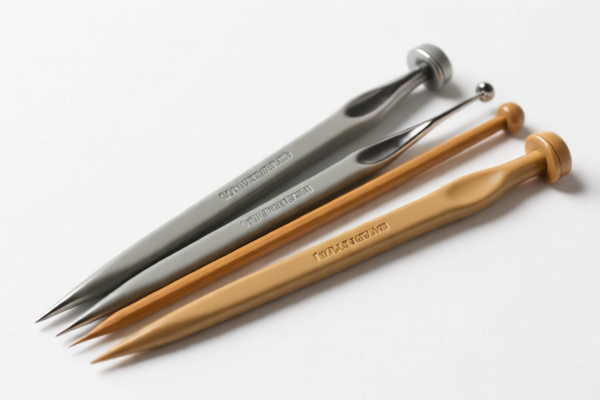
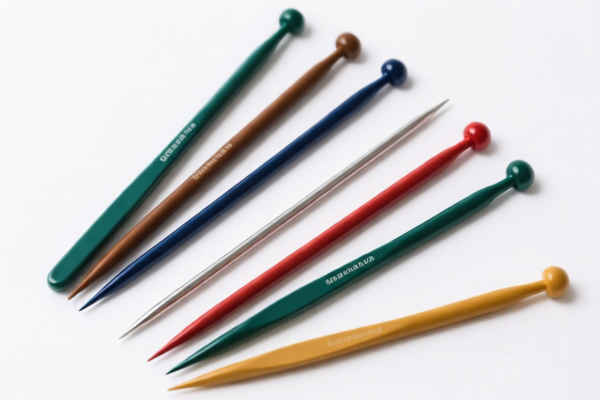
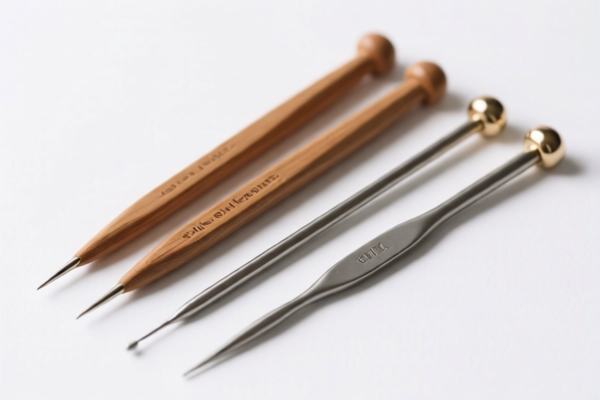
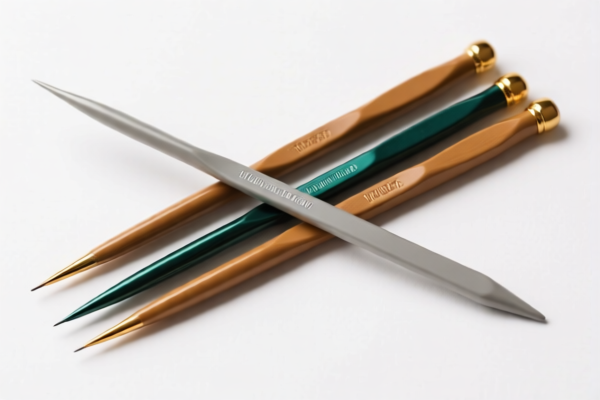
AI Analysis
🧶 Knitting & Crochet Set (DIY Craft Kit)
🌐 HS Code Reference & Customs Clearance Guide | 2026 Latest Tariff Analysis | Professional Entry Strategies
📌 I. Product Definition & Classification: What Exactly is a "Knitting Crochet Set"?
A "Knitting Crochet Set" is typically a beginner-friendly DIY kit used for crafting. In international trade, the classification depends heavily on the primary material, form, and intended use. It generally falls into one of two categories: 1. Textile Materials/Accessories: If the kit is primarily composed of yarn, cords, or fabric accessories (e.g., tassels, trim). 2. Toys/Entertainment Supplies: If the kit includes hooks, needles, and yarn primarily for recreational/educational purposes (often treated as "other" recreational items).
⚠️ Key Classification Divergence:
- If viewed as textile materials (yarn/cord) →归入 Chapter 56 or Chapter 61.
- If viewed as recreational/toy supplies →归入 Chapter 95.
Note: This divergence causes a massive tax difference (10% vs. 38.9%).
📦 II. HS Code Classification Details (2026 Latest Tariff Authority Comparison)
| HS Code | Product Description | Application Scenario | Tax Rate (Total) |
|---|---|---|---|
5609.00.40.00 |
Articles of yarn, string, cord, rope, etc., not elsewhere specified | Kits dominated by yarn/rope materials; considered "textile articles" | 38.9% |
6117.80.95.70 |
Other made-up clothing accessories (Knitted/Crocheted) | Kits containing accessories/parts, inferred as synthetic/hybrid fiber | 32.1% |
6117.80.85.00 |
Other made-up clothing accessories (Knitted/Crocheted) | Kits with knitting accessories/tools, classified as "parts of accessories" | 32.1% |
9505.90.60.00 |
Other festive, carnival, or other entertainment articles | Kits containing hooks + yarn for recreational/hobby use | 10.0% |
9505.10.50.20 |
Other festive articles (Christmas/Entertainment) | DIY craft kits for festive or general entertainment purposes | 10.0% |
🔍 Critical Insight:
- High Tax Path (32.1% - 38.9%): Customs may classify the set as "textile materials" or "clothing accessories" because it contains yarn/hook materials. This incurs significant USITC (25%) and IEEPA (10%) duties. - Low Tax Path (10.0%): Customs may classify the set as "entertainment/toy supplies" if the primary purpose is deemed recreational rather than industrial textile production.
💰 III. 2026 Latest Tariff Rate Breakdown (Including Surcharge Policies)
✅ Applicable Country: United States (US)
✅ Origin: China (CN)
✅ Effective Date: November 10, 2025 (and onwards)
🎯 1. 5609.00.40.00 — Articles of Yarn/String (High Risk)
| Item | Content |
|---|---|
| Base Duty | 3.9% |
| USITC Surcharge (Sec 301) | +25.0% |
| IEEPA Surcharge | +10.0% |
| Total Rate | 38.9% |
| Calculation | CIF Value × 38.9% |
| De Minimis Exemption? | ❌ No (denied for textile/textile articles) |
| Legal Basis | IEEPA:9903.01.25 → USITC:5609.00.40.00 |
📌 Explanation:
- The base duty is low (3.9%), but the 25% Section 301 tariff and 10% IEEPA tariff drive the cost up drastically. - This classification applies if Customs determines the "core component" is the yarn/cord itself.
🎯 2. 6117.80.95.70 & 6117.80.85.00 — Other Knitted/Crocheted Accessories
| Item | Content |
|---|---|
| Base Duty | 14.6% |
| USITC Surcharge (Sec 301) | +7.5% |
| IEEPA Surcharge | +10.0% |
| Total Rate | 32.1% |
| Calculation | CIF Value × 32.1% |
| De Minimis Exemption? | ❌ No |
| Legal Basis | IEEPA:9901.25 → USITC:6117.80.xxxx |
📌 Explanation:
- These codes fall under Chapter 61 (Apparel Accessories). - The 14.6% base duty is higher than Chapter 56, but the USITC surcharge is only 7.5% (compared to 25% for yarn), making it slightly cheaper than5609.00.40.00. - Applies if the kit is seen as "accessories" or "parts" rather than raw yarn.
🎯 3. 9505.90.60.00 & 9505.10.50.20 — Entertainment/Festive Articles (Optimal Strategy)
| Item | Content |
|---|---|
| Base Duty | 0.0% |
| USITC Surcharge (Sec 301) | 0.0% |
| IEEPA Surcharge | +10.0% |
| Total Rate | 10.0% |
| Calculation | CIF Value × 10.0% |
| De Minimis Exemption? | ⚠️ Check Specific Rules (Usually eligible for de minimis if < $800, but verify current policy) |
| Legal Basis | IEEPA:9903.01.24 → USITC:9505.90.60.00 |
📌 Explanation:
- Base Duty is 0%!
- Only the 10% IEEPA tariff applies. - This classification views the kit as a recreational toy or hobby supply rather than a textile product. - Savings: Up to 28.9% - 32.1% compared to textile classifications.
🛠️ IV. Customs Clearance Practical Advice (Avoiding Pitfalls)
✅ 1. Documentation Checklist (Non-Negotiable)
| Document | Required? | Note |
|---|---|---|
| ✅ Product Description | ✔️ | Must clearly state "DIY Craft Kit" or "Hobby Set". Avoid vague terms like "Yarn" alone. |
| ✅ Product Photos | ✔️ | Show the hook, needles, AND yarn together to prove it's a complete set. |
| ✅ Bill of Lading/Invoice | ✔️ | Value must include all components. |
| ✅ Material Composition | ✔️ | Specify fiber content (e.g., "100% Acrylic Yarn, Plastic Hook"). |
| ✅ Origin Certificate | ✔️ | Crucial for proving CN origin to apply IEEPA rules correctly. |
✅ 2. Declaration Strategy (Key Tactics)
🔥 "Declare as Hobby, Not Textile! Name it Right, Save Big!"
| Scenario | Correct Declaration | Incorrect Declaration |
|---|---|---|
| Kit with Hook + Yarn | 9505.90.60.00"Crochet Hook and Yarn Craft Kit for Beginners" |
5609.00.40.00"Knitting Yarn" |
| Kit with Accessories | 9505.10.50.20"Festive DIY Crafting Set" |
6117.80.85.00"Knitting Accessories" |
| Pure Yarn/Cord | 5609.00.40.00(Only if no hook/tools) |
9505.90.60.00(Misclassification risk) |
⚠️ Warning:
- If you declare9505but the shipment contains only yarn with no hooks/tools, Customs will likely reclassify it to5609.00.40.00or6117.80.xxxx, leading to back taxes + penalties. - Ensure the "Hook" or "Tool" is clearly visible and listed in the invoice to justify the "Kit" classification under Chapter 95.
✅ 3. Special Case Handling
| Situation | Recommendation |
|---|---|
| De Minimis ($800 Threshold) | If the kit value is < $800, verify if 9505 codes are eligible for entry under Section 321 (De Minimis). If classified as 5609 or 6117, they may not qualify. |
| OEM/Private Label | Ensure the brand name doesn't conflict with existing trademarks. |
| Mixed Materials | If the kit contains wooden needles + acrylic yarn, emphasize the "Entertainment/Toy" aspect to stay in Chapter 95. |
🌍 V. Global Market Comparison (2026)
| Region | Recommended HS Code | Total Tariff | Notes |
|---|---|---|---|
| 🇺🇸 USA | 9505.90.60.00 |
10.0% | Best option if classified as hobby kit. |
| 🇺🇸 USA | 5609.00.40.00 |
38.9% | Avoid if possible; high risk for yarn-heavy kits. |
| 🇨🇳 China | 6117.80.95.70 |
Varies | Import duty + VAT. Check local CBTC rules. |
| 🇪🇺 EU | 9505.90.90 |
0-4% | VAT applies (19-25%). Lower tariffs than US. |
| 🇬🇧 UK | 9505.10.00 |
0% | Post-Brexit rules; check specific UK Tariff. |
📌 Conclusion:
- The US is the most challenging market due to Section 301 and IEEPA tariffs. - Correct HS Code selection (9505vs5609) can save ~29-32% in duties.
📌 VI. Common Mistakes & Pitfalls (Lessons Learned)
❌ Mistake 1: Declaring a "Crochet Kit" as "Yarn" (5609.00.40.00)
👉 Consequence: Tax jumps from 10% to 38.9%.
👉 Why: Customs focuses on the highest-value component (yarn) rather than the functional unit (kit).
❌ Mistake 2: Declaring a "Crochet Kit" as "Clothing Accessory" (6117.80.xxxx)
👉 Consequence: Tax jumps from 10% to 32.1%.
👉 Why: Misinterpretation of "parts" vs. "finished articles".
❌ Mistake 3: Ignoring the "Hook" in the description
👉 Consequence: Customs may assume no tool is present, classifying it as raw material.
👉 Fix: Always include "Hook", "Needle", or "Tool" in the product name.
✅ Correct Approach:
"DIY Crochet Kit for Beginners, Includes Plastic Hook and Acrylic Yarn, For Entertainment & Hobby Use, Model XYZ"
🎯 VII. Conclusion: Precision Declares Profit
🎯 Remember the Golden Rule:
🔹 "Kit = Hobby (10%) | Yarn = Textile (38.9%)"
🔹 "Include the Tool, Save the Duty!"
📌 Pro Tip:
If your product is entirely yarn (no hooks), you cannot avoid the 38.9% rate in the US. Consider bundling with a low-cost plastic hook to change the classification.
Request a Pre-Ruling from US Customs (CBP) if you are shipping large volumes to ensure your 9505 classification is accepted.
📣 Take Action Now:
📞 Consult a licensed US Customs Broker.
📸 Provide clear photos of the complete kit (hooks + yarn).
📝 Draft invoice descriptions that emphasize "Entertainment" and "DIY Set".
✨ Smart Customs Classification, Maximized Margins!
💼 Every percent saved in duty is pure profit!
Customer Reviews
About HS Code Classification
The Harmonized System (HS) is an internationally standardized nomenclature developed by the World Customs Organization (WCO) to classify traded products. Over 200 countries use the HS system as the basis for customs tariffs, trade statistics, and import/export regulations.
Each HS code follows a hierarchical structure:
- Chapter (2 digits) — Broad category of goods (e.g., Chapter 84: Machinery and Mechanical Appliances)
- Heading (4 digits) — More specific grouping within the chapter
- Subheading (6 digits) — Internationally standardized breakdown, used by all WCO member countries
- National subdivisions (8-10 digits) — Country-specific extensions for further classification, such as US HTSUS 10-digit codes
Correct HS code classification is essential for smooth customs clearance, accurate duty payment, and compliance with trade regulations. Misclassification can lead to customs delays, overpayment of duties, or penalties.
When importing from CN to US, the applicable tariff rates may include:
- Most-Favored-Nation (MFN) rate — The standard duty rate applied to WTO members
- General rate — Applied to countries without trade agreements
- Trade remedy duties — Additional tariffs such as Section 301 (anti-dumping), Section 232 (national security), or countervailing duties
The information provided on this page is for reference purposes only. For official classification, please consult with your local customs authority or a licensed customs broker.