Knitting Machine Parts
CN → US| HS Code | Tariff Rate | Origin | Destination | Doc |
|---|---|---|---|---|
| 8448591000 | 17.5% | CN | US | Official Doc |
| 8448512000 | 35.0% | CN | US | Official Doc |
| 8452902010 | 17.5% | CN | US | Official Doc |
| 8479907500 | 17.5% | CN | US | Official Doc |
| 8452902090 | 17.5% | CN | US | Official Doc |
Product Images
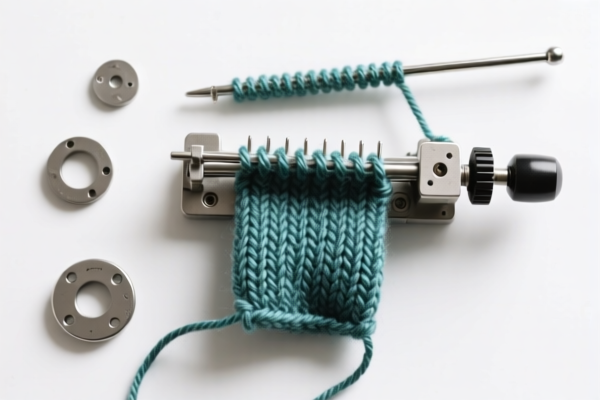
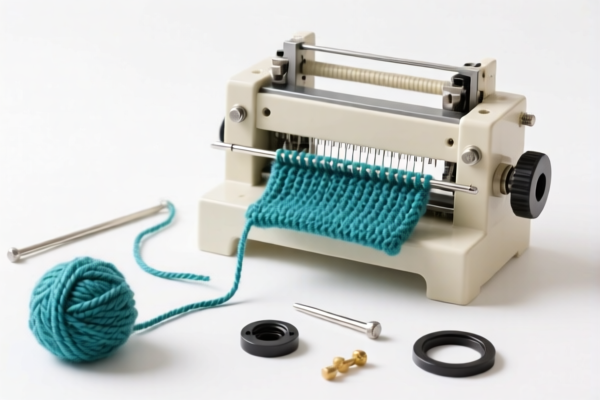
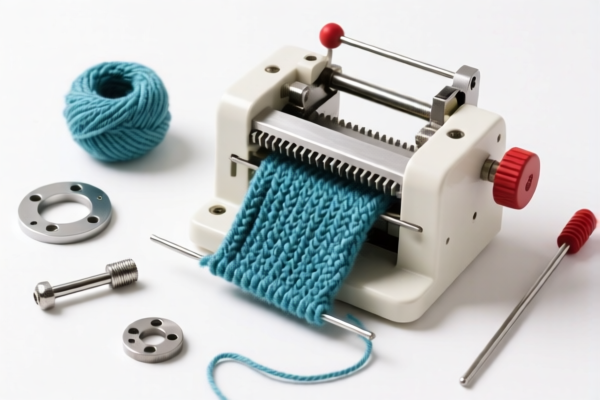
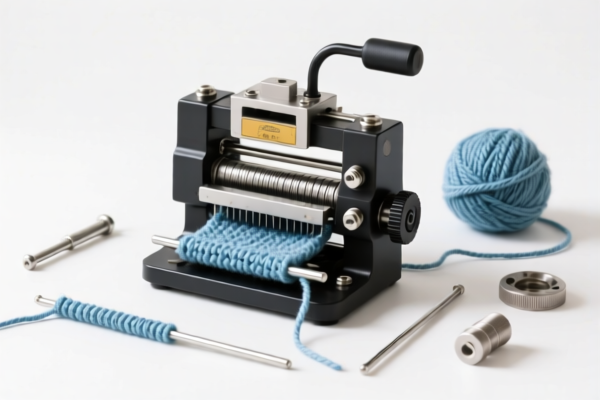
AI Analysis
🧶 Knitting Machine Parts (针织机配件)
🌐 HS Code Reference & Customs Clearance Guide | 2026 Latest Tariff Analysis | Professional-Level Clearance Strategy
📌 I. Product Definition & Classification: Do You Really Understand "Knitting Machine Parts"?
Knitting machine parts are essential components for textile manufacturing equipment. In international trade, they are categorized based on their specific machine type (Knitting Machine vs. Sewing Machine) and their functional role. Misclassification can lead to significant duty differences due to the "Section 301" and "Section 232" related tariffs.
⚠️ Key Distinction Point:
- Knitting Machines (8448): Parts specifically for knitting machines (loops, needles, feeders) fall under 8448.51 or 8448.59.
- Sewing Machines (8452): Parts for sewing machines (hooks, bobbins, feed dogs) fall under 8452.90.
- General Machinery (8479): If the part does not fit specific knitting/sewing codes but is clearly a spare part, it may fall under 8479.90 as a "part of other machines."
📦 II. HS Code Classification Details (2026 Latest Tariff Authority Cross-Reference)
| HS Code | Product Description | Application Scenario | Tax Explanation from Data |
|---|---|---|---|
8448.59.10.00 |
Knitting Machine Parts: Classified as "parts of machines of heading 8448." Matches "Knitting Machine Parts" in usage and classification. | Knitting machine needles, cam plates, yarn guides, tensioners. | 17.5%: Base 0% + Add. 7.5% + Section 232 (1022) 10%. |
8448.51.20.00 |
Knitting Machine Parts: Classified under "Auxiliary machinery and special parts for knitting machines." | Specialized auxiliary components, specialized knitting attachments. | 35.0%: Base 0% + Add. 25.0% + Section 232 (1022) 10%. |
8452.90.20.10 |
Sewing Machine Parts: Classified under "Parts of sewing machines." Usage is consistent with sewing machine components. | Sewing machine needles, presser feet, bobbins. | 17.5%: Base 0% + Add. 7.5% + Section 232 (1022) 10%. |
8479.90.75.00 |
Sewing Machine Parts: Classified under "Parts of other machines" (Fallback category). Fits logic of "parts not elsewhere specified." | Generic mechanical parts used in sewing/knitting contexts that don't fit specific sub-headings. | 17.5%: Base 0% + Add. 7.5% + Section 232 (1022) 10%. |
8452.90.20.90 |
Sewing Machine Parts: Classified under "Other parts of sewing machines." Usage consistent with "other parts of sewing machines." | Miscellaneous sewing machine components. | 17.5%: Base 0% + Add. 7.5% + Section 232 (1022) 10%. |
🔍 Critical Reminder:
- 8448.51.20.00 carries a 35.0% rate, which is significantly higher than other categories (17.5%). This is due to a higher Section 301 additional duty (25% vs. 7.5%).
- Ensure the technical documentation clearly distinguishes between "Knitting" (loop formation) and "Sewing" (stitch formation) to avoid misclassification.
💰 III. 2026 Latest Tariff Rate Details (Including Additional Duties & Policy Add-ons)
✅ Applicable Country: United States (US)
✅ Origin: China (CN)
✅ Effective Time: Current regulations (Section 301 & Section 232/122 provisions)
🎯 1. 8448.59.10.00 – Knitting Machine Parts (Other/General)
| Item | Content |
|---|---|
| Base Duty Rate | 0.0% |
| USITC Additional Duty (Section 301) | +7.5% |
| Section 122 Tariff | +10% |
| Total Duty Rate | 17.5% |
| Tax Calculation | CIF Value × 17.5% |
| De Minimis Exemption | ❌ Not Applicable (High duty rates usually exclude de minimis benefits for direct shipments from China). |
| Legal Basis Path | HTSUS:8448.59.10.00 → USITC Footnote 9903.xx → Section 122 Authority |
📌 Explanation:
- "USITC Additional Duty 7.5%" refers to specific Section 301 exclusions or lower tier duties for certain textile machinery parts.
- "Section 122 Tariff 10%" applies under specific emergency import relief provisions or related trade actions.
- Total 17.5% is moderate compared to electronics but higher than standard most-favored-nation rates for some goods.
🎯 2. 8448.51.20.00 – Knitting Machine Auxiliary Parts (Higher Tier)
| Item | Content |
|---|---|
| Base Duty Rate | 0.0% |
| USITC Additional Duty (Section 301) | +25.0% |
| Section 122 Tariff | +10% |
| Total Duty Rate | 35.0% |
| Tax Calculation | CIF Value × 35.0% |
| De Minimis Exemption | ❌ Not Applicable |
| Legal Basis Path | HTSUS:8448.51.20.00 → USITC Footnote 9903.88.01 → Section 122 Authority |
📌 Caution:
- The 25% additional duty significantly increases costs. This code is often applied to "specialized" or "auxiliary" machinery parts.
- Ensure the part is not considered a "specialized auxiliary machine" if a lower-duty code (8448.59) is applicable.
🎯 3. 8452.90.20.10 & 8452.90.20.90 – Sewing Machine Parts
| Item | Content |
|---|---|
| Base Duty Rate | 0.0% |
| USITC Additional Duty (Section 301) | +7.5% |
| Section 122 Tariff | +10% |
| Total Duty Rate | 17.5% |
| Tax Calculation | CIF Value × 17.5% |
| De Minimis Exemption | ❌ Not Applicable |
📌 Note:
- Sewing machine parts generally fall under a 7.5% additional duty tier, making them more cost-effective than the 35% knitting auxiliary parts.
-8452.90.20.10and.90are both rated at 17.5%.
🎯 4. 8479.90.75.00 – Other Machine Parts (Fallback)
| Item | Content |
|---|---|
| Base Duty Rate | 0.0% |
| USITC Additional Duty (Section 301) | +7.5% |
| Section 122 Tariff | +10% |
| Total Duty Rate | 17.5% |
| Tax Calculation | CIF Value × 17.5% |
| De Minimis Exemption | ❌ Not Applicable |
📌 Note:
- This is a "catch-all" code. Use only if the part does not fit specific sewing or knitting codes.
- Customs may challenge this classification if a more specific code (like 8452 or 8448) applies.
🛠️ IV. Practical Customs Clearance Advice (Pitfall Avoidance Guide)
✅ 1. Required Documentation Checklist (All Mandatory)
| Document | Must Provide | Description |
|---|---|---|
| ✅ Product Specification Sheet | ✔️ | Must clearly state: "Part for Knitting/Sewing Machine," model number, material. |
| ✅ Technical Drawing/Manual | ✔️ | Proves the part is dedicated to the machine and not a general industrial component. |
| ✅ Product Photos | ✔️ | Clear shots of the part, marking, and any identifying numbers. |
| ✅ Commercial Invoice | ✔️ | Must explicitly state: "Knitting Machine Part" or "Sewing Machine Part." Avoid vague terms like "Industrial Part." |
| ✅ Packing List | ✔️ | Shows quantities and weights. |
| ✅ Origin Certificate | ✔️ | Required for Section 122 and Section 301 duty assessment. |
✅ 2. Declaration Tips (Key Mnemonics)
🔥 "Distinguish Knit vs. Sew, Watch the 35% Trap, Be Specific!"
| Scenario | Correct Declaration | Wrong Practice |
|---|---|---|
| Knitting Machine Needle/Cam | 8448.59.10.00 or 8448.51.20.00 |
Report as "Sewing Part" → 35% Penalty Risk |
| Sewing Machine Hook/Bobbin | 8452.90.20.10 / .90 |
Report as "General Machine Part" → Audit Risk |
| Generic Metal Bracket | 8479.90.75.00 (if no specific code) |
Report as "Knitting Part" → Misclassification |
| Mixed Batch (Knit & Sew) | Split Declaration | Mixed Declaration → Delay/Seizure |
⚠️ Key Insight:
- 8448.51.20.00 (35%) is the "Trap." If the part is a standard knitting machine part (not auxiliary), try to justify8448.59.10.00(17.5%).
- Provide evidence that the part is not for an "auxiliary machine" if you want to avoid the 25% Section 301 rate.
✅ 3. Special Circumstances Handling
| Scenario | Handling Advice |
|---|---|
| OEM Parts for Foreign Brand | Provide OEM authorization letter + design specs. |
| Parts for Repair/Maintenance | Clearly label as "Spare Parts for [Machine Model]." |
| New vs. Used Parts | Used parts may require additional sanitation/inspection documents. |
| Kit Sets (Part + Machine) | If the part is packaged with the machine, declare the whole set under the machine code (often lower duty for the machine itself). |
🌍 V. Global Market Clearance Comparison (2026 Latest)
| Country/Region | Recommended HS Code | Duty Rate (China Origin) | Certification Requirements | Notes |
|---|---|---|---|---|
| 🇺🇸 USA | 8448.59.10.00 / 8452.90.20.10 |
17.5% (or 35% for 8448.51.20) | N/A | Section 122 + Section 301 apply. |
| 🇺🇸 USA | 8448.51.20.00 |
35.0% | N/A | High duty for auxiliary parts. |
| 🇨🇳 China | 8448.59.10.00 |
5-8% | N/A | No additional duties. |
| 🇪🇺 EU | 8448.59 / 8452.90 |
0-4% | CE (if electrical) | No Section 301/122 equivalents. |
| 🇬🇧 UK | 8448.59 / 8452.90 |
0-4% | UKCA | Post-Brexit rules apply. |
📌 Conclusion:
- The USA is the only major market with complex additional duties (Section 122 + Section 301) for these parts.
- China, EU, and UK have much simpler, lower duty structures.
- For US exports, classification accuracy is critical to avoid the 35% rate.
📌 VI. Common Errors & Pitfall Guide (Lessons Learned)
❌ Error 1: Declaring "Knitting Machine Parts" as "Sewing Machine Parts" (8452) to avoid higher duties.
👉 Consequence: Customs inspection will reveal the part is for knitting (e.g., circular knitting needles). Reclassification + Penalties.
❌ Error 2: Failing to distinguish between "Knitting Machine Part" (8448) and "Auxiliary Knitting Machine Part" (8448.51).
👉 Consequence: Misuse of 8448.51.20.00 leads to 35% duty instead of 17.5%. Loss of Profit Margin.
❌ Error 3: Using vague terms like "Textile Parts" on the commercial invoice.
👉 Consequence: Customs delays for classification review. Storage Fees + Demurrage.
❌ Error 4: Ignoring Section 122 tariffs.
👉 Consequence: Underpayment of 10% additional duty. Retroactive Tax + Interest.
✅ Correct Approach:
"Circular Knitting Machine Spare Part: Cam Plate, Material: Steel, Model: XYZ, Intended for: Knitting Machine Model ABC"
🎯 VII. Conclusion: Professional Declaration, Save Time and Money!
🎯 Remember the Mnemonic:
🔹 "Knit is 8448, Sew is 8452. Watch out for 8448.51.20 (35%). Be specific, avoid disputes."
🔹 "HS Code decides your cost, 17.5% vs 35% is a huge gap. Declare accurately, save thousands!"
📌 Tip:
If your knitting/sewing machine parts are originating from Vietnam, Thailand, or Mexico, you may be eligible for lower or zero additional duties under USMCA or GSP programs.
Recommendation: Apply for Advance Ruling (Pre-classification) from US Customs (CBP) if the part's classification is ambiguous.
📣 Immediate Action:
📞 Contact a professional customs broker + Provide product photos + Apply for HS Code Pre-ruling
🚀 Let your knitting machine parts clear customs smoothly, efficiently, and cost-effectively!
✨ Professional Clearance Starts with Accurate Classification!
💼 Every cent of your cost deserves precise calculation!
Customer Reviews
About HS Code Classification
The Harmonized System (HS) is an internationally standardized nomenclature developed by the World Customs Organization (WCO) to classify traded products. Over 200 countries use the HS system as the basis for customs tariffs, trade statistics, and import/export regulations.
Each HS code follows a hierarchical structure:
- Chapter (2 digits) — Broad category of goods (e.g., Chapter 84: Machinery and Mechanical Appliances)
- Heading (4 digits) — More specific grouping within the chapter
- Subheading (6 digits) — Internationally standardized breakdown, used by all WCO member countries
- National subdivisions (8-10 digits) — Country-specific extensions for further classification, such as US HTSUS 10-digit codes
Correct HS code classification is essential for smooth customs clearance, accurate duty payment, and compliance with trade regulations. Misclassification can lead to customs delays, overpayment of duties, or penalties.
When importing from CN to US, the applicable tariff rates may include:
- Most-Favored-Nation (MFN) rate — The standard duty rate applied to WTO members
- General rate — Applied to countries without trade agreements
- Trade remedy duties — Additional tariffs such as Section 301 (anti-dumping), Section 232 (national security), or countervailing duties
The information provided on this page is for reference purposes only. For official classification, please consult with your local customs authority or a licensed customs broker.