Knitting Machine Parts: Start Comb
CN → US| HS Code | Tariff Rate | Origin | Destination | Doc |
|---|---|---|---|---|
| 8448591000 | 17.5% | CN | US | Official Doc |
| 8448515000 | 17.5% | CN | US | Official Doc |
Product Images
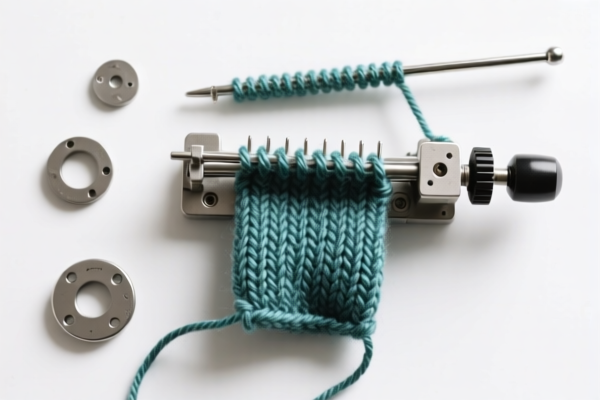
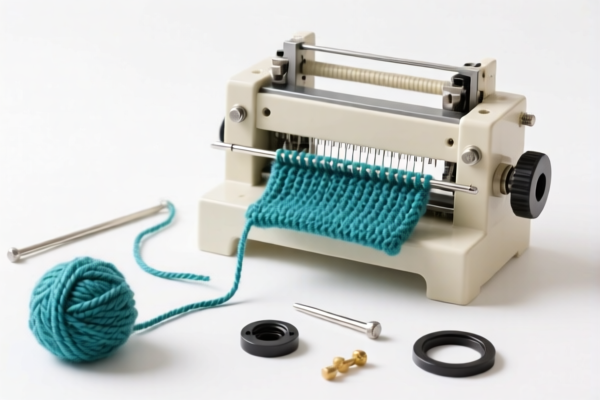
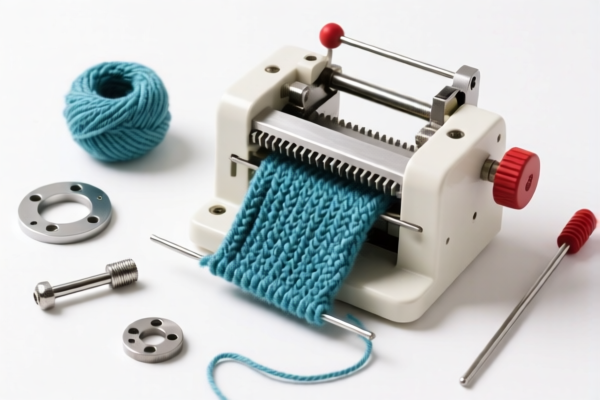
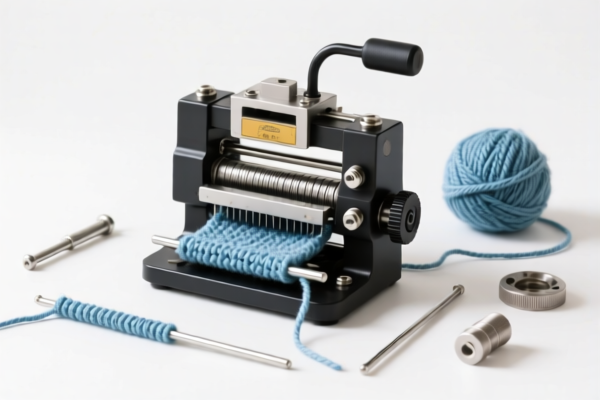
AI Analysis
🧶 Knitting Machine Parts: Start Comb (Knitting Machinery Auxiliaries)
🌐 HS Code Reference & Customs Clearance Guide | 2026 Latest Tariff Analysis | Professional Clearance Strategy
📌 Part 1: Product Definition & Classification: What is a "Start Comb"?
In the textile industry, the Start Comb is a critical auxiliary component for knitting machines (specifically circular knitting machines or flat knitting machines). It is used at the beginning of the knitting process to guide the yarn and establish the initial loop structure, preventing yarn slippage and ensuring uniform tension.
Key Characteristics: 1. Function: It is a specialized tool for forming stitches during the startup phase. 2. Component Type: It falls under "Needles, Sinkers, and Other Articles Used in Forming Stitches." 3. Classification Logic: Because it is exclusively used with knitting machines of Heading 8447, it cannot be classified as a general mechanical part. It must follow the specific subheadings for knitting machine accessories.
⚠️ Critical Distinction:
- If the part is a comb used specifically for forming stitches (like a latch comb, start comb, or guide comb), it belongs under 8448.51.
- If the part is a generic frame, shaft, or motor component not directly involved in stitch formation, it might fall under 8448.59 ("Other parts and accessories").
- For "Start Comb" specifically: It is unequivocally an article used in forming stitches. Therefore, it falls under 8448.51.50.00.
📦 Part 2: HS Code Classification Details (2026 Latest Tariff Authority)
Based on the provided data, here is the precise classification for "Knitting Machine Parts: Start Comb."
| HS Code | Product Description | Application Scenario | Key Classification Feature |
|---|---|---|---|
8448.51.50.00 |
Sinkers, needles and other articles used in forming stitches: Other | Start Combs, Guide Combs, Latch Combs, Needle Blocks (stitch-forming components) | ✅ Directly involved in stitch formation |
8448.59.10.00 |
Parts and accessories of machines of heading 8447...: Other: Parts of knitting machines | Machine frames, spindle flyers, gear boxes, non-stitch-forming structural parts | ❌ Not directly forming stitches |
🔍 Expert Note:
- Start Comb =8448.51.50.00: This is the only correct classification for a "Start Comb" because it is explicitly an "article used in forming stitches."
- Do NOT use8448.59.10.00: This code is for "Other" parts that are not needles, sinkers, or stitch-forming articles. Using this code for a Start Comb is a classification error that may lead to customs audits.
💰 Part 3: 2026 Latest Tariff Rate Details (Including Additional Taxes)
✅ Applicable Country: United States (US)
✅ Origin: China (CN)
✅ Effective Date: From November 10, 2025 (for subsequent imports)
🎯 1. 8448.51.50.00 —— Start Comb (Article Used in Forming Stitches)
| Item | Content |
|---|---|
| Base Tariff Rate | 0.0% (ad valorem) |
| Section 301 Additional Tariff | +7.5% |
| IEEPA Additional Tariff | 0.0% (Not applicable for this category in the provided data) |
| Total Tariff Rate | 7.5% |
| Tax Calculation | CIF Value × 7.5% |
| De Minimis Eligibility | ❌ No (Denied for Section 301 goods) |
| Legal Basis Path | USITC:8448.51.50.00 → Section 301: Footnote 8448.51.50.00 |
📌 Explanation:
- Base Rate (0%): Knitting machine parts generally have a low base tariff under HTSUS.
- Section 301 Surcharge (+7.5%): This is the critical cost driver. All knitting machine parts and accessories from China are subject to this additional tariff.
- Total Cost Impact: While 7.5% is lower than IT equipment or consumer electronics, it is a significant added cost for high-volume textile components.⚠️ Why not 8448.59.10.00?
The provided data shows8448.59.10.00also has a 7.5% total tax. However, classifying a Start Comb here is technically incorrect because it misrepresents the function of the goods. Customs may penalize incorrect classification even if the tax rate is the same.
🛠️ Part 4: Customs Clearance Practical Advice (Pitfall Avoidance Guide)
✅ 1. Required Documentation Checklist
| Document | Mandatory? | Description |
|---|---|---|
| ✅ Product Description | ✔️ | Must clearly state "Start Comb for Knitting Machine" and specify the machine model it fits. |
| ✅ Technical Specification | ✔️ | Include material (e.g., stainless steel, hardened steel), dimensions, and function (stitch formation). |
| ✅ Photos | ✔️ | Clear images of the comb, including any branding or model numbers. |
| ✅ Commercial Invoice | ✔️ | Item description must match HS Code logic: "Auxiliary part for knitting machine used in stitch formation." |
| ✅ Packing List | ✔️ | Detailed count and weight of each comb unit. |
| ✅ Origin Certificate | ✔️ | Proof of Chinese origin (if claimed) to ensure correct Section 301 application. |
✅ 2. Declaration Strategy (Key Mantra)
🔥 "Function Determines Code: Stitch Forming = 8448.51, Not 8448.59!"
| Scenario | Correct Declaration | Incorrect Declaration | Risk |
|---|---|---|---|
| Start Comb | 8448.51.50.00 |
8448.59.10.00 |
Classification Error: Even if tax is same, customs may flag for audit. |
| Machine Frame | 8448.59.10.00 |
8448.51.50.00 |
Over-payment: You might pay higher duties if rates differ (though here they are similar, logic matters). |
| General Spare Part | 8448.59.10.00 |
8448.51.50.00 |
Under-declaration: Misclassifying non-stitch parts as stitch parts can lead to penalties. |
✅ 3. Special Considerations
| Situation | Handling Advice |
|---|---|
| OEM Custom Combs | Provide the knitting machine manufacturer’s part number and drawing to prove it is a specialized accessory. |
| Mixed Containers | If shipping with other knitting parts (e.g., needles, shuttles), ensure each item is classified correctly. Do not lump all under one HS code. |
| Used/Refurbished Parts | Declare as "Used." Note that some ports may require additional inspection for used textile machinery parts. |
| Material Composition | If the comb is made of special alloys, mention it in the description, but it does not change the HS code unless it becomes a raw material. |
🌍 Part 5: Global Market Comparison (2026 Latest)
| Country/Region | Recommended HS Code | Tariff Rate | Certification Requirements | Notes |
|---|---|---|---|---|
| 🇺🇸 United States | 8448.51.50.00 |
7.5% | N/A | Subject to Section 301 surcharge. |
| 🇨🇳 China | 8448.51.50.00 |
0% - 5% | CCC (if applicable) | Import duties may be low; VAT applies. |
| 🇪🇺 European Union | 8448.51 |
0% - 4% | CE Marking (if machinery) | Varies by member state; generally low duty. |
| 🇦🇺 Australia | 8448.51 |
5% | RCM (if electrical) | No major surcharges for this category. |
| 🇯🇵 Japan | 8448.51 |
0% - 3% | PSE (if electrical) | Favorable tariff rates for machinery parts. |
📌 Conclusion:
- USA: The primary concern is the 7.5% Section 301 tariff. Ensure your supplier is aware of this cost burden.
- Other Markets: Tariffs are generally lower or zero, making non-US markets more attractive for cost-sensitive textile parts.
📌 Part 6: Common Errors & Pitfall Guide (Lessons Learned)
❌ Error 1: Classifying Start Comb as 8448.59.10.00 ("Other Parts")
👉 Consequence: While the tax rate may be similar (7.5%), it is technically incorrect. Customs may demand reclassification, delay shipment, or impose penalties for misdeclaration.
👉 Correct Action: Always use 8448.51.50.00 for stitch-forming articles.
❌ Error 2: Describing the item vaguely as "Machine Part"
👉 Consequence: Customs officers may apply the highest possible duty rate or request additional documentation, causing delays.
👉 Correct Action: Use precise terms: "Knitting Machine Start Comb, Stainless Steel, for Circular Knitting Machine Model XYZ."
❌ Error 3: Ignoring Section 301 Applicability
👉 Consequence: Underpaying duties and facing retroactive taxes + penalties.
👉 Correct Action: Confirm that the product is subject to Section 301 (Chinese origin knitting parts are).
✅ Correct Practice:
"8448.51.50.00 - Knitting Machine Start Comb, Designed for Stitch Formation, Made of Hardened Steel, Origin: China"
🎯 Part 7: Conclusion: Precision Classification Saves Time and Money
🎯 Remember the Mantra:
🔹 "Stitch Forming? Go to 51. Other Parts? Go to 59."
🔹 "7.5% Tax is Standard, But Misclassification is Not."
📌 Pro Tip:
If you are importing large volumes, consider applying for an Advance Ruling from U.S. Customs and Border Protection (CBP) to get a binding decision on the HS code. This provides legal certainty and prevents future disputes.
📣 Immediate Action:
📞 Consult with a licensed customs broker.
📄 Provide detailed technical drawings of the Start Comb.
🚀 Ensure your commercial invoice explicitly states "Used in Forming Stitches" to support8448.51.50.00.
✨ Professional Clearance Starts with Accurate Classification!
💼 Your Profit Margin Depends on Correct HS Codes!
Customer Reviews
About HS Code Classification
The Harmonized System (HS) is an internationally standardized nomenclature developed by the World Customs Organization (WCO) to classify traded products. Over 200 countries use the HS system as the basis for customs tariffs, trade statistics, and import/export regulations.
Each HS code follows a hierarchical structure:
- Chapter (2 digits) — Broad category of goods (e.g., Chapter 84: Machinery and Mechanical Appliances)
- Heading (4 digits) — More specific grouping within the chapter
- Subheading (6 digits) — Internationally standardized breakdown, used by all WCO member countries
- National subdivisions (8-10 digits) — Country-specific extensions for further classification, such as US HTSUS 10-digit codes
Correct HS code classification is essential for smooth customs clearance, accurate duty payment, and compliance with trade regulations. Misclassification can lead to customs delays, overpayment of duties, or penalties.
When importing from CN to US, the applicable tariff rates may include:
- Most-Favored-Nation (MFN) rate — The standard duty rate applied to WTO members
- General rate — Applied to countries without trade agreements
- Trade remedy duties — Additional tariffs such as Section 301 (anti-dumping), Section 232 (national security), or countervailing duties
The information provided on this page is for reference purposes only. For official classification, please consult with your local customs authority or a licensed customs broker.