Knitting Needle
CN → US| HS Code | Tariff Rate | Origin | Destination | Doc |
|---|---|---|---|---|
| 9601906000 | 17.5% | CN | US | Official Doc |
| 9601908000 | 21.2% | CN | US | Official Doc |
Product Images
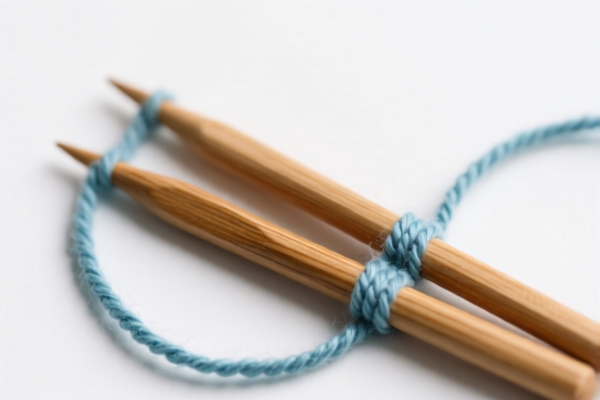
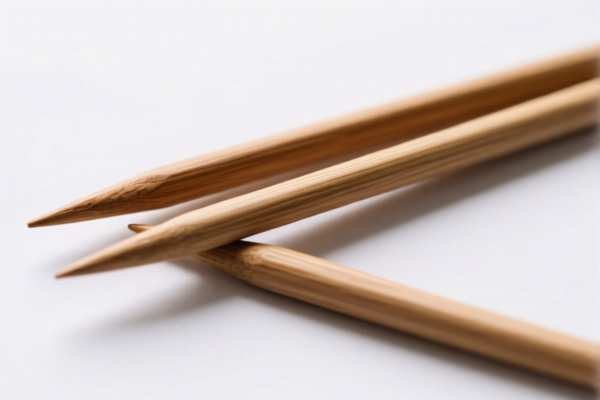
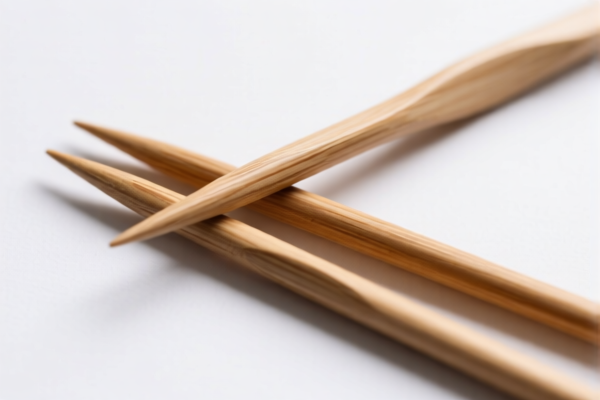

AI Analysis
🧶 Knitting Needles (Hand Knitting Needles & Crochet Hooks)
🌐 HS Code Reference & Customs Clearance Guide | 2026 Latest Tariff Analysis | Professional Clearance Strategy
📌 I. Product Definition & Classification: Do You Really Understand "Knitting Needles"?
Knitting needles are essential tools for the textile and handicraft industry. In international trade, they are generally classified as hand tools rather than machinery. The classification depends heavily on the material used, as the US Harmonized Tariff Schedule (HTS) strictly distinguishes between needles made of metal, plastic, bamboo, or other animal materials.
⚠️ Key Distinction Point:
- If made of metal, plastic, or wood/bamboo → Typically classified under Chapter 96 (Miscellaneous Manufactured Articles).
- If made of worked bone, horn, tortoise-shell, ivory, or coral → Classified under 9601 (Worked Ivory, Bone, etc.).
- Note: The provided<DATA>specifically covers needles made of animal carving materials (bone, horn, etc.). Standard metal or plastic needles usually fall under 9602.00.00.00 or 9604.00.00.00, but based on your specific<DATA>, we focus on the 9601.90 subheadings.
📦 II. HS Code Classification Details (Based on Provided )
The following HS codes are derived strictly from the provided <DATA>. These codes apply only if the knitting needles are crafted from worked animal materials such as bone, horn, hoof, whalebone, quill, or combinations thereof.
| HS Code | Product Description | Material Composition | Tax Rate (China Origin → US) |
|---|---|---|---|
9601.90.60.00 |
Worked animal carving materials: Of bone, horn, hoof, whalebone, quill | Bone, Horn, Hoof, Whalebone, Quill | 7.5% (Total) |
9601.90.80.00 |
Worked animal carving materials: Other | Tortoise-shell, Coral, Mother-of-Pearl, Ivory, or other non-specified animal materials | 11.2% (Total) |
🔍 Critical Clarification:
-9601.90.60.00: Applies specifically to Bone, Horn, Hoof, Whalebone, or Quill.
-9601.90.80.00: Acts as the catch-all for other animal materials like Ivory, Coral, Mother-of-Pearl, or Tortoise-shell.
- ⚠️ Warning: Standard metal, plastic, or wooden knitting needles do NOT belong here. They typically fall under9602.00.00.00(Worked or carved materials) or9604.00.00.00(Hand knitting needles of other materials), with different tax rates. Ensure your material is indeed "worked animal material" before using these codes.
💰 III. 2026 Latest Tariff Rate Breakdown (Detailed Tax Analysis)
✅ Applicable Country: United States (US)
✅ Origin: China (CN)
✅ Effective Time: Current US Trade Policy (Post-2025 Updates)
🎯 1. 9601.90.60.00 — Knitting Needles of Bone, Horn, Hoof, Whalebone, Quill
| Item | Detail |
|---|---|
| Base Tariff | 0.0% (ad valorem) |
| Additional Tariff (Section 301) | +7.5% |
| Total Tax Rate | 7.5% |
| Tax Calculation | CIF Value × 7.5% |
| De Minimis Eligibility | ❌ No (Subject to full duty assessment for commercial imports) |
| Legal Basis | US HTSUS 2026; Section 301 Tariff List |
📌 Explanation:
- The base duty for these specific animal-derived hand tools is 0%.
- The 7.5% is the Section 301 additional tariff applied to many Chinese-origin goods in Chapter 96.
- No IEEPA 10% surcharge is listed in the provided<DATA>for this specific code, so the total remains 7.5%.
🎯 2. 9601.90.80.00 — Knitting Needles of Other Animal Materials (e.g., Ivory, Coral, Mother-of-Pearl)
| Item | Detail |
|---|---|
| Base Tariff | 3.7% (ad valorem) |
| Additional Tariff (Section 301) | +7.5% |
| Total Tax Rate | 11.2% |
| Tax Calculation | CIF Value × 11.2% |
| De Minimis Eligibility | ❌ No |
| Legal Basis | US HTSUS 2026; Section 301 Tariff List |
📌 Explanation:
- The base duty is higher at 3.7% because materials like Coral, Ivory, or Mother-of-Pearl are considered more valuable or exotic.
- The Section 301 additional tariff of +7.5% applies uniformly.
- Total: 11.2%. This is significantly higher than bone/horn needles due to the base rate.
🛠️ IV. Customs Clearance Practical Advice (Avoid Pitfalls)
✅ 1. Required Documentation Checklist
| Document | Required? | Purpose |
|---|---|---|
| ✅ Product Specifications | ✔️ | Must clearly state material composition (e.g., "Made from Buffalo Horn"). |
| ✅ Material Declaration | ✔️ | Crucial for distinguishing between 9601.90.60.00 (Bone/Horn) and 9601.90.80.00 (Other). |
| ✅ Commercial Invoice | ✔️ | Must describe goods as "Hand Knitting Needles, Material: [Specific Animal Material]". |
| ✅ Packing List | ✔️ | Itemize quantity and value per needle or set. |
| ✅ Photos of Products | ✔️ | Show texture and material to prove it is not metal/plastic. |
| ❌ CITES Permits | ⚠️ Conditional | If needles contain Ivory, Coral, or Tortoise-shell, CITES permits may be required by USFWS. Check endangered species regulations! |
✅ 2. Declaration Tips (Key Mnemonic)
🔥 “Material Determines Code, Bone is 7.5%, Other is 11.2%!”
| Scenario | Correct HS Code | Common Mistake |
|---|---|---|
| Needles made of Buffalo Horn | 9601.90.60.00 |
Misclassifying as "Other" → Overpaying 3.7% base |
| Needles made of Coral | 9601.90.80.00 |
Misclassifying as "Bone" → Underpaying, leading to penalties |
| Needles made of Metal/Steel | NOT in <DATA> |
Using 9601 codes → Customs Rejection/Refusal |
| Needles made of Plastic | NOT in <DATA> |
Using 9601 codes → Customs Rejection/Refusal |
⚠️ Critical Warning:
- Do NOT use these HS codes for standard metal or plastic knitting needles. They belong to 9602.00.00.00 (Base rate often 0%, but check current 301 rates) or 9604.00.00.00.
- If you are importing Ivory or Endangered Species materials, ensure you have CITES documentation. Failure to do so can result in seizure, fines, and criminal charges.
✅ 3. Special Cases Handling
| Scenario | Handling Advice |
|---|---|
| Mixed Material Needles | If a needle is partly bone and partly plastic, classify based on the essential character (usually the bone/horn part if dominant) or consult a customs broker. |
| Ivory Needles | Highly Restricted. US bans commercial import of ivory with strict exceptions. Verify legality before shipping. |
| Coral Needles | May require USFWS permit. Coral is often regulated under CITES. |
| Whalebone Needles | Whalebone is often exempt from CITES if pre-convention, but US domestic laws (Marine Mammal Protection Act) may apply. Verify status. |
🌍 V. Global Market Comparison (2026)
| Market | Recommended HS Code (Animal Material) | Estimated Duty | Notes |
|---|---|---|---|
| 🇺🇸 USA | 9601.90.60.00 (Bone/Horn) 9601.90.80.00 (Other) |
7.5% (Bone/Horn) 11.2% (Other) |
Subject to Section 301 tariffs. |
| 🇨🇳 China | 9601.90.60.00 / 9601.90.80.00 |
0% - 5% | Depends on free trade agreements or domestic policy. |
| 🇪🇺 EU | 9601.10 (Ivory) 9601.90 (Other) |
Varies | Strict CITES enforcement. High duties on exotic materials. |
| 🇯🇵 Japan | 9601.00.000 |
6.5% | Standard duty for worked animal materials. |
📌 Conclusion:
- The US has a tiered tax structure based on the specific animal material.
- Bone/Horn is cheaper (7.5% total) than Coral/Ivory (11.2% total).
- Non-animal needles (metal/plastic) are not covered by this<DATA>and will be misclassified if forced into these codes.
📌 VI. Common Mistakes & Pitfalls (Lessons Learned)
❌ Mistake 1: Classifying Metal Knitting Needles under 9601.90.60.00
👉 Consequence: Customs will reject the declaration, leading to delays, re-inspection, and potential fines. Metal needles belong to 9602.00 or 9604.00.
❌ Mistake 2: Not declaring CITES-regulated materials (Ivory/Coral)
👉 Consequence: Seizure of goods, heavy fines, and possible legal action by USFWS.
❌ Mistake 3: Confusing Whalebone with Bone
👉 Consequence: Whalebone may have different regulatory requirements. Ensure accurate material description.
❌ Mistake 4: Using "Knitting Needles" as a generic description without material specification
👉 Consequence: Customs may not determine the correct subheading, leading to highest possible duty assessment.
✅ Correct Practice:
“Hand Knitting Needles, Made from Buffalo Horn, Model XYZ, 100% Natural Animal Material”
🎯 VII. Conclusion: Precise Classification Saves Money!
🎯 Remember:
🔹 “Bone/Horn = 7.5% | Other Animal Material = 11.2% | Metal/Plastic = NOT in this Data!”
🔹 “Material is King: Declare exactly what it’s made of to avoid customs nightmares!”
📌 Pro Tip:
If you are importing Ivory or Coral, consult a licensed customs broker and verify CITES compliance before shipping. The penalties for non-compliance are severe.
📣 Immediate Action:
📞 Contact a Customs Broker to verify material eligibility.
📄 Prepare Detailed Material Descriptions on your Commercial Invoice.
🚀 Ensure Smooth Clearance by Accurate HS Code Selection!
✨ Professional Customs Clearance Starts with Accurate Classification!
💼 Every Percent Saved is Pure Profit!
Customer Reviews
About HS Code Classification
The Harmonized System (HS) is an internationally standardized nomenclature developed by the World Customs Organization (WCO) to classify traded products. Over 200 countries use the HS system as the basis for customs tariffs, trade statistics, and import/export regulations.
Each HS code follows a hierarchical structure:
- Chapter (2 digits) — Broad category of goods (e.g., Chapter 84: Machinery and Mechanical Appliances)
- Heading (4 digits) — More specific grouping within the chapter
- Subheading (6 digits) — Internationally standardized breakdown, used by all WCO member countries
- National subdivisions (8-10 digits) — Country-specific extensions for further classification, such as US HTSUS 10-digit codes
Correct HS code classification is essential for smooth customs clearance, accurate duty payment, and compliance with trade regulations. Misclassification can lead to customs delays, overpayment of duties, or penalties.
When importing from CN to US, the applicable tariff rates may include:
- Most-Favored-Nation (MFN) rate — The standard duty rate applied to WTO members
- General rate — Applied to countries without trade agreements
- Trade remedy duties — Additional tariffs such as Section 301 (anti-dumping), Section 232 (national security), or countervailing duties
The information provided on this page is for reference purposes only. For official classification, please consult with your local customs authority or a licensed customs broker.