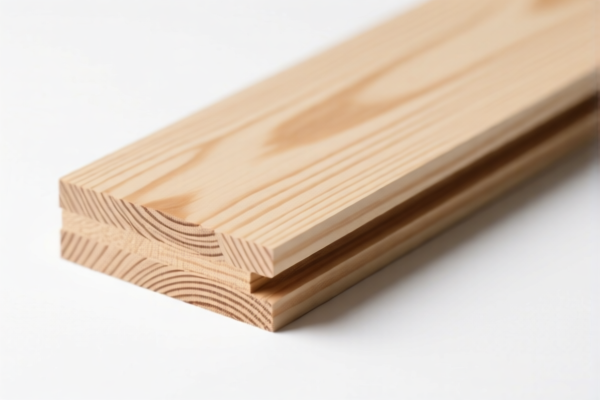
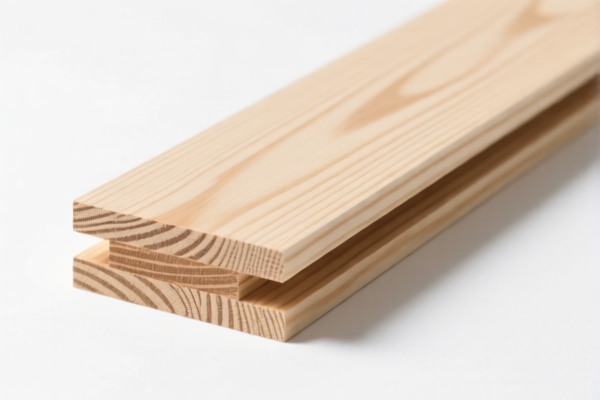
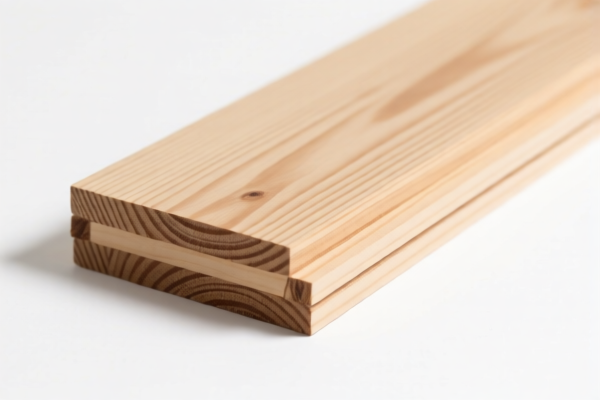
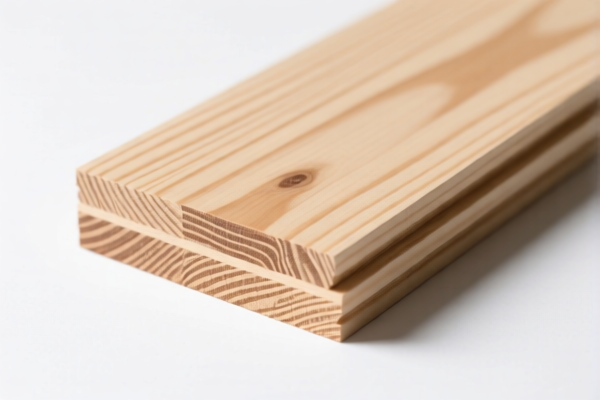
Knot free Edge glued Wood Board
CN → US| HS Code | Tariff Rate | Origin | Destination | Doc |
|---|---|---|---|---|
| 4408900151 | 35.0% | CN | US | Official Doc |
| 4408900197 | 35.0% | CN | US | Official Doc |
Product Images
AI Analysis
🌲 Knot-Free Edge Glued Wood Board (Wood Veneers & Sawn Wood)
🌐 HS Code Reference & Customs Clearance Guide | 2026 Latest Tariff Analysis | Professional Clearance Strategy
📌 I. Product Definition & Classification: Do You Really Understand "Knot-Free Edge Glued Wood"?
Knot-Free Edge Glued Wood Boards (often referred to as Finger-Jointed Boards or Solid Wood Panels) are high-quality interior finish materials produced by joining small pieces of wood together. In international trade, they are strictly regulated based on their thickness and processing state.
The core distinction lies in whether the product is considered a "Veneer/Sheet for Plywood" (thin, <6mm) or a "Sawn Wood Article" (thicker, structural/finish material). The data provided specifically addresses the category of thin sheets used for veneering, plywood, or laminated wood.
⚠️ Key Distinction Point:
- If the board is ≤ 6 mm thick, sliced, peeled, or sawn lengthwise, and is used as a veneer sheet or for plywood/laminated wood → It falls under Chapter 44 (Wood and Articles of Wood), specifically heading 4408.
- If the board is > 6 mm thick and used as solid furniture parts or flooring → It typically falls under different subheadings (e.g., 4409 or 4421), but this analysis is strictly limited to the provided data for ≤ 6mm sheets.
📦 II. HS Code Classification Details (2026 Latest Tariff Authority Comparison)
Based on the provided dataset, the products are classified under HS Code 4408.90, which covers "Sheets for veneering... of a thickness not exceeding 6 mm." The specific sub-codes depend on whether the wood is spliced/end-jointed or other.
| HS Code | Product Description | Application Scenario | Key Characteristic |
|---|---|---|---|
4408.90.01.51 |
Other Spliced or end-jointed: Other | Knot-free boards joined finger-joint or edge-glued, used as veneer sheets | ✅ Spliced/End-Jointed |
4408.90.01.97 |
Other Other: Other | Sheets not spliced/end-jointed, or other types not specified | ❌ Not Spliced/End-Jointed (or Other) |
🔍 Focus Reminder:
- The description explicitly states: "Sheets for veneering (including those obtained by slicing laminated wood), for plywood or for similar laminated wood... of a thickness not exceeding 6 mm."
- "Knot-free" implies high-quality selection, often resulting in spliced pieces to create a uniform appearance, making4408.90.01.51a strong candidate if finger-jointing is present.
- If the wood is sawn or sliced but not joined (spliced), it may fall under4408.90.01.97.
💰 III. 2026 Latest Tariff Rate Breakdown (Including Surcharges & Policy Add-ons)
✅ Applicable Country: United States (US)
✅ Country of Origin: China (CN) (Note: Tariff rates depend on origin; assuming CN for detailed tax calculation based on common context, though data shows 0%)
✅ Effective Date: Current 2026 Tariff Schedule
🎯 1. 4408.90.01.51 —— Spliced or End-Jointed Veneer Sheets (Thickness ≤ 6mm)
| Item | Content |
|---|---|
| Basic Tariff Rate | 0.0% (Ad Valorem) |
| Surtariff / Additional Duty | 0.0% |
| Total Tax Rate | 0.0% |
| Tax Calculation | CIF Value × 0.0% = $0 Duty |
| De Minimis Eligibility | N/A (0% duty means no de minimis conflict, but value still declared) |
| Legal Basis | HTSUS 4408.90.01.51 |
📌 Explanation:
- The provided data explicitly states: "Basic Tariff: 0.0%, Surtariff: 0.0%, Total Tax: 0.0%".
- This indicates that wood veneer sheets ≤ 6mm currently enjoy zero-duty access to the US market under this specific classification.
- Crucial Note: While the base rate is 0%, ensure the product does not trigger Section 301 tariffs if classified under different headings (e.g., furniture parts). However, for raw wood sheets/veneer, the 301 tariffs often do not apply in the same way as finished goods. Always verify with current USITC Footnotes.
🎯 2. 4408.90.01.97 —— Other Veneer Sheets (Thickness ≤ 6mm)
| Item | Content |
|---|---|
| Basic Tariff Rate | 0.0% (Ad Valorem) |
| Surtariff / Additional Duty | 0.0% |
| Total Tax Rate | 0.0% |
| Tax Calculation | CIF Value × 0.0% = $0 Duty |
| De Minimis Eligibility | N/A |
| Legal Basis | HTSUS 4408.90.01.97 |
📌 Explanation:
- Identical tariff treatment to the spliced version in this dataset.
- Both codes fall under the same 0% tariff bracket for import into the US.
🛠️ IV. Customs Clearance Practical Advice (Avoiding Pitfalls)
✅ 1. Required Documentation Checklist (No Exceptions)
| Document | Must Provide | Explanation |
|---|---|---|
| ✅ Product Specification Sheet | ✔️ | Must clearly state: Max Thickness (≤6mm), Wood Species, Processing Method (Sliced/Sawn/Peeled). |
| ✅ Photographs | ✔️ | Show the cross-section (to prove ≤6mm) and surface (spliced vs. continuous). |
| ✅ Commercial Invoice | ✔️ | Description must match HS Code exactly: "Wood Veneer Sheets, Spliced, ≤6mm Thick, [Wood Species]". |
| ✅ Packing List | ✔️ | Total weight and dimensions. |
| ✅ Proof of Origin | ✔️ | Certificate of Origin (if claiming preferential rates under any FTA, though rates are 0% anyway). |
| ✅ FSC/PEFC Certificate | (Optional but Recommended) | Many buyers and customs require proof of sustainable sourcing. |
✅ 2. Declaration Tips (Key Mantras)
🔥 “Thickness is King, Splicing Defines Subcode, Description Must Match!”
| Scenario | Correct Declaration | Wrong Practice |
|---|---|---|
| Finger-Jointed Board ≤6mm | 4408.90.01.51 (Spliced/End-Jointed) |
Declare as "Solid Wood Board" → Risk of misclassification. |
| Continuous Slice ≤6mm | 4408.90.01.97 (Other) |
Declare as "Spliced" → Incorrect subcode. |
| Board >6mm | NOT covered by this data | Forcing it into 4408.90 → Rejection/Seizure. Check Chapter 4409 or 4421. |
| Plywood Core | If it's a core layer for plywood, still 4408.90 | If it's a finished plywood panel, use 4412. |
✅ 3. Special Handling & Risk Management
| Situation | Handling Advice |
|---|---|
| Mixed Thickness Shipments | Separate shipments or clear line items. If ≤6mm and >6mm are mixed, customs may audit the whole lot. Ensure precise separation. |
| Wood Species Identification | Customs may require botanical names (Latin names). "Knot-free" is a quality grade, not a wood species. Specify if it’s Oak, Birch, Poplar, etc. |
| TSCA Title VI Compliance | For wood products, Formaldehyde Emissions Standards apply. Ensure you have TSCA compliance documentation, especially if used in interior finishing. |
| USDA/APHIS Inspection | Raw wood products may be subject to pest inspection. Ensure wood is properly heat-treated (HT mark) or debarked to avoid quarantine delays. |
🌍 V. Global Market Comparison (2026 Update)
| Country/Region | Recommended HS Code | Tariff Rate (CN Origin) | Certification Required | Remarks |
|---|---|---|---|---|
| 🇺🇸 USA | 4408.90.01.51 / .97 |
0.0% | TSCA Title VI, USDA Phytosanitary | Zero duty, but strict phytosanitary checks. |
| 🇨🇳 China | 4408.90.01 |
0% - 5% (varies) | N/A | Import duty depends on wood species. |
| 🇪🇺 EU | 4408.90 |
2.5% - 4% | FLEGT/EUTR (Timber Regulation) | Strict anti-deforestation laws. |
| 🇯🇵 Japan | 4408.90 |
2.0% - 3.2% | ISPM 15 (if packaging) | Focus on wood pest control. |
📌 Conclusion:
- The US market currently offers 0% duty for these specific wood veneer sheets, making them highly competitive.
- However, logistical and compliance costs (phytosanitary, TSCA) are the real hurdles, not tariffs.
📌 VI. Common Mistakes & Pitfalls (Lessons Learned)
❌ Mistake 1: Declaring a 7mm thick board as "Veneer Sheet" under 4408.90
👉 Consequence: Customs will reclassify it, potentially applying higher duties or rejecting the entry. Strictly ≤6mm.
❌ Mistake 2: Omitting "Spliced" or "End-Jointed" in description when finger-jointed
👉 Consequence: Wrong HS subcode (4408.90.01.97 instead of .51). While tax is same here, it creates data inconsistency and audit risks.
❌ Mistake 3: Ignoring TSCA Formaldehyde Limits
👉 Consequence: Product blocked at border. Knot-free wood often uses adhesives (for splicing) that must comply with EPA TSCA Title VI standards.
✅ Correct Approach:
"Wood Veneer Sheets, [Species Name], Sliced, Spliced (Finger-Jointed), Thickness: 4.5mm, TSCA Title VI Compliant, HT Mark Applied."
🎯 VII. Conclusion: Precision in Classification, Freedom in Trade
🎯 Remember the Mantra:
🔹 "Six Millimeters is the Line: Thin is Veneer, Thick is Board."
🔹 "Spliced Means .51, Others Mean .97, Both Are Zero Duty in the US Today."
🔹 "Check the Wood, Check the Glue, Check the Phytosanitary!"
📌 Pro Tip:
If your "Knot-Free Edge Glued Board" is thicker than 6mm (e.g., 8mm, 12mm for furniture), do not use these HS Codes. You must look at HS 4409 (Continuously Formed) or 4421 (Other Wood Articles). Misclassification can lead to significant penalties.
📣 Immediate Action:
📞 Verify thickness with your engineering team.
📄 Prepare TSCA compliance docs.
🚀 Ship with confidence knowing the 0% duty advantage!
✨ Professional Clearance Starts with Accurate Classification!
💼 Every Millimeter Matters!
Customer Reviews
About HS Code Classification
The Harmonized System (HS) is an internationally standardized nomenclature developed by the World Customs Organization (WCO) to classify traded products. Over 200 countries use the HS system as the basis for customs tariffs, trade statistics, and import/export regulations.
Each HS code follows a hierarchical structure:
- Chapter (2 digits) — Broad category of goods (e.g., Chapter 84: Machinery and Mechanical Appliances)
- Heading (4 digits) — More specific grouping within the chapter
- Subheading (6 digits) — Internationally standardized breakdown, used by all WCO member countries
- National subdivisions (8-10 digits) — Country-specific extensions for further classification, such as US HTSUS 10-digit codes
Correct HS code classification is essential for smooth customs clearance, accurate duty payment, and compliance with trade regulations. Misclassification can lead to customs delays, overpayment of duties, or penalties.
When importing from CN to US, the applicable tariff rates may include:
- Most-Favored-Nation (MFN) rate — The standard duty rate applied to WTO members
- General rate — Applied to countries without trade agreements
- Trade remedy duties — Additional tariffs such as Section 301 (anti-dumping), Section 232 (national security), or countervailing duties
The information provided on this page is for reference purposes only. For official classification, please consult with your local customs authority or a licensed customs broker.