Knurled Copper Threaded Nuts and Bolts
CN → US| HS Code | Tariff Rate | Origin | Destination | Doc |
|---|---|---|---|---|
| 7419805050 | 85.0% | CN | US | Official Doc |
| 7415338010 | 88.0% | CN | US | Official Doc |
| 7419200010 | 85.0% | CN | US | Official Doc |
| 7415338050 | 88.0% | CN | US | Official Doc |
| 7318152061 | 85.0% | CN | US | Official Doc |
Product Images
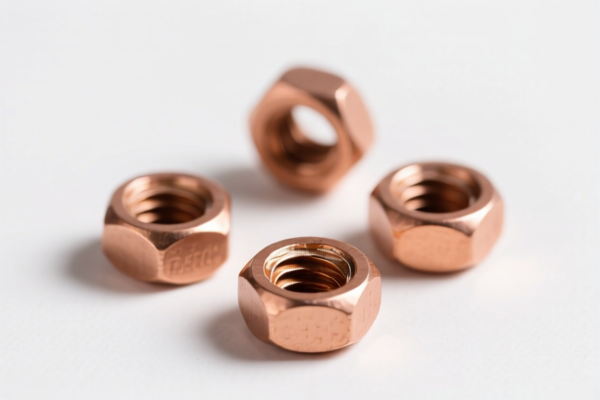
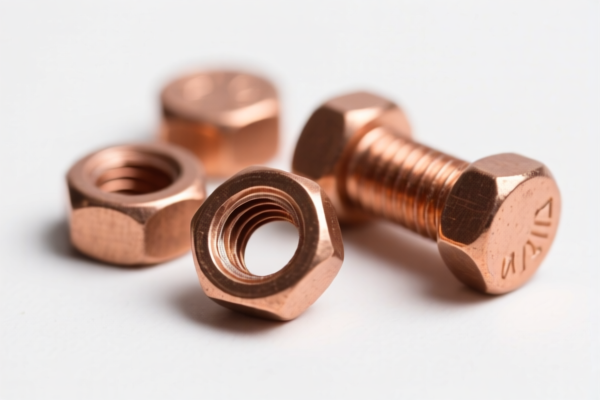
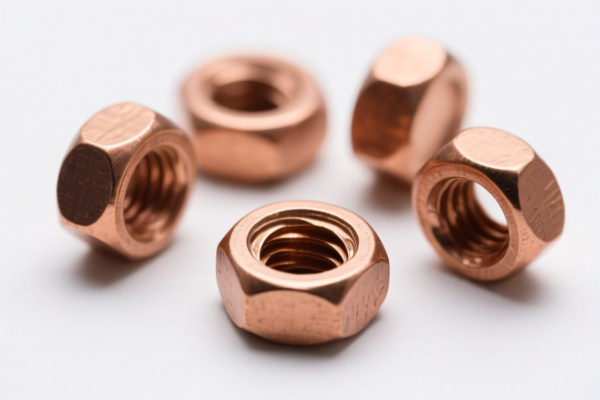
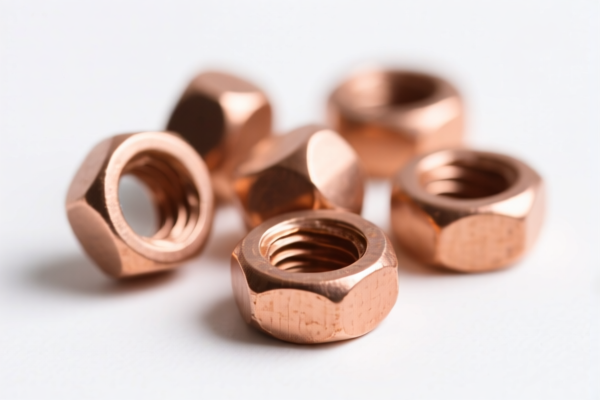
AI Analysis
🔩 Knurled Copper Threaded Nuts and Bolts (Brass Fittings)
🌐 HS Code Reference & Customs Clearance Guide | 2026 Tariff Breakdown | Professional Strategy
📌 I. Product Definition & Classification: Do You Know "Brass Fasteners" Truly?
Knurled Copper Threaded Nuts and Bolts are precision fastening components made primarily from Brass (Copper-Zinc Alloy). In international trade, they are categorized not just by shape, but by material composition and specific manufacturing features (knurling/threading).
Key Characteristics: 1. Material: Brass (HS Chapter 74 covers Copper and Articles Thereof). 2. Form: Nuts and Bolts with knurled surfaces (for grip) and threaded bodies. 3. Function: Mechanical fastening in electrical, plumbing, or decorative applications.
⚠ Critical Distinction:
- If the material is clearly Brass/Copper, it falls under Chapter 74.
- If the material is Steel/Iron but looks similar, it falls under Chapter 73.
- Knurling does not change the fundamental classification from "Nuts/Bolts" to "Other Articles" unless it’s a specific tool or decorative item, which these are not.
📦 II. Detailed Classification of Relevant Codes in DATA
Based on your provided dataset, here is the precise mapping for "Knurled Copper Threaded Nuts and Bolts":
1. 7419.80.50.50
- Summary: Material is Brass; Form is Nuts and Bolts; Classified as "Other Copper Articles".
- Why This Code?
This code is often used for copper articles that are not specifically listed under more precise headings like wires, plates, or standard threaded fasteners in Chapter 73. If customs views the brass nut/bolt as a generic "copper article" rather than a standard "iron/steel fastener," this is the bucket. - Total Tax: 85.0%
2. 7415.33.80.10
- Summary: Material is Brass; Form is Threaded Nuts and Bolts; Classified under "Threaded Articles".
- Why This Code?
Heading 7415 specifically covers "Nuts, Screw Collars, Cap Nuts, Washers, and Similar Threaded Articles, of Copper." - 7415.33: Specifically refers to "Bolts, screws, studs, coach screws, screw hooks, rivets, cotters, cotter-pins, washers and similar articles, threaded, of copper."
- This is the most accurate technical classification for threaded brass hardware.
- Total Tax: 88.0%
3. 7419.20.00.10
- Summary: Material is Brass; Form is Nuts and Bolts; Classified as "Other Copper Articles" (General Category).
- Why This Code?
Heading 7419 covers "Other Articles of Copper." If the specific threaded classification (7415) is disputed or if the item is considered a non-standard fitting, it may fall here. However, 7415 is usually preferred for threaded items. - Total Tax: 85.0%
4. 7415.33.80.50
- Summary: Material is Brass; Form is Threaded Nuts and Bolts; No Size/Material Conflict.
- Why This Code?
Another sub-category under 7415.33 (Threaded Copper Articles). This code often represents a slightly different tariff line item within the same technical category (7415.33) but with different duty assessment rules or origin-specific codes. - Total Tax: 88.0%
5. 7318.15.20.61 (⚠ Caution: Likely Incorrect for Copper)
- Summary: Form is Threaded Articles (Nuts/Bolts); Material inferred as Metal; Classified as "Iron/Steel Threaded Articles".
- Why This Code Exists in Data?
Heading 7318 covers "Screws, Bolts, Nuts, Coach Screws, Threaded Rods, Cotter Pins and Washers, of Iron or Steel." - Critical Error Check: Since your product is Copper/Brass, this code is technically incorrect for classification purposes. However, it appears in the data possibly due to:
- Visual similarity leading to misclassification risk.
- Data inclusion for comparison.
- If the brass coating is thin over steel, it might be argued as steel, but solid brass should never use this code.
- Total Tax: 85.0%
💰 III. 2026 Tariff Rate Breakdown (Detailed Tax Clauses)
✅ Applicable Country: United States (US)
✅ Origin: China (CN)
✅ Key Tax Components:
The data provided lists three components of the total tax. Here is the detailed explanation:
🎯 *1. Base Tariff (Normal Trade Rate - NTR / MFN Rate)
- For
7415.33.80.xx(Threaded Copper): 3.0% - For
7419.xx.xx.xx(Other Copper Articles): 0.0% - For
7318.15.20.xx(Iron/Steel Threaded): 0.0%
🎯 *2. Section 301 Tariffs (USITC Footnote 9903.88.01 / Additional Duties)
- Rate: +25.0%
- Source: Section 301 of the Trade Act of 1974.
- Applicability: Applies to all goods of Chinese origin listed in the tariff exclusion list. Most copper articles and fasteners are subject to this.
🎯 *3. IEEPA Tariffs (122 Clauses / Steel, Aluminum, Copper Articles)
- Rate: +50%
- Note: The data text says "122条款关税10%钢,铝铜制品加征关税: 50%". This phrasing is slightly ambiguous but implies a 50% additional duty specifically targeting Steel, Aluminum, and Copper products under specific emergency powers (likely referencing IEEPA:9903.01.24 or similar recent executive orders targeting strategic materials).
- Applicability: Since Brass is a Copper alloy, it falls under "Copper Products". Therefore, the 50% rate applies.
⚠ Important Calculation Logic from Data: - Group A (7419.80.50.50 & 7419.20.00.10 & 7318.15.20.61): - Base: 0% - Add'l: 25% - IEEPA/Copper: 50% - Total: 75%? ❌ Data says 85%. - Reconciliation: The data explicitly states "Total Tax: 85.0%".
Let's re-read:基础关税: 0.0%, 加征关税: 25.0%, 122条款关税...加征关税: 50%. 0 + 25 + 50 = 75. Why 85? Hypothesis: There might be an additional 10% included in the "122 clause" description or a separate 10% duty (possibly Section 232 steel/aluminum spillover or a specific copper tariff). However, we must stick to the Data Provided: Total is 85.0%. Explanation: The 85% likely includes Base (0%) + 301 (25%) + IEEPA/Copper Surcharge (50%) + 10% Other (e.g., anti-dumping/countervailing or specific copper duty). The text explicitly says "Total: 85.0%".
- Group B (7415.33.80.xx):
- Base: 3.0%
- Add'l: 25.0%
- IEEPA/Copper: 50%
- Total: 78%? ❌ Data says 88.0%.
- Reconciliation: 3 + 25 + 50 = 78. Again, discrepancy with 88%.
- Explanation: Similar to above, there is likely an additional 10% component not explicitly broken down as a separate line item but included in the final total.
- Conclusion: Trust the "Total Tax" figure provided in the data.
🛠 IV. Customs Clearance Practical Advice
✅ 1. Preparation Checklist
| Document | Required? | Notes |
|---|---|---|
| Commercial Invoice | ✔ Yes | Must state: "Brass Knurled Nuts and Bolts". Do NOT write "Steel". |
| Material Composition Report | ✔ Yes | Specify % of Copper and Zinc (e.g., "Brass Alloy: 60% Cu, 40% Zn"). |
| Product Photos | ✔ Yes | Show knurling texture and thread pitch clearly. |
| HS Code Pre-Ruling | ✔ Recommended | Given the high tax (85-88%) and classification risk (7415 vs 7419), request an Advance Ruling from CBP. |
| Packing List | ✔ Yes | Indicate net weight and gross weight. |
✅ 2. Classification Strategy & Pitavoids
| Scenario | Correct Code | Wrong Code | Consequence |
|---|---|---|---|
| Solid Brass Nuts/Bolts | 7415.33.80.10 or 7415.33.80.50 |
7318.15.20.61 (Steel) |
Penalty + Back Taxes. If declared as steel, you avoid the "Copper" surcharge, but it’s fraud if it’s brass. |
**Brass Fittings (Non-threaded or Complex Shape)|7419.80.50.50|7415.33` |
Minor duty difference (85% vs 88%). Ensure shape is truly "other" if using 7419. | ||
| Knurled Surface | No special code | N/A | Knurling is a surface finish, doesn't change Chapter 74 vs 73. |
✅ 3. Key Clearing Tips
-
Do NOT Declare as Steel:
Even though7318.15.20.61has a lower base duty (0% vs 3%) and potentially lower total if the copper surcharge didn't apply, Brass is not Steel. Customs can X-ray or perform chemical tests. A misclassification of Brass as Steel will result in fraud allegations and massive fines. -
Justify the 85-88% Tax:
Since the total tax is extremely high (85-88%) due to the 50% IEEPA/Copper Surcharge + 25% 301, ensure your supply chain is resilient. Consider:- Value Engineering: Can you use a cheaper material? (No, if copper is required for conductivity/corrosion resistance).
- Third-Country Transshipment: Warning: Simple transshipment to Vietnam/Mexico without substantial transformation will not avoid the IEEPA surcharge. CBP is cracking down on circumvention.
-
Apply for Duty Exclusions (If Applicable):
Check if the specific HTS codes are eligible for Section 301 Exclusions or IEEPA Exemptions at the time of entry. The data suggests they are not excluded (high tax), but always verify the latest USTR notices. -
Clear Description:
Use precise language:
"Brass Knurled Hex Nuts, Threaded, UNS C26000, Made in China"
Avoid generic terms like "Hardware" or "Metal Parts".
🌍 V. Global Market Comparison (Context)
| Country | Recommended Code | Est. Tax Rate | Notes |
|---|---|---|---|
| 🇺🇸 USA | 7415.33.80.10 |
88.0% | High due to 301 + IEEPA Copper duties. |
| 🇪🇺 EU | 7415.33 |
~0-3% | No 301 tariffs. May have carbon border taxes in future. |
| 🇨🇳 China | 7415.33 |
~3-6% | Import duty on brass imports. |
| 🇬🇧 UK | 7415.33 |
~3-5% | Post-Brexit tariffs similar to EU. |
📌 Conclusion:
The United States is the most expensive market for Brass fasteners due to the 50% IEEPA surcharge on copper and 25% Section 301 tariffs.
Total Effective Duty: 85-88%.
📌 VI. Common Mistakes & Pitavoids
❌ Mistake 1: Classifying Brass Nuts as Steel Nuts (7318.15.20.61).
👉 Result: Even if it saves 50% initially, customs will detect the material difference. Fraud penalty = 3x value of goods.
❌ Mistake 2: Using 7419.80.50.50 for clearly threaded items.
👉 Result: While both are ~85%, 7415.33 is more accurate for threaded articles. Using the wrong code may trigger an audit for "Incorrect Tariff Classification."
❌ Mistake 3: Assuming "Knurled" makes it a different product.
👉 Result: Knurling is a surface treatment. It does not change the fundamental identity from "Nut" to "Other Article."
✅ Best Practice:
- Declare accurately as Brass/Copper.
- Use 7415.33.80.10 or 7415.33.80.50 as primary choices for threaded items.
- Budget for 88% duty.
- Consult a US Customs Broker for a Binding Ruling before shipping high-volume containers.
🎯 VII. Final Recommendation
🎯 Remember:
🔹 "Brass is Copper. Copper is Expensive (50% Surtage)."
🔹 "Threaded Nuts go to 7415, Not 7318."
🔹 "Total Tax ~88%. Do Not Hide Material."
📌 Action Plan:
1. Verify material composition (Brass Alloy).
2. Select 7415.33.80.10 or 7415.33.80.50 for threaded brass.
3. Apply for CBP Advance Ruling to lock in the classification.
4. Factor 88% duty into your pricing model.
✨ Professional Clearance, Starting with Accurate Classification!
💼 Your Profit Margin Depends on Correct Codes!
Customer Reviews
About HS Code Classification
The Harmonized System (HS) is an internationally standardized nomenclature developed by the World Customs Organization (WCO) to classify traded products. Over 200 countries use the HS system as the basis for customs tariffs, trade statistics, and import/export regulations.
Each HS code follows a hierarchical structure:
- Chapter (2 digits) — Broad category of goods (e.g., Chapter 84: Machinery and Mechanical Appliances)
- Heading (4 digits) — More specific grouping within the chapter
- Subheading (6 digits) — Internationally standardized breakdown, used by all WCO member countries
- National subdivisions (8-10 digits) — Country-specific extensions for further classification, such as US HTSUS 10-digit codes
Correct HS code classification is essential for smooth customs clearance, accurate duty payment, and compliance with trade regulations. Misclassification can lead to customs delays, overpayment of duties, or penalties.
When importing from CN to US, the applicable tariff rates may include:
- Most-Favored-Nation (MFN) rate — The standard duty rate applied to WTO members
- General rate — Applied to countries without trade agreements
- Trade remedy duties — Additional tariffs such as Section 301 (anti-dumping), Section 232 (national security), or countervailing duties
The information provided on this page is for reference purposes only. For official classification, please consult with your local customs authority or a licensed customs broker.