Kraft Paper Bag
CN → US| HS Code | Tariff Rate | Origin | Destination | Doc |
|---|---|---|---|---|
| 4819400020 | 35.0% | CN | US | Official Doc |
| 4819400040 | 35.0% | CN | US | Official Doc |
Product Images
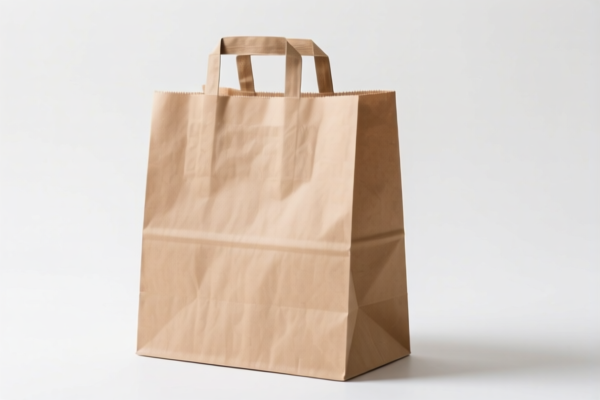
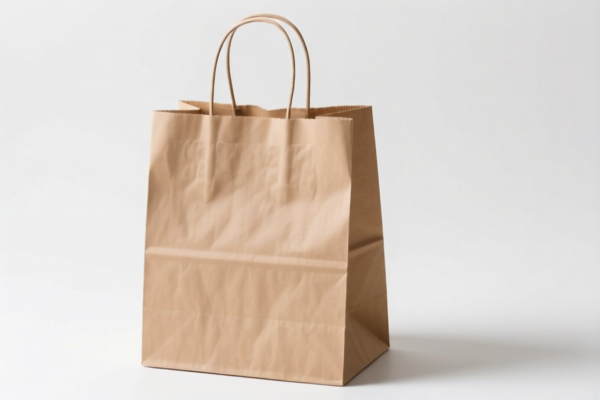
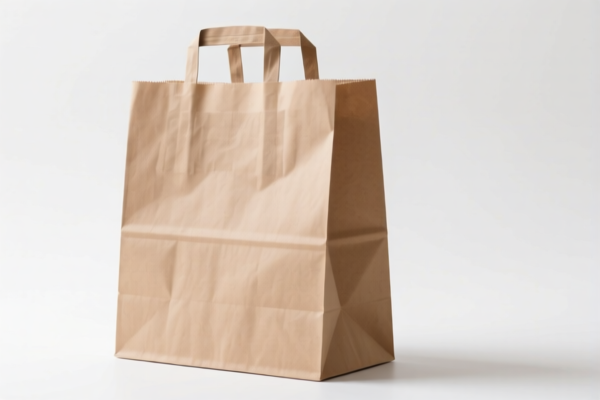

AI Analysis
📦 Kraft Paper Bags & Packaging (Paper Sacks and Multiwall Bags)
🌐 HS Code Reference & Customs Clearance Guide | 2026 Latest Tariff Analysis | Professional Clearance Strategy
📌 I. Product Definition: What Exactly is a "Kraft Paper Bag"?
Kraft paper bags are sturdy, durable packaging containers made from wood pulp processed via the Kraft process. In international trade, the classification depends heavily on the type of container and specific use:
1. General Sacks and Bags: Including multiwall bags, conical bags, and standard kraft sacks used for bulk goods (cement, flour, chemicals). 2. Office/Retail Paperboard Items: Box files, letter trays, or small retail bags (if distinct from bulk sacks).
⚠️ Key Distinction Point:
- If the item is a "Sack," "Bag," or "Multiwall Bag" for bulk packing (even if made of paper/paperboard), it generally falls under 4819.40.
- If it is a "Box," "Case," or "Tray" for storage/display, it may fall under 4819.10 or 4819.20.
- Based on your provided DATA, we are focusing strictly on the "Sacks and Bags" category under 4819.40.
📦 II. HS Code Classification Details (2026 Latest Tariff Authority Comparison)
| HS Code | Product Description | Application Scenario | Key Feature |
|---|---|---|---|
4819.40.00.20 |
Other sacks and bags, including cones; Shipping sacks and multiwall bags, other than grocers' bags | Bulk cement, industrial chemicals, agricultural products, multiwall paper bags | ✅ Bulk/Industrial Use |
4819.40.00.40 |
Other sacks and bags, including cones; Other | Specialty kraft bags, non-grocer bags not fitting other specific subheadings | ✅ General Purpose |
🔍 Critical Note:
- Both codes fall under Heading 4819.40: "Other sacks and bags... other than grocers' bags."
- "Grocers' bags" (small retail shopping bags) are typically classified under 4819.10 or 4819.20, which have different tax treatments.
- Your data explicitly excludes "grocers' bags," so this guide focuses only on bulk/industrial kraft sacks and multiwall bags.
💰 III. 2026 Latest Tariff Rate Breakdown (Including Surtaxes)
✅ Applicable Country: United States (US)
✅ Country of Origin: China (CN)
✅ Effective Date: Current (Based on provided data)
🎯 1. 4819.40.00.20 – Shipping Sacks & Multiwall Bags (Bulk)
| Item | Content |
|---|---|
| Base Tariff | 0.0% (ad valorem) |
| Surtax (Section 301) | +25.0% |
| Total Tax Rate | 25.0% |
| Tax Calculation | CIF Value × 25% |
| Legal Basis | USITC Footnote related to 4819.40.00.20 |
📌 Explanation:
- Although the base tariff is 0%, the 25% surtax applies due to trade measures (Section 301) on certain Chinese-origin goods.
- This is a flat 25% additional duty on top of the base rate.
- Total Effective Rate: 25%.
🎯 2. 4819.40.00.40 – Other Sacks and Bags
| Item | Content |
|---|---|
| Base Tariff | 0.0% (ad valorem) |
| Surtax (Section 301) | +25.0% |
| Total Tax Rate | 25.0% |
| Tax Calculation | CIF Value × 25% |
| Legal Basis | USITC Footnote related to 4819.40.00.40 |
📌 Explanation:
- Identical tax treatment to4819.40.00.20.
- Applies to kraft bags that are not shipping sacks, multiwall bags, or cones, but still not grocers' bags.
🛠️ IV. Customs Clearance Practical Advice (Avoid Pitfalls)
✅ 1. Documentation Checklist (Mandatory)
| Document | Required | Notes |
|---|---|---|
| ✅ Commercial Invoice | ✔️ | Must clearly state "Kraft Paper Sacks" or "Multiwall Bags." |
| ✅ Packing List | ✔️ | Specify quantity, weight, and dimensions. |
| ✅ Product Description | ✔️ | Detailed description: Material (e.g., "100% Kraft Paper"), Usage (e.g., "For Cement Packaging"), Wall Count (e.g., "3-Ply Multiwall"). |
| ✅ Certificate of Origin | ✔️ | If applicable for potential future exemptions (though currently 25% surtax likely applies). |
| ✅ Photos of Goods | ✔️ | Show the bag structure (single wall vs. multiwall) and any printing/lining. |
✅ 2. Declaration Tips (Key Mnemonic)
🔥 "Specify Usage, Avoid 'Grocer,' Surtax is 25%!"
| Scenario | Correct Declaration | Wrong Declaration |
|---|---|---|
| Bulk Cement Bags | 4819.40.00.20 "Shipping Sacks" |
"Grocers' Bags" (Wrong Code) |
| Multiwall Chemical Bags | 4819.40.00.20 "Multiwall Bags" |
"Cartons" (Wrong Code) |
| Small Retail Kraft Bags | NOT Covered in DATA | Misclassified as 4819.40 → Potential Penalty |
| Office Paper Trays | NOT Covered in DATA | Misclassified as 4819.40 → Wrong Code |
📌 Warning:
- Do not describe these as "Grocers' Bags" (small shopping bags). Grocers' bags are under 4819.10/20 and may have different tax rates.
- Your DATA explicitly covers "Other sacks and bags... other than grocers' bags." Ensure your invoice reflects bulk/industrial use.
✅ 3. Special Considerations
| Situation | Handling Advice |
|---|---|
| Lined Bags (PE/PP lining) | Still classified under 4819.40 if the primary material is paper/paperboard. Declare material composition clearly. |
| Printed Bags | Printing does not change the HS Code, but must be described accurately. |
| Multiwall vs. Single Wall | Both fall under 4819.40.00.20 if they are "Shipping sacks and multiwall bags." |
| Origin | If the product is not from China, the 25% surtax may not apply. Verify origin carefully. |
🌍 V. Global Market Comparison (2026 Latest)
| Country/Region | Recommended HS Code | Tariff Rate | Notes |
|---|---|---|---|
| 🇺🇸 USA (China Origin) | 4819.40.00.20 / .40 |
25% (Surtax) | Base 0% + 25% Surtax |
| 🇨🇳 China (Import) | 4819.40 |
Varies (Usually 5-10%) | Check latest Chinese tariff schedule |
| 🇪🇺 EU | 4819.40 |
0% - 3% | Generally low tariff for paper packaging |
| 🇬🇧 UK | 4819.40 |
0% - 3% | Post-Brexit rates similar to EU |
| 🇦🇺 Australia | 4819.40 |
5% | Standard MFN rate |
📌 Conclusion:
- USA imposes a 25% additional tariff on these items from China.
- Other markets generally have lower or zero tariffs for paper packaging.
📌 VI. Common Mistakes & Pitfalls (Lessons Learned)
❌ Mistake 1: Declaring "Kraft Paper Bags" as "Grocers' Bags"
👉 Consequence: Wrong HS Code (4819.10/20 vs. 4819.40). If the actual use is bulk, customs may reclassify and apply different duties or penalties.
❌ Mistake 2: Ignoring the 25% Surtax
👉 Consequence: Underpayment of duties. The 25% is not optional; it's mandatory for China-origin goods under current US trade policy.
❌ Mistake 3: Vague Description "Paper Bags"
👉 Consequence: Customs may detain the shipment for further inspection. Be specific: "Multiwall Kraft Paper Sacks for Cement."
❌ Mistake 4: Confusing "Boxes" with "Bags"
👉 Consequence: Boxes fall under 4819.10/20. If you declare a box as a bag, it’s a misclassification.
✅ Correct Approach:
"Multiwall Kraft Paper Sacks, 3-ply, PE-lined, for industrial chemical packaging, HS Code 4819.40.00.20, Origin: China."
🎯 VII. Conclusion: Professional Declaration, Cost Control
🎯 Remember the Mantra:
🔹 "Bulk Sacks = 4819.40, Grocers' Bags = Different Code"
🔹 "China Origin = 25% Surtax, No Exemption"
🔹 "Describe Clearly, Avoid Delays"
📌 Pro Tip:
If your kraft bags are multiwall and used for shipping (e.g., cement, flour), they fall under 4819.40.00.20.
If they are other types of bags (not grocers' bags), they fall under 4819.40.00.40.
Both carry a 25% surtax for China-origin goods.
📣 Immediate Action:
📞 Verify Product Type: Is it a "Shipping Sack" or "Other Bag"?
📄 Prepare Accurate Invoice: Specify "Kraft Paper Sacks" and exclude "Grocers' Bags."
💰 Budget for 25% Surtax: Factor this into your landed cost calculation.
✨ Professional Customs Clearance Starts with Accurate Classification!
💼 Your Cost Efficiency Depends on Precise Declaration!
Customer Reviews
About HS Code Classification
The Harmonized System (HS) is an internationally standardized nomenclature developed by the World Customs Organization (WCO) to classify traded products. Over 200 countries use the HS system as the basis for customs tariffs, trade statistics, and import/export regulations.
Each HS code follows a hierarchical structure:
- Chapter (2 digits) — Broad category of goods (e.g., Chapter 84: Machinery and Mechanical Appliances)
- Heading (4 digits) — More specific grouping within the chapter
- Subheading (6 digits) — Internationally standardized breakdown, used by all WCO member countries
- National subdivisions (8-10 digits) — Country-specific extensions for further classification, such as US HTSUS 10-digit codes
Correct HS code classification is essential for smooth customs clearance, accurate duty payment, and compliance with trade regulations. Misclassification can lead to customs delays, overpayment of duties, or penalties.
When importing from CN to US, the applicable tariff rates may include:
- Most-Favored-Nation (MFN) rate — The standard duty rate applied to WTO members
- General rate — Applied to countries without trade agreements
- Trade remedy duties — Additional tariffs such as Section 301 (anti-dumping), Section 232 (national security), or countervailing duties
The information provided on this page is for reference purposes only. For official classification, please consult with your local customs authority or a licensed customs broker.