L grade Natural Rubber
CN → US| HS Code | Tariff Rate | Origin | Destination | Doc |
|---|---|---|---|---|
| 4016993510 | 35.0% | CN | US | Official Doc |
| 4001220015 | 35.0% | CN | US | Official Doc |
| 4001100000 | 35.0% | CN | US | Official Doc |
Product Images
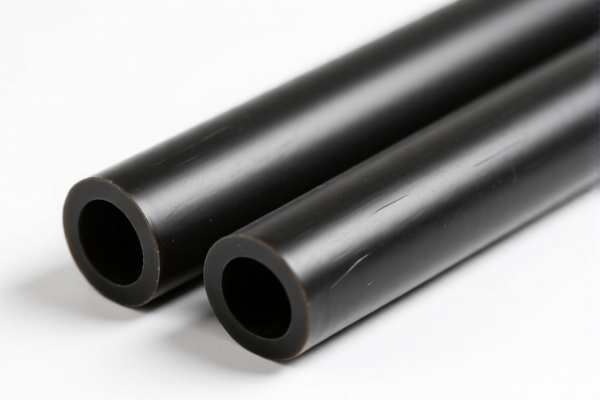
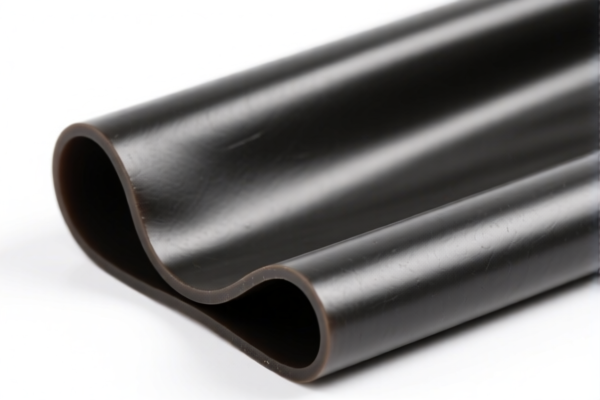
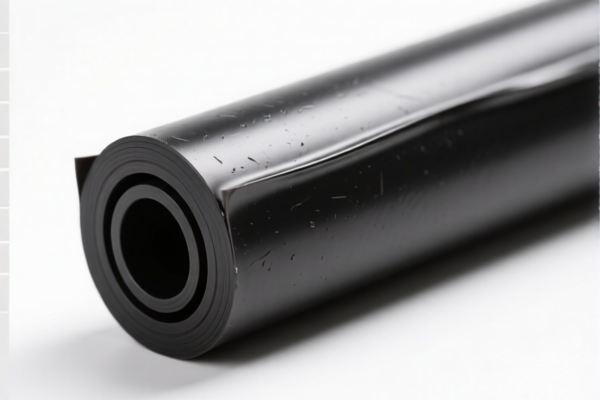
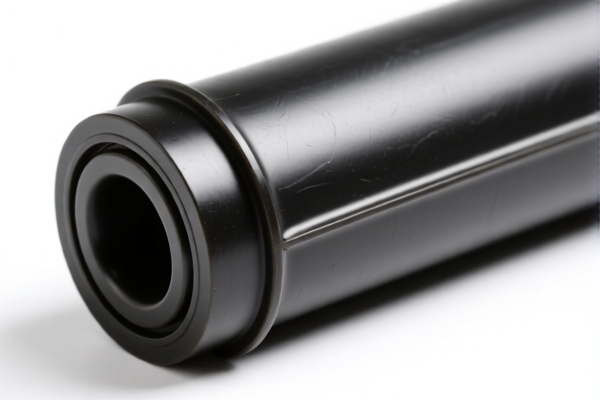
AI Analysis
🌿 L-Grade Natural Rubber: The "Gold Standard" for High-Performance Elastomers
🌐 HS Code Classification & Customs Clearance Guide | 2026 Latest Tariff Analysis | Professional Clearance Strategy
📌 I. Product Definition & Classification: What Exactly is "L-Grade" Natural Rubber?
L-Grade Natural Rubber represents a premium tier of Natural Rubber (NR) that is wholly derived from natural sources (latex of Hevea brasiliensis or other rubber-producing plants), specifically processed to meet the strict Grade L physical and chemical standards.
In international trade, it is crucial to distinguish L-Grade from other types of natural rubber based on origin and processing state:
1. Pure Natural Origin (Grade L)
- Source: 100% natural latex, coagulated and processed (smoked sheets, latex concentrate, etc.) to meet the specific "Grade L" specifications (e.g., low residue non-rubber content, high purity).
- Classification: Falls strictly under Chapter 40, specifically heading 4001 ("Natural rubber, balata, gutta-percha, guayule, chicle and similar natural gums in primary forms or in plates, sheets or strips").
- Key HS Code: 4001.22.00.15 (Specific to L-Grade Natural Rubber).
2. Generic Natural Rubber (Non-Grade L or Other Forms)
- Source: Natural rubber that does not meet Grade L specifications, or other forms like crude latex.
- Classification: Also under Chapter 40, but potentially different subheadings based on form.
- Key HS Codes:
- 4001.10.00.00: For natural latex rubber (liquid form).
- 4016.99.35.10: For natural rubber products in non-primary forms (e.g., manufactured articles, mats, gaskets), unless they are in primary form (blocks, sheets).
⚠️ Critical Distinction:
- If the product is "Grade L", it is specifically classified under 4001.22.00.15.
- If it is generic natural rubber (e.g., TSR 20, TSR 5) or latex, it falls under 4001.10.00.00 or other 4001 subheadings.
- If it is a manufactured item (not raw material), it may fall under 4016 (Other articles of vulcanized rubber other than hard rubber).
- Never confuse "L-Grade Natural Rubber" with "Synthetic Rubber" (Chapter 40, heading 4002) or "Vulcanized Rubber Articles" (Chapter 40, heading 4016) unless explicitly stated.
📦 II. HS Code Classification Details (2026 Latest Tariff Authority Cross-Reference)
| HS Code | Product Description | Application Scenario | Contains Synthetic? | Primary Form? |
|---|---|---|---|---|
4001.22.00.15 |
L-Grade Natural Rubber, matching Grade L and natural rubber material requirements | High-end tires, medical gloves, precision seals | ❌ No (100% Natural) | ✅ Yes (Primary Form: Sheets/Blocks) |
4001.10.00.00 |
Natural latex rubber, material is natural latex, form is rubber | Liquid latex for dipping, coating, or foam | ❌ No (100% Natural) | ✅ Yes (Liquid Primary Form) |
4016.99.35.10 |
Natural latex rubber, material is natural rubber, form is primary form (Note: Data anomaly - typically 4016 is non-primary) | See Clarification Below | ❌ No (100% Natural) | ❌ Likely Non-Primary (Article) |
🔍 Data Clarification Note:
- The HS Code4016.99.35.10in the provided data describes "Natural latex rubber... form is primary form." This is technically contradictory because 4016 is for "Other articles of vulcanized rubber," which implies non-primary form (manufactured articles).
- Correction/Advice: If the product is truly in primary form (raw blocks/sheets), it should be 4001.xx.xx. If it is a manufactured article (e.g., rubber mats, gaskets), it is 4016. The provided data4016.99.35.10likely refers to a specific manufactured natural rubber article despite the description.
- For L-Grade Natural Rubber, the correct and specific code is4001.22.00.15.
💰 III. 2026 Latest Tariff Rate Breakdown (Including Surtaxes, Policy Surcharges)
✅ Applicable Country: United States (US)
✅ Origin: China (CN)
✅ Effective Date: November 10, 2025 (and subsequent imports)
🎯 1. 4001.22.00.15 —— L-Grade Natural Rubber (Grade L, Natural Origin)
| Item | Content |
|---|---|
| Base Tariff Rate | 0% (ad valorem) |
| USITC Surtax | +25% (under Section 301) |
| IEEPA Surtax | +10% (For Chinese/HK products, effective Nov 10, 2025) |
| Total Tariff Rate | 35% |
| Tax Calculation | CIF Value × 35% |
| De Minimis Exemption? | ❌ Not Eligible (deny_de_minimis) |
| Legal Basis Path | IEEPA:9903.01.25 → IEEPA:9903.01.24 → USITC:4001.22.00.15 → FOOTNOTE:9903.88.01 |
📌 Explanation:
- "USITC Surtax 25%": Under U.S. Trade Law Section 301, specific Chinese rubber products are subject to additional duties.
- "IEEPA 10%": The International Emergency Economic Powers Act surcharge for Chinese-origin goods.
- Total 35% is a high tariff, significantly impacting cost.
- No De Minimis: Small shipments cannot bypass this tariff.
🎯 2. 4001.10.00.00 —— Natural Latex Rubber (Liquid Form)
| Item | Content |
|---|---|
| Base Tariff Rate | 0% |
| USITC Surtax | +25% |
| IEEPA Surtax | +10% |
| Total Tariff Rate | 35% |
| Tax Calculation | CIF × 35% |
| De Minimis Exemption? | ❌ Not Eligible |
| Legal Basis Path | IEEPA:9901.25 → IEEPA:9903.01.24 → USITC:4001.10.00.00 → FOOTNOTE:9903.88.01 |
📌 Note:
- Same tax structure as L-Grade.
- Applies to liquid latex or other non-sheet natural rubber forms in primary state.
🎯 3. 4016.99.35.10 —— Natural Rubber Articles (Primary Form? See Clarification)
| Item | Content |
|---|---|
| Base Tariff Rate | 0% |
| USITC Surtax | +25% |
| IEEPA Surtax | +10% |
| Total Tariff Rate | 35% |
| Tax Calculation | CIF × 35% |
| De Minimis Exemption? | ❌ Not Eligible |
| Legal Basis Path | IEEPA:9903.01.25 → IEEPA:9903.01.24 → USITC:4016.99.35.10 → FOOTNOTE:9903.88.01 |
📌 Important:
- If this HS Code is used for manufactured goods (e.g., rubber mats, seals), the 35% tariff still applies.
- If the product is raw material, misclassification under 4016 could lead to customs penalties. Always verify form.
🛠️ IV. Customs Clearance Practical Advice (Real-World Pitfall Avoidance)
✅ 1. Preparation Checklist (Essential Documents)
| Document | Required | Description |
|---|---|---|
| ✅ Product Specification Sheet | ✔️ | Must explicitly state "L-Grade", material composition (100% Natural Rubber), and form (sheet/block/latex). |
| ✅ Certificate of Origin (CO) | ✔️ | Issued by Chinese customs or chamber of commerce. Must match HS Code 4001.22.00.15. |
| ✅ Commercial Invoice | ✔️ | Clearly describe as "L-Grade Natural Rubber, Grade L Specification". Avoid vague terms like "rubber sheet". |
| ✅ Packing List | ✔️ | Detail weight, quantity, and packaging (e.g., bales, wrapped in plastic). |
| ✅ Third-Party Test Report | ✔️ | Proof of "Grade L" status (e.g., residue non-rubber content, ash content, nitrogen content). |
| ✅ Bill of Lading | ✔️ | Ensure consistency with invoice and packing list. |
✅ 2. Declaration Tips (Key Mantra)
🔥 "Grade L is Key, Material is Pure, Form is Primary, 35% is Due!"
| Scenario | Correct Declaration | Wrong Practice |
|---|---|---|
| L-Grade Natural Rubber (Sheets/Blocks) | HS Code 4001.22.00.15 |
Misdeclare as 4001.10.00.00 (Latex) → Risk of rejection |
| Liquid Natural Latex | HS Code 4001.10.00.00 |
Misdeclare as "Rubber Sheets" → Penalty |
| Manufactured Rubber Goods | HS Code 4016.99.35.10 |
Misdeclare as "Raw Rubber" → Avoidable tariff risk if classified correctly as article |
| Synthetic Rubber (SBR, BR, etc.) | Different HS Code (e.g., 4002.xx) | Misdeclare as "Natural Rubber" → Fraud/Seizure |
✅ 3. Special Handling
| Scenario | Handling Advice |
|---|---|
| OEM/Custom L-Grade | Provide customer order + technical specs to prove "Grade L" requirement. |
| Mixed Shipments (Natural + Synthetic) | Do not mix! Declare separately. Mixing can lead to full shipment audit or rejection. |
| Small Sample Shipments | No De Minimis exemption! Pay full 35%. Consider air freight cost vs. duty. |
| Re-exported Rubber | If rubber was originally Chinese but exported to Vietnam/Mexico and re-imported, Country of Origin may still be China. Check rules of origin carefully. |
🌍 V. Global Market Comparison (2026 Latest)
| Country/Region | Recommended HS Code | Tariff (China Origin) | Certification Required | Notes |
|---|---|---|---|---|
| 🇺🇸 United States | 4001.22.00.15 |
35% (0% + 25% + 10%) | None specific (but lab test recommended) | High tariff, strict origin check |
| 🇨🇳 China | 4001.22.00.15 |
0% (Import) | None | Domestic consumption |
| 🇪🇺 European Union | 4001.22.00 |
0% (under GSP/Non-discrimination) | REACH (for chemicals) | No US-style surtaxes |
| 🇦🇺 Australia | 4001.22.00 |
5% (Standard MFN) | None | Lower duty than US |
| 🇯🇵 Japan | 4001.22.00 |
0% (under JTEPA) | None | Free trade agreement benefits |
📌 Conclusion:
- The United States imposes a massive 35% tariff on L-Grade Natural Rubber from China.
- EU, Japan, and Australia are far more favorable markets (0-5%).
- Consider supply chain diversification (e.g., sourcing from Thailand, Vietnam, Indonesia) to avoid US surtaxes if exporting to the US.
📌 VI. Common Mistakes & Pitfalls (Blood & Tears Lessons)
❌ Mistake 1: Calling "L-Grade Rubber" just "Rubber" on Invoice
👉 Consequence: Customs may classify under generic code, leading to discrepancy checks, delays, or misclassification penalties.
❌ Mistake 2: Confusing "L-Grade" with "TSR 20" or "TSR 5"
👉 Consequence: While both are natural rubber, L-Grade has specific chemical/physical specs. Mislabeling can lead to rejection at port if lab tests fail.
❌ Mistake 3: Assuming De Minimis Applies
👉 Consequence: Small parcels (< $800) are NOT exempt from 35% duty for Chinese rubber. Plan logistics accordingly.
❌ Mistake 4: Mixing Natural and Synthetic Rubber in One Shipment
👉 Consequence: Complete shipment hold. Separate declarations are mandatory.
✅ Correct Approach:
"L-Grade Natural Rubber, Grade L Specification, 100% Natural Source, Primary Form, HS Code 4001.22.00.15, Origin: China"
🎯 VII. Conclusion: Professional Declaration, Save Time, Reduce Cost!
🎯 Remember the Mantra:
🔹 "Grade L is 4001, Not 4016. 35% is Due, No De Minimis. Origin is China, Surtax is Real."
🔹 "HS Code Determines Life, 35% Tariff Changes Profit. Declare Correctly, Avoid Delays."
📌 Pro Tip:
If your rubber is sourced from Thailand, Vietnam, or Indonesia, you may qualify for lower tariffs (0-5%) in the US.
Consider Advance Ruling or Consultation with Customs Broker before shipment.
📣 Immediate Action:
📞 Contact Professional Customs Broker + Provide Product Specs + Apply for HS Code Advance Ruling
🚀 Let Your Rubber, Clear Customs Smoothly, Export Efficiently, Maximize Profits!
✨ Professional Clearance, Starts with Accurate Classification!
💼 Every Penny of Your Cost, Deserves Precision Calculation!
Customer Reviews
About HS Code Classification
The Harmonized System (HS) is an internationally standardized nomenclature developed by the World Customs Organization (WCO) to classify traded products. Over 200 countries use the HS system as the basis for customs tariffs, trade statistics, and import/export regulations.
Each HS code follows a hierarchical structure:
- Chapter (2 digits) — Broad category of goods (e.g., Chapter 84: Machinery and Mechanical Appliances)
- Heading (4 digits) — More specific grouping within the chapter
- Subheading (6 digits) — Internationally standardized breakdown, used by all WCO member countries
- National subdivisions (8-10 digits) — Country-specific extensions for further classification, such as US HTSUS 10-digit codes
Correct HS code classification is essential for smooth customs clearance, accurate duty payment, and compliance with trade regulations. Misclassification can lead to customs delays, overpayment of duties, or penalties.
When importing from CN to US, the applicable tariff rates may include:
- Most-Favored-Nation (MFN) rate — The standard duty rate applied to WTO members
- General rate — Applied to countries without trade agreements
- Trade remedy duties — Additional tariffs such as Section 301 (anti-dumping), Section 232 (national security), or countervailing duties
The information provided on this page is for reference purposes only. For official classification, please consult with your local customs authority or a licensed customs broker.