LCD Module
CN → US| HS Code | Tariff Rate | Origin | Destination | Doc |
|---|---|---|---|---|
| 8541499500 | 60.0% | CN | US | Official Doc |
| 8542390090 | 60.0% | CN | US | Official Doc |
| 8542390070 | 60.0% | CN | US | Official Doc |
| 8541410000 | 35.0% | CN | US | Official Doc |
| 9405428200 | 35.0% | CN | US | Official Doc |
Product Images
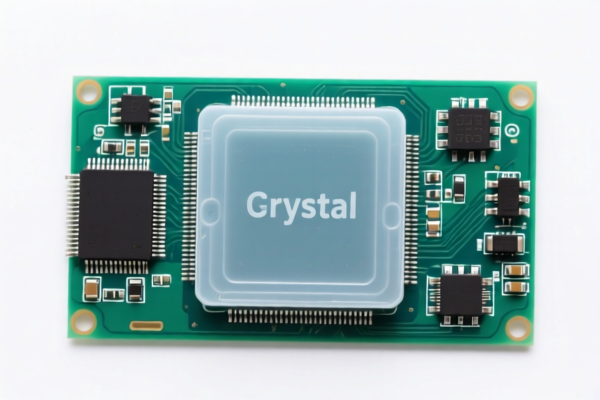
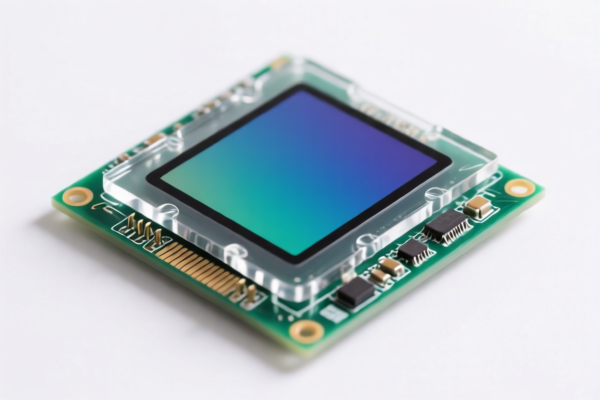
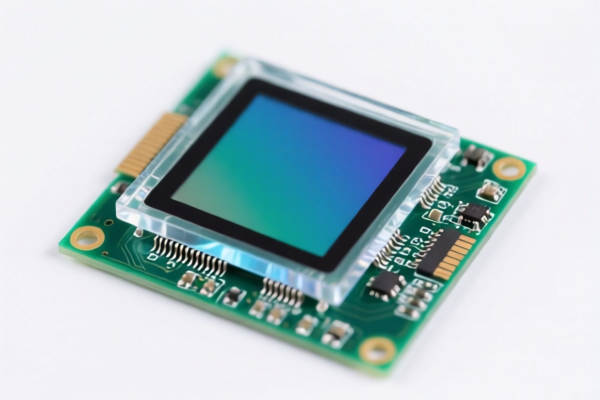
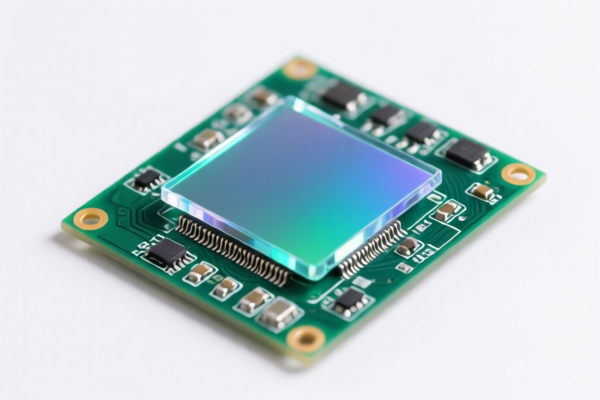
AI Analysis
💡 LED Modules (LED Modules for Semiconductor Devices)
🌐 HS Code Reference & Customs Clearance Guide | 2026 Latest Tariff Analysis | Professional Entry Strategy
📌 I. Product Definition: What Exactly is an "LED Module"?
In international trade, "LED Modules" are not just simple lights. They are complex assemblies consisting of Light Emitting Diodes (LEDs), driver circuits, connectors, and sometimes heat sinks, integrated into a single unit. Depending on their internal structure and intended use, they fall into different categories:
- Standalone Semiconductor Devices: If the module is essentially a packaged LED with minimal integration, it may be classified as a diode.
- Electronic Integrated Circuits (ICs): If it contains complex control logic or is treated as a downstream component of IC technology, it falls under IC parts.
- Lighting Fixtures/Appliances: If it is part of a larger lighting system or backlight assembly, it might be classified under lighting equipment.
⚠️ Key Distinction Point:
- If the module is primarily a semiconductor device (LEDs + basic driver) → Chapter 85 (Electrical Machinery)
- If the module is integrated into a lighting fixture or backlight → Chapter 94 (Furniture/Lighting Articles)
- Crucial: The presence of additional circuitry (not just LEDs) often pushes classification toward 8542 (ICs) or 8541 (Diodes) rather than simple lighting goods.
📦 II. HS Code Classification Matrix (2026 Latest Tariff Authority Cross-Reference)
| HS Code | Product Description | Application Scenario | Key Classification Logic |
|---|---|---|---|
8541.49.95.00 |
Light Emitting Diodes (LEDs) and similar semiconductor devices; other (modules) | General LED modules, high-power LEDs, LED strips with basic drivers | Fits the definition of "LED" as a semiconductor device. "Module" is considered an assembly form. |
8542.39.00.90 |
Electronic integrated circuits; other (LED modules as downstream IC components) | LED modules with complex control chips, treated as IC peripherals | Views LED modules as "downstream application components" of ICs, falling under "Other" electronic components. |
8542.39.00.70 |
Electronic integrated circuits; parts (LED modules as IC parts) | LED modules containing specific integrated control circuits | Classifies as "Other" electronic components under IC parts, a catch-all for complex electronic elements. |
8541.41.00.00 |
Light Emitting Diodes (LEDs); red color | Red LED modules specifically | Specific Color Rule: If the module is primarily red LEDs, it gets a specific subheading. Otherwise, generic LED modules use 8541.49.95.00. |
9405.42.82.00 |
Portable lighting devices powered by lamps using light emitting diodes (LEDs) | LED modules used in backlighting or as part of a lighting fixture assembly | Treats the module as part of a "lighting article" or "backlight module" rather than a standalone electronic component. |
🔍 Critical Reminder:
-8541.49.95.00is the most common for generic LED modules (white, blue, RGB, etc.) that are semiconductor devices.
-8542.39.00.90/70applies if the module is heavily integrated with IC control logic, treating it as an electronic component rather than just a light source.
-9405.42.82.00is risky if the module is sold separately as a component; it is better suited for modules integrated into a lighting fixture or backlight unit ready for end-use.
💰 III. 2026 Latest Tariff Rate Details (Including Surtaxes & Policy Add-ons)
✅ Applicable Country: United States (US)
✅ Origin: China (CN)
✅ Effective Date: November 10, 2025 (for subsequent imports)
🎯 1. 8541.49.95.00 —— LEDs (Generic LED Modules)
| Item | Details |
|---|---|
| Base Tariff | 0% (ad valorem) |
| USITC Surtax (301) | +25% (Section 301, Footnote 9903.88.01) |
| IEEPA Surtax (122) | +10% (Section 122, against China/HK) |
| Total Rate | 60.0% |
| Calculation | CIF Value × 60% |
| De Minimis Eligibility | ❌ Not Eligible (deny_de_minimis) |
| Legal Path | IEEPA:9903.01.25 → USITC:8541.49.95.00 → FOOTNOTE:9903.88.01 |
📌 Explanation:
- LED modules are considered semiconductor devices.
- Total Tax = 60% is extremely high. This includes the base 0% + 25% (Section 301) + 10% (Section 122) + potentially other surcharges depending on the exact ruling.
- No de minimis exemption: Even small shipments are subject to full duty.
🎯 2. 8542.39.00.90 & 8542.39.00.70 —— Electronic Integrated Circuits / Parts
| Item | Details |
|---|---|
| Base Tariff | 0% |
| USITC Surtax (301) | +25% |
| IEEPA Surtax (122) | +10% |
| Total Rate | 60.0% |
| Calculation | CIF Value × 60% |
| De Minimis Eligibility | ❌ Not Eligible |
| Legal Path | IEEPA:9903.01.24 → USITC:8542.39.00.90 → FOOTNOTE:9903.88.01 |
📌 Note:
- Classification as IC parts or other electronic components leads to the same 60% rate.
- This highlights the penalty for classifying complex electronic modules under Chapter 85 (Electrical Machinery) from China.
🎯 3. 8541.41.00.00 —— Red LED Modules
| Item | Details |
|---|---|
| Base Tariff | 0% |
| USITC Surtax (301) | +25% |
| IEEPA Surtax (122) | +10% |
| Total Rate | 35.0% |
| Calculation | CIF Value × 35% |
| De Minimis Eligibility | ❌ Not Eligible |
| Legal Path | IEEPA:9903.01.25 → USITC:8541.41.00.00 |
📌 Opportunity:
- If your module is specifically red LEDs, it falls under8541.41.00.00, reducing the total tax to 35% (25% + 10%).
- Verification: Ensure the module contains only or primarily red LEDs. Mixed-color modules do not qualify.
🎯 4. 9405.42.82.00 —— LED Backlight/Modules as Lighting Articles
| Item | Details |
|---|---|
| Base Tariff | 0% |
| USITC Surtax (301) | +25% |
| IEEPA Surtax (122) | +10% |
| Total Rate | 35.0% |
| Calculation | CIF Value × 35% |
| De Minimis Eligibility | ❌ Not Eligible |
| Legal Path | IEEPA:9903.01.24 → USITC:9405.42.82.00 |
📌 Strategic Advantage:
- If the module is sold as part of a backlight assembly or lighting fixture, it may be classified under Chapter 94.
- Tax = 35%, which is significantly lower than the 60% for electronic components.
- Risk: Must prove it is a "lighting article" and not a standalone electronic component.
🛠️ IV. Customs Clearance Practical Advice (Avoiding Pitfalls)
✅ 1. Documentation Checklist (Non-Negotiable)
| Document | Required | Notes |
|---|---|---|
| ✅ Product Specification Sheet | ✔️ | Must detail: LED type (color, wavelength), driver IC info, dimensions, voltage, current. |
| ✅ Circuit Diagram/Block Diagram | ✔️ | Critical to prove if it’s a simple LED (Ch 85) or part of a lighting fixture (Ch 94). |
| ✅ Product Photos (With Label) | ✔️ | Show model number, brand, electrical ratings. |
| ✅ Third-Party Test Report | ✔️ | FCC, CE, RoHS, UL (if applicable). |
| ✅ Commercial Invoice | ✔️ | Must state "LED Module for Backlighting" or "Semiconductor LED Device" accurately. |
| ✅ Certificate of Origin (CO) | ✔️ | Essential for origin determination. |
| ✅ Packing List | ✔️ | Clear indication of component vs. assembly. |
✅ 2. Declaration Strategy (Key Mantra)
🔥 "Component or Fixture? Know your place!"
| Scenario | Correct HS Code | Incorrect Declaration | Consequence |
|---|---|---|---|
| Generic LED Module (White/RGB) | 8541.49.95.00 |
"Light" or "Lamp" | Risk of reclassification + penalty |
| Red LED Module | 8541.41.00.00 |
"Other LEDs" | Overpayment of tax (35% vs 60%) |
| LED with Complex Control IC | 8542.39.00.90 |
"LED Light" | High tax (60%) |
| LED Backlight Assembly | 9405.42.82.00 |
"Electronic Component" | Lower tax (35%) if justified |
| Standalone LED Chip | 8541.41.00.00 / 8541.49.95.00 |
"IC Part" | Misclassification |
📌 Advice:
- If the module is intended for backlighting (e.g., for LCD TVs, monitors, signs), emphasize its role as a lighting component and try to justify9405.42.82.00(35% tax).
- If it is a standalone electronic part sold to manufacturers, you must accept the 60% tax under8541.49.95.00or8542.39.00.90.
- Never misdeclare a 60% tax item as a lower-tax item without evidence.
✅ 3. Special Cases
| Scenario | Handling Advice |
|---|---|
| OEM Custom Modules | Provide customer POs and design specs to prove intended use (e.g., backlight vs. semiconductor device). |
| Mixed Color Modules | Do not use 8541.41.00.00 (Red). Use 8541.49.95.00 (60%). |
| Modules with Integrated Drivers | If the driver is complex, consider 8542.39.00.90 (60%). If simple, 8541.49.95.00 (60%). |
| Backlight Units | If sold as a "unit" for lighting, argue for 9405.42.82.00 (35%). |
🌍 V. Global Customs Comparison (2026 Latest)
| Country/Region | Recommended HS Code | Tariff Rate | Certification Required | Notes |
|---|---|---|---|---|
| 🇺🇸 USA | 8541.49.95.00 |
60% (Chinese Origin) | FCC + RoHS | Highest cost. Consider restructuring supply chain. |
| 🇨🇳 China | 8541.49.95.00 |
0-15% (Import Duty) | CCC (if applicable) | No surtaxes. Favorable for domestic sales. |
| 🇪🇺 EU | 8541.49.95.00 |
0-4% (if not dual-use) | CE + RoHS | No Section 301/122 equivalents. Much cheaper. |
| 🇦🇺 Australia | 8541.49.95.00 |
5% | RCM | No surtaxes. Moderate cost. |
| 🇯🇵 Japan | 8541.49.95.00 |
0% | PSE | No surtaxes. Lowest cost for non-US markets. |
📌 Conclusion:
- USA is the most expensive market for LED modules due to Section 301 (25%) + Section 122 (10%).
- Total 60% tax makes US exports of Chinese LED modules highly competitive disadvantage.
- Alternative Strategy: Consider shipping to Vietnam, Mexico, or Malaysia for final assembly to avoid US surtaxes (if rules of origin are met).
📌 VI. Common Mistakes & Pitfalls (Lessons Learned)
❌ Mistake 1: Declaring LED Modules as "Light Bulbs" to get lower taxes
👉 Consequence: Customs will reclassify to 8541.49.95.00 (60%) and impose penalties.
❌ Mistake 2: Ignoring the "122 Clause" (IEEPA)
👉 Consequence: Even if 301 tax is waived, the 10% IEEPA tax still applies. Total tax never drops below 35-60%.
❌ Mistake 3: Using 9405.42.82.00 without justification
👉 Consequence: If the module is not part of a lighting fixture, customs will reject it and charge 60%.
❌ Mistake 4: Misclassifying Red LEDs as "Other LEDs"
👉 Consequence: Overpayment. Red LEDs are 35%, not 60%. Always verify color composition.
✅ Correct Approach:
"LED Module, White, 12V DC, for LCD Backlighting, Model XYZ, FCC Certified"
→ Justify9405.42.82.00(35%) if sold as a backlight unit, or8541.49.95.00(60%) if sold as a component.
🎯 VII. Conclusion: Professional Classification, Cost Efficiency
🎯 Key Takeaways:
🔹 "60% is the norm for electronic LED modules from China to the US."
🔹 "Red LEDs = 35%. Backlight Units = 35%. Generic LEDs = 60%."
🔹 "No De Minimis Exemption: Small or large, pay the tax."
📌 Tips:
- If your LED modules are highly integrated, consider if they can be classified as IC parts (8542) or lighting articles (9405) to potentially save tax, but be prepared for audit.
- Pre-Ruling: Apply for an Advance Ruling from CBP to confirm the HS Code and tax rate before shipping.
- Supply Chain: For US-bound goods, consider non-Chinese origin (e.g., Vietnam, Thailand) to avoid Section 301 + 122 surtaxes.
📣 Immediate Action:
📞 Contact a professional customs broker + Provide circuit diagrams + Request CBP Advance Ruling
🚀 Minimize tax, maximize profit, ensure smooth clearance!
✨ Precise Classification Starts with Details!
💼 Your Cost, Your Control!
Customer Reviews
About HS Code Classification
The Harmonized System (HS) is an internationally standardized nomenclature developed by the World Customs Organization (WCO) to classify traded products. Over 200 countries use the HS system as the basis for customs tariffs, trade statistics, and import/export regulations.
Each HS code follows a hierarchical structure:
- Chapter (2 digits) — Broad category of goods (e.g., Chapter 84: Machinery and Mechanical Appliances)
- Heading (4 digits) — More specific grouping within the chapter
- Subheading (6 digits) — Internationally standardized breakdown, used by all WCO member countries
- National subdivisions (8-10 digits) — Country-specific extensions for further classification, such as US HTSUS 10-digit codes
Correct HS code classification is essential for smooth customs clearance, accurate duty payment, and compliance with trade regulations. Misclassification can lead to customs delays, overpayment of duties, or penalties.
When importing from CN to US, the applicable tariff rates may include:
- Most-Favored-Nation (MFN) rate — The standard duty rate applied to WTO members
- General rate — Applied to countries without trade agreements
- Trade remedy duties — Additional tariffs such as Section 301 (anti-dumping), Section 232 (national security), or countervailing duties
The information provided on this page is for reference purposes only. For official classification, please consult with your local customs authority or a licensed customs broker.