LED Car Light
CN → US| HS Code | Tariff Rate | Origin | Destination | Doc |
|---|---|---|---|---|
| 8512202040 | 10.0% | CN | US | Official Doc |
| 8512202080 | 35.0% | CN | US | Official Doc |
| 9405428440 | 38.9% | CN | US | Official Doc |
| 9405428410 | 38.9% | CN | US | Official Doc |
| 8539520091 | 12.0% | CN | US | Official Doc |
Product Images



AI Analysis
🚗 LED Car Light (Automotive LED Lighting Systems)
🌐 HS Code Classification & Customs Clearance Guide | 2026 Tariff Deep Dive | Professional Strategy for Automotive Lighting
📌 1. Product Definition & Classification Logic: What Exactly is an "LED Car Light"?
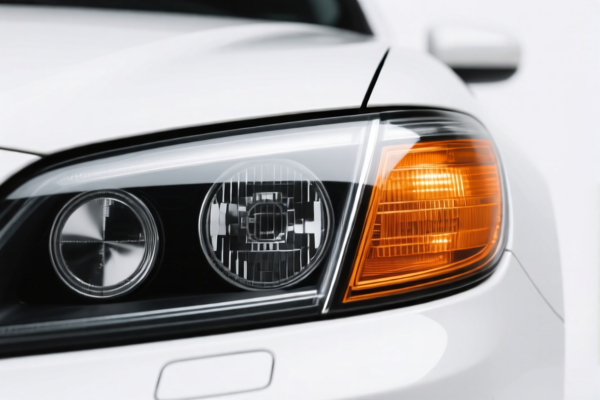
LED Car Lights are specialized lighting devices designed exclusively for vehicles (automobiles, motorcycles, heavy trucks). Their core function is vehicular illumination (headlights, tail lights, turn signals, fog lights).
In international trade, the classification depends heavily on technical architecture and specificity: * Vehicular Lighting Components (Chassis-based): If the light is strictly a vehicle accessory (8512 series). * General Lighting Fixtures (Building/General): If the design is generic but used on a vehicle (9405 series). * Light Emitting Diodes (Lamp/Tube): If classified under specific LED lamp categories (8539 series).
⚠️ Critical Differentiation: * 8512.20.20.xx: Specific for automotive equipment. Usually lower duty unless "Add-on" taxes apply. * 9405.42.84.xx: "Other" lighting fixtures. Often captures LED car lights deemed "not specifically for vehicles" or falling under a "catch-all" category. * 8539.52.00.91: Specific LED lamps/tubes.
📦 2. HS Code Classification Matrix (Data Source: 2026 Tariff Analysis)
Based on the provided data, here is the authoritative breakdown for LED Car Lights:
| HS Code | Summary & Logic | Applicable Tax Rate |
|---|---|---|
8512.20.20.40 |
Specific Automotive Category LED car lights classified as "lighting equipment for vehicles" with no material conflict. |
10.0% |
8512.20.20.80 |
General Automotive / Catch-All LED lighting equipment for vehicles falling under "Other" sub-categories. |
35.0% |
9405.42.84.40 |
LED-Specific Fixture Designed specifically for LED sources, classified under "Lamps and Lighting Fittings". |
38.9% |
9405.42.84.10 |
General LED Fixture Based on functional consistency for LED sources, treated as a catch-all category. |
38.9% |
8539.52.00.91 |
LED Lamp Component LEDs classified as "Other" lamps within the 8539 series (Light Emitting Diodes). |
12.0% |
🔍 Key Insight:
8512.20.20.40is the most cost-effective option (10%) if the product is definitively identified as a vehicle part. *8512.20.20.80jumps to 35% (high risk) due to additional "Add-on" tariffs. *9405series* (~38.9%) is often used when the "vehicle-specific" nature is ambiguous, triggering higher duties.
💰 3. 2026 Tariff Breakdown (Detailed Clause Analysis)
✅ Context: Analysis based on the provided tax details (likely US Market with Section 301/IEEPA implications).
🎯 Option A: The "Sweet Spot" — 8512.20.20.40
- Total Tax: 10.0%
- Breakdown:
- Base Tariff: 0.0%
- Section 301 (Add-on): 0.0%
- Clause 122 (Special Measures): +10.0%
- Why it's low: The "Clause 122" applies, but no Section 301 tariff is levied, making this the most competitive classification for genuine automotive lights.
🎯 Option B: The "High Risk" — 8512.20.20.80
- Total Tax: 35.0%
- Breakdown:
- Base Tariff: 0.0%
- Section 301 (Add-on): +25.0% (Critical Penalty)
- Clause 122: +10.0%
- Why it's high: Falling into "Other" (80) triggers the heavy 25% Section 301 penalty on top of Clause 122.
🎯 Option C: The "General Fixture" — 9405.42.84.40 & .10
- Total Tax: 38.9%
- Breakdown:
- Base Tariff: 3.9%
- Section 301 (Add-on): +25.0%
- Clause 122: +10.0%
- Why it's high: The 3.9% base rate + 25% Section 301 + 10% Clause 122 = 38.9%. This is the most expensive route.
🎯 Option D: The "Component" — 8539.52.00.91
- Total Tax: 12.0%
- Breakdown:
- Base Tariff: 2.0%
- Section 301 (Add-on): 0.0%
- Clause 122: +10.0%
- Why it's low: Similar to Option A, no Section 301 applies, only a 2% base + 10% Clause 122.
🛠️ 4. Customs Clearance Strategy & Recommendations
✅ 1. Classification Priority (Cost Optimization)
To minimize customs duties, prioritize HS Codes in this order:
1. 8512.20.20.40 (10%) ⭐ BEST – If the product is a complete unit designed specifically for vehicles.
2. 8539.52.00.91 (12%) – If the product is a standalone LED lamp unit (e.g., replacement bulb) without the vehicle housing.
3. 8512.20.20.80 (35%) – Avoid if possible.
4. 9405.42.84.xx (38.9%) – Avoid. This treats the car light as a generic building fixture, incurring the highest penalty.
✅ 2. Documentation Requirements (Critical for 8512)
To successfully claim the lower 10% rate under 8512.20.20.40, you must prove Vehicular Specificity:
* Technical Drawings: Must show vehicle-specific mounting points, connectors, and voltage (12V/24V DC).
* User Manual: Must state "For use on [Vehicle Model/Type]" and not "For General Home/Street Use".
* Part Numbers: Should follow the manufacturer's automotive part numbering system.
* Certifications: DOT (US), E-mark (EU), SAE standards. If it lacks vehicle safety certifications, Customs may force a re-classification to 9405.
✅ 3. Declaration Tips (The "Do's and Don'ts")
| Do | Don't |
|---|---|
| Describe as: "LED Headlight Assembly for Automobile" | Avoid: "LED Light Fixture" or "LED Lamp" (Too generic). |
| Highlight 12V/24V DC input in specs. | Avoid implying "General Lighting" use (e.g., "Floodlight for Yard"). |
| Provide OEM compatibility list. | Do not ship with generic packaging that looks like home decor. |
| Declare Section 122 clearly in remarks. | Do not hide the origin or product function. |
✅ 4. Special Warning: The "Section 301" Trap
- Codes ending in .80 (8512) and 9405 are subject to a 25% Add-on Tariff.
- Codes ending in .40 (8512) and 8539 DO NOT carry this 25% penalty.
- Action: If your product documentation is ambiguous, Customs will default to the higher tax bracket. Ensure your marketing materials and invoice explicitly state "Automotive Only".
🌍 5. Global Market Snapshot (2026 Context)
| Market | Recommended HS Code | Effective Rate | Risk Factor |
|---|---|---|---|
| 🇺🇸 USA | 8512.20.20.40 |
10% | Low (if specs match) |
| 🇨🇳 China | 8512.20.20.40 |
Low | Stable |
| 🇪🇺 EU | 9405.42.84.xx |
Varies | High E-mark required |
| 🇦🇺 Australia | 8512.20.20.40 |
Low | RCM Certification needed |
📌 6. Conclusion: Win the Clearance Game
🔥 Golden Rule: "Vehicle Specificity = Low Duty." * If you claim General Lighting (
9405), you pay 38.9%. * If you prove Automotive Application (8512.20.20.40), you pay 10.0%. * The difference is nearly 4x!🚀 Final Action Plan: 1. Audit Product: Ensure every unit has automotive connectors (not AC plugs). 2. Update Invoice: Use terms like "Automotive LED Assembly" not "LED Light". 3. Pre-Ruling: Apply for an Advance Ruling if the product is hybrid (e.g., car light that could be used elsewhere). 4. Verify: Confirm the
8512.20.20.40eligibility with your customs broker before shipping.
✨ Clearance Success Starts with the Right HS Code!
💼 Don't let a classification error cost you 28% extra!
Customer Reviews
About HS Code Classification
The Harmonized System (HS) is an internationally standardized nomenclature developed by the World Customs Organization (WCO) to classify traded products. Over 200 countries use the HS system as the basis for customs tariffs, trade statistics, and import/export regulations.
Each HS code follows a hierarchical structure:
- Chapter (2 digits) — Broad category of goods (e.g., Chapter 84: Machinery and Mechanical Appliances)
- Heading (4 digits) — More specific grouping within the chapter
- Subheading (6 digits) — Internationally standardized breakdown, used by all WCO member countries
- National subdivisions (8-10 digits) — Country-specific extensions for further classification, such as US HTSUS 10-digit codes
Correct HS code classification is essential for smooth customs clearance, accurate duty payment, and compliance with trade regulations. Misclassification can lead to customs delays, overpayment of duties, or penalties.
When importing from CN to US, the applicable tariff rates may include:
- Most-Favored-Nation (MFN) rate — The standard duty rate applied to WTO members
- General rate — Applied to countries without trade agreements
- Trade remedy duties — Additional tariffs such as Section 301 (anti-dumping), Section 232 (national security), or countervailing duties
The information provided on this page is for reference purposes only. For official classification, please consult with your local customs authority or a licensed customs broker.