LED Ceiling Light
CN → US| HS Code | Tariff Rate | Origin | Destination | Doc |
|---|---|---|---|---|
| 8539520091 | 12.0% | CN | US | Official Doc |
| 9405118010 | 38.9% | CN | US | Official Doc |
| 9405116010 | 42.6% | CN | US | Official Doc |
| 8539520020 | 12.0% | CN | US | Official Doc |
| 8541410000 | 35.0% | CN | US | Official Doc |
Product Images
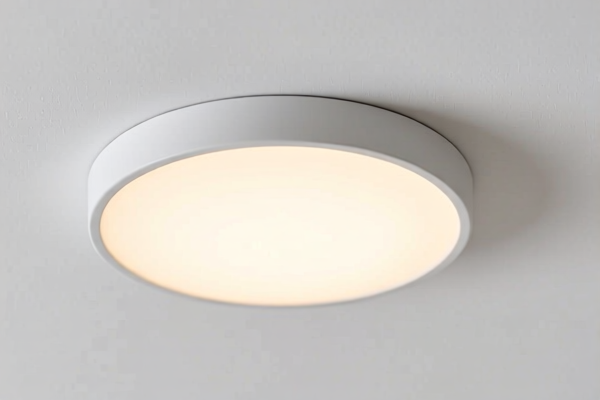
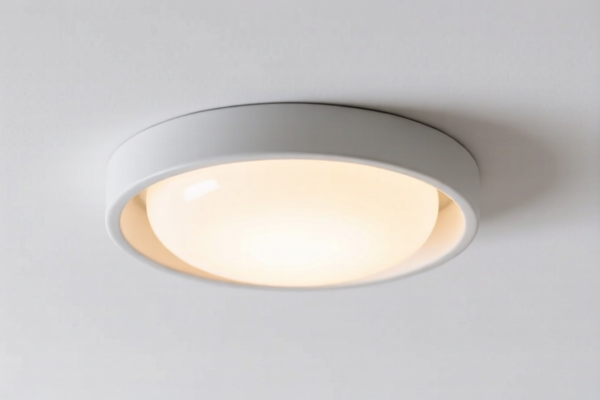
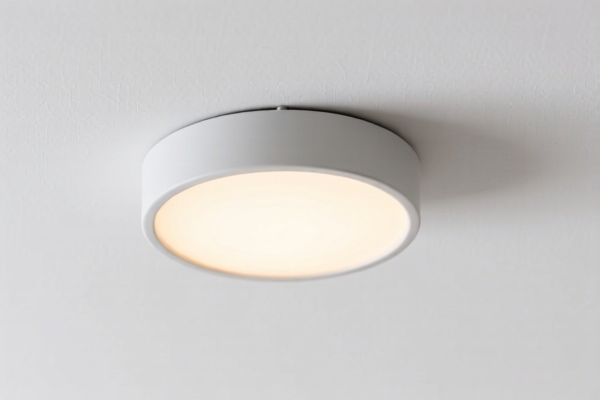
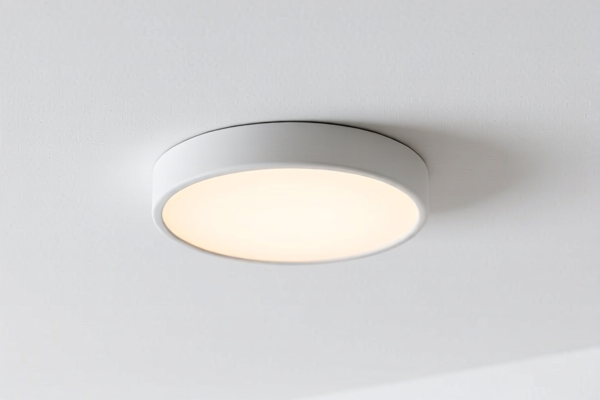
AI Analysis
💡 LED Ceiling Light (The "Luminous Crown" of Interiors)
🌐 HS Code Reference & Customs Clearance Guide | 2026 Latest Tariff Breakdown | Strategic Classification for US Imports
📌 I. Product Definition & Classification: What Exactly is an "LED Ceiling Light"?
The LED Ceiling Light is a fixed lighting fixture designed for ceiling mounting, utilizing Light Emitting Diodes (LEDs) as the light source. In international trade, the classification hinges on what component is being imported and how it is packaged:
- Complete Fixture (The Whole Unit): Includes the housing, diffuser, base, and often the LED driver/integrated circuit. This is treated as a "lamp" or "lighting fitting."
- Standalone LED Modules/Parts: If the LED chips, boards, or drivers are imported separately as components for assembly, they fall under electronic parts chapters.
- Integrated vs. Detachable: Key for determining if it's a "lamp" (HS 9405) or a "lighting apparatus" (HS 8539/8541).
⚠️ Key Distinction:
- If it’s a complete, ready-to-use fixture (housing + light source + driver) → HS 9405.11
- If it’s only the LED light source/module without the full fixture housing → HS 8539.52
- If it’s just the LED chip/diode itself or bare assembly → HS 8541.41
📦 II. HS Code Classification Details (2026 Latest Tariff Authority Cross-Reference)
| HS Code | Product Description | Applicability Scenario | Component Status |
|---|---|---|---|
8539.52.00.91 |
Other LED Lamps: Matching LED light source characteristics; classified as "Other LED Lighting Apparatus." | Standalone LED bulbs/plates or incomplete fixtures lacking full housing classification. | ⚠️ Partial/Fixture Ambiguity |
9405.11.80.10 |
LED Ceiling Lights: Household LED lighting appliances, suitable for ceiling mounting purposes. | Standard Complete Fixtures: Fully assembled, ready for residential/commercial ceiling installation. | ✅ Complete Fixture |
9405.11.60.10 |
LED Ceiling Lights: Form factor as wall/ceiling lighting apparatus, purpose is LED light source. | Commercial-grade ceiling fixtures with specific architectural form factors. | ✅ Complete Fixture (Commercial) |
8539.52.00.20 |
LED Lamps: Matching LED material characteristics and diode form. | LED panels or plates that do not meet the full "fixture" definition of 9405. | ⚠️ Component/Semi-Finished |
8541.41.00.00 |
Light Emitting Diodes: Applications in assembled forms or components. | Bare LED assemblies, chip-level components, or internal parts without external housing. | ✅ Internal Component Only |
🔍 Critical Reminder:
- Complete Ceiling Lights (with housing, diffuser, and driver) should primarily be classified under 9405.11 to avoid misclassification penalties.
- Do not classify a complete fixture as8539or8541unless you are importing only the light source module for assembly abroad.
- Customs Alert: Misclassifying a complete fixture as an LED component (8541) to seek lower base rates can trigger severe audits and back-taxes.
💰 III. 2026 Latest Tariff Rate Breakdown (Including Additional Duties & Policy Surcharges)
✅ Applicable Country: United States (US)
✅ Origin: China (CN)
✅ Effective Time: 2025 November 10 onwards (including subsequent imports)
🎯 1. 9405.11.80.10 & 9405.11.60.10 —— Complete LED Ceiling Lights (Household/Commercial)
| Item | Content |
|---|---|
| Base Tariff | 3.9% (for 80.10) / 7.6% (for 60.10) |
| Section 301 Additional Duty | +25.0% |
| IEEPA Surcharge (China) | +10.0% (From 122 Clause) |
| Total Effective Rate | 38.9% (for 80.10) / 42.6% (for 60.10) |
| Tax Calculation | CIF Value × Total Rate |
| De Minimis Exemption | ❌ Not Eligible (deny_de_minimis) |
| Legal Path | USITC:9405.11.80.10 → FOOTNOTE:301 → IEEPA:9903.01.25 |
📌 Interpretation:
- These are fully assembled fixtures. The base rate is low, but the Section 301 tariff (+25%) and IEEPA surcharge (+10%) dominate the cost.
- Total burden: ~40%. This is a high-cost category for US importers.
- Risk: High. Customs may scrutinize if these are truly "household" vs. "commercial" to determine if 60.10 or 80.10 applies.
🎯 2. 8539.52.00.91 & 8539.52.00.20 —— LED Lamps/Apparatus (Partial/Module Classification)
| Item | Content |
|---|---|
| Base Tariff | 2.0% |
| Section 301 Additional Duty | 0.0% (Exempt under current specific provisions for certain LED apparatus) |
| IEEPA Surcharge (China) | +10.0% (From 122 Clause) |
| Total Effective Rate | 12.0% |
| Tax Calculation | CIF Value × 12.0% |
| De Minimis Exemption | ❌ Not Eligible (deny_de_minimis) |
| Legal Path | USITC:8539.52.00.91 → IEEPA:9903.01.24 → FOOTNOTE:122 |
📌 Interpretation:
- Significant Cost Saving Opportunity: If your product can be legally classified as an "LED Lamp/Apparatus" rather than a "Lighting Fitting," the rate drops from ~40% to 12%.
- Condition: This typically applies if the product is imported as a light source module or lacks the full "fixture" characteristics defined in Chapter 94.
- Warning: Misclassification is a common audit target. Ensure the product truly fits the technical definition of8539.
🎯 3. 8541.41.00.00 —— LEDs / Assembled Diodes (Component Level)
| Item | Content |
|---|---|
| Base Tariff | 0.0% |
| Section 301 Additional Duty | +25.0% |
| IEEPA Surcharge (China) | +10.0% (From 122 Clause) |
| Total Effective Rate | 35.0% |
| Tax Calculation | CIF Value × 35.0% |
| De Minimis Exemption | ❌ Not Eligible (deny_de_minimis) |
| Legal Path | USITC:8541.41.00.00 → FOOTNOTE:301 → IEEPA:9903.01.25 |
📌 Interpretation:
- Only for bare LED components or internal assemblies without external lighting function.
- Rate is 35%. Higher than the8539module rate, but lower than complete fixtures.
- Use Case: Importing LED strips or chip assemblies for domestic reassembly into fixtures.
🛠️ IV. Customs Clearance Practical Advice (Real-World Pitfall Avoidance)
✅ 1. Documentation Checklist (Non-Negotiable)
| Document | Required | Purpose |
|---|---|---|
| ✅ Product Datasheet | ✔️ | Must specify: Lumens, Voltage, IP Rating, Dimensions, Integrated vs. Non-Integrated Driver. |
| ✅ Assembly Diagram | ✔️ | Critical to prove if the LED source is "integrated" (fits 9405) or "separable" (fits 8539/8541). |
| ✅ High-Res Photos | ✔️ | Show entire fixture, internal components, and label/specs. |
| ✅ Commercial Invoice | ✔️ | Description must be precise: "LED Ceiling Fixture, Model X, 3000K, 120V" NOT just "Light." |
| ✅ Origin Certificate | ✔️ | For Section 301 duty exemption claims (if applicable to third-country assembly). |
| ✅ FCC Statement | ✔️ | Proof of electromagnetic compatibility (required for electronic drivers). |
✅ 2. Classification Strategy (Key Mnemonics)
🔥 “Fixture Goes to 9405, Module to 8539, Chip to 8541!”
| Scenario | Recommended HS Code | Why? |
|---|---|---|
| Complete Ceiling Light (Housing + Diffuser + Driver + LED) | 9405.11 | It’s a "lamp" in the legal sense. Best for end-user sale. |
| LED Panel/Plate (Sold as a retrofit module, no housing) | 8539.52 | Lower tariff (12%) if classified correctly as a lighting apparatus. |
| Bare LED Strip/Chip (No driver, no housing) | 8541.41 | It’s a component. Not a finished lighting product. |
| Mixed Container (Fixtures + Bulbs) | Split Declaration | Do not mix. Fixtures under 9405, Bulbs under 8539. |
✅ 3. Special Considerations for US Importers
| Situation | Recommendation |
|---|---|
| Dropshipping / De Minimis | ❌ All listed HS Codes are EXCLUDED from the $800 de minimis exemption. You must file formal entry (Type 86) and pay duties. |
| OEM Branding | If you import generic fixtures and brand them in the US, ensure the export invoice matches the import entry exactly. |
| Driver Integration | If the LED driver is integral (cannot be replaced without breaking the fixture), it strongly supports 9405. If it’s a standard plug-in driver, consider 8539. |
| Counterfeits | Ensure all LED components have legitimate FCC IDs. Customs will detain products with fake certifications. |
🌍 V. Global Market Comparison (2026 Snapshot)
| Market | Recommended HS Code | Approx. Tariff (China Origin) | Key Requirement |
|---|---|---|---|
| 🇺🇸 USA | 9405.11 / 8539.52 |
12% ~ 42.6% | FCC, No De Minimis, Section 301 + IEEPA |
| 🇨🇳 China | 9405.11 |
~0-5% (VAT 13% applies) | CCC Certification (for certain types) |
| 🇪🇺 EU | 9405.11 |
0% (if CE/ErP compliant) | CE Mark, RoHS, WEEE, Energy Labeling |
| 🇬🇧 UK | 9405.11 |
0% (if UKCA compliant) | UKCA Mark, Post-Brexit rules |
| 🇦🇺 Australia | 9405.11 |
5% | RCM, GEMS Registration |
📌 Conclusion:
- The USA is the most expensive market for LED Ceiling Lights due to the combination of Section 301 and IEEPA tariffs.
- EU and Australia are more favorable, relying mainly on compliance certifications rather than punitive tariffs.
- Strategy: For the US market, evaluate if your product can be structured as a lighting apparatus (8539) to save ~28-30% in duties compared to full fixtures.
📌 VI. Common Errors & Pitfalls (Lessons Learned)
❌ Error 1: Declaring a complete ceiling fixture as "LED Parts" (8541) to avoid tariffs.
👉 Consequence: Customs audit, penalty, and forced payment of ~35-42% + penalties.
👉 Fix: Provide assembly diagrams showing the fixture is a single functional unit.
❌ Error 2: Ignoring the IEEPA 10% Surcharge.
👉 Consequence: Underpayment of duty, leading to port holds and storage fees.
👉 Fix: Always include IEEPA surcharge in cost calculations for China-origin goods entering the US.
❌ Error 3: Assuming De Minimis ($800) applies.
👉 Consequence: Package seized, fined, or returned. LED lights are explicitly excluded.
👉 Fix: Prepare for formal entry clearance for all shipments, regardless of value.
❌ Error 4: Vague Description: "Lighting Product."
👉 Consequence: Customs officers assign the highest possible duty code arbitrarily.
👉 Fix: Use specific terms: "LED Ceiling Mount Fixture, 12W, 4000K, Model XYZ."
🎯 VII. Conclusion: Strategic Classification for Profit Maximization
🎯 Key Takeaway:
🔹 "Fixture = 9405 (Higher Duty), Module = 8539 (Lower Duty)."
🔹 "No De Minimis for China Origin – Plan Formal Entry."
🔹 "Documentation is King: Datasheets and Diagrams Prevent Audits."
📌 Pro Tip:
If you are importing complete fixtures for the US market, consider:
1. Supply Chain Diversification: Sourcing from Vietnam or Mexico (if applicable) to avoid Section 301/IEEPA.
2. Product Design: Can the LED source be sold as a separate module (8539) and assembled in the US? This could reduce tariff burden to 12%.
3. Advance Ruling: File a Pre-Ruling Request with US CBP to get a binding opinion on your specific product classification.
📣 Immediate Action:
📞 Consult a Licensed Customs Broker
📄 Submit Product Technical Files
📊 Calculate Landed Cost Including Total Tariff (Base + 301 + IEEPA)
💼 Precision in Classification = Precision in Profit!
✨ Clear the Hurdle, Light Up the Market!
Customer Reviews
About HS Code Classification
The Harmonized System (HS) is an internationally standardized nomenclature developed by the World Customs Organization (WCO) to classify traded products. Over 200 countries use the HS system as the basis for customs tariffs, trade statistics, and import/export regulations.
Each HS code follows a hierarchical structure:
- Chapter (2 digits) — Broad category of goods (e.g., Chapter 84: Machinery and Mechanical Appliances)
- Heading (4 digits) — More specific grouping within the chapter
- Subheading (6 digits) — Internationally standardized breakdown, used by all WCO member countries
- National subdivisions (8-10 digits) — Country-specific extensions for further classification, such as US HTSUS 10-digit codes
Correct HS code classification is essential for smooth customs clearance, accurate duty payment, and compliance with trade regulations. Misclassification can lead to customs delays, overpayment of duties, or penalties.
When importing from CN to US, the applicable tariff rates may include:
- Most-Favored-Nation (MFN) rate — The standard duty rate applied to WTO members
- General rate — Applied to countries without trade agreements
- Trade remedy duties — Additional tariffs such as Section 301 (anti-dumping), Section 232 (national security), or countervailing duties
The information provided on this page is for reference purposes only. For official classification, please consult with your local customs authority or a licensed customs broker.