LED Christmas Tree String Light Decoration
CN → US| HS Code | Tariff Rate | Origin | Destination | Doc |
|---|---|---|---|---|
| 3926400010 | 15.3% | CN | US | Official Doc |
| 9405310010 | 43.0% | CN | US | Official Doc |
| 8539520020 | 12.0% | CN | US | Official Doc |
| 9405310040 | 43.0% | CN | US | Official Doc |
| 3926904800 | 13.4% | CN | US | Official Doc |
Product Images
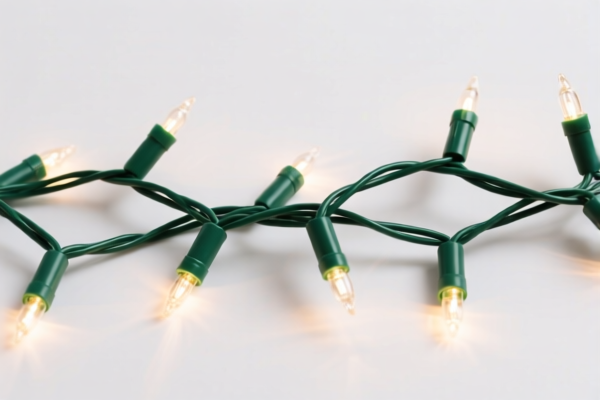
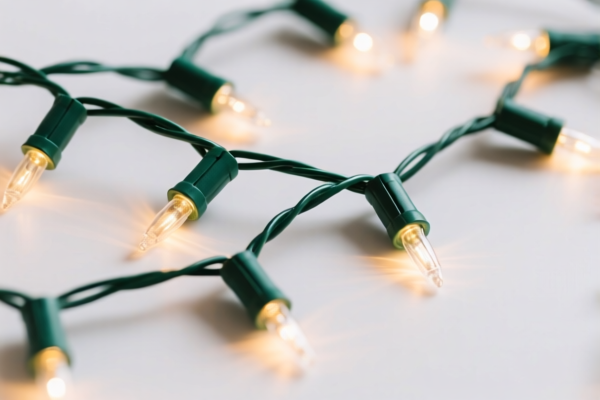
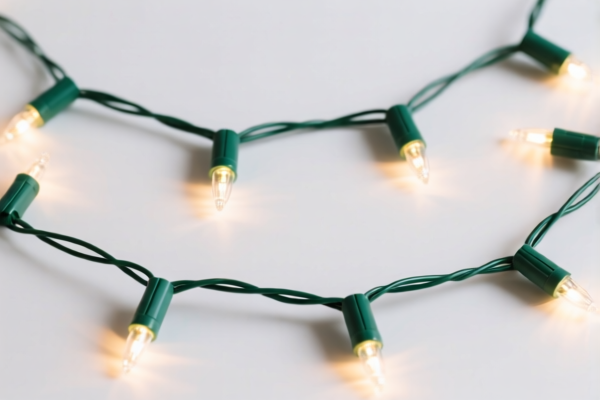
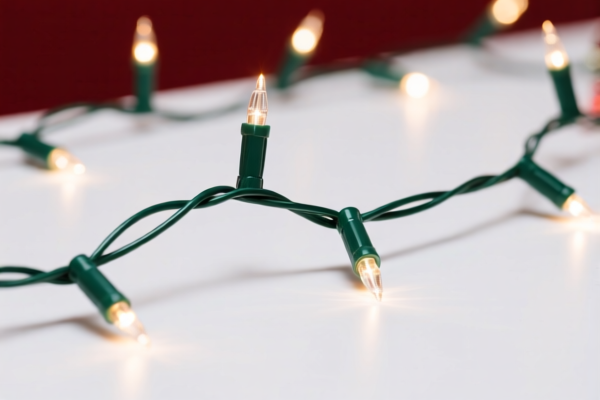
AI Analysis
🎄 LED Christmas Tree String Light Decoration
🌐 HS Code Reference & Clearance Guide | 2026 Latest Tariff Analysis | Professional Customs Strategy
📌 Part 1: Product Definition & Classification: Do You Really Understand "LED String Lights"?
LED Christmas Tree String Lights are festive decorative items used to illuminate Christmas trees, both indoor and outdoor. In international trade, these products are often confused due to their hybrid nature: they combine electrical components (LEDs, wiring) with decorative aesthetics (Christmas tree shape, plastic insulation).
This ambiguity leads to significant differences in tariff rates. The core classification logic depends on whether the customs authority prioritizes the electrical function (light source) or the decorative purpose (ornament).
⚠️ Key Distinction Point:
- If the primary characteristic is the LED light source itself → It falls under Chapter 94 or 85 (Electrical/Lighting equipment).
- If the primary characteristic is the plastic/decorative material acting as an ornament → It may fall under Chapter 39 (Plastics/Articles of Plastic).
📦 Part 2: HS Code Classification Details (2026 Latest Tariff Authority Comparison)
Based on the provided data, here are the 5 potential HS Codes for "LED Christmas Tree String Light Decoration," ranging from high-tax electrical classifications to lower-tax decorative classifications.
| HS Code | Product Description | Matching Logic | Total Tax Rate |
|---|---|---|---|
9405.31.00.10 |
LED Christmas Tree String Lights | Explicit match: "LED" (source) + "Christmas Tree" (use) + "String Light" (form). Fully consistent with the specific subheading for LED lights for Christmas trees. | 43.0% |
9405.31.00.40 |
LED String Lights (Other) | Matches "LED" (source) and "Christmas Tree String Light" (use). "Other" covers non-miniature series wiring decorative lights. | 43.0% |
8539.52.00.20 |
LED Lamps | Matches "LED" and "String Light" attributes as "Light Emitting Diode (LED) Lamp." No material or form conflict. | 12.0% |
3926.40.00.10 |
Plastic Decorations | Product is for decorative use (Christmas lights). Made of plastic (insulation/casing). Fits the "Other decorations" residual category. No material conflict. | 15.3% |
3926.90.48.00 |
Other Plastic Articles | Core material is plastic (wire insulation, brackets) + electronic components. Fits "Plastic Articles." | 13.4% |
🔍 Critical Note:
- The two 9405 codes carry the highest tax rate (43%) because they are classified as specific electrical lighting articles.
- The 8539 code offers a moderate rate (12%) by focusing solely on the LED component.
- The 3926 codes offer the lowest rates (13.4% - 15.3%) by classifying the item primarily as a plastic decorative article rather than an electrical appliance.
💰 Part 3: 2026 Latest Tariff Rate Breakdown (Including Surcharges & Policy Add-ons)
✅ Applicable Country: United States (US)
✅ Origin: China (CN)
✅ Effective Date: 2025/2026 (Current Trade Policy Context)
🎯 1. 9405.31.00.10 & 9405.31.00.40 —— LED Christmas Tree String Lights (High Risk/High Cost)
| Item | Content |
|---|---|
| Base Duty Rate | 8.0% |
| Section 301 Surcharge | +25.0% |
| Section 122 Surcharge | +10.0% |
| Total Effective Rate | 43.0% |
| Tax Calculation | CIF Value × 43% |
| De Minimis Eligibility | ❌ No (Standard de minimis rules usually apply differently, but high duties often trigger scrutiny) |
| Legal Basis Path | USITC:9405.31.00.10/40 → Section 301: 25% → Section 122: 10% |
📌 Explanation:
- Base Duty (8%): Standard tariff for lighting fixtures.
- Section 301 (25%): Added tariff on Chinese-origin goods under Trade Act Section 301.
- Section 122 (10%): Additional tariff based on recent trade actions (Section 122 of the Trade Expansion Act).
- Result: This is the most expensive classification. Misclassifying a decorative light as an "electrical fixture" here can double the cost compared to plastic decoration classification.
🎯 2. 8539.52.00.20 —— LED Lamps (Moderate Cost)
| Item | Content |
|---|---|
| Base Duty Rate | 2.0% |
| Section 301 Surcharge | 0.0% |
| Section 122 Surcharge | +10.0% |
| Total Effective Rate | 12.0% |
| Tax Calculation | CIF Value × 12% |
| Legal Basis Path | USITC:8539.52.00.20 → Section 122: 10% |
📌 Note:
- This classification focuses on the LED component itself, not the string/decorative assembly.
- It benefits from a low base rate (2%) and avoids the Section 301 25% surcharge (assuming specific exclusion or classification nuance applies, or as per provided data).
- However, it still carries the 10% Section 122 surcharge.
🎯 3. 3926.40.00.10 —— Plastic Decorations (Low Cost Option A)
| Item | Content |
|---|---|
| Base Duty Rate | 5.3% |
| Section 301 Surcharge | 0.0% |
| Section 122 Surcharge | +10.0% |
| Total Effective Rate | 15.3% |
| Tax Calculation | CIF Value × 15.3% |
| Legal Basis Path | USITC:3926.40.00.10 → Section 122: 10% |
📌 Explanation:
- Classified as "Other decorations" made of plastic.
- Avoids the 25% Section 301 tariff.
- Still subject to the 10% Section 122 surcharge.
🎯 4. 3926.90.48.00 —— Other Plastic Articles (Lowest Cost Option B)
| Item | Content |
|---|---|
| Base Duty Rate | 3.4% |
| Section 301 Surcharge | 0.0% |
| Section 122 Surcharge | +10.0% |
| Total Effective Rate | 13.4% |
| Tax Calculation | CIF Value × 13.4% |
| Legal Basis Path | USITC:3926.90.48.00 → Section 122: 10% |
📌 Note:
- This is a residual category for plastic articles.
- Lowest base rate (3.4%) and only 10% surcharge.
- Risk: Customs may challenge this if the product is perceived primarily as an electrical light rather than a plastic ornament.
🛠️ Part 4: Clearance Practical Advice (Real-World Pitfall Guide)
✅ 1. Required Documentation Checklist (Non-Negotiable)
| Document | Required | Explanation |
|---|---|---|
| ✅ Product Specs | ✔️ | Must detail materials: % Plastic, % Electrical components, LED type. |
| ✅ Photos | ✔️ | Clear images of the light, packaging, and material close-ups. |
| ✅ Declaration Name | ✔️ | Use precise terms. "LED String Light" vs. "Plastic Christmas Decoration" changes the code. |
| ✅ Material Composition | ✔️ | Critical for Chapter 39 vs. Chapter 94/85. |
| ✅ Commercial Invoice | ✔️ | Must match HS Code description exactly. |
✅ 2. Declaration Strategy (Key Mantra)
🔥 "Function vs. Form: Is it a Light or an Ornament?"
| Scenario | Correct Declaration | Risk if Wrong |
|---|---|---|
| Primary Use = Illumination | 9405.31.00.10 (43%) |
Overpaid tax if misclassified as plastic. |
| Primary Use = Decoration (Plastic Dominant) | 3926.40.00.10 (15.3%) |
Underpaid tax risk if deemed electrical. |
| Focus on LED Component Only | 8539.52.00.20 (12%) |
Niche classification; ensure "lamp" aspect is primary. |
| General Plastic Article | 3926.90.48.00 (13.4%) |
Lowest cost, but highest audit risk if lights are prominent. |
✅ 3. Special Considerations
| Situation | Handling Advice |
|---|---|
| Mixed Materials | If plastic > 50% by weight/value, argue for Chapter 39 (3926). If electrical > 50%, argue for Chapter 94/85. |
| Customs Audits | 9405 is frequently audited due to high duty. Keep proof of decorative intent (e.g., catalog showing it as "ornament"). |
| Section 122 Impact | All options above include the 10% Section 122 surcharge. No option is fully exempt from this. |
| Pre-Ruling | Highly Recommended. Apply for an Advance Ruling from CBP to lock in the HS Code and avoid retroactive duties. |
📌 Part 5: Common Mistakes & Pitfall Guide (Blood & Tears Lessons)
❌ Mistake 1: Declaring 3926.90.48.00 (13.4%) for products that are clearly electrical lights.
👉 Consequence: Customs reclassifies to 9405.31.00.10 (43%). Back taxes + penalties!
❌ Mistake 2: Declaring 9405.31.00.10 (43%) for simple plastic decorations with minimal LEDs.
👉 Consequence: Overpaying ~30% in duties unnecessarily.
❌ Mistake 3: Ignoring the Section 122 10% Surcharge.
👉 Consequence: All five HS codes above include this 10% hit. Failing to budget for it causes cash flow issues.
❌ Mistake 4: Using vague descriptions like "Christmas Light" without material breakdown.
👉 Consequence: CBP will select the highest duty code (43%) by default.
✅ Correct Approach:
"Plastic LED String Lights, Decorative Use, PVC Insulation, Model XYZ, FCC Certified"
Supporting Doc: Material weight ratio showing Plastic > Electrical Components.
🎯 Part 6: Conclusion: Professional Declaration, Save Costs!
🎯 Remember the Mantra:
🔹 "Plastic Dominant = 13-15% | LED Dominant = 12-43%"
🔹 "Section 122 Hits 10% Across the Board"
🔹 "Choose Wisely: 43% vs 13% is a 30% Margin Difference!"
📌 Pro Tip:
If your product is primarily a plastic ornament with LEDs merely as an accent, aggressively support the Chapter 39 classification (3926).
If it is a functional light source for illumination, prepare for the Chapter 94 classification (9405).
📣 Immediate Action:
📞 Contact a licensed customs broker.
📄 Submit product samples and photos for HS Code Pre-ruling.
🚀 Accurate classification saves tens of thousands in duties.
✨ Professional Clearance Starts with Precise Classification!
💼 Every cent of your cost deserves to be calculated accurately!
Customer Reviews
About HS Code Classification
The Harmonized System (HS) is an internationally standardized nomenclature developed by the World Customs Organization (WCO) to classify traded products. Over 200 countries use the HS system as the basis for customs tariffs, trade statistics, and import/export regulations.
Each HS code follows a hierarchical structure:
- Chapter (2 digits) — Broad category of goods (e.g., Chapter 84: Machinery and Mechanical Appliances)
- Heading (4 digits) — More specific grouping within the chapter
- Subheading (6 digits) — Internationally standardized breakdown, used by all WCO member countries
- National subdivisions (8-10 digits) — Country-specific extensions for further classification, such as US HTSUS 10-digit codes
Correct HS code classification is essential for smooth customs clearance, accurate duty payment, and compliance with trade regulations. Misclassification can lead to customs delays, overpayment of duties, or penalties.
When importing from CN to US, the applicable tariff rates may include:
- Most-Favored-Nation (MFN) rate — The standard duty rate applied to WTO members
- General rate — Applied to countries without trade agreements
- Trade remedy duties — Additional tariffs such as Section 301 (anti-dumping), Section 232 (national security), or countervailing duties
The information provided on this page is for reference purposes only. For official classification, please consult with your local customs authority or a licensed customs broker.