LED Diode
CN → US| HS Code | Tariff Rate | Origin | Destination | Doc |
|---|---|---|---|---|
| 8542390070 | 60.0% | CN | US | Official Doc |
| 8542390090 | 60.0% | CN | US | Official Doc |
| 8541410000 | 35.0% | CN | US | Official Doc |
Product Images
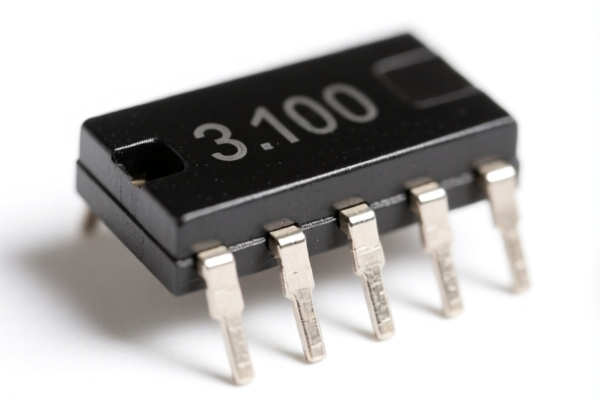
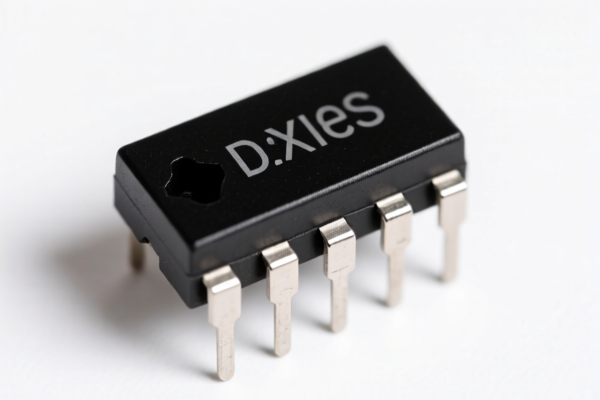
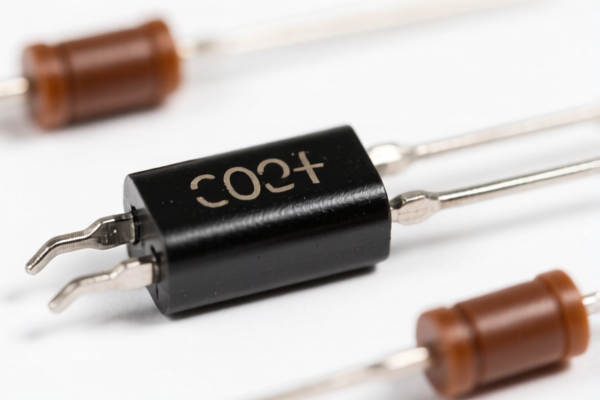
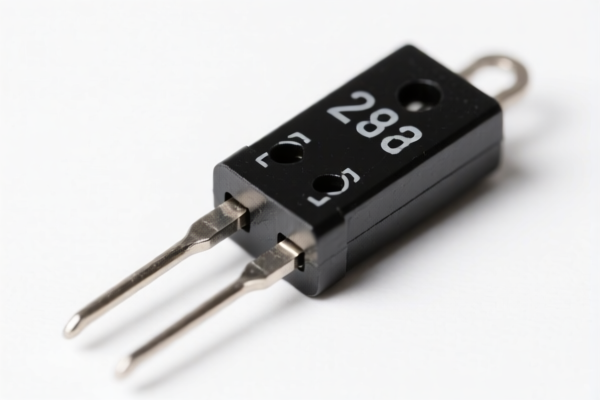
AI Analysis
💡 LED Diode (Light Emitting Diode)
🌐 HS Code Reference & Clearance Guide | 2026 Latest Tariff Analysis | Professional Customs Strategy
📌 I. Product Definition & Classification: Do You Really Understand "LEDs"?
Light Emitting Diodes (LEDs) are the foundational building blocks of modern lighting, displays, and electronic signaling. In international trade, they are not a "one-size-fits-all" category. Their classification hinges on a critical technical distinction: Is it an independent lighting component or an integrated circuit?
1. Discrete Semiconductor Devices (Independent LEDs)
These are standalone components used for general lighting, indicators, or discrete signaling. They function as single units without complex internal logic.
Key Feature:* Simple p-n junction structure; no complex processing or integration of multiple functions on a single chip.
2. Integrated Circuits & Semiconductor Arrays (LED ICs/Modules)
These are LEDs manufactured as part of a larger semiconductor process, often integrated with control circuits, drivers, or arranged in complex arrays (e.g., LED matrix displays, Micro-LED chips).
Key Feature:* High integration, specific performance characteristics beyond simple light emission, or classified under "other electronic apparatus" due to their role in complex circuits.
⚠️ Critical Distinction Point:
- If it is a standard, discrete LED (e.g., 5mm bulb, SMD 0805) → Likely 8541.41.00.00
- If it is an LED integrated into a complex circuit or classified as "other electronic components" due to specific high-tech features → Likely 8542.39.00.70 or 8542.39.00.90
📦 II. HS Code Classification Details (2026 Latest Tariff Authority Mapping)
Based on the provided data, here are the three potential classifications for LED Diodes, along with their logical justifications and tax implications.
| HS Code | Product Description | Justification from Data | Total Tax Rate |
|---|---|---|---|
8541.41.00.00 |
Light Emitting Diodes (Standard/Discrete) | "Perfect Match": The product name "LED" aligns perfectly with the core terminology in the classification explanation. This is the most direct classification for standard LEDs. | 35.0% |
8542.39.00.70 |
LEDs under Electronic ICs/Semiconductors (Specific Performance) | "Functional Match": Inferred as an electronic integrated circuit or semiconductor device with specific performance characteristics. Fits the "specific performance features" of electronic categories without material/形态 conflict. | 60.0% |
8542.39.00.90 |
Other Electronic Components (IC Category) | "Logical Inference": Inferred as an electronic component belonging to the "other electronic products" under the IC category. Logical fit for "Other" category with no material conflict. | 60.0% |
🔍 Key Insight:
- 8541.41.00.00 is the default and most common classification for general-purpose LEDs (lighting, indicators).
- 8542.39.00.70/90 applies when the LED is considered part of a complex semiconductor device or integrated circuit with specialized electronic functions, not just light emission. This distinction is crucial for high-tech LED modules or Micro-LED chips.
💰 III. 2026 Latest Tariff Rate Breakdown (Including Surcharges)
✅ Applicable Country: United States (US)
✅ Country of Origin: China (CN)
✅ Effective Date: November 10, 2025 (and subsequent imports)
🎯 1. 8541.41.00.00 —— Standard Light Emitting Diodes
| Item | Details |
|---|---|
| Base Tariff | 0% (ad valorem) |
| Section 301 Surcharge | +25% (USITC Footnote) |
| 122 Clause Tariff | +10% (Specific provision for certain electronic components) |
| Total Tax Rate | 35.0% |
| Tax Calculation | CIF Value × 35% |
| De Minimis Exemption | ❌ Not Available |
| Legal Basis Path | USITC:8541.41.00.00 → Section 301: 25% → 122 Clause: 10% |
📌 Explanation:
- This is the most favorable rate for standard LEDs.
- The "122 Clause Tariff" is a specific addition on top of the Section 301 tariff for certain electronic items.
- Total: 35%. This is significantly lower than the 60% rate for IC-classified LEDs.
🎯 2. 8542.39.00.70 & 8542.39.00.90 —— LEDs Classified as Electronic ICs/Semiconductors
| Item | Details |
|---|---|
| Base Tariff | 0% (ad valorem) |
| Section 301 Surcharge | +50% (Higher rate for certain semiconductors/electronic apparatus) |
| 122 Clause Tariff | +10% (Specific provision) |
| Total Tax Rate | 60.0% |
| Tax Calculation | CIF Value × 60% |
| De Minimis Exemption | ❌ Not Available |
| Legal Basis Path | USITC:8542.39.00.70/90 → Section 301: 50% → 122 Clause: 10% |
📌 Explanation:
- If customs authorities determine the LED is part of a complex integrated circuit or has specific electronic performance characteristics beyond simple illumination, it falls under Chapter 85 (Electrical Machinery) rather than Chapter 85 (Semiconductors).
- Total: 60%. This is a high-cost classification, doubling the tax burden compared to standard LEDs.
- Risk: Misclassifying a standard LED as an IC can lead to underpayment and penalties. Misclassifying an IC LED as standard can lead to overpayment.
🛠️ IV. Customs Clearance Practical Advice (Pitfall Avoidance Guide)
✅ 1. Required Documentation (Non-negotiable)
| Document | Must Provide | Purpose |
|---|---|---|
| Product Specification Sheet | ✔️ | Must detail: Type (Discrete vs. Integrated), Wavelength, Current/Voltage, Package Size. |
| Circuit Diagram/Schematic | ✔️ | Crucial for distinguishing 8541 vs. 8542. Shows if there are integrated control circuits. |
| Product Photos (with Label) | ✔️ | Clear view of model number, brand, and any markings indicating integration (e.g., "LED Driver IC"). |
| Third-Party Test Report | ✔️ | FCC, CE, RoHS, UL (if applicable). Confirms compliance and intended use. |
| Commercial Invoice | ✔️ | Must explicitly state: "Light Emitting Diode (LED), Model XYZ, Discrete Semiconductor Device" or "LED Integrated Circuit". |
| Certificate of Origin (CO) | ✔️ | Required for tariff calculation and potential exemptions (if applicable). |
| Packing List | ✔️ | Clearly separate LEDs from accessories (drivers, lenses, PCBs). |
✅ 2. Declaration Tips (Key Mantras)
🔥 "Name Accurate, Circuit Clear, Tax Down!"
| Scenario | Correct Declaration | Wrong Practice | Consequence |
|---|---|---|---|
| Standard LED (Lighting/Indicator) | 8541.41.00.00 |
Declare as 8542.39.00.90 |
Overpay 25% tax |
| LED Matrix/Display Chip (High Integration) | 8542.39.00.70 |
Declare as 8541.41.00.00 |
Underpay Tax + Penalties |
| LED + Driver IC on Same PCB | Whole Unit? | Split into LED + PCB | Complex Classification Risk |
| Micro-LED Chip | 8542.39.00.70 |
Declare as 8541.41.00.00 |
High Audit Risk |
📌 Strategy:
- For standard LEDs (5mm, SMD, etc.), stick to 8541.41.00.00 and emphasize "Discrete Semiconductor Device."
- For complex LED arrays or Micro-LEDs with embedded control, use 8542.39.00.70 and provide detailed circuit diagrams to justify "specific performance characteristics."
✅ 3. Special Case Handling
| Situation | Handling Advice |
|---|---|
| LEDs with Integrated Drivers | If the driver is on the same PCB, it may be classified as a "lamp fitting" or "lighting apparatus," which could have different tariffs. Seek pre-ruling. |
| OEM Custom LEDs | Provide customer specs and design drawings. If custom features add electronic complexity, lean towards 8542. |
| LEDs for Medical/Aerospace | If used in critical systems with specific reliability features, provide certifications. May still be 8541 if discrete. |
| Mixed Shipments | Do not mix standard LEDs and LED ICs in one HS Code. Declare separately to avoid audit flags. |
🌍 V. Global Market Comparison (2026 Latest)
| Country/Region | Recommended HS Code | Tariff (CN Origin) | Key Requirements | Notes |
|---|---|---|---|---|
| 🇺🇸 USA | 8541.41.00.00 |
35% | FCC, RoHS | High tariff; clear distinction between 8541 and 8542 is critical. |
| 🇨🇳 China | 8541.41.00.00 |
~5-10% | CCC (if applicable) | Lower tariff; easier clearance. |
| 🇪🇺 EU | 8541.41.00.00 |
0-2% | CE, RoHS, ErP | No major surcharges; strict environmental compliance. |
| 🇦🇺 Australia | 8541.41.00.00 |
5% | RCM | Moderate tariff; no major surcharges. |
| 🇯🇵 Japan | 8541.41.00.00 |
0% | PSE | Low tariff; strict safety standards. |
📌 Conclusion:
- The USA is the most challenging market for LED imports due to high surcharges (35-60%).
- Classification accuracy is paramount in the US. Misclassification can lead to massive cost differences (25% tariff gap).
- China, EU, Japan, and Australia are more favorable with lower or zero tariffs and simpler compliance.
📌 VI. Common Mistakes & Pitfall Guide (Blood & Tears Lessons)
❌ Mistake 1: Using "LED" as the sole description on the invoice
👉 Consequence: Customs cannot determine if it's 8541 or 8542 → Delays, audits, or incorrect classification.
👉 Fix: Use precise descriptions: "Discrete LED, 5mm, Red, 20mA" vs. "Micro-LED Display Module."
❌ Mistake 2: Assuming all LEDs are 8541.41.00.00
👉 Consequence: If the LED is part of a complex IC (e.g., for display drivers), it should be 8542.39.00.70. Misclassification leads to underpayment and penalties.
👉 Fix: Analyze the circuit. If it includes control logic or complex integration, use 8542.
❌ Mistake 3: Not providing circuit diagrams for high-value LED modules
👉 Consequence: Customs may assume the highest tax rate (60%) due to lack of evidence for 35%.
👉 Fix: Always provide schematics to justify the "discrete" nature of the LED.
❌ Mistake 4: Splitting LEDs and their drivers into different HS Codes unnecessarily
👉 Consequence: Complex clearance, potential for missing duties on the driver if misclassified.
👉 Fix: If LEDs and drivers are sold together, consider declaring the whole assembly if possible, or ensure each part is correctly classified.
✅ Correct Approach:
"High-Brightness Discrete LED, SMD 0805, White, 3.2V, 20mA, for General Lighting, Model XYZ, FCC & RoHS Certified"
🎯 VII. Conclusion: Precise Classification Saves Money!
🎯 Remember the Mantra:
🔹 "Discrete = 8541 (35%) | Integrated = 8542 (60%)"
🔹 "Circuit Diagram is Your Best Friend in the US"
🔹 "Don't Guess, Declare! 25% Tax Gap is Real!"
📌 Pro Tip:
If your LEDs are manufactured in Vietnam, Mexico, or Malaysia, you may qualify for IEEPA exemptions or lower tariffs under USMCA or other FTAs.
Strongly recommend applying for an Advance Ruling before shipping large volumes to the US.
📣 Action Item:
📞 Contact a Professional Customs Broker
📄 Provide Product Specs + Circuit Diagrams
🚀 Get a Pre-Ruling for 8541.41.00.00 to ensure 35% Tax Rate, not 60%!
✨ Professional Clearance Starts with Precise Classification!
💼 Every Percent of Tax Saved is Pure Profit!
Customer Reviews
About HS Code Classification
The Harmonized System (HS) is an internationally standardized nomenclature developed by the World Customs Organization (WCO) to classify traded products. Over 200 countries use the HS system as the basis for customs tariffs, trade statistics, and import/export regulations.
Each HS code follows a hierarchical structure:
- Chapter (2 digits) — Broad category of goods (e.g., Chapter 84: Machinery and Mechanical Appliances)
- Heading (4 digits) — More specific grouping within the chapter
- Subheading (6 digits) — Internationally standardized breakdown, used by all WCO member countries
- National subdivisions (8-10 digits) — Country-specific extensions for further classification, such as US HTSUS 10-digit codes
Correct HS code classification is essential for smooth customs clearance, accurate duty payment, and compliance with trade regulations. Misclassification can lead to customs delays, overpayment of duties, or penalties.
When importing from CN to US, the applicable tariff rates may include:
- Most-Favored-Nation (MFN) rate — The standard duty rate applied to WTO members
- General rate — Applied to countries without trade agreements
- Trade remedy duties — Additional tariffs such as Section 301 (anti-dumping), Section 232 (national security), or countervailing duties
The information provided on this page is for reference purposes only. For official classification, please consult with your local customs authority or a licensed customs broker.