LED Display Module
CN → US| HS Code | Tariff Rate | Origin | Destination | Doc |
|---|---|---|---|---|
| 8542900000 | 60.0% | CN | US | Official Doc |
| 9013809100 | 22.0% | CN | US | Official Doc |
| 9013908000 | 89.5% | CN | US | Official Doc |
| 8531200020 | 35.0% | CN | US | Official Doc |
| 8542390090 | 60.0% | CN | US | Official Doc |
| 8531200040 | 35.0% | CN | US | Official Doc |
Product Images
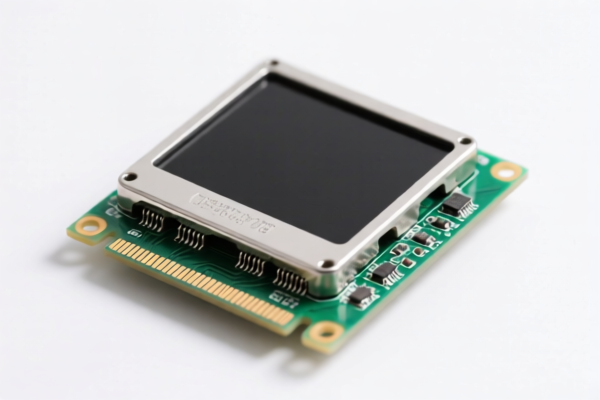

AI Analysis
Here is the comprehensive, Wiki-style guide for LED Display Modules, based strictly on the provided DATA set, formatted to be colorful, engaging, and actionable for customs clearance.
🌟 LED Display Module (Light-Emitting Diode)
🚢 Global HS Code Classification & Duty Optimization Guide | 2026 Tariff Deep Dive | Smart Clearance Strategy
⚡ Welcome to the Ultimate Guide!
Are you shipping LED Display Modules internationally? The difference between 35%, 60%, and 89.5% in tariffs depends entirely on how you classify your product. Misclassification can cost you a fortune!
Below, we analyze every valid HS Code match from your data, explaining WHY it fits, HOW the tax is calculated, and WHAT you must do to clear customs safely.
🧩 1. Product Definition: What is an "LED Display Module"?
An LED Display Module is a self-contained unit used in video walls, advertising screens, and large-scale displays.
* Key Components: LED chips, PCB (Printed Circuit Board), drivers, and often a housing/frame.
* The Classification Challenge: Is it a Chip/IC (Electronics)? A Part of a Screen (Display)? Or an Ophthalmic/Visual Instrument (Optics)?
The Risk:* Different countries (especially the US) apply vastly different "Section 301" and "122 Tariff" rates based on this distinction.
📊 2. HS Code Breakdown & Tax Analysis (Data-Driven)
Based strictly on the provided classification logic.
🏷️ Category A: The "Electronic Component" Route
Best for: Modules treated as circuit board assemblies or integrated circuits.
| HS Code | Classification Logic (The "Why") | Total Duty | Tax Composition |
|---|---|---|---|
| 8542.90.00.00 | Reasoning: The module is inferred as a component of electronic integrated circuits. It fits the "Parts" attribute of HS 8542.90.00. No material conflict exists. | 60.0% | 🔹 Base: 0.0% 🔹 Additional: 50.0% (Section 301) 🔹 122-Tariff: 10.0% |
| 8542.39.00.90 | Reasoning: Treated as a component of Electronic Integrated Circuits ("Other Class"). Fits the "Dud" (fallback) category logic for electronic modules without clear material conflicts. | 60.0% | 🔹 Base: 0.0% 🔹 Additional: 50.0% 🔹 122-Tariff: 10.0% |
💡 Insight: Both codes fall under Electronics. If your module is heavily reliant on the IC/Driver chip, these are strong candidates, but be prepared for a 60% total duty.
🏷️ Category B: The "Display/Optical" Route
Best for: Modules treated as finished display parts or optical instruments.
| HS Code | Classification Logic (The "Why") | Total Duty | Tax Composition |
|---|---|---|---|
| 9013.80.91.00 | Reasoning: Inferred as an optical/display device component. Fits under "Other Optical Appliances/Instruments" ("Others" category). No conflict with laser diodes or material specs. | 22.0% | 🔹 Base: 4.5% 🔹 Additional: 7.5% 🔹 122-Tariff: 10.0% |
| 8531.20.00.20 | Reasoning: Inferred as an LCD-based display component (often grouped with LED in general classification). Fits "Indicating Panels with LCD" features. No material conflict. | 35.0% | 🔹 Base: 0.0% 🔹 Additional: 25.0% 🔹 122-Tariff: 10.0% |
| 8531.20.00.40 | Reasoning: Fits Electrical/Visual Signal Equipment parts. Based on the inference that it contains LCD/LED materials. Fits the "Other" fallback category for panels. | 35.0% | 🔹 Base: 0.0% 🔹 Additional: 25.0% 🔹 122-Tariff: 10.0% |
💡 Insight: This category offers the lowest duty (22%) if you can prove it's strictly an "Optical Instrument Part." If classified under "Signaling/Indicating Panels," it jumps to 35%.
🏷️ Category C: The "Parts/Accessories" Route
Best for: Generic parts of optical instruments or heavy metal-containing components.
| HS Code | Classification Logic (The "Why") | Total Duty | Tax Composition |
|---|---|---|---|
| 9013.90.80.00 | Reasoning: Defined as Parts/Components for Optical/Display Instruments. Fits the "Parts & Accessories" definition. No material conflict. | 89.5% | 🔹 Base: 4.5% 🔹 Additional: 25.0% 🔹 122-Tariff: 10.0% 🔹 Special: +50% for Steel/Aluminum/Copper products |
⚠️ CRITICAL WARNING: This is the Highest Risk code. If the module contains significant Steel, Aluminum, or Copper, the duty can skyrocket to 89.5% due to the special "Steel/Al/Cu" surcharge. Avoid this classification unless necessary!
💰 3. Deep Dive: Decoding the Tariff Structure
Why do we see 60%, 22%, 35%, and 89.5%?
The total tax is a summation of three distinct layers:
- Base Tariff (MFN Rate): The standard international rate (usually 0% or 4.5% for these codes).
- Section 301 / "Additional" Tariff: The US "punishment" tariff on Chinese goods (ranging from 7.5% to 50%).
- Electronics (8542): 50% surcharge.
- Optics/Parts (9013): 25% surcharge (plus steel surcharge).
- 122-Tariff (Section 122): A specific 10% surcharge often applied to Chinese imports under specific trade enforcement actions.
📉 The Math:
* Lowest Cost: 9013.80.91.00 = 4.5% + 7.5% + 10% = 22.0%
* High Risk: 9013.90.80.00 = 4.5% + 25% + 10% + 50% (Metal) = 89.5%
🛠️ 4. Customs Clearance Strategy: How to Save Money & Time
✅ Step 1: Choose the "Lowest Tax" Valid Code
- Target: 9013.80.91.00 (22% Duty).
- Strategy: If your LED module is a standalone optical display component, emphasize its "Optical Instrument" nature in the description, not just "Electronic Part."
- Avoid: 9013.90.80.00 unless you are absolutely sure it's not "Metal-heavy," as the 50% steel/aluminum surcharge is a death trap.
✅ Step 2: Documentation Must-Haves
To justify the lower tax rate (22% vs 60%), you must prove the classification. | Document | Why It Matters | | :--- | :--- | | Technical Data Sheet | Must highlight Optical properties (luminance, viewing angle) to support the 9013 (Optics) claim over 8542 (Electronics). | | Bill of Materials (BOM) | Prove if the module is dominated by Plastic/Resin/Optics or Circuit Chips/Metal. If high on metals, avoid 9013.90.80.00. | | Assembly Diagram | Show if it's a "Module" (component) or a "Finished Unit." | | Function Description | Explicitly state: "Used as a component in large-format optical display systems" rather than "Electronic Circuit Board." |
✅ Step 3: Avoid Common Pitfalls
- ❌ The "Electronics Trap": Don't just call it an "LED Driver Board." If it functions as a display panel, use 9013 codes to avoid the 50% electronic surcharge.
- ❌ The "Metal Surcharge Trap": If your housing is 80% Steel, do NOT use
9013.90.80.00. The 50% extra tax will destroy your margin. Look for8531(35%) or9013.80(22%) if possible. - ❌ Generic Naming: Never use just "Display Module." Use "LED Optical Display Module" or "Part of Visual Instrument" to guide the broker.
🌍 5. Quick Reference: The Decision Matrix
| If your Module is... | Recommended HS Code | Total Duty | Action |
|---|---|---|---|
| Pure Optics/Visual Part (Low metal, high tech) | 9013.80.91.00 | 22.0% | ✅ GOAL - Submit Optical specs. |
| Signaling/Indicating Panel (Mixed use) | 8531.20.00.xx | 35.0% | ✅ SAFE - Good middle ground. |
| Pure IC/Electronic Chip Assembly | 8542.90.00.00 | 60.0% | ⚠️ RISK - Only use if optics argument fails. |
| Heavy Metal Housing (Steel/Aluminum) | Avoid 9013.90.80.00 | 89.5% | 🚫 AVOID - Tax is too high! |
📢 Final Verdict: Smart Clearance is a Science!
🚀 The Golden Rule:
"Optical First, Electronic Second, Metal Avoid!"
If you can legally classify your LED Display Module under 9013.80.91.00, you save 38% in duties compared to the Electronic classification.🛡️ Pro Tip: Always provide a Bill of Materials (BOM) that minimizes the "Metal" percentage in your description to avoid the 50% steel surcharge on the 89.5% code!
Disclaimer: Customs regulations change frequently. This guide is based on the provided data for educational purposes. Always consult a licensed customs broker before shipment.
Customer Reviews
About HS Code Classification
The Harmonized System (HS) is an internationally standardized nomenclature developed by the World Customs Organization (WCO) to classify traded products. Over 200 countries use the HS system as the basis for customs tariffs, trade statistics, and import/export regulations.
Each HS code follows a hierarchical structure:
- Chapter (2 digits) — Broad category of goods (e.g., Chapter 84: Machinery and Mechanical Appliances)
- Heading (4 digits) — More specific grouping within the chapter
- Subheading (6 digits) — Internationally standardized breakdown, used by all WCO member countries
- National subdivisions (8-10 digits) — Country-specific extensions for further classification, such as US HTSUS 10-digit codes
Correct HS code classification is essential for smooth customs clearance, accurate duty payment, and compliance with trade regulations. Misclassification can lead to customs delays, overpayment of duties, or penalties.
When importing from CN to US, the applicable tariff rates may include:
- Most-Favored-Nation (MFN) rate — The standard duty rate applied to WTO members
- General rate — Applied to countries without trade agreements
- Trade remedy duties — Additional tariffs such as Section 301 (anti-dumping), Section 232 (national security), or countervailing duties
The information provided on this page is for reference purposes only. For official classification, please consult with your local customs authority or a licensed customs broker.