LED Module
CN → US| HS Code | Tariff Rate | Origin | Destination | Doc |
|---|---|---|---|---|
| 8542390090 | 60.0% | CN | US | Official Doc |
| 8541499500 | 60.0% | CN | US | Official Doc |
| 9405428200 | 35.0% | CN | US | Official Doc |
| 8542390070 | 60.0% | CN | US | Official Doc |
| 8541410000 | 35.0% | CN | US | Official Doc |
| 9405418200 | 35.0% | CN | US | Official Doc |
Product Images
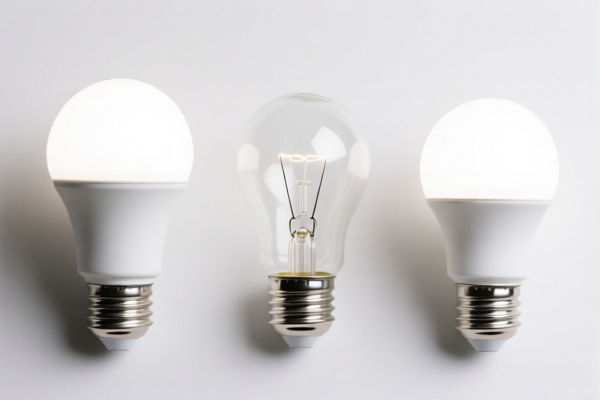
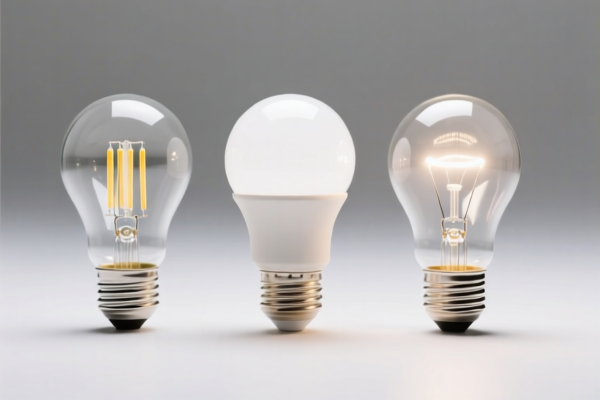
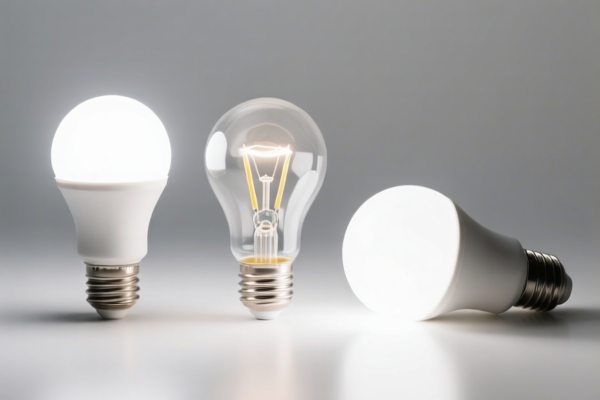
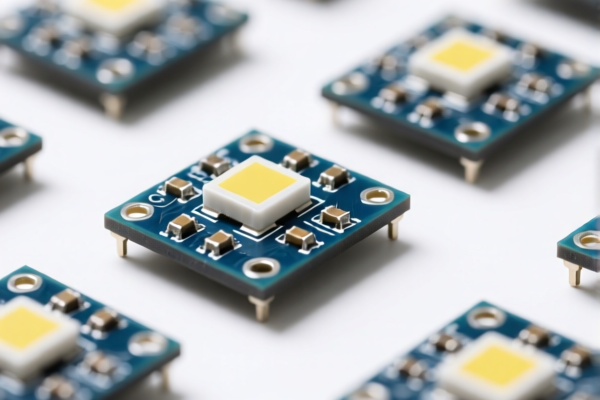
AI Analysis
💡 LED Module: The Ultimate 2026 Import Guide & Tax Strategy
🌐 HS Code Reference & Customs Clearance | 2026 Tax Regime Analysis | Professional Clearance Strategy
📌 I. Product Definition & Classification: Do You Really Understand "LED Modules"?
The LED Module is a critical downstream application component of electronic integrated circuits. It serves as the core light source for display backlights, lighting fixtures, and signage. In international trade, its classification hinges on whether it is treated as a semiconductor component or an assembly/luminaire.
Core Distinctions: * Semiconductor Component (The Chip/Device): Pure LED chips or assemblies without external power/control logic. * Category: Light Emitting Diodes (LEDs). * Electronic Integrated Circuit (The Driver/Control): Modules containing integrated circuits, connectors, and driver boards that control the light. * Category: Integrated Circuits / Lighting Components. * Luminaire/Backlight (The Final Assembly): LED modules used strictly as backlighting for LCD panels or integrated into lighting fixtures. * Category: Lamps, Lighting Fixtures, or Backlight Modules.
⚠️ Critical Classification Point:
- If the module is a semiconductor device or integrated circuit with a driver → 8542 / 8541.
- If the module is a LCD Backlight assembly → 9405.
- Tax Risk: Misclassifying a high-tax semiconductor as a low-tax lighting fixture can lead to severe penalties (and vice versa).
📦 II. Detailed HS Code Classification (2026 Authoritative Reference)
Based on the provided 2026 Tariff Data, here is the precise breakdown for LED Modules:
| HS Code | Product Description & Logic | Total Tax Rate | Tax Detail (US Origin: China) |
|---|---|---|---|
| 8542.39.00.90 | LED Module as a downstream component of Electronic Integrated Circuits. Fits the logic of IC assemblies. | 60.0% | Base: 0% + Add'l: 50% + Sec. 301 (122 Clause): 10% |
| 8541.49.95.00 | LED (Light Emitting Diode)范畴. Fits the description of LEDs and their assembled forms directly. | 60.0% | Base: 0% + Add'l: 50% + Sec. 301 (122 Clause): 10% |
| 9405.42.82.00 | LCD Backlight Module. Composed of LEDs + Connectors. Fits definition of LCD backlighting. | 35.0% | Base: 0% + Add'l: 25% + Sec. 301 (122 Clause): 10% |
| 8542.39.00.70 | LED Lighting Component. Deduced as IC parts. No material or form conflict. | 60.0% | Base: 0% + Add'l: 50% + Sec. 301 (122 Clause): 10% |
| 8541.41.00.00 | LED Diode. Direct match to Light Emitting Diode. Module form fits semiconductor assembly. | 35.0% | Base: 0% + Add'l: 25% + Sec. 301 (122 Clause): 10% |
| 9405.41.82.00 | Backlight Module. Matches LED material & backlight form. Functional usage consistent. | 35.0% | Base: 0% + Add'l: 25% + Sec. 301 (122 Clause): 10% |
🔍 Key Insight:
- 60% Tax Rate: Applies to modules classified as Electronic Integrated Circuits (8542) or LED Components (8541) under the broader "high-tech semiconductor" category. - 35% Tax Rate: Applies when the module is explicitly defined as an LCD Backlight Module (9405) or a specific LED Diode (8541.41) without the complex IC driver integration. - Common Pitfall: Failing to distinguish between a "Driver Board + LED" (IC, 60%) vs. a "Pure Backlight Strip" (Lighting, 35%).
💰 III. 2026 Tariff Rate Breakdown (Including Add-ons & Policy Levies)
✅ Applicable Market: United States (US)
✅ Origin: China (CN)
✅ Effective Date: 2025/2026 Regime
✅ Policy Basis: Section 301 & Section 122 (122 Clause)
🎯 Scenario A: High-Tax Classification (Integrated Circuits & High-Power LEDs)
Codes: 8542.39.00.90, 8541.49.95.00, 8542.39.00.70
Total Tax: 60.0%
| Component | Rate | Legal Basis & Explanation |
|---|---|---|
| Base Duty | 0.0% | Standard MFN rate for electronics is often 0%. |
| Section 301 Add-on | +50.0% | "List 3/4" additions under USITC Section 301 targeting Chinese high-tech components. |
| Section 122 Clause | +10.0% | Specific 2026 Policy: "Section 122 Tariff" targeting semiconductor and advanced electronic components from China. |
| Total Effective Rate | 60.0% | Calculated on CIF Value. |
📌 Strategic Note:
This 60% rate is extremely high. It effectively neutralizes price advantages for "intelligent" LED modules containing driver ICs. Do not attempt to undervalue; the risk of audit is high.
🎯 Scenario B: Medium-Tax Classification (Backlights & Simple Diodes)
Codes: 9405.42.82.00, 8541.41.00.00, 9405.41.82.00
Total Tax: 35.0%
| Component | Rate | Legal Basis & Explanation |
|---|---|---|
| Base Duty | 0.0% | Standard MFN rate. |
| Section 301 Add-on | +25.0% | "List 1/2" additions or specific lighting/assembly rates under Section 301. |
| Section 122 Clause | +10.0% | Applies to the "122 Clause" specifically mentioned in the data for these sub-categories. |
| Total Effective Rate | 35.0% | Calculated on CIF Value. |
📌 Strategic Note:
The 35% rate is significantly better than 60%. If your product is a pure backlight strip (no complex driving logic) or a simple diode, strive to classify under 9405 or 8541.41 to save 25% in duties.
🛠️ IV. Customs Clearance Practical Advice (Risk Avoidance Guide)
✅ 1. Documentation Checklist (Non-Negotiable)
| Document | Requirement | Why It Matters |
|---|---|---|
| Technical Data Sheet | ✔️ Mandatory | Must explicitly state: "Contains Integrated Circuit" or "No Integrated Circuit". This determines the 60% vs 35% path. |
| Circuit Diagram | ✔️ Mandatory | Customs will demand to see the driver board. If the diagram shows an IC, 8542 is likely forced. |
| Product Photos (Internal) | ✔️ Mandatory | Photos showing the LED chips vs. the control board are crucial for the "Backlight" vs. "IC" argument. |
| Bill of Materials (BOM) | ✔️ Mandatory | List components. If "Driver IC" is >5% of cost, you are in 8542. |
| Commercial Invoice | ✔️ Mandatory | Description: Do NOT just write "LED Module". Write: "LCD Backlight Module (No Driver IC)" or "Semiconductor LED Module with Driver IC". |
| Country of Origin Cert | ✔️ Mandatory | Essential for applying Section 301 exemptions (if applicable) or avoiding de minimis issues. |
✅ 2. Declaration Strategy (The "Golden Rules")
🔥 Rule #1: "IC vs. Light"
- If the module has a driver chip (even a small one) to convert power to light → Declare as 8542.39 / 8541.49 (Tax 60%).
- If the module is purely passive (LEDs + Connectors + Lens) for a backlight → Declare as 9405 (Tax 35%).
| Scenario | Correct HS Code | Wrong HS Code | Consequence |
|---|---|---|---|
| Smart LED Module (with driver) | 8542.39.00.90 (60%) |
9405.42.82.00 (35%) |
Penalty + Back Tax (25% + Interest) |
| Passive Backlight Strip | 9405.42.82.00 (35%) |
8542.39.00.90 (60%) |
Overpayment (Loss of Profit) |
| Simple Diode Array | 8541.41.00.00 (35%) |
8542.39.00.70 (60%) |
Overpayment |
✅ 3. Special Handling for "Section 122" (122 Clause)
⚠️ Critical Warning: The 10% surcharge in the data is specific to the "122 Clause" (likely a specific 2026 US trade measure targeting specific high-tech components).
- Action: Check if your product's HTS subheading is specifically listed under the 122 exclusion list.
- If Excluded: The 10% might be waived, reducing the 60% total to 50% or 35% total to 25%.
- If Included: The 10% is non-negotiable.
🌍 V. Global Market Comparison (2026 Context)
| Market | Preferred HS Code for LED Module | Est. Duty (China Origin) | Key Compliance |
|---|---|---|---|
| 🇺🇸 USA | 8542.39.00.90 or 9405.42.82.00 |
35% - 60% | Heavy Section 301 & 122 Clause. Requires pre-clearance ruling. |
| 🇪🇺 EU | 8542.39 or 9405.41 |
~0% - 2.5% | CE, RoHS, WEEE. No Section 301. |
| 🇯🇵 Japan | 8541.49 or 9405.42 |
~0% - 3% | PSE Certification. Low tariffs. |
| 🇨🇦 Canada | 8542.39 |
~0% - 5% | C-TPAT compliance. No Section 301. |
📌 Conclusion: The US is the only market with the Section 122 Clause (10%) and high Section 301 rates (25-50%). All other markets are significantly cheaper.
🎯 VI. Conclusion & Final Strategy
The Bottom Line for 2026 Imports: 1. Know Your Circuit: The presence or absence of a Driver IC is the single most important factor determining your tax rate (60% vs 35%). 2. Pre-Audit is Mandatory: Given the 122 Clause (10% surcharge), you must verify your HS Code against the latest 2026 exclusion lists before shipping. 3. Avoid "Over-Clearing": Do not claim "Backlight" (9405) if you have an IC. The risk of a 25% back-tax penalty is too high. 4. Optimize Design: If your product allows, consider splitting the driver board from the LED module. Shipping the "Backlight" (9405) separately from the "Driver" (8542) might allow for different duty treatments (though this requires complex supply chain planning).
🚀 Final Call to Action:
Do not guess your HS Code.
✅ Submit a "Binding Tariff Ruling" Request to US Customs (CBP) before the first container ships.
✅ Provide Circuit Diagrams & BOM to your customs broker immediately.
✅ Budget for 35% or 60%—do not rely on 0% expectations.
✨ Precision in Classification = Precision in Profit!
💼 Let your LED Modules light up the world, not your tax bill!
Customer Reviews
About HS Code Classification
The Harmonized System (HS) is an internationally standardized nomenclature developed by the World Customs Organization (WCO) to classify traded products. Over 200 countries use the HS system as the basis for customs tariffs, trade statistics, and import/export regulations.
Each HS code follows a hierarchical structure:
- Chapter (2 digits) — Broad category of goods (e.g., Chapter 84: Machinery and Mechanical Appliances)
- Heading (4 digits) — More specific grouping within the chapter
- Subheading (6 digits) — Internationally standardized breakdown, used by all WCO member countries
- National subdivisions (8-10 digits) — Country-specific extensions for further classification, such as US HTSUS 10-digit codes
Correct HS code classification is essential for smooth customs clearance, accurate duty payment, and compliance with trade regulations. Misclassification can lead to customs delays, overpayment of duties, or penalties.
When importing from CN to US, the applicable tariff rates may include:
- Most-Favored-Nation (MFN) rate — The standard duty rate applied to WTO members
- General rate — Applied to countries without trade agreements
- Trade remedy duties — Additional tariffs such as Section 301 (anti-dumping), Section 232 (national security), or countervailing duties
The information provided on this page is for reference purposes only. For official classification, please consult with your local customs authority or a licensed customs broker.